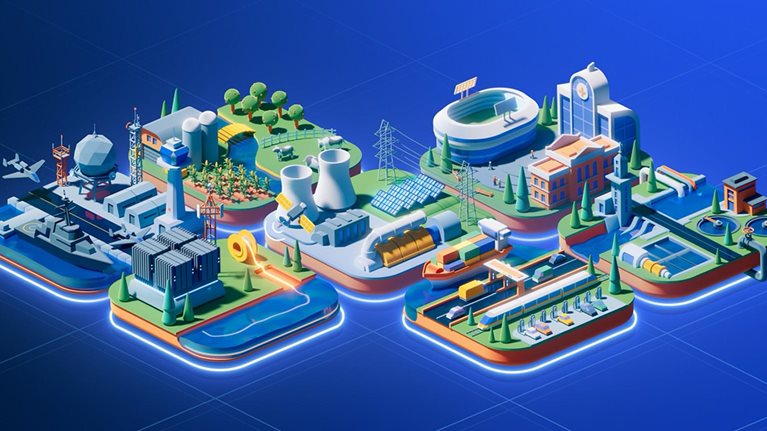
The next era of value creation may be defined less by digital innovation alone and more by the ability to build, operate, and scale physical assets. On this episode of The McKinsey Podcast, Hines co-CEO Laura Hines-Pierce joins McKinsey’s North American Chair Eric Kutcher to discuss a widening gap between digital ambition and physical capacity. From a global housing shortage to an emergency energy and infrastructure supercycle, the conversation explores what it takes to build at scale—and why labor, permitting, and supply chain are now the true bottlenecks. They also reflect on leadership, organizational change, and preparing a 70-year-old firm for a more volatile, fast-changing future.
In this recurring series on The McKinsey Podcast, Kutcher speaks with top CEOs about the practice of leadership.
The McKinsey Podcast is regularly cohosted by Lucia Rahilly and Roberta Fusaro.
To watch the full-length version of this interview, visit The McKinsey Podcast playlist on McKinsey’s YouTube channel.
The following transcript has been edited for clarity and length.
Execution, not capital, is the constraint
Eric Kutcher: Today, I’m joined by Laura Hines-Pierce, CEO of Hines, one of the leading real estate firms in the world.
Laura Hines-Pierce: I’ll actually correct you on that. We are one of the largest global investment managers in the real assets space. We started as a developer, and that’s certainly how much of our history and reputation were built.
We’re a 70-year-old firm founded by my grandfather, so I’m a third-generation leader. He started as a one-man shop developing small warehouses on the outskirts of Houston. Today, we manage approximately $100 billion in assets under management, operate in 30 countries and nearly 400 cities, and invest across the risk spectrum and all major real estate asset classes.
Eric Kutcher: What are you seeing across the different real estate asset classes as an investor today?
Laura Hines-Pierce: When I look at asset classes and where we have conviction, we’ve deliberately structured ourselves for diversification and for the ability to meet the market where it is. As I mentioned, we’re in nearly 400 cities. The opportunity today in Stuttgart, Germany, is different from the opportunity in San Francisco, California.
We’ve intentionally positioned ourselves to be able to pull different levers across both the risk spectrum and asset classes, depending on market conditions. That said, our highest conviction globally is in living. As you can imagine, it’s a major topic.
Globally, we’re about 6.5 million housing units short. At the same time, future supply is constrained by high construction costs, labor shortages, and permitting challenges. We believe that creates a sustained opportunity over the long term.
In addition, we’re entering what appears to be an energy and infrastructure supercycle. We’re spending significant time in the powered-land space and thinking about how our capabilities can expand to meet that opportunity.
Want to subscribe to The McKinsey Podcast?
Eric Kutcher: Let’s spend a little more time on this energy supercycle. Much of it is being driven by AI and data center build-outs. You could also argue that the broader electrification of society—electric vehicles, for example—is contributing. I don’t think we’re capital constrained when it comes to getting shovels in the ground and building the necessary infrastructure. How does that all play out? What are the limiting factors today? And how difficult is it to help those with capital deploy it?
Laura Hines-Pierce: I agree—we are not capital constrained in today’s environment. What we are is execution constrained. The challenge is the ability to source opportunities, secure permits, navigate regulatory requirements, bring power to a site, and think about projects holistically.
There’s a lot of noise in the market right now, and execution capabilities vary widely. The firms that succeed will be those with deep local capabilities and a proven track record of delivering projects. You also have to think about the supply chain. The winners will be those that can anticipate constraints and secure critical components in advance.
Eric Kutcher: Which is part of execution itself.
Laura Hines-Pierce: Absolutely. It’s about much more than simply having a site with potential access to power.
The future still needs electricians
Eric Kutcher: What about labor?
Laura Hines-Pierce: I think labor will remain a consistent challenge. This is particularly acute in the United States, given the scale of demand and the constraints already in place. We’re not producing enough electricians. We’re not producing enough engineers. Unfortunately, I don’t have a simple solution. The reality is that scarcity in those professions will ultimately show up in higher costs.
I think labor will remain a consistent challenge. This is particularly acute in the United States, given the scale of demand and the constraints already in place.
Eric Kutcher: In my experience, people don’t fully appreciate the situation we’re facing. I sit on the board of the Federal Reserve Bank of San Francisco, and one observation I’ve made is that we’re operating in a different paradigm. For a long time, maintaining stability in the workforce and unemployment rate required roughly 150,000 to 200,000 net new jobs per month. Today, that number is closer to zero.
The reason is straightforward: Immigration has slowed, and a generation of baby boomers is retiring from the workforce. Those individuals possess a tremendous amount of institutional knowledge and tacit expertise. Layer on top of that a birth rate below replacement level, and the equation worsens over time rather than improving.
Laura Hines-Pierce: Exactly. I can’t overstate how significant this challenge is. Resources required to invest in and execute within the physical world are becoming increasingly scarce.
As I mentioned, you can’t create new electricians overnight. The result is higher costs, which means investors need to account for these realities when underwriting opportunities. Those who truly understand local markets and labor dynamics will be best positioned to capitalize and finance projects effectively.
More broadly, we’re seeing a shift in where value is created in the real asset space—from software to hardware. AI is an incredible technology and an extraordinary tool, but in many ways it is democratizing the digital world. Increasingly, differentiation will come from the ability to execute in the physical world. That’s where we believe value creation will occur in the years ahead.
Eric Kutcher: And as you said, you can’t build a model that replaces physical assets. We have a real deficit.
Increasingly, differentiation will come from the ability to execute in the physical world.
Laura Hines-Pierce: At least not yet.
Eric Kutcher: It’s an interesting question. I attended CES [Consumer Electronics Show] in January, and if you asked what the conference was about this year, the answer would be “physical AI”—or what many of us simply call robotics. There’s a lot of discussion about massive job displacement. We see autonomous vehicles and robo-taxis operating in cities today. But the reality is that we’ll need different forms of labor. There’s certainly a reskilling challenge ahead, but I don’t see a shortage of opportunity anytime soon.
Laura Hines-Pierce: Our focus isn’t on cost cutting or eliminating jobs. It’s about amplifying our competitive advantage. We create value in the physical world. We have people on the ground in nearly 400 cities who know their markets better than anyone else. They are local experts.
We want to use AI to free people from their computers and enable them to spend more time creating value in the real world. That means building relationships, sourcing deals, overseeing development projects, operating assets, and delivering exceptional experiences to occupants.
Those activities require human judgment and human connection. That’s where we’re focused—amplifying human capability and, frankly, investing more in it.
Adaptability is durability
Eric Kutcher: You mentioned living as a major investment theme beyond the energy supercycle. You also discussed labor shortages, and presumably, labor will gravitate toward sectors willing to pay the most. Given the economics of data centers, people may naturally move in that direction. What does that mean for housing prices over the next five to ten years, particularly in a world with a constrained housing supply and rising construction costs?
Laura Hines-Pierce: I believe we’re operating in an inflationary environment. To materially reduce housing costs, a number of factors would need to align: lower material and labor costs and regulatory changes that make it easier to build. Ultimately, increasing supply is what brings prices down. From an investment standpoint, that’s one reason we have such strong conviction in the living sector. We also continue to build because the supply shortage remains so significant across the risk spectrum.
Eric Kutcher: We recently conducted research on permitting challenges in the United States. It found that approximately $1.5 trillion in funded, shovel-ready projects are currently waiting for permits. You mentioned permitting earlier in the context of building constraints. What’s driving this backlog?
Laura Hines-Pierce: Over time, a number of well-intentioned laws and policies have been layered into the permitting process. In some cases, those mechanisms create opportunities for delays that were never intended. For example, a single objection from a neighboring property owner can significantly slow a project. Those delays can last months—or even years. Striking the right balance between oversight and efficiency is challenging, and sometimes the system moves out of balance.
Eric Kutcher: Let’s zoom out and talk about you as a CEO and what it’s like to lead a multigenerational family business. How did you get from point A to point C? I’m skipping point B because there was an important stop in the middle, right?
Laura Hines-Pierce: One of the things I’m most proud of over the past several years has been helping codify our ability to grow, evolve, and adapt. We’ve always believed deeply in our core values: integrity, quality, and an owner’s mindset. One advantage of a family-led firm is that those values are embedded from an early age. When leadership transitions occur, the values remain constant because they are already deeply ingrained in the next generation of leaders.
Eric Kutcher: I’d love to hear how your father thought about passing ownership and leadership to you. You’re standing on his shoulders. And now, with young children of your own, how do you think about lineage and continuity?
Laura Hines-Pierce: Stewardship is an active concept to me. It requires conviction about the future and a constant commitment to moving toward it. In the built environment, investments are long term. The assets we develop and operate will exist for decades. That means we need a strong point of view about the future and a commitment to leaving things better than we found them.
We think about stewardship in our partnerships, with our investors, and with our clients. Relationships are long-term investments, and we view ourselves as stewards of those relationships as well.
Eric Kutcher: What’s it like to take on the CEO role of an institution that means so much—not only to employees and stakeholders around the world, but also to your family and, I suspect, to your collective identity?
Laura Hines-Pierce: I’m actually a co-CEO. I currently serve alongside my father, which has been a unique and special experience. He brings more than 30 years of leadership experience, institutional knowledge, and perspective gained through multiple cycles. I bring a different lens: thinking about where we need to be 30 years from now and helping position the firm accordingly.
It’s been a remarkable experience because, frankly, I’ve been forged in the fire. I joined the Office of the CEO in February 2020. We all know what happened a month later. Then I officially became co-CEO in February 2022, one month before Russia invaded Ukraine. During that same five-year period, I also had three children.
What I’ve learned is that change is the only constant. That has always been true, but the pace of change is accelerating. The firms that will succeed are those that can adapt, evolve, and lead through change. They run toward opportunity rather than away from it. At the same time, my father’s partnership provides a stabilizing force. Together, we balance pushing toward the future while remaining grounded in who we are.
What I’ve learned is that change is the only constant.
Eric Kutcher: I was recently asked how CEOs are coping with uncertainty, and I think you just answered the question perfectly. You essentially said, “I don’t focus on what’s coming at me every day. I focus on where we need to be five or ten years from now, and I navigate toward that destination. Obstacles will arise, and sometimes I have to go around them. But as long as I stay committed to the destination and remain open minded about what could change my assumptions, I can stay on course.” One advantage of that mindset is that you’re more battle-tested.
Laura Hines-Pierce: For better or worse.
Eric Kutcher: For better or worse. But being battle-tested matters. I don’t hear CEOs becoming as rattled by uncertainty as they once did. Increasingly, they simply expect it.
Laura Hines-Pierce: Exactly. As I think about evolving our culture, that’s something I want to formally codify. We need a culture that embraces change and uncertainty and actively looks for opportunity within it. One of our core values is maintaining an entrepreneurial culture, and I believe that mindset is particularly relevant in today’s environment.
Every transformation is a talent transformation
Eric Kutcher: You mentioned your three young children, who may one day listen to this conversation. What would you want them to know about leadership and what you’ve learned through adversity?
Laura Hines-Pierce: If you stay focused on your North Star and where you want to go over the long term—and if you genuinely embrace stewardship—then you’ll make better decisions with partners, investments, and design. In many ways, that clarity makes leadership easier.
Eric Kutcher: How are you thinking about AI today? Where are you on that journey? And how are you changing the organization to help people see what’s possible?
Laura Hines-Pierce: We’re approaching AI much the same way we’ve approached other major transformations: with a combination of top-down leadership and bottom-up innovation.
We’re also building a central team focused on governance and implementation. Their role is to ensure we’re solving the right workflow challenges and applying solutions consistently across the organization.
The goal is to enable our people to leverage technology so they can focus on what only humans can do. They build relationships with business leaders in their communities. They source opportunities. They oversee development and redevelopment projects. They manage buildings and deliver exceptional service to occupants. Technology should enable more of those activities, not replace them.
The goal is to enable our people to leverage technology so they can focus on what only humans can do.
Eric Kutcher: How do you identify people throughout the organization and challenge them according to their own level of readiness?
Laura Hines-Pierce: We view AI primarily as a people challenge. Technology accounts for perhaps 10 percent of the solution. Processes account for another 20 percent. The remaining 70 percent is about people and change management.
That’s why we’ve been focused on strengthening our organizational change capabilities. We’re identifying individuals with the curiosity, drive, and capability to lead. Those champions are embedded within business units and connected to a central group that provides training, support, and tools.
Many of these champions come directly from the business. Others are placed within teams to understand how technology can improve workflows in practical ways. The central group then helps scale successful solutions across the organization while ensuring consistency and coordination.
Eric Kutcher: Do you have to bring everyone along? It may sound Darwinian, but while everyone should have the opportunity to learn and access the tools, if someone chooses not to participate, isn’t that ultimately their responsibility?
Laura Hines-Pierce: Every job evolves. Every company evolves. Every industry evolves.
The most successful individuals and organizations are the ones that embrace that evolution. That’s always been true, and I believe this moment is simply another chapter in that ongoing process.
Related Articles