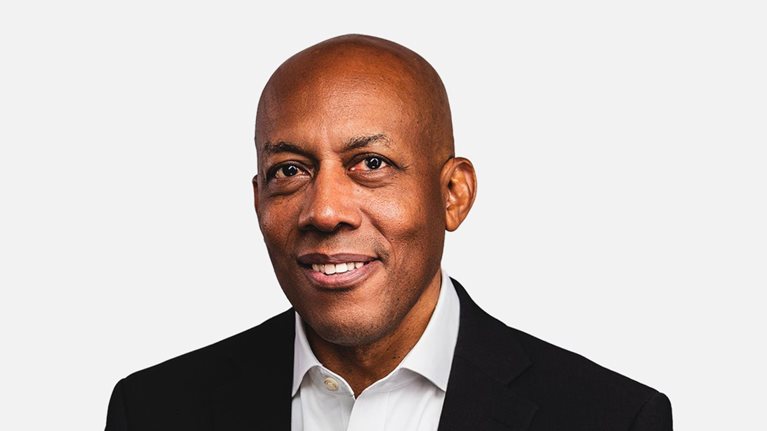
Chief JoAnne Bass, Air Force (Ret.), was raised in the military and watched her father get up early every day to serve in the US Army. When she enlisted in the US Air Force in 1993, she thought it would be a mere four-year stint on her life’s longer journey. Thirty-one years later, Bass retired from the Air Force after rising to become its 19th Chief Master Sergeant, the service’s highest enlisted leadership position. During her tenure, she held a variety of leadership roles and broke several barriers along the way, ultimately ascending to the rank of Chief Master Sergeant of the Air Force and representing the interests of more than 689,000 active-duty, Guard, Reserve, and civilian Airmen and their families.
As America marks its 250th anniversary, McKinsey is sitting down with leaders from the public, private, and social sectors to explore the ideas and opportunities that will shape the country’s next chapter. In this interview, McKinsey Senior Partner Scott Blackburn talks with Bass about the leadership qualities that have defined her career, how large organizations—and their people—can adapt through moments of disruption and uncertainty, and why America’s next generation gives her hope for the future.
This interview has been edited for length and clarity.
Scott Blackburn: As we think about America celebrating its 250th anniversary, we’ve evolved so much over time. We’ve faced adversity over different chapters and eras. For you, what is uniquely American that has allowed us to show so much resilience?
JoAnne Bass: As someone who’s spent a lot of time overseas and with folks from different nations, I’ve appreciated those opportunities because you see how others live and what drives their values. But you also learn to grow a deeper appreciation for your own. When I think about America, nobody has more grit than our nation. It’s one of the youngest nations in the world, founded on a set of ideas centered on democracy.
I think about the people who came here over 250 years ago and established something new. It took courage. It took innovation. It took the resilience of the people who came here and, for the past 250 years, welcomed others to take part in our ideals.
Scott Blackburn: You have had a 31-year career in the Air Force, and few people have invested as much as you have in enlisted leaders and officers in the entire service. How did your leadership philosophy evolve from when you were a young tech sergeant to when you were Chief Master Sergeant of the Air Force?
JoAnne Bass: I often say that you’re never too young to lead and you’re never too old to learn. If you met folks who knew me way back when, they’d say, “No way. There is no way she’s the chief master of the Air Force.” When I was younger, learning how to lead required reps and sets so that I could continue becoming the leader that our Air Force was going to need.
Initially, I didn’t have to lead anything or anyone except for my peers: a group of three or four of us who were working in our section. As I continued to grow in rank and responsibility, my sphere of influence grew from three people to ten, to 70, to 200, and ultimately to 689,000 people in the total force. That took a lot of listening, learning, and feedback. I surrounded myself with other strong leaders whom I could glean from and spend time with. I worked to create a culture and a climate where folks could be at their very best.
That’s the goodness of leadership. As a young leader, I thought I had to have all the right answers. But the reality is that as you grow and become a more mature leader, you realize that you don’t have to have all the answers. You create the atmosphere so that the folks around you can thrive.
Scott Blackburn: You talk about purpose and the sense of belonging that comes from joining the military or a team. For the rest of America and the world—corporations and other types of organizations—what could they learn from how you create that culture of belonging, mission, and purpose in the military?
JoAnne Bass: For us, it really starts on day one. The minute that service members come to basic training, they’re coming into a profession of arms. It’s a profession where we will teach you values and core competencies, and shape you into the service member we’ll need you to be for however long you serve. I love going to our basic training. I don’t know that recruits love it while they’re going through the process. If we gave them the opportunity to go home, they would probably take it. But after they’ve accomplished difficult things together with their newest brothers and sisters in the military, they start to buy into it.
When you go to a basic training graduation, no one is more committed than those recruits on that parade field. They just spent the past seven weeks doing really tough stuff, and they understand that they’re now joining something greater than themselves. We create a culture where we expect a lot. We have the highest of standards, and we expect you to take care of your fellow Airmen to accomplish a great mission.
We believe in culture in the military. I tell people all the time that they’re part of something different. This isn’t a 9-to-5 job. This is a way of life. And that way of life is something powerful and enduring that you’ll be part of for the rest of your life.
Scott Blackburn: The Air Force comprises more than 600,000 Airmen. How do you think about that scale of leading, influencing, and even changing cultures—particularly in times you had to lead that were not the easiest? How do you make those shifts in such a large organization?
JoAnne Bass: As a leader, the number didn’t excite me as much as the opportunity. What I would share with our service members—especially as [former Chief of Staff of the US Air Force] General CQ Brown Jr. and I got in the seat—was really a play on one of my favorite books: What Got You Here Won’t Get You There. What I would share with other Airmen is: We are the strongest Air Force in the world, but what got us here today will not get us to the future. We really have to think about that and understand the current operating environment, as well as our strategic challenges.
If we rest on our laurels and think that the same grit and innovation that got us here is going to be what gets us there, we’ll get stuck in a mindset of, “Things are great, and we’re going to continue to be great.” Greatness depends on effort, on our best minds, and on the conditions set before us. We have to look at our systems and the design of our military to ensure we’ll be successful in the future. And if, as senior leaders, we share that message only to the top echelon of our force, it’s not going to work. Everybody in an organization that large has to have—to some degree—some foundational understanding of where we’ve got to shift to.
For the last four years of my career, I spent time talking tactically, operationally, and strategically with everybody, especially the new generation. I let them know that they’re entering into the greatest Air Force in the world, but for us to continue being great, we need the best of them. We need them to think differently, be innovative, and make a real difference.
Scott Blackburn: During your tenure as a senior leader in the Air Force, you saw an unprecedented amount of change: the pandemic, the invasion of Ukraine, the widespread adoption of AI. How do you think about leading in these times of rapid change?
JoAnne Bass: I was selected as Chief Master Sergeant of the Air Force in 2020 and, yes, we were knee-deep in the COVID-19 pandemic. I tell people all the time, “We didn’t get a playbook for this.” Nobody in the world did. I was very proud of our military and of the Air Force. We did some key things to ensure that a pandemic wouldn’t keep us from doing the things we needed to—some things that people said were impossible. How do we ensure that we’re training while everybody is distancing and wearing masks?
We were determined not to quit training, so we had to find ways to innovate. We set up a new basic training program at Keesler Air Force Base in Mississippi, and experts said, “We can do this, but it’ll take us a year to figure it out.” We said, “We’ll figure this out in three months.” America’s Air Force never stopped training or developing people during COVID-19.
With AI and technology, we’re going to be fine as long as leaders in every industry set the conditions for our people to thrive and become the masters of their trade—and we give them opportunities to help us go in the directions we need to. Again, we didn’t get a playbook for this. And, by the way, we didn’t get a playbook 250 years ago, or 200 years ago, or 100 years ago. Some of us remember 2000 and Y2K. Everybody was petrified about what was going to happen in 2000, right? And we were fine.
We have to be early adopters and take risks. We’ve got to understand this world and bring some of our nation’s best talent to do this work, especially in the information technology and cyber domains.
Scott Blackburn: Every year, approximately 200,000 US military veterans—Airmen, soldiers, seamen, guardians, and coasties—are transitioning out of the military. These are people who might have come in at age 18, as you did. What advice would you give to veterans who are transitioning to civilian life? And what advice might you give to people who are thinking about hiring transitioning veterans?
JoAnne Bass: To each and every one of our veterans, I would say: Do not sell yourself short. We have trained you and created the conditions for you to succeed. It doesn’t matter what you do, so don’t sell yourself short.
I would also say that you’ve got to learn every single day. Surround yourself with a network of people who specialize in that field, connect with them, and crush it like you did with every other objective and mission that we gave you throughout your military career.
To employers, I would say that nobody trains 100 percent of the workforce except our military. It doesn’t matter whether someone is an officer, enlisted member, or civilian. We put them through training at the very beginning of their career, then we give them specialty training. We also specialize in helping Airmen build multiple skills. So if we don’t have the component we need to get after a mission, somebody on that team will have the skill set to fill in.
We teach them how to be communicators. We teach them how to make decisions with little to no information. We teach them how to be innovative with little to no resources. And we teach them how to get after the objective, even during a crisis.
For every service member who wants to work: I would say, hire them. They may not have all of the competencies that look perfect on a résumé. But that doesn’t matter, because they’re going to learn—and learn fast—because they have the core skills that America will need today and in the next ten, 15, and 20 years. Because they learned that from day one.
Scott Blackburn: One of the themes of your career is that everybody has the capacity to contribute. To answer the call to serve your country, it could be through the military or other means. What does that look like to you, and what should we be communicating to our fellow Americans?
JoAnne Bass: Every leader has an opportunity to communicate that it takes all of us. When I led in the Air Force, I would remind people that if they have a desire and want to contribute, then we have a spot on the team for them. In any industry or in academia, I would make sure that every person within the organization knows they have a spot on the team and an opportunity to serve. Service really is about community and about leaving things better than you found them—for your organization and your family as well.
I introduced this to my kids. As a military member, they had to serve with me. I’d say, “You guys are going to go ring the bell during the holiday season, and we’re going to get some money for the Salvation Army.” I brought my kids in because I wanted them not only to see their parents serve but also to understand the joys of being able to give back. To some degree, a six- or seven-year-old who’s out there shaking the bell is developing a sense of duty for themselves. I think that as parents, teachers, and coaches, we all have a responsibility to be good neighbors, create a village around our children, and teach them good citizenship.
Scott Blackburn: As you think about the military family and the whole ecosystem around service members, what can we, as a country, do to better support those families?
JoAnne Bass: It takes action, such as finding out who the military members and their families are on your street. If you haven’t seen the service member come by in a while, maybe the family’s there by themselves and just getting to know people in your community. Finding out how to support and provide connection for that military member or family is huge. Our role in taking care of the military family connects directly to our ability to recruit the best that America has to offer. We tell people all the time that you recruit the service member, but you retain the family.
So if we take care of the family, it will naturally be easier to recruit service members in America’s all-volunteer force. A few years ago, we celebrated 50 years of an all-volunteer force. Our goal should be to celebrate 75 and 100 years, because what makes our organization so great is that it’s composed entirely of volunteers. And families tie into that. I’m especially passionate about this because I have a military family, and I used to be a military kid. So I can appreciate what today’s military children experience as they support their mom or dad. And I can certainly appreciate what our spouses go through as they are supporting theirs.
Scott Blackburn: America is officially 250 years old. We’re now entering the next 250 years. What gives you the most optimism and excitement about what’s to come?
JoAnne Bass: This next generation. I have two girls, and every time we talk about things going on in our nation—the good things, the challenging things—I remind them that this country is theirs to contribute to. Anytime I felt like I needed a break from the Pentagon, I would go and spend time at basic training or our tech training schools and see some of America’s youngest and brightest. I get excited about this generation because they want to know that they’re serving for a purpose, right? Maybe that purpose is like mine, where they wanted to pay off their car, or they just want to get out of their hometown.
Some folks may want to serve because they saw something inspiring, or someone in their family served. But this generation really does want to have a sense of purpose. The sky’s the limit with them. When young Airmen have great ideas about how we might do things better as an Air Force, we want to hear from them now. They’re digital natives, and they can do things faster and more quickly than most of us can.
In our Air Force technical training, we had to step back and consider how to shift our training and modernization efforts to be more relevant to this generation. They may have eight-second attention spans and operate with three or four different devices at once; I can only use one or two, and then I’m tapped out. So, how do we adjust our training to more effectively use young people’s skills to their greatest potential? We have to cultivate that potential and stoke that fire, because we’re going to need those talents going forward.