The home services market—which includes a wide variety of services, such as roofing, safety and security, and pet services—has emerged as a focus sector for investors and entrepreneurs alike. Growth is expected to rise in the coming years, driven by long-term, embedded trends, such as the rising number of existing homes and the increased outsourcing of home services. Certain subsectors within the home services market have also shown a degree of recession resistance, making them more attractive for long-term investments.
We are often asked whether achieving outsize value creation in the home services market is possible—and per our research, the answer is yes. However, in a moderate-growth market with rising investment intensity, companies must pull multiple value creation levers and move quickly to capture the full opportunity.
Companies in the space present substantial value creation opportunities in both the short and medium term. We have found that the average home services operator can achieve more than 500 basis points in margin improvement, or the equivalent through growth, by transforming its operations through targeted interventions aimed at both increasing revenues and decreasing costs. In addition, many subsectors display considerable fragmentation, offering substantial opportunities for consolidation and economies of scale. A broad suite of favorable market trends—including digitalization, the rise of e-commerce and omnichannel, and the creation of multibrand platforms—is also opening up new growth opportunities.
While would-be investors will need to navigate potential issues concerning labor, pricing, and regulation, value creation can be significant. Those that act quickly will be able to seize the opportunities that offer the greatest potential.
Understanding the US home services market
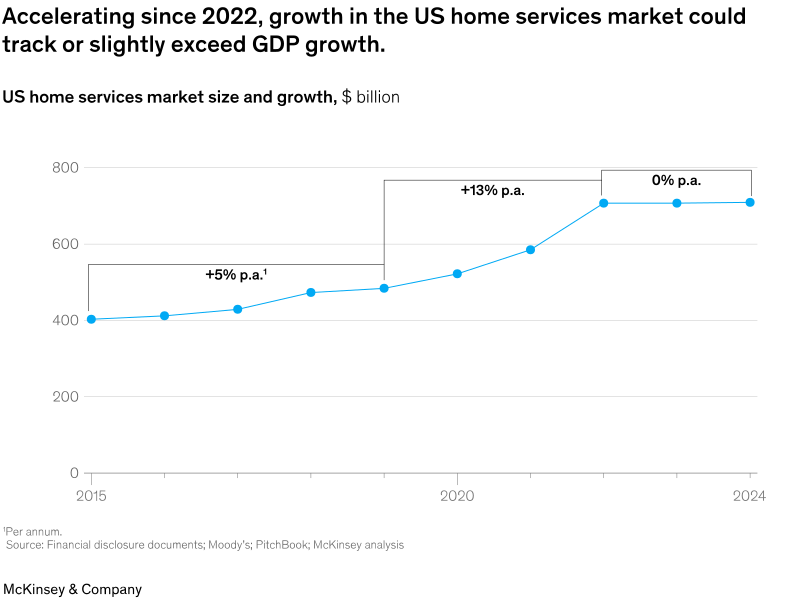
US spending on home services is approximately $700 billion and has demonstrated relatively stable growth over the past decade (Exhibit 1). The home services space experienced solid growth in the prepandemic years, with a CAGR of around 5 percent. The first years of the pandemic saw an uptick to 13 percent CAGR, but the market experienced a slowdown between 2022 and 2024 and remained mostly flat throughout the period. Growth is expected to pick back up to around 2 percent annually over the next few years, meaning growth could track or slightly exceed GDP growth.1
Strong market fundamentals, despite potential challenges
The US home services market has exhibited consistent growth in both market size and deal activity, as well as a track record of recession resilience in some subsectors.
Market growth
The home services industry comprises a number of subsectors of varying size, which are often categorized into four groups based on the criticality and frequency of those services. While the size and growth rate of market subsectors vary significantly, growth is relatively strong across the market (Exhibit 2). Factors driving this growth include increasing demand for home improvement and maintenance services, a rise in the number of existing homes, and the growing trend of outsourcing home services.2
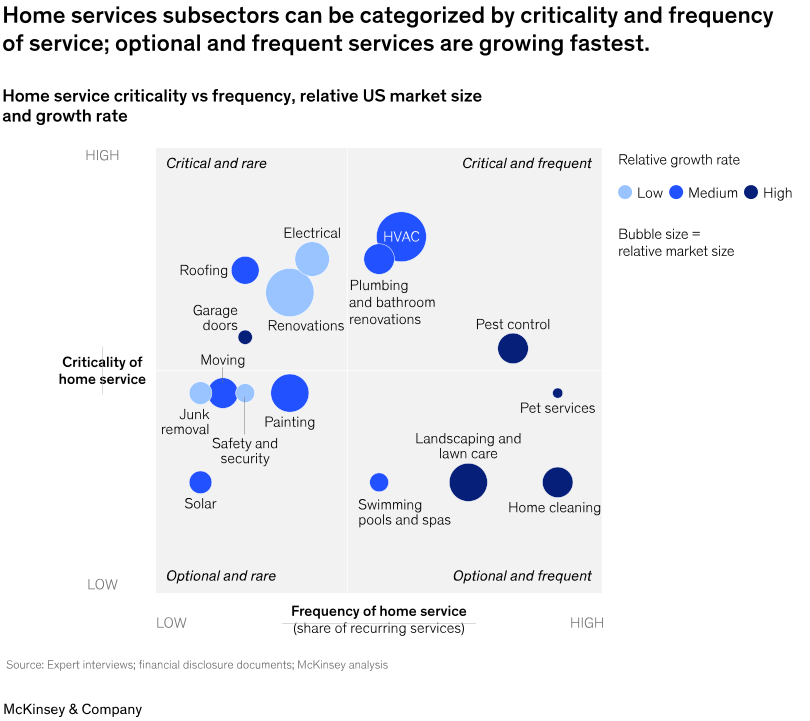
Growth has generally been fastest in the optional and frequent category, including for services such as landscaping and lawn care, home cleaning, and pet services.
In addition, deal activity has grown significantly faster in home services than in other consumer spaces. The sector’s share of deals increased from 2 percent in 2017 to 6 percent in 2022—a CAGR of 27 percent.3
Recession resilience
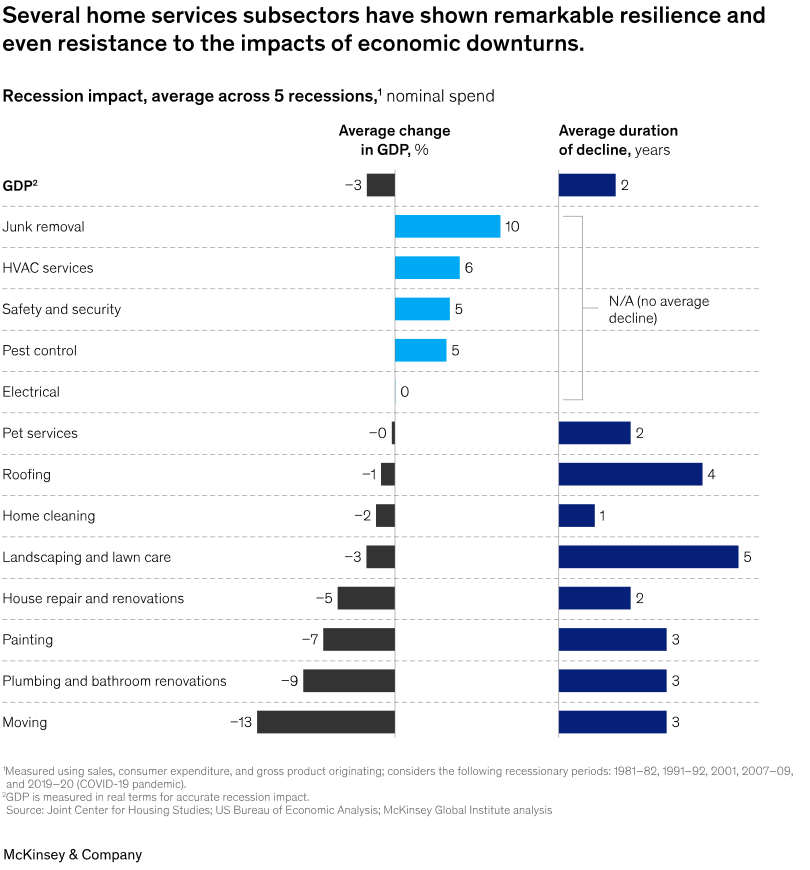
Certain subsectors within the home services market have shown a degree of recession resilience (Exhibit 3), making them more attractive for long-term investments. Services that are nondiscretionary or emergency-related, such as HVAC repairs and electrical, tend to maintain steady demand even during economic downturns.4 This resilience adds to the sector’s appeal, providing a stable revenue stream for investors.
Potential challenges
While there are substantial opportunities in the home services market, would-be investors should be aware of a few potential challenges and identify strategies to navigate them successfully.
Skilled-labor shortages. Individuals with specialized skills (such as HVAC and plumbing) are in high demand and short supply.5 However, in light of (agentic) AI, these roles become more attractive as people consider reskilling.6 Training and development programs can help build a skilled workforce and ensure high-quality service delivery.
Price sensitivity. Because consumer price sensitivity varies across subsectors, such as for optional or infrequent services, carefully managing pricing strategies is key to remaining competitive.
Regulatory and compliance issues. Licensing, safety standards, and proper documentation requirements can vary by region and service type. Knowing which regulations apply is critical to ensure compliance and avoid potential legal issues.
Strong value creation opportunities
Some growth opportunities apply across subsectors, while others will have more impact in specific subsectors.7
Measures to boost revenue and reduce costs
Coupled with the potential for rollup strategies and platform creation in the home services sector, these opportunities make the space particularly exciting.
In our experience, potential for outsize value creation is driven by several key levers; commercial strategies, operational improvements, and excellent customer service are key to boosting revenue.
- Commercial strategies can meaningfully boost revenue through stronger revenue growth management sales practices. Smarter, more dynamic pricing updates based on elasticity and market conditions can propel significant margin expansion. Implementing sales best practices—such as aligning incentives, providing effective training, and equipping the workforce with the right tools—can boost productivity and revenue growth. In addition, building a marketing engine that drives performance across the funnel and strengthens brand positioning can generate sustained long-term value.
- Effective scheduling, together with enhanced digital and analytics, can increase bookings by 10 to 20 percent.
- Customer satisfaction and an orientation toward high-quality service can improve customer retention and referrals by 10 to 20 percent and increase on-site upselling opportunities by 20 to 40 percent.
One leading national home services company, for example, implemented a 360-degree customer view powered by a machine learning model that leverages more than 50 features to identify churn indicators and generate actionable insights. These insights enabled customer care and retention teams to double call-center productivity, identify 65 percent of churners early for targeted preventive actions, and deliver an EBITDA uplift of around 15 percent.
In another example, a company’s cross-functional agile pod for rapid A/B testing in digital marketing and e-commerce designed a mobile-first purchase flow and applied a continuous test-and-learn approach, ultimately achieving a 75 percent increase in website conversion rate.
On the cost side, our experience suggests that optimizing operational and general and administrative (G&A) levers can result in considerable savings. These levers are also important for both owned and operated businesses and franchised systems, given the role branch-level economics play in accelerating scaling.
- Operational levers, such as standardized service levels and procurement optimization, can meaningfully reduce costs. Implementing standard service times and rolling out training programs can reduce the time to serve customers by 10 to 15 percent, for example, while consolidating suppliers and renegotiating contracts can save 5 to 10 percent on supply purchases.
- G&A levers also play a significant role in cost reduction. This includes making strategic make-versus-buy decisions, rightsizing the cost base, and optimizing finance and controlling practices. Outsourcing software development can reduce those costs by 10 to 15 percent, for example, while rightsizing executive compensation and reevaluating professional fees can save 15 to 20 percent of that spend. Additionally, overhauling financial disclosure documents and normalizing P&L statements can create more clarity and structure for franchisees, allowing for better coaching and support from the corporate level.
One company, for example, realized $50 million in in-year savings and $150 million in run-rate savings by applying an accelerated, two-pronged sourcing approach. The first prong, an initial diagnostic, identified immediate opportunities across demand reduction, vendor negotiations, and payment terms. The second prong, implementation, lasted 12 weeks and included direct negotiations with the top ten to 15 vendors, the launch of more than ten RFPs in multiple categories, improvements to spend-management processes, and procurement capabilities enhancements. As a result of this approach, an additional $200 million in incremental run-rate savings was identified as available for capture in the near term.
Consolidation opportunities
Many subsectors of the home services market are highly fragmented, with numerous small and local service providers (Exhibit 4).8 For example, independents and local players have a combined market share of more than 80 percent for both critical and rare services and optional and rare services.
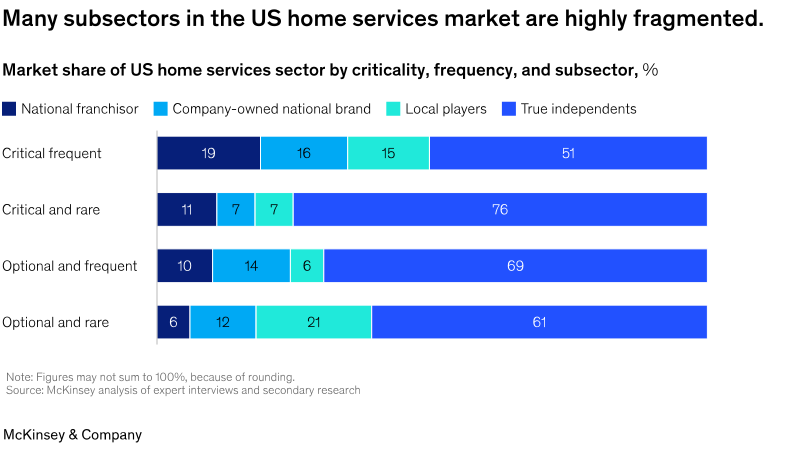
This fragmentation presents untapped opportunities for rollups and synergies through consolidation. In particular, investors can realize value through economies of scale in purchasing, labor, technology, and centralized services. And in segments where the average company is a small business, players with strong financial backing and management capabilities can outcompete their local peers and capture above-market organic growth.
For example, the plumbing repairs market may offer significant opportunities for consolidation—the market has numerous small and local service providers, and 70 percent of market share is held by independent companies. By consolidating, players could realize substantial economies of scale.9 The market is also expected to grow significantly, driven by increasing demand for smart plumbing technologies and sustainable products and by the need for regular maintenance and repairs.10
New growth opportunities
Trends in the home services market—including digitalization, the rise of e-commerce, and the growth of multibrand platforms—are reducing customer frictions and creating new value pools.
Digitalization is enabling improved business operations. The home services market is undergoing a digital transformation, with companies increasingly adopting digital tools and technologies to enhance service delivery and customer experience. Digital simulations, AI-enabled troubleshooting, and scheduling or inventory optimization are just some of the innovations showing potential to drive efficiency and productivity in the sector. Looking ahead, the value proposition of larger digitally-enabled companies could become even stronger, such as through AI visualization tools to increase sales and AI takeoff tools to optimize purchasing efficiency. In comparison, smaller peers that cannot implement and train on such tools could lag behind.
E-commerce and omnichannel strategies boost lead generation and conversion. E-commerce and omnichannel strategies are gaining traction in the home services market, with companies leveraging online channels—including online platforms and mobile applications—to reach a broader audience and provide a seamless customer experience. Potential customers can now find home services providers much more easily, and they can benefit from integrated online booking systems, virtual consultations, and real-time updates on service status.
Multibrand and multi-subsector platforms are opening up new opportunities. Platform-based players are enjoying the most advanced level of value creation. In our experience so far, most synergies have come from G&A and franchising or development synergies; nonetheless, growing digital and analytics capabilities are showing strong potential to enable cross-selling, deepen engagement, and unlock scalable growth through better execution and increased share of wallet.
Overall, the US home services market exhibits healthy growth rates, recession-resilient pockets, and substantial value creation opportunities. Investors that look for strategic consolidation opportunities, take advantage of favorable market trends, and leverage appropriate commercial, operational, and G&A strategies can create significant value from their investments.