In 2021 and 2022, the world’s economic recovery after the COVID-19 pandemic coincided with sharp cuts in pipeline gas deliveries from Russia to Europe, sending spot prices for liquefied natural gas (LNG) surging.1 The LNG market evolved from an era of undersupply and elevated prices to a more balanced phase in 2023 and 2024 as additional production—particularly from the United States—became available and demand softened in key regions.2 For instance, in Europe, milder winters and efforts to curb natural gas consumption led to declining gas imports.3 With supply normalizing and volatility easing, a new wave of capacity is now expected to enter the market from Qatar and the United States, and shifting geopolitical and trade conditions are set to remake global energy flows.
About the survey
McKinsey’s Liquefied Natural Gas (LNG) Buyers Survey examines the attitudes and preferences of LNG buyers against the backdrop of the global energy market (exhibit). This year’s survey, the sixth edition since 2016, was conducted online and by interview in July 2025. It includes 41 respondents representing oil and gas companies, integrated energy companies, trading houses, and power and gas utility companies in 17 countries across the Americas, Asia, and Europe. The 30-question survey explores key factors that influence LNG buyers’ decisions and captures sentiment on a range of issues related to natural gas. These include drivers of demand, strategies for risk management, criteria for supplier selection, and preferences in contracts.
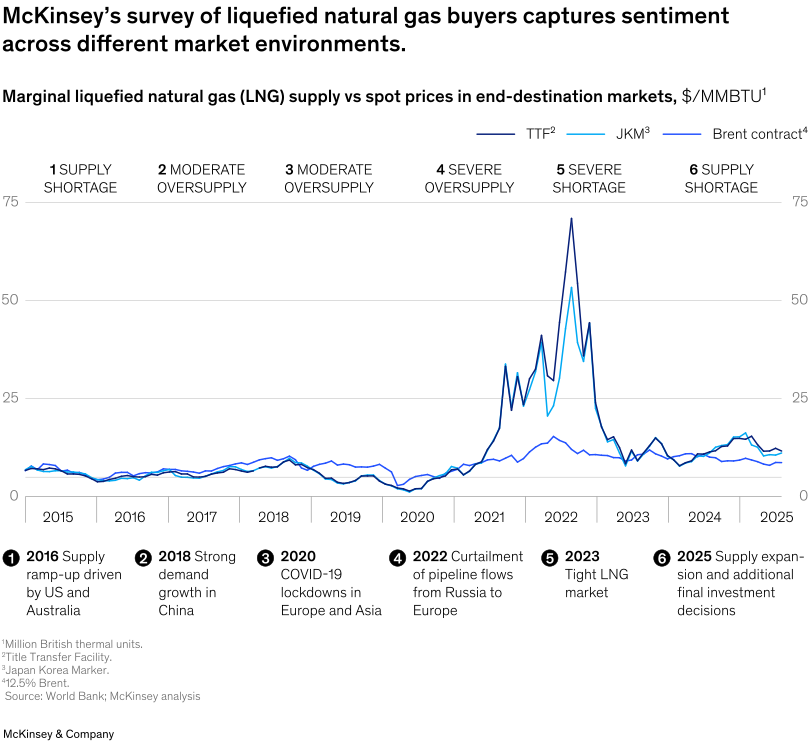
To learn how LNG buyers are reacting to these moves, McKinsey surveyed 41 buyers across important global markets in the biennial LNG Buyers’ Survey in July 2025 (see sidebar, “About the survey”). The buyers’ responses reveal their perspectives on future gas demand, risk management, and market opportunities. In a global energy market facing potential price volatility, supply chain challenges, and considerable uncertainty, the survey finds that LNG buyers are prioritizing flexibility, including diversifying supply and varying contract terms. This article examines recent trends in buyers’ procurement strategies and identifies opportunities for suppliers to proactively address LNG buyers’ evolving priorities and needs.
A new wave of supply could stabilize prices and boost latent demand
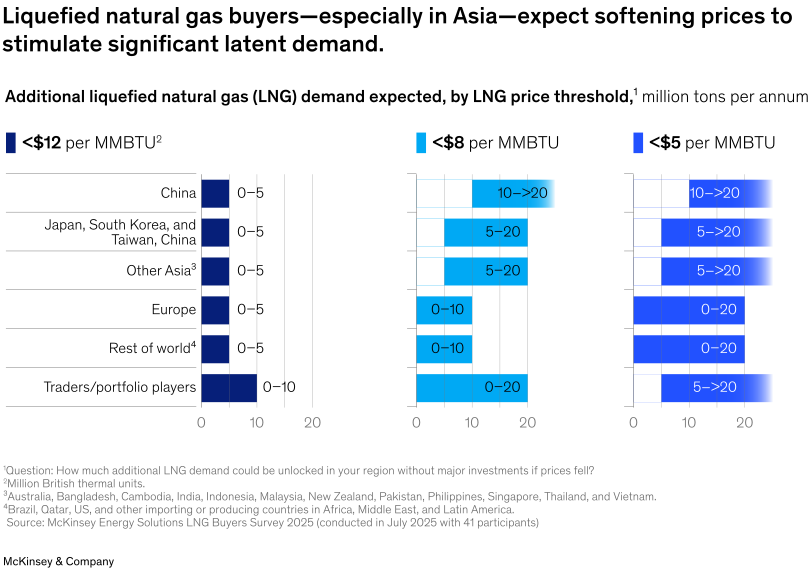
Global LNG demand is expected to continue growing, particularly in Asia, spurred by ongoing regional economic growth and urbanization, the survey finds. At the same time, European buyers anticipate a gradual decline in LNG demand through at least 2040 as renewable infrastructure expands across the region, displacing gas-fired-energy production. As additional gas capacity comes online, especially in North America and the Middle East, LNG buyers around the world expect that the tightness of the supply market will ease. About 60 percent of respondents expect prices to stabilize at $7 to $10 per one million British thermal units (MMBTU) by 2030. At these prices, latent demand would likely materialize, especially in Asia. Chinese buyers—which demonstrate the greatest price sensitivity—report that they would switch from coal to LNG when the prices are equal, at around $8 per MMBTU.
Buyers in other major Asian markets, including Japan and South Korea, also anticipate a potential increase in demand in response to lower prices, although the wider ranges of volumes that they report suggest greater uncertainty. Meanwhile, buyers in the rest of the world, including in Europe, believe that LNG demand will be less sensitive to lower prices. In Europe, this probably reflects buyers’ expectations of declines in long-term regional LNG demand.
Apart from regional dynamics, LNG traders and portfolio players expect substantial latent demand, which likely reflects their global view emphasizing long-term growth of LNG and diversified LNG supply.
Supply diversification is the primary lever to derisk geopolitics
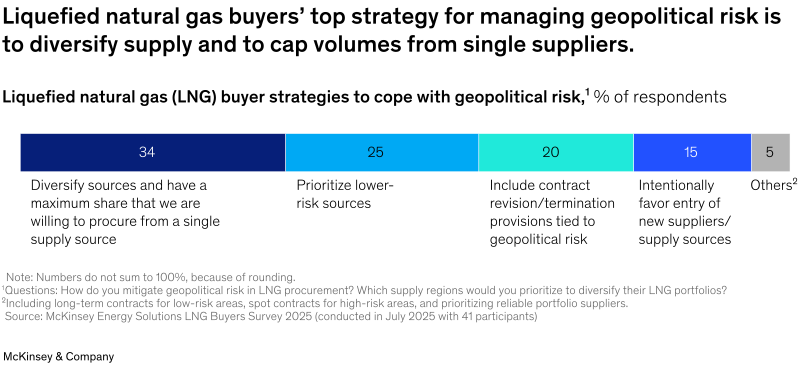
As geopolitical pressures reshape global energy flows, LNG buyers report focusing on diversifying supply sources, including capping volumes from any single supplier, as their top strategy for mitigating risk. Buyers also report a marginal preference for using lower-risk suppliers, such as those located in resource-rich countries with stable shipping routes. Notably, European buyers express a stronger preference for this strategy than others do: 30 percent prioritize lower-risk sources, compared with the global average of 25 percent.
One-fifth of global LNG buyers prioritize LNG contracts that contain provisions for revising or terminating LNG agreements, consistent with results from 2023. European buyers show a higher preference for such provisions when compared with Chinese peers. In addition, while only 15 percent of LNG buyers address risk by choosing new suppliers, Chinese buyers show a higher preference for this approach. Of those surveyed, only Asian buyers report using additional strategies for managing geopolitical risk, including sourcing from trusted portfolio players and reserving higher-risk suppliers for a limited number of spot purchases.
Buyers seek to secure additional contracts in the next two to three years
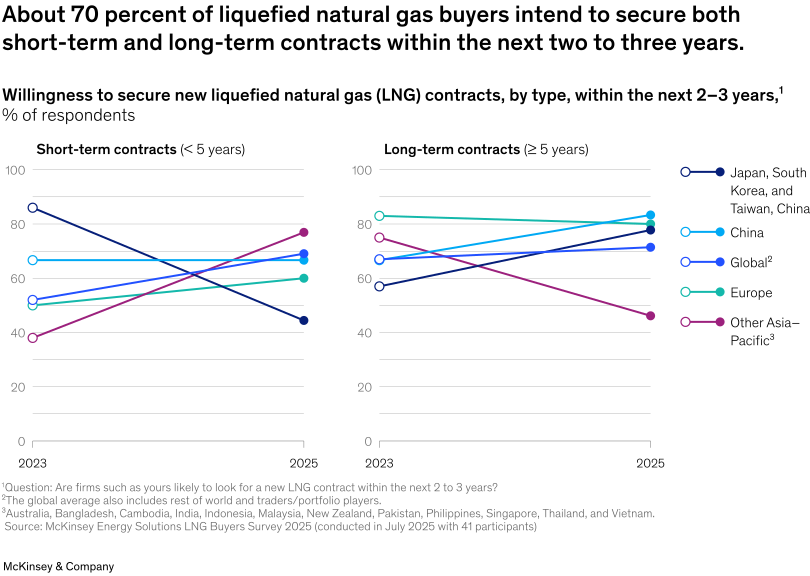
About 70 percent of global LNG buyers intend to secure both short- and long-term contracts within the next two to three years. While the global share of buyers considering long-term contracts is consistent with the 2023 findings, buyers’ willingness to secure short-term contracts has increased nearly 20 percentage points since then. Buyers in some areas of the Asia–Pacific region show a substantial interest in short-term contracts: 77 percent of respondents there intend to pursue this option, an increase of nearly 40 percentage points since 2023.
At 83 percent of respondents, Chinese buyers demonstrate the strongest intention to secure long-term contracts, a 16-percentage-point increase from two years ago. Other major importing markets in Asia, such as Japan and South Korea, also strongly favor long-term contracts, at 78 percent. This marks a flip from 2023, when 86 percent of these respondents preferred short-term contracts and 57 percent were considering long-term ones. European buyers have maintained a steady preference for long-term contracts since 2023.
Flexibility leads the list of contract priorities
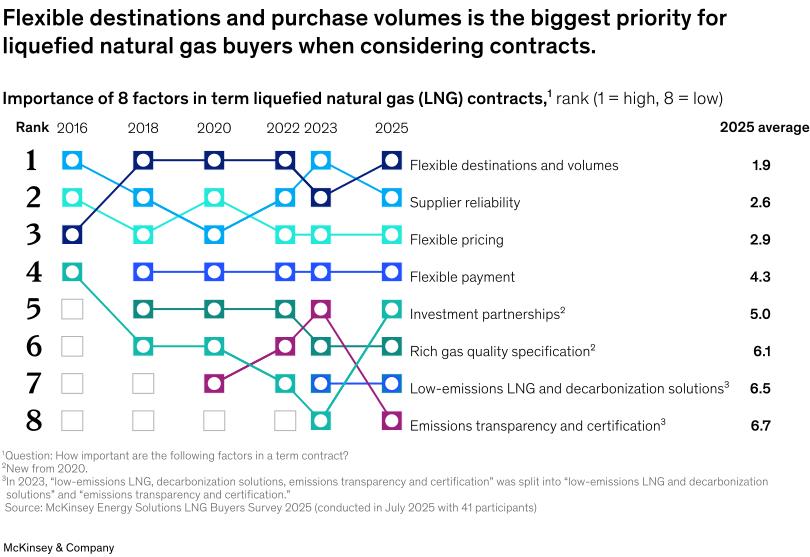
LNG buyers are increasingly prioritizing flexibility to navigate an uncertain market; flexible destinations and purchase volumes are their top priorities when evaluating contracts. The distribution of responses is similar across regions, with buyers generally assigning consistent rankings. The exception is China, where LNG buyers identify pricing flexibility as the number one priority and place greater emphasis on flexible payment terms compared with buyers in other regions. Asian buyers show more interest than their peers in investment partnership opportunities (such as joint ventures to develop new infrastructure) and in LNG that’s specified as rich and high quality and thus has an elevated heating value to enable enhanced energy delivery.
In 2025, European LNG buyers place less emphasis on sustainability factors—including low-emission LNG; decarbonization solutions, such as using clean energy during gas production; transparency with emission data; and certified low-emission gas—compared with their priorities two years earlier. Their preference for investment partnerships, however, has increased since 2023. This could create opportunities for suppliers to engage in joint ventures and equity partnerships with buyers across the LNG value chain to reinforce long-term relationships and stable supply.
Results from the 2025 LNG Buyers’ Survey highlight a pivotal shift in global procurement strategies that’s driven by an increasingly balanced market, evolving geopolitical dynamics, and regional differences in demand. Buyers are responding to these changes by prioritizing flexibility in contract terms and supply sources, actively managing risk through diversification, and adopting a mix of short- and long-term agreements. As new supply enters the market and prices stabilize, these adaptive approaches position LNG buyers to capitalize on emerging opportunities while remaining resilient amid ongoing uncertainty in the global energy landscape. For suppliers’ part, those that tailor their offerings to buyers’ needs are in the best position to establish strategic partnerships and achieve long-term growth.