Critical minerals1 have become the strategic foundation of the next industrial era. Elements such as lithium and copper, as well as rare earth elements (REEs), are increasingly seen as necessities for national security because they are essential to defense supply chains, AI, energy systems, and advanced manufacturing.
Africa has a central role to play in this emerging minerals economy. The continent holds more than a quarter of the world’s known reserves of critical minerals, including some of the highest-grade deposits of copper, manganese, and bauxite, along with major lithium deposits.2 What’s more, Africa’s importance in international supply chain strategies is increasing as rising global demand for critical minerals collides with a tightening supply. McKinsey’s Global Materials Perspective 2025 estimates demand for energy transition materials will grow at a CAGR of 4.5 percent through 2035.3 At the same time, the supply of several precious metals and critical materials, such as REEs, nickel, and manganese, faces persistent constraints around ore quality, processing, and infrastructure.4 These pressures are likely to intensify as geopolitical conflicts and increased resource nationalism continue to disrupt mineral flows and investor sentiment.5
However, a web of structural challenges in Africa’s mining sector—across infrastructure, logistics, and operating environments—is eroding the continent’s geological advantage. African mines are generally more costly than global peers with the same ore quality due to inefficiencies in mining and processing.6
Three structural interventions could help Africa convert its minerals wealth into sustained competitive advantage: a coordinated clustering approach, stronger capabilities in capital-project execution and operational excellence, and the deployment of technology innovation to accelerate development. Our research shows efforts in these areas could unlock up to $40 billion in incremental value across the mining ecosystem, increasing the continent’s GDP by 4 percent and creating more than three million jobs by 2035 (see sidebar, “About the analysis”). Clustering mining operations, in particular, could fundamentally alter project economics by spreading infrastructure costs, reducing risk, and creating investible regional ecosystems that ensure Africa can take its place as a mining leader on the strategic minerals frontier.
Africa’s opportunity to facilitate the energy and AI transitions
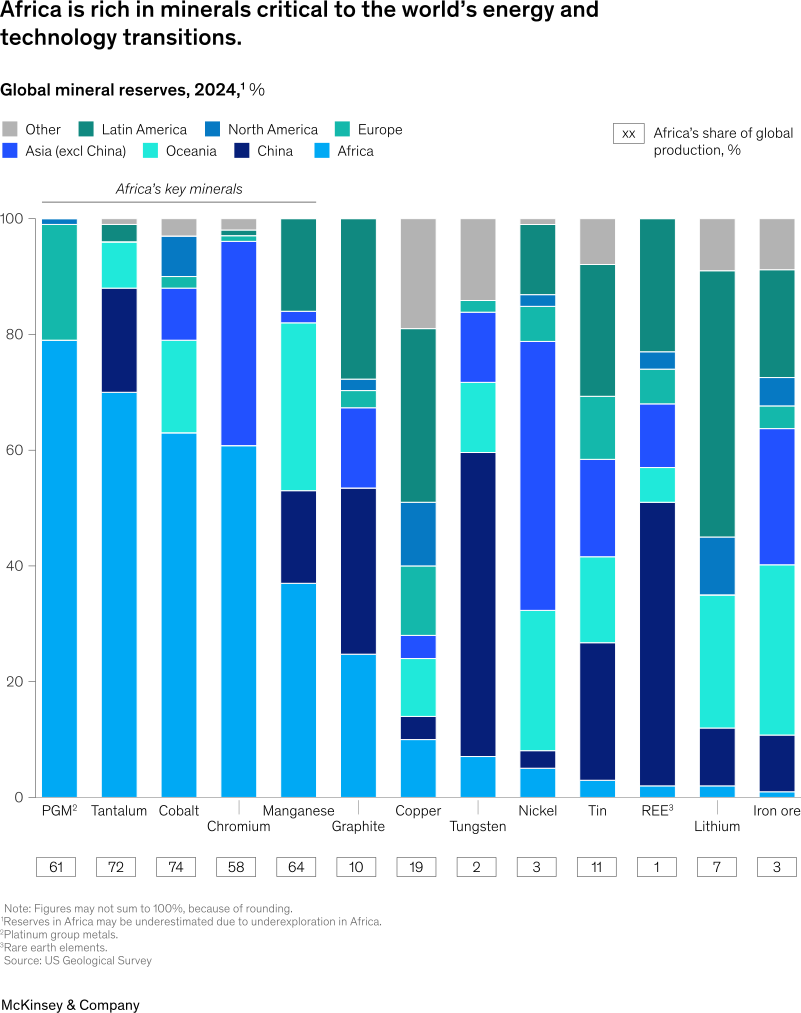
Africa’s mineral endowment is both exceptionally diverse and globally significant. More than 60 percent of the world’s platinum group metals, tantalum, cobalt, and chromium reserves are located in Africa, with significant deposits of manganese (37 percent of the global total), graphite (25 percent), and copper (10 percent) across the continent (Exhibit 1).
The growing global demand for these minerals, needed for the world’s energy and technology transitions, is driving unprecedented growth in African production capacity, especially in copper, cobalt, lithium, and graphite. At the same time, there is a trend toward mineral sovereignty on the continent. The G20 Critical Minerals Framework, adopted at the 2025 G20 Johannesburg Summit, reframes the global minerals trade as a driver of inclusive growth and sustainable development, securing supply chains against geopolitical risks and shifting developing nations from raw exports to local value-addition.7
The Framework recognizes that Africa’s high-grade deposits of critical minerals are one of the continent’s most valuable assets. By yielding greater value per metric ton mined, higher-grade deposits are a natural hedge against logistics and infrastructure costs. Additionally, our research shows that Africa’s high-grade feedstocks align with global decarbonization ambitions. For example, high-grade iron ore with 65 percent iron content, such as that of the Simandou project in Guinea, which is the world’s largest untapped reserve of high-grade iron ore, has the potential to reduce CO₂ emissions from ironmaking by 5 percent per metric ton (compared with ore with 62 percent iron content). This efficiency is achieved because the process requires fewer coal-based inputs.8 However, most African countries and mining operations have some way to go before they can capitalize on these advantages.
Why Africa’s geological advantage is not translating into mining leadership
Despite its significant and high-quality deposits, early-stage mine development in Africa lags behind the rest of the world, including regions such as Australia, Chile, and the United States (Exhibit 2). Annual exploration spending in Africa over the past five years, at $1.2 billion, is around half of that in Australia and Canada, at $2.0 billion and $2.2 billion, respectively. This is true despite the fact that Africa is larger than China, Europe, and the United States combined.9 This discrepancy could explain the comparatively low percentage of some mineral deposits on the continent, notably REE (at 2 percent of global totals), which may reflect underexploration rather than a lack of deposits.10
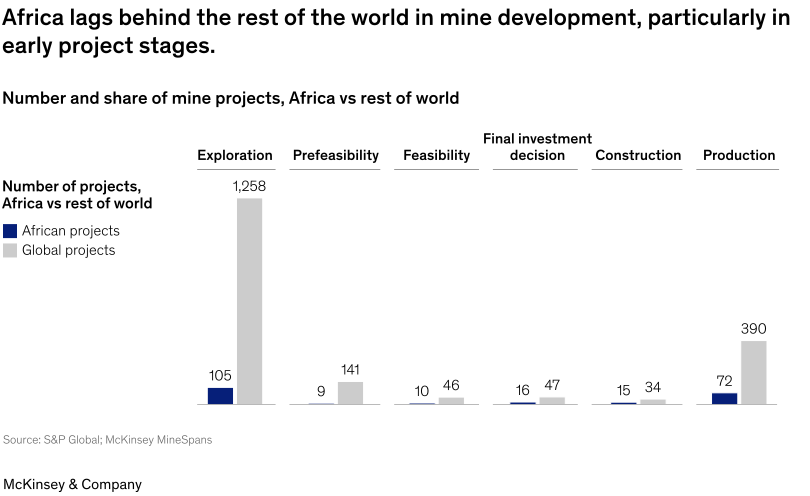
African projects are often stalled by high country risk, legal and jurisdictional uncertainty, permitting delays, and community conflict. For example, West Africa’s Simandou took three decades to move from exploration to production in 2025 despite its value as the world’s largest untapped high-grade ore deposit, in part because of political changes and financing hurdles.11 At full production, the project could deliver 120 million metric tons of iron ore per year.12 Similarly, the Kalagadi manganese mine in South Africa was slowed by reluctance in debt markets, while Tanzania’s Mahenge and Nachu graphite mines stalled after new legislation in 2017, which prompted study changes and deterred investors.13
Infrastructure underinvestment is also a key constraint in African mining project development. In many cases, the necessary infrastructure—including roads, rail, and power—is either limited or unreliable, driving up costs and project risk. High power costs and grid instability have been known to halt mining production in mineral-rich nations, while the rail network in sub-Saharan Africa—the bulk of which was built at the end of the 19th century and the first third of the 20th century—is constrained, with very few sections electrified outside of South Africa.14 In addition, nearly 40 percent of Africa’s key mineral producers are landlocked, which means capacity is limited by long, costly hauls to port on single-track rail lines.15 Technical uncertainties related to water use, waste management, and the specific technology needed to extract minerals add another layer of complexity.16
Africa’s mining industry also suffers from a productivity gap compared with other regions.17 Many advanced economies have typically adopted capital-intensive, mechanized mining to offset high labor costs and enjoy access to strong skill bases and readily available capital. African mining systems, by contrast, operate with comparatively lower labor costs, high cost of capital, and regulatory and legal frameworks that have historically supported more labor-intensive operating models.18 While productivity will likely improve as older mines are retired or modernized and new projects ramp up, limited technology adoption and digitalization, as well as a shortage of skilled talent, are likely to remain key challenges for the sector.
As a result of these factors, Africa’s natural geological advantage is being eroded. Less than 10 percent of the continent’s $9 billion critical-mineral-projects pipeline has secured financing or progressed to the construction and feasibility stages, according to MineSpans data, reflecting investor caution. What investment there is tends to be concentrated in a small number of large, tier-one assets that can absorb risk and deliver scale. By contrast, midtier deposits—despite often having attractive grade quality—remain largely undeveloped because they fall below the risk-adjusted thresholds required for investment.
The unexpected outcome of this structurally skewed development model, in which capital is flowing to a narrow set of relatively safe mega-assets while many economically viable resources remain in the ground, is that in the later stages of mine development, African mines have a higher feasibility than many of their global counterparts (see Exhibit 2).
Powering up Africa’s mining value chain
To capture the full potential of the region’s abundant, high-quality ore grades, African stakeholders would need to address these structural issues in exploration, infrastructure, and operational execution to derisk operations and scale production. Three actions can be taken today to help mining become more competitive: clustering mining assets, prioritizing capital and operational efficiencies, and adopting innovative technologies to accelerate development.
Clustering mining assets can transform project economics
Mining operations in geographic proximity can be “clustered” to unlock value and create investible mining ecosystems, particularly in areas with high infrastructure challenges and environmental sensitivities (Exhibit 3). Our analysis finds that integrating investments and sharing infrastructure—such as ports and processing plants—could improve ore production volumes by up to 5 percent and reduce the unit cost of production by about 20 percent. Four key critical-mineral clusters in southern Africa could unlock between $15 billion and $20 billion in revenue and create about 1.85 million jobs in the medium term, while West African bauxite and iron ore clusters could add another $17 billion and create 1.3 million jobs across Guinea, Liberia, and Sierra Leone.
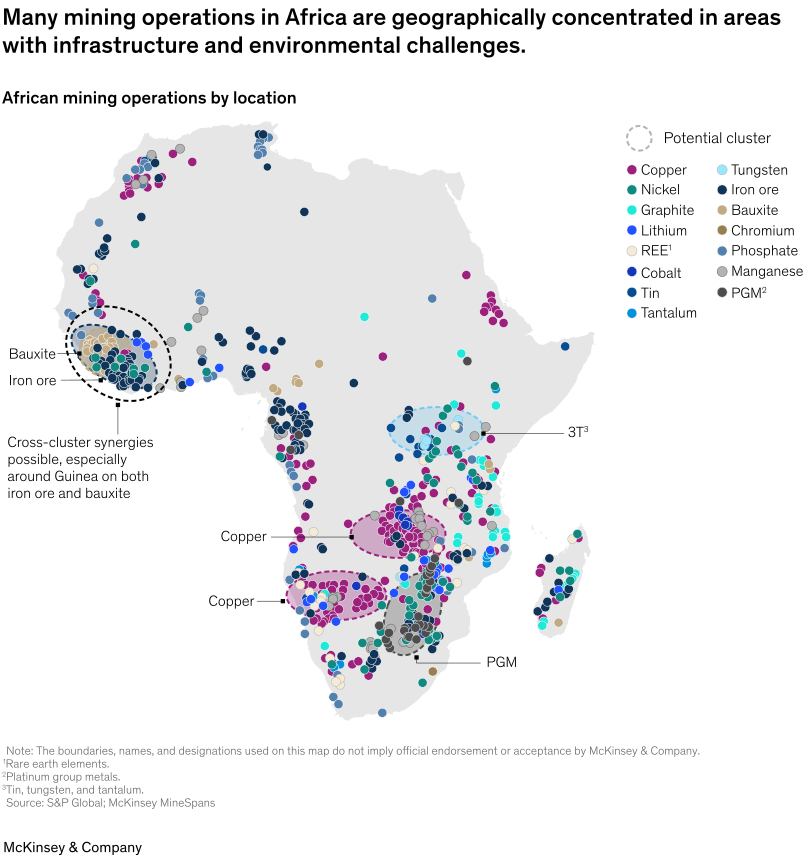
Clusters spread risk, making clustered projects significantly more attractive to investors than isolated ventures.19 They can also help drive better purchase agreements with anchor customers, helping to secure future output; spark in-country value addition, such as the establishment of industrial parks to improve the mining ecosystem; and boost skills development through pooled resources in training programs. Manufacturing plants with shared locations can create additional value through the development of downstream production capacity or parts and equipment used (Exhibit 4).
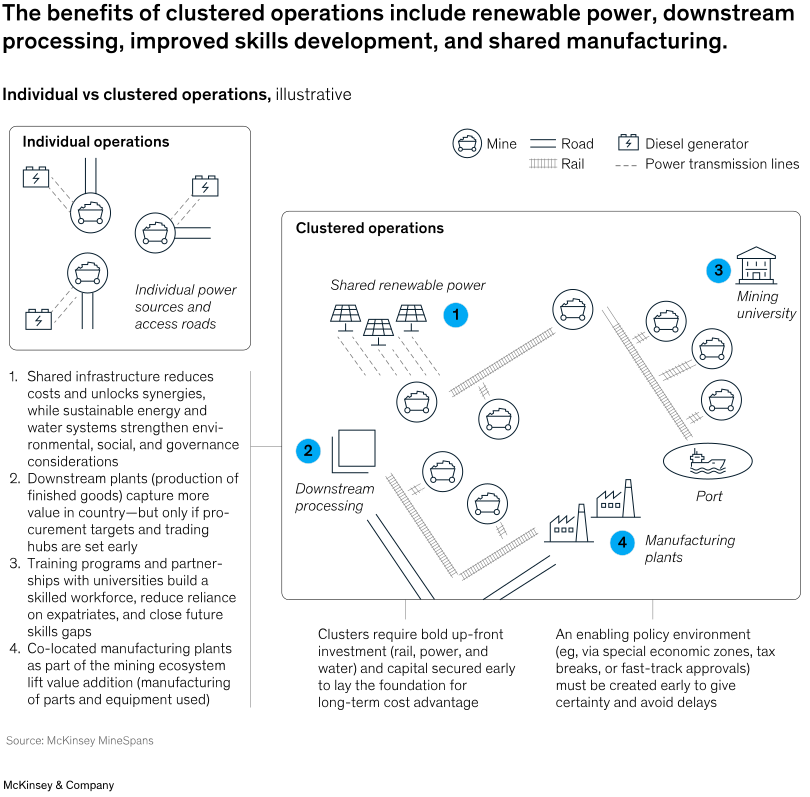
Additionally, our analysis finds that mining clusters can help address environmental, social, and governance challenges at a systemic level, solving issues such as power, water, and land use more effectively than isolated projects. These hubs enable shared decarbonization assets and coordinated biodiversity management, such as using unified data to drive water efficiency. They can also pool resources for community utilities and local job markets, reducing regional tensions through centralized communication and ultimately strengthening governance by improving accountability, risk management, and transparency across all stakeholders.
There are several examples on the continent that demonstrate the potential of a clustering approach. The infrastructure-based cluster created through the Lobito Corridor, which connects mineral-rich Democratic Republic of the Congo (DRC) and Zambia to the Atlantic port of Lobito in Angola, is providing a foundation for core infrastructure improvements in the copper value chain, with the potential to create access to mineral deposits along the railway line.20
The Badirammogo Water User Association in South Africa similarly enables multiple mines and government or municipal users to operate as a single regional cluster for bulk water planning, funding, delivery, and operations. The project has been shown to aggregate demand, align incentives via shared governance and co-funding, improve bankability by leveraging creditworthy industrial offtakes, and help ensure end-to-end execution. Importantly, it also includes community potable-water supply, strengthening the relationships between stakeholders and communities as well as promoting long-term regional stability.21
To establish effective mining clusters, two things are critical. First, up-front investment is required, typically entailing a combination of sovereign guarantees, such as foreign direct investment and export credit agreements, along with offtake agreements. Long-term investments can be prioritized around critical elements of mineral corridors, such as rail and power, and anchor investor consortiums can help pool capital. Second, an enabling policy environment that stretches across national and regulatory boundaries is needed to reduce uncertainty and transaction costs and help make it commercially and socially feasible to develop, operate, and close a mine while meeting environmental and social safeguards.
Capital and operational excellence can help improve cost position and increase cash flows
A second opportunity for African mining lies in streamlining operating costs and optimizing major investments so that mines can reach profitability faster, improve their competitive positioning, and take their place in key global supply chains (Exhibit 5).
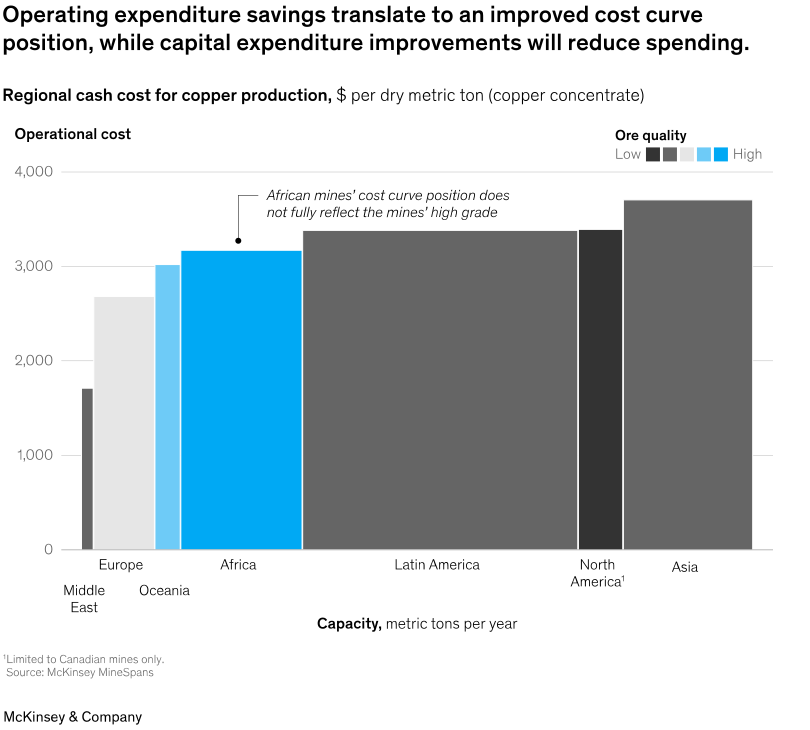
Our analysis, based on data from McKinsey MineLens, shows that optimizing project scope—for instance, through right-sizing the starter project, phasing development, or prioritizing shallower or higher-grade ore—can reduce capital expenditures by up to 15 percent. Additionally, improving planning can shorten timelines by up to a year, and maximizing life cycle cash flow can reduce operational expenditures by up to 20 percent, with a 5 percent revenue uplift possible from enhanced mineral recovery.
Through the pursuit of operational and capital expenditure excellence, the Kamoa-Kakula Copper Complex in the DRC was able to exceed production targets, achieving more than 100 metric kilotons of recoverable copper in concentrate during phase one of operations.22 Since then, it has maintained momentum by deploying repeatable expansion modules, with phase three reaching commercial production and bringing total recoverable copper production to approximately 450 metric kilotons, reflecting a delivery model that prioritizes scaling rather than reinvention. While the mine’s high ore grades contributed to improving early cash generation and helped derisk investments, a credible joint venture structure and the proactive securing of reliable, lower-carbon power via investment in hydro-generation have played a key role in its success.
Innovative mining technologies can accelerate development
Technology may be the fastest lever available to African mining operators looking to improve productivity without waiting for large-scale infrastructure investment. McKinsey MineLens data shows that technology innovation can help increase throughput by 12 to 22 percent and reduce operational expenditures by 8 to 13 percent.
Analytics and AI already play a major role in African mining. Exploration, extraction, and operational-efficiency exercises incorporate large volumes of data from sensor historians, failure modes and effects analysis databases, engineering reports, work orders, and maintenance logs.23 Agentic AI, enabled by powerful large language models, can add a layer of intelligence to this to inform better decision-making and boost capabilities in the sector. Previous McKinsey research estimates that at-scale deployment of gen AI could add between $5.3 billion and $8.5 billion of economic value to Africa’s mining sector, with opportunities across the value chain—from safety and environmental awareness through risk mitigation and compliance monitoring.24
For example, the use of advanced geophysical methods can refine drill targeting, helping to speed up exploration and reduce costs, while applying machine learning and AI to geological data sets could increase the hit rate by 15 to 30 percent.25 KoBold Metals recently secured $537 million to develop a significant copper deposit in Zambia, which it identified through the use of AI.26
Additionally, deploying AI-enabled multipurpose rigs designed to perform multiple types of drilling techniques using a single machine without manual intervention can reduce costs per drilled meter by 15 to 30 percent and lower risk through real-time downhole logging.27
Smart plants that collect real-time data can also optimize production and predict maintenance issues before they occur. Across large-scale mining operations, autonomous equipment, centralized operations centers, and AI have been shown to consistently increase overall equipment effectiveness (OEE) and recovery while reducing labor intensity and unplanned downtime.28 Increasing OEE remains a key opportunity in African mining, where the average availability and utilization of equipment lag behind global peers by five to six percentage points and five to nine percentage points, respectively (Exhibit 6). In surface mines, load and haul activities can account for up to 60 percent of total operating costs, making OEE a key metric to assess performance by capturing losses across availability, utilization, and operating tempo.29
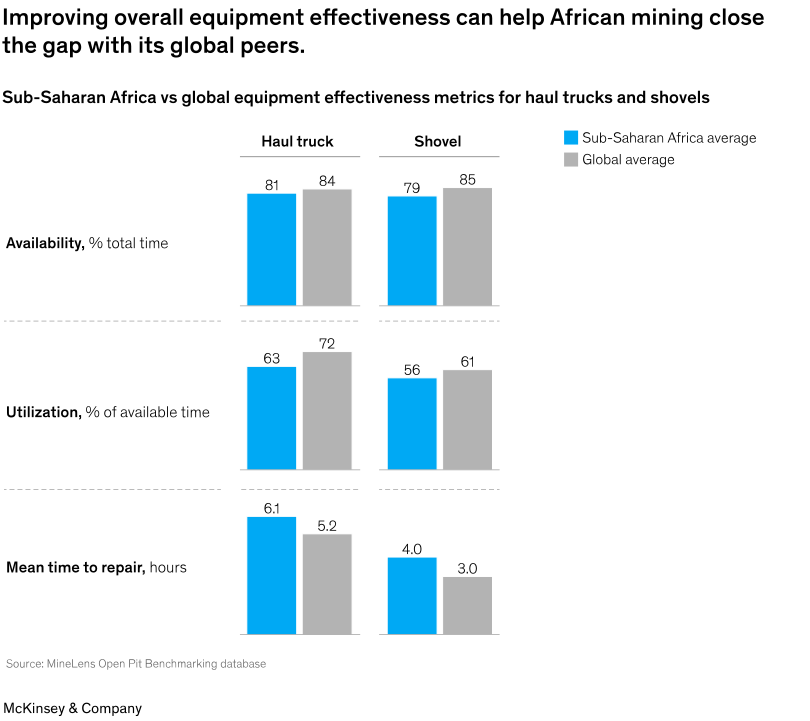
In clustered mining environments, productivity gains through technology can be compounded because smart plants and other technologies can serve as digital backbones, enabling multiple operations to function as a single system. For example, shared condition-monitoring platforms, standardized control logic, and centralized remote operations can enable pooled maintenance, faster failure learning, and consistent operating practices across sites, supporting higher reliability and lower unit costs.
In an increasingly volatile world, Africa’s mining sector stands at an inflection point. The continent has the resources that the world needs, but the question remains whether it can convert its geological advantage into investable, competitive mining ecosystems. The industry’s future will likely be shaped by its ability to navigate key constraints, including gaps in infrastructure, skills, and governance. By making strategic plays now, notably developing clusters, enhancing operational excellence, and deploying smart technology, stakeholders—from mining companies and investors to governments and regulators—can build a resilient, competitive, and globally significant mining sector that meets rising demand and builds African economies and their people over the long term.