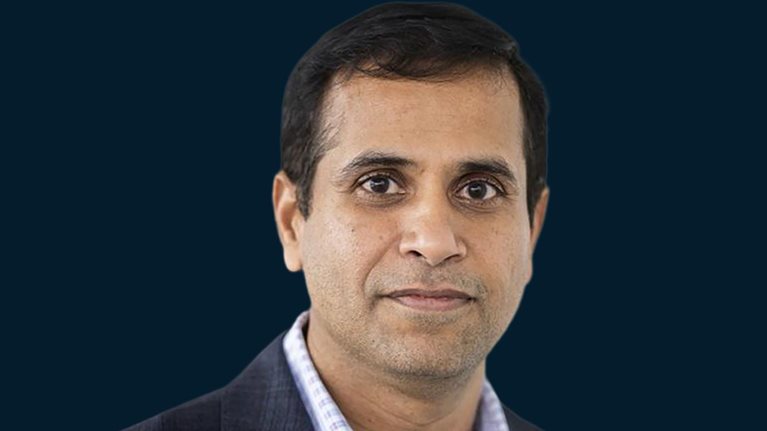
In this episode of Eureka!, McKinsey’s podcast on innovation in life sciences, host Navraj Nagra and McKinsey partner Yigit Yorulmaz speak with Dr. Alex Condoleon, chief medical affairs officer for global medical engagement and impact at Pfizer. Condoleon, a physician executive who has led medical, innovation, and digital health efforts across Australia, China, Europe, and the United States, argues that medical affairs’ longstanding ceiling has lifted and that the function can now be a genuine strategic partner in life sciences. He discusses what it takes to bring the right evidence to the right clinicians at the right moment, how to measure medical affairs’ impact beyond commercial metrics, and what patient-first looks like at a global scale across a wide portfolio of disease areas. An edited version of their conversation follows.
A career built anticipating the industry’s next move
Navraj Nagra: You’ve had a distinctive journey into medical affairs, including leadership roles spanning medical, innovation, and digital healthcare. What were the pivotal moments that shaped your career direction, and what ultimately pulled you into this role at Pfizer?
Alex Condoleon: Looking back at the career trajectory I’ve been on, I’ve always believed that if you want to impact global health in a meaningful way, you need to get a step ahead of where the system is already going, not follow it. That has guided each of my career moves.
I started in the industry in Australia and moved to China. That wasn’t because I had clarity on what China would become; it was because I had a conviction that China would play a significant role in healthcare. Fast-forward to today, and China’s ambition is becoming clear in biotech and in AI, and that shift is going to impact global health.
From there, I moved to Europe, into my first dedicated role focused on consumer healthcare rather than the prescription business. That was me seeking to understand how patients were starting to take control of their health and what that could mean. In that role, almost a decade ago, I was seeing early direct-to-patient models. I remember meeting the team at what today we call Ro.com when they were in their infancy, and yet there was something about what they were building toward that I thought was going to matter. Fast-forward to today and we see platforms like Hims & Hers and Ro.com playing a dominant role in how people choose to access glucagon-like peptide-1 (GLP-1) drugs in the United States.
My next pivot was moving to the United States, focused on enterprise digital transformation in medical affairs, and later building out a digital healthcare franchise. Again, it’s a similar pattern: investing ahead of a change I believed was coming, so I could be ready for the moment. I think that moment is the one we’re living through now, a moment of convergence. Many global powers are influencing what the healthcare landscape looks like; digital and AI are rising in healthcare delivery; and all of that is pushing the trend of patient empowerment and patient-guided care. When you see that kind of seismic opportunity come together, it’s great to be in an organization like Pfizer, which seeks to do bold things, because being bold in healthcare is your way of staying relevant and achieving leadership.
I’ve been very fortunate to come into a position focused on the role of data, analytics, and AI in optimizing how we think about medicine, science, and value, and how we communicate it and bring it to the forefront. I’m hopeful those things make a meaningful difference to moving healthcare forward.
Why the ceiling on medical affairs is gone
Yigit Yorulmaz: Your remit in medical affairs involves overseeing a high-caliber global platform focused on medical engagement and impact. How does this, and your past experience, help you reimagine what medical affairs can look like? What excites you about building and leading a function that doesn’t exist at any scale in many medical affairs organizations?
Alex Condoleon: I’m excited by the role I get to do every day. Part of the reason is that I’d reached a point where I genuinely felt medical affairs had hit a ceiling. What energizes me today is that I’m more convinced than ever that ceiling is gone, and that medical affairs has the potential to be a true strategic partner in life sciences. We’re in the process, as a function, of stepping into that role, and I think now is the moment.
There are a few reasons for that belief. It starts with how healthcare systems, and the experience of healthcare professionals and patients engaging with the system, are fundamentally changing. In a world where the lives of healthcare professionals are chaotic and made more complex every day, the need for accurate, relevant, timely signals to guide how they manage patients is more important than ever. But it must be approached differently than in the past. That’s exciting, but it will also challenge us: Compared to a decade ago, we need to reimagine our role, reinvent how we bring value to our target customer groups, and constantly listen to insight and feedback that helps us improve.
I say that partly because, as an industry, we’re in a period of great productivity, with lots of new products coming to market. But there’s a paradox: Every time we launch a new product and solve an unmet need, we also unintentionally add complexity to an already complex treatment landscape. That pushes the importance of thinking about what information healthcare professionals and patients need, and when. That’s where there’s an exciting role for digital platforms to enhance and magnify what we aspire to do, enriched by the AI advances we’re seeing now.
So although we’re challenged to lead through a period where the pace of external change feels like it’s outstripping our internal capacity to absorb it, that’s fundamentally a world of opportunity for medical affairs teams. But to grab that opportunity, building the right data, analytics, and AI infrastructure is critical. We’re really good with data in medical affairs, good at making sense of incomplete and imprecise data. We just need different techniques, and to get comfortable with the learning curve.
If we can build those fundamentals into our capability mix, and lead in a way that resonates with teams, I think the way the external world and technology are advancing means something important for medical, and represents the pillars on which we’ll step up as a function.
Reaching physicians in a more complex landscape
Navraj Nagra: Just to add a further deep dive here: You mentioned the use of some of these technologies, these new ways of working, to better engage physicians and medical professionals. Can you give me an example of what you’re doing at the moment to help physicians think about this more complex landscape, and how you’re engaging with them differently compared to what was being done even ten or 20 years ago?
Alex Condoleon: That’s a really important question. Given the data now available, we can, with a good degree of precision, understand the clinical realities physicians are facing, including where there are gaps in care that represent challenges and opportunities for medical teams working with the patients they oversee. Once we understand that, we have a need state we can seek to solve.
We’ve built the data and analytics capabilities that give us precision on who’s facing a clinical challenge that aligns with where we think there’s room for improvement. At the same time, we’ve been able to be precise about the digital footprint of those healthcare professionals, which lets us rethink what content we need and how to make it relevant to the channels physicians are actually on. That’s half the equation.
What’s equally important is that there’s now maturity in the healthcare landscape, letting us partner with medically focused digital channels to deploy content precisely, in the right form and at the right time, for target physicians. By bringing together the right customer segment, the right need state, and content adapted to how information is digested on the right channels, and by partnering with these platforms, we’ve seen tangible improvement in care. That improvement doesn’t replace what our field medical teams do, it’s supplemental. It increases reach and magnifies what we’re already doing through impactful field conversations.
That’s something we couldn’t have fully believed two years ago would be possible, but it is and it works. It’s an example of taking the discipline of medical affairs and matching it to the need state of the healthcare professionals you’re trying to reach. Our traditional face-to-face work can now be magnified and elevated beyond that, and we’ll only see acceleration of it.
One portfolio, many specialized environments
Navraj Nagra: One thing we recognize is that there’s such a wide portfolio across Pfizer, from vaccines to primary care to specialty medicines. When you think about patient needs, physician needs, and the scientific conversations across these categories, how does that vary? What are the differences in maturity of the approaches you’ve discussed across those categories?
Alex Condoleon: That’s a fascinating question, and one of the things I’m really fortunate about in my role. Working across a portfolio like Pfizer’s, you start to see different elements of the future of healthcare emerge, in different ways, in different specialties. One day I’m hopeful they’ll converge.
Take oncology, or rare diseases, where Pfizer has a significant focus. We’re seeing the rapid rise of a precision, science-driven form of personalization. It was only a handful of decades ago that we defined cancers by their organ of origin, but today we have hundreds of subtypes based on histology, genetics, and biomarkers, and we can envisage further precision coming. We can take the same parallel with heart failure, which has been segmented as we understand more of the genetic contributors. So there’s precision emerging in some areas, and it will only grow.
Then at another end of the spectrum, look at vaccines, or an area like GLP-1s, where the dynamic is very different: You’re fundamentally engaging with the population and shaping patient choice and behavior. Patient literacy, ease of access, and convenience matter enormously to the choices people make. And then there’s primary care and specialty care, where we’re focused on understanding healthcare professional preferences, beliefs, practice patterns, and care gaps, so we can be as targeted and relevant as possible.
I call those out because one day those three thematics will converge into a great healthcare experience, where the science of precision spans all of healthcare, where people navigate their own healthcare guided by their choices, preferences, and literacy, and where the industry has learned to be as relevant and personalized as possible to the attitudes and behaviors of the healthcare professionals we engage with.
So the breadth of our portfolio is a landscape of learning, one I’m hopeful will lead to a convergence that brings more value to patients and healthcare professionals alike. Today you can’t treat the portfolio as one-size-fits-all, but you can treat it as several test-and-learn environments, where concepts proven in one area show us when others will benefit from the same trends.
What to standardize, what to keep local
Yigit Yorulmaz: Fascinating to hear you talk about that. It’s absolutely true that different parts of healthcare are evolving in different ways, but when the portfolio is so diverse, medical affairs can’t rely on a single playbook to determine what good looks like. So you have, as a leader, the choice of deciding what must be standardized—whether platform capabilities, principles, or how you measure things—and what must be bespoke: the content you use, how you’re thinking about channel mix. How do you think about that variation across therapeutic areas or geographies, based on your experience? What’s standardized, and what’s unique?
Alex Condoleon: There’s no easy answer to that. As we build new capabilities for medical affairs—especially data, analytics, and AI capabilities—scale matters. On the flip side, being relevant to different therapeutic areas or geographies also matters. Bridging that tension is a day-to-day exercise in judgment.
There are areas where standardization and scale matter most. How we structure and govern data is best done with discipline at an enterprise level. The same goes for the analytics platforms and new professional skills we’re bringing into teams; while we’re maturing them and working out what value looks like, there’s benefit to housing that learning centrally. The same is true for how we build AI models and partner with large language model (LLM) companies: At this early-learning stage, that fits into working out the foundational capabilities that represent the workforce of the future.
But none of that matters if we can’t make it relevant to the people we’re seeking to bring value to. Central capabilities can be quicker to build in transforming moments, but ultimately they need to sit as close to the customer as possible. That means working closely with the teams you’re partnering with, not being overprescriptive about the offering, and building understanding of a capability and a best practice while giving people the freedom to innovate beyond it. That’s how we keep capabilities relevant, especially to medical stakeholders.
We’re in build mode right now. We might have ideas of a target operating model, but the key word is target, not today’s state. Organizations aren’t static, they’re living things, and it’s when we let that chemistry play out that we innovate beyond what’s apparent today. So there’s a place, especially in this digitally accelerated phase, for building capabilities that don’t yet exist. But if we can’t equally let teams apply those capabilities with freedom to operate in their own context, we’ll lose value and struggle to translate healthcare know-how and tech know-how into medical affairs impact.
Governing AI and digital initiatives
Navraj Nagra: You’ve described what sounds like a plethora of AI and digital initiatives to drive medical engagement and impact. How are you governing the decision-making around this? How are you deciding where the ROI is good enough to give your teams the freedom to operate in that space, and where you don’t believe there’s going to be impact from certain digital interventions? What’s the operating model behind these digital and AI initiatives?
Alex Condoleon: Firstly, executive sponsorship really matters when you’re going through big transformative change like this. That’s because there’s a lot we don’t know; we’re going to make mistakes and learn through failing. If the goal is worth heading toward, we’ll tolerate the learning that comes with it.
Beyond executive sponsorship, the operating model has to adapt to what you’re building, especially when capabilities in digital and AI are emergent rather than matured. That means wanting as many stakeholders vested in the journey as possible, while respecting that your priority might not be theirs. That’s why high-visibility steering groups matter; they give stakeholders a chance to stay close, understand where the transformation is heading, and be heard. At every layer of leadership, it matters, and wherever the bottleneck comes up, you need to understand it and have empathy with it.
I want to pressure-test that one layer down and talk about the fear people understandably have with AI: fear of job security, job change, reskilling, in an environment where it’s not always obvious how those things will play out. I’m more optimistic than most about what these tools can bring, but I understand why those perceptions exist. Good executive sponsors, steering committees, and project structures all mean something, but it all gets lost the moment you’re out of touch with the feeling in the organization, and whether your pace of change is landing the way it’s meant to.
One more point, specific to data and AI: We’re governing data on one hand, but we have to watch that we’re not protecting it to build new power bases of leadership. That’s one of the most important tensions we’re navigating right now. We can’t have full democratization of data—there's important governance needed to protect the reasons it was created or licensed, and how it can be used. So we need governance, but also freedom to innovate. What gets in the way is when we control data for power rather than governance. That’s a watch-out we need to keep course-correcting. But I’m sure in five years we’ll be more mature than we are now, and in ten years native to how we work. For now, these are areas that deserve double attention.
Leading change without losing trust
Yigit Yorulmaz: I want to probe on that idea of change and how you enact it. You’ve been emphasizing how technology alone isn’t enough, and clearly we need to think about creating the right governance, operating model, and winning hearts and minds as part of the journey. But I want to ask about the hardest moments you’ve reflected on. As an industry, we’re now at the cusp of another wave of innovation with even greater potential. How do you think about the relationship between the degree of ambition, leaning forward, and doing change the right way for the culture and structural ways of working? Is there a balance? What learnings are you bringing into this new chapter of your leadership?
Alex Condoleon: A friend of mine once said innovation is like a potent therapy—the dosage, the cadence, the sequencing, it all matters. I keep that top of mind. I’ve probably got more battle scars than trophies on my wall.
There’s no perfect recipe to it. But when you get the mix right, you see teams energized, you create momentum, and people lean in. When you get it wrong, there’s resistance and fatigue. Even the most ambitious vision means nothing if you don’t win hearts and minds, and ripple that change outward.
A few thoughts occur to me, in dramatic periods like the one we’re in. First, on the leader: Leading change today takes immense courage. Success is like a very fine wire that you have to walk, and it’s got failure on either side of it. And you have to be prepared to fail if you want to succeed, something organizations don’t always reward.
Second, alignment top-down matters, because organization-wide transformative change can’t make sense in isolation; it has to fit the totality of where the organization is heading. One-off bits of change don’t make sense to people if they don’t fit the collective effort. So the second thought is about organizational relevance to the level of ambition you’re pursuing.
Third is demonstrating that it’s not just a priority, but one you're willing to put resources and capabilities against. Those are the elements that actually make change happen. But all of that means nothing without trust in the system, and trust is often our afterthought rather than our first thought. We’re at our best when the change we drive builds a great result for the company, but also a great culture—a spirit of collective innovation, success, and celebration. That means staying focused on whether the change is relevant to the passion, purpose, and pride people bring to their work.
There’s a bit of political intelligence involved, which is really just understanding how to lead change relevant to multiple agendas. If you can make healthcare better and make people proud of their contribution, that’s the beginning of a change journey set up for success.
Navraj Nagra: When we think about proving the impact of medical affairs, what does success look like for you, both for the work you’re doing and for the medical affairs organization more broadly?
Alex Condoleon: I don’t know how many people hold my view, but I hope soon everyone in medical affairs does. I believe that you absolutely can measure the impact of medical affairs. And if I get a little bit provocative, maybe the more relevant question is: Are we ready to take accountability for what the results tell us? Because, if we’re going to talk about metrics and measuring impact, I think we need to be really clear on why we even want to answer those questions. And when we’re at our best, I think we want to understand what our impact is solely and purely so we can push ourselves to do better. I say that not because we shouldn’t be proud of the results we’re already achieving, but because the needs in healthcare are so high that we should always want more.
Additionally, measuring medical affairs’ impact doesn’t mean measuring everything we do. We should choose only a few things that really matter. Two lenses come to mind. First, it needs to be an externally relevant guide. We’re a healthcare professional (HCP), healthcare system, and healthcare environment facing team, and everything we do—the evidence we generate, the insight we bring, how we engage with stakeholders—is about shifting healthcare. Being grounded in something externally based matters because it represents the full value chain of medical. Second, to help stakeholders at any level understand our measures of impact, we need to keep it simple and consistent; a dashboard with a thousand data points isn’t easy to understand.
So what tells a meaningful, externally grounded story that keeps pushing us further? Care gaps are one area I’ve been a strong believer in—understanding demonstrated practice behavior improvement, with a belief that over time it leads to patient outcome improvement. That represents the full value chain of medical: Wherever you sit in that chain, you’ve contributed to something impacting how care is delivered. It’s understandable at the highest level, and externally grounded. That doesn’t mean it’s the only data point further down; we need to understand how each team contributes to that roll-up metric, which is where we get a hierarchy of metrics feeding up to something that shows impact.
That’s a tangible, actionable example, relevant to the full value chain, one that says medical understands its ultimate impact, and teams can pursue an endless goal of driving better care. We’re probably never going to reach zero care gap, but we can reach a cultural and professional endpoint, an enduring ambition to not give up. That represents the passion, precision, and value of this function, and can resonate externally and internally to elevate it.
What patient centricity actually looks like
Yigit Yorulmaz: I love that what you’re saying ties back to your clear passion for the patient, that ultimately the better outcomes are in service of patients across these different therapeutic areas. I want to probe on that a bit more. What does great look like when we’re being truly patient-centric? It’s a term everybody uses, and in some shape or form we are, but if we push ourselves to bring that to day-to-day for a global medical affairs organization, from its full remit, what could great look like in your vision for being patient-centric?
Alex Condoleon: It’s a term we’ve used for a long time, and we keep learning what it means in its full power. At its core, patient centricity starts as a cultural philosophy before it becomes an operational model. Many of us in medical affairs started as healthcare professionals, doctors, pharmacists, nurses, or allied health professionals, and we need to stay connected to that origin, ultimately impacting patient outcomes. The cultural symbols start with leaders and colleagues talking about the insights they’ve learned from and for patients, the actions they’re taking to improve patients’ lives, and how they’re measuring the contribution they’re making. That cultural ethos is the important starting point for the operations to come alive.
Operationally, we often think about engaging healthcare professionals, especially key opinion leaders, to make our science relevant and applicable to how care is delivered. We can go a step beyond that now. Data and analytics bring us closer to the patient, giving us a more precise understanding of the patient journey and where the friction points are than we might have assumed before. It gives us a louder voice for what patients want, their need state, and the endpoints that matter most in their lives. Lastly, it shows us that patients aren’t uniform; every individual is distinct. Injecting those reality checks into our strategies, priorities, and tactics can move us off the textbook approach to healthcare and into the meaningful part of it, the reason we entered this field in the first place.
The role of AI in shaping medical affairs
Navraj Nagra: You’ve described how you’re seeing AI genuinely make a difference for medical affairs, clinicians, and patients, somewhat through a form of co-intelligence, where your teams work with AI to be more productive. Where is there still hype in the equation, though? We still see a lot of claims and counterclaims about what’s possible and what’s real. I would love your take from a global perspective.
Alex Condoleon: I genuinely believe AI is the most disruptive technological advancement of our generation, at least so far. There is hype, coming mostly from doomsdayers forecasting the downfall of society and workforces. But technologically, I don’t think we’re seeing hype. If anything, it’s the opposite: The technology is ahead of what we’re able to deploy. A decade ago, when I was pushing a digital agenda for medical affairs, the formula was overpromise, work hard, and learn from what didn’t live up to the business case. Today it’s the reverse: More is possible than we can deploy, and the external world is moving faster than we can internally absorb.
A few points to back that up: More than 10 percent of the world’s population are using ChatGPT every week today. And one in four of those frequent users is searching on healthcare every week. Microsoft Copilot recently put out its report of usage in 2025, and the number one (mobile usage) search topic was health. So it’s not only that AI is disruptive, it’s that healthcare is front and center of this AI story. That’s why I say there should be a positive call to action for stakeholders in life sciences, pharma, and medical affairs when it comes to AI.
At the same time, AI has the potential to eliminate repetitive, lower-value work, freeing up our professional contribution to be maximized elsewhere. That means thinking through how AI augments human potential, lifting the co-intelligence, judgment, creativity, and discovery we bring. AI will give us productivity, and I think the real strategic question, the counterbalance to the doomsday hype question is: What are we going to do with the capacity that we free up in organizations? If all we do is drive productivity with AI, I don’t think we promote new discovery. I don’t think we change standards of care. I don’t think we close care gaps beyond what we are doing today. All we do is achieve some productivity. I think the question for all of us is to get crisp on how we are going to reinvest the liberated resources so that we use the co-intelligence of AI to have an even bigger impact on healthcare than what we can imagine achieving today.
That’s the magic place, but getting there takes real strategic thinking. I actually think that second part—where we redeploy resources to—is as big a strategic question as any we’ll have to answer as we build up AI capabilities.