The latest McKinsey investor survey confirms that, across industries, investors consistently reward companies with strong fundamentals—namely sustainable revenue growth, meaningful margin expansion, and efficient use of capital. In recent years, medtech has lagged on these measures. Weak earnings growth has depressed investor confidence and suppressed overall sector value creation.
Yet not all medtech companies are struggling. A select group of outperformers has outlined consistent strategies, executed them effectively, and improved fundamentals. Investors are rewarding them with significantly higher returns. For the rest of the sector, the path forward requires a renewed focus on fundamentals and decisive portfolio, innovation, commercial, and operational actions to drive performance.
Medtech’s lagging fundamentals weigh on investor confidence
From 2010 to 2018, medtech investors enjoyed strong returns as innovation across the industry drove sustained revenue growth and boosted shareholder value. In recent years, however, medtech has fallen to the bottom of the S&P 500 in total shareholder returns. From 2018 to 2025, the sector delivered roughly 3 percent annual TSR compared with 12 percent for the broader index. In that period, growth edged up slightly, while operating margins remained mostly flat (Exhibit 1).
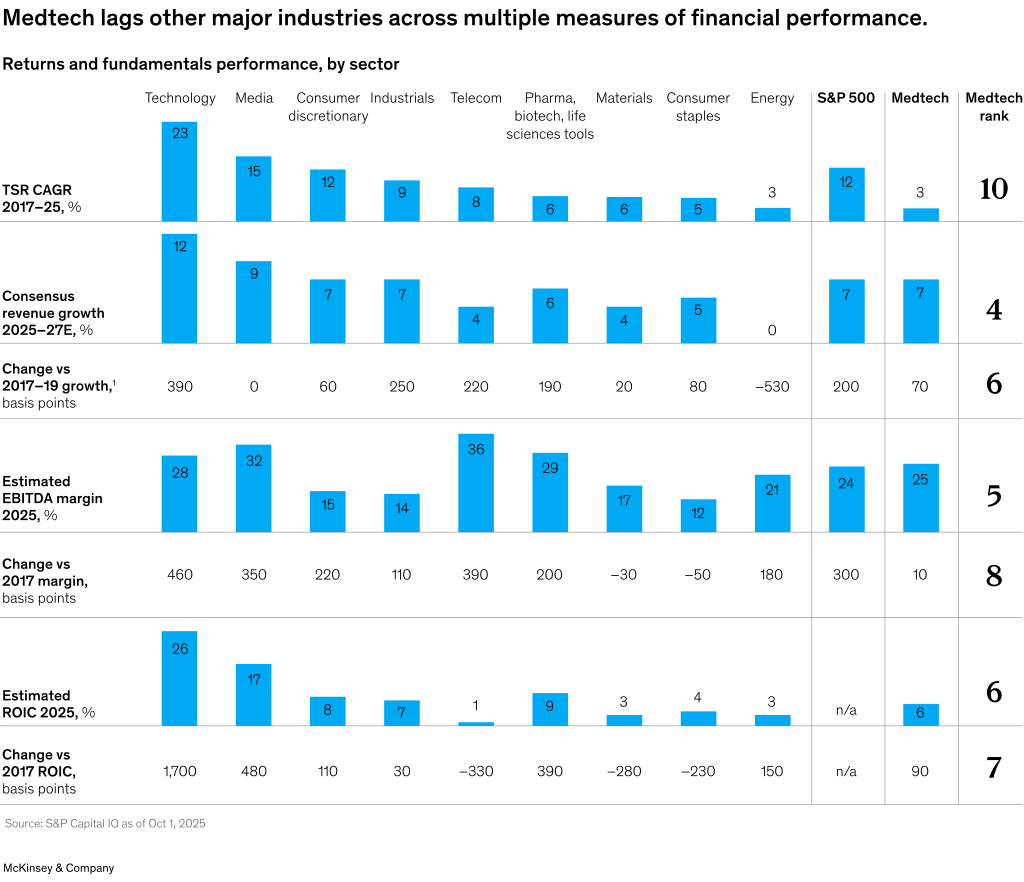
Compare this with other sectors that saw greater returns due to stronger fundamental performance. Notably, technology firms delivered roughly 23 percent annual TSR, as revenue accelerated from 8 percent to 12 percent, margins expanded by almost five percentage points, and their return on invested capital more than doubled. Technology’s stronger fundamentals have fueled earnings growth nearly three times faster than medtech’s; investors have rewarded that performance with P/E multiples about 40 percent higher (Exhibit 2).
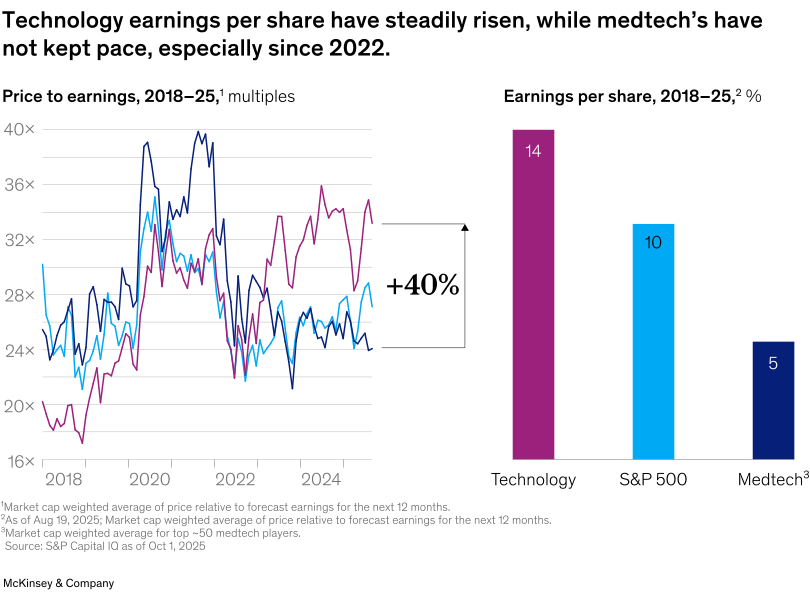
The message from capital markets is clear: Investors are not overlooking medtech; they are responding rationally to slowing earnings power.
Evidence of outperformance in medtech
Medtech faces systemic headwinds. Rising input costs and persistent supply chain disruptions continue to weigh on profitability. Innovation productivity has slowed, and venture-funded opportunities are taking longer to come to market. Regulatory and reimbursement shifts, alongside slowing growth in emerging markets, have further complicated the environment.
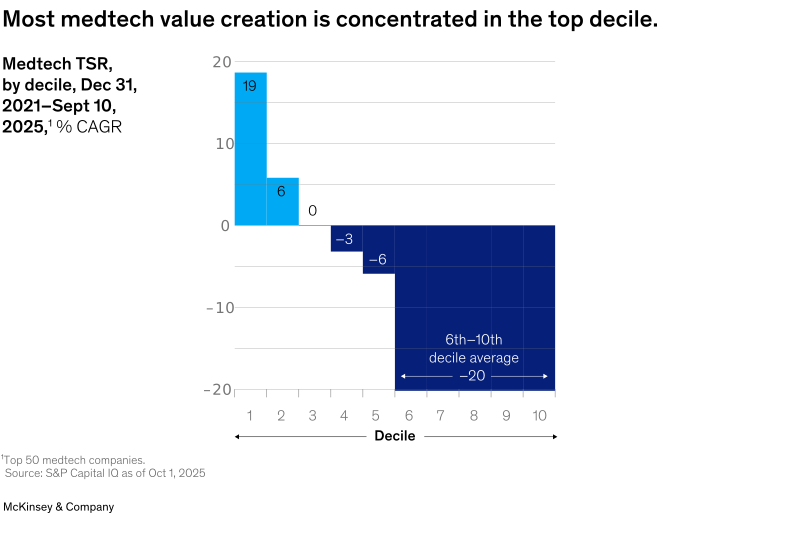
Most medtech companies are struggling to respond. Roughly 90 percent of public medtech firms have failed to match the S&P 500’s returns, and about 80 percent have delivered zero to negative returns over the past four years. Yet a small group of outperformers has broken through, propelling the vast majority of growth in the industry. Indeed, the top-decile medtech performers have generated nearly twice the value of the S&P 500 (Exhibit 3).
A fundamentals-driven formula for medtech value creation
This emerging “winner takes all” dynamic shows that fundamentals drive sustained value creation. High-performing medtech companies span the spectrum—from diversified portfolios to pure plays and across implantables, disposables, and capital equipment. Despite their differences in composition, they follow a similar fundamentals-driven formula for success:
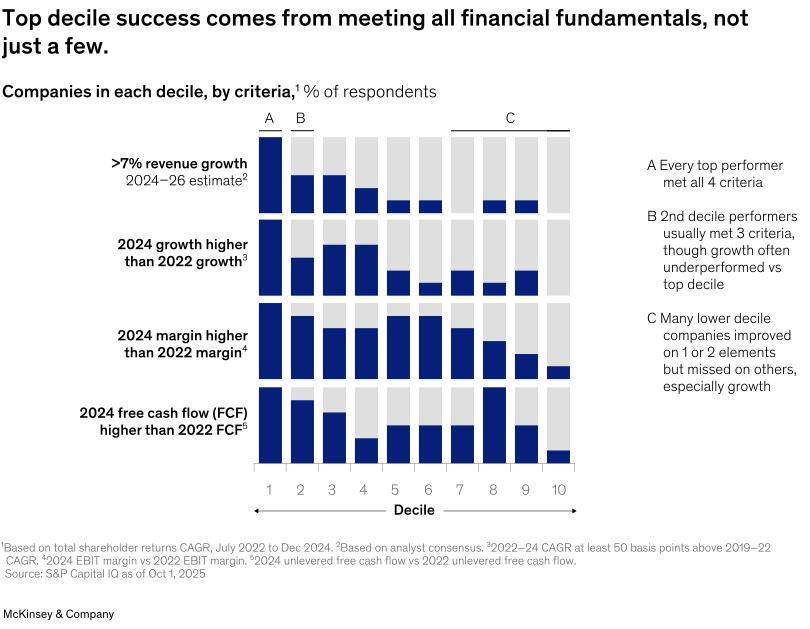
- Consistent performance on core financial metrics. Top performers accelerate organic growth, deliver steady margin expansion, and generate cash through disciplined capital allocation (Exhibit 4). In contrast to the rest of the sector, these leaders have delivered all three measures consistently, simultaneously, and more effectively.
- Clear strategy anchored in strong markets and operating excellence. Top performers focus on leadership positions in high-innovation markets that offer sustainable growth potential. They allocate resources to ensure capital is dedicated to the areas of the portfolio with the greatest returns, and they invest more than peers in R&D and M&A. Leaders expand margins while maintaining investment levels by pursuing targeted margin improvement programs, especially in the supply chain. Their operating model is typically decentralized to keep decisions close to customers, while the corporate center provides focus on capital allocation, standards, and talent.
- Compelling equity story. Top performers craft a clear equity story that ties fundamentals and strategy to measurable financial targets—growth, margins, and capital efficiency—and to operational guideposts such as market growth, leadership positions, new product launches, and installed base. They communicate this story consistently and provide transparent retrospectives against previously reported targets, reinforcing investor confidence in future performance. The result is stronger valuations and more credibility with shareholders.
Three critical drivers of future medtech fundamentals
Investors are wondering if the medtech sector’s underperformance is a temporary slowdown or a long-term structural issue. As medtech firms chart their paths forward, winning value creation strategies will need to address investors’ questions about the underlying drivers of core fundamental performance:
- Innovation and growth. Is there sufficient pipeline strength to accelerate growth for the sector? Will start-up funding help replenish future pipelines in a suitable time frame? Or will innovation remain concentrated in a narrow set of segments and market leaders, while a higher share of the market becomes commoditized?
- Operational efficiency. Will medtech supply chains recover from recent disruptions, or have we reached the industry’s limits on gross margins? Will the sector be able to slow operating expense growth below revenue growth? Will companies be able to convert AI opportunities into outsize productivity gains?
- Portfolio choices and business models. Can more medtech companies beyond the top decile focus their portfolios, clarify capital allocation choices, and evolve operating models that convert to stronger earnings performance and shareholder returns?
In the near term, margin recovery may deliver incremental gains in shareholder returns. Over the longer term, however, closing the gap with other sectors will hinge on whether more medtech companies can replicate the fundamentals of the top decile through innovation-led growth, sharper portfolio choices, and disciplined capital allocation. Without these shifts, medtech is likely to remain structurally disadvantaged compared with sectors where fundamentals continue to accelerate.