From robotic surgical systems to advanced diagnostic imaging, medical technologies have become indispensable to modern medicine, enabling life-saving interventions and improving operational efficiency across healthcare. By addressing major unmet needs such as diabetes and heart disease, and by capitalizing on increased demand from expanded care delivery options such as ambulatory surgery centers, these innovations have been the growth engine for medtech companies.
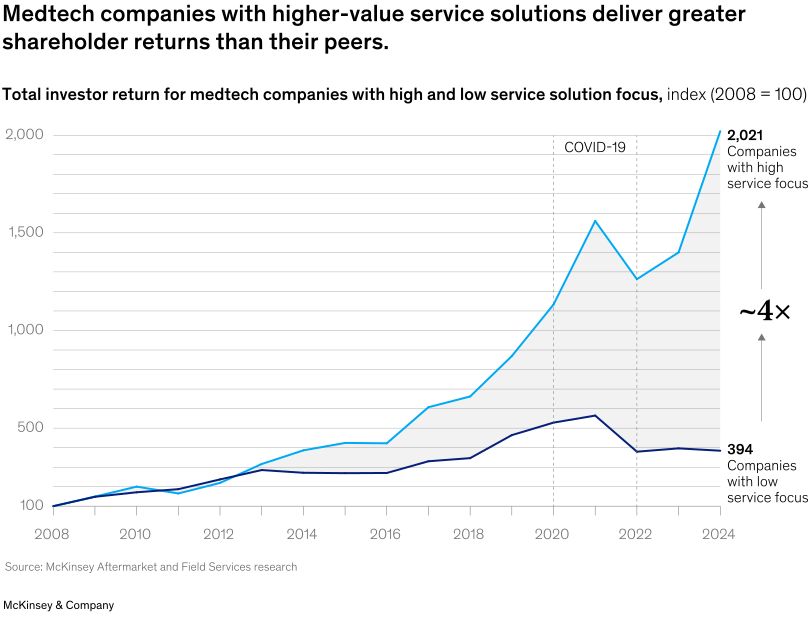
As technology adoption accelerates, so has the demand for manufacturer aftermarket services. This trend has driven double-digit growth in the equipment maintenance market since 2020 and has prompted leading companies to rethink services as more than just a cost of doing business. McKinsey analysis shows that service-focused companies generate up to 35 percent of their revenue from services, which improves margin stability through recurring income and lowers reliance on capital equipment cycles. As a result, OEM leaders are increasingly positioning service functions as a strategic lever to enhance customer experience and accelerate enterprise growth—in some cases achieving total shareholder returns up to four times higher than those of less innovative peers (Exhibit 1).
The business case is clear. Enhancing the customer experience, including through expanded services, creates a “flywheel effect”: For example, according to our analysis, a 10 to 20 percent jump in customer satisfaction can increase revenue by 32 percent, increase employee engagement by 20 to 30 percent, and reduce service costs by up to 50 percent. It is no surprise, then, that one in four medtech services executives cite customer experience as the top disruptor to their bottom line.
This article highlights customer expectations shaping the future of medtech services, identifies the critical factors for service expansion success, and suggests actions medtech leaders could take to build an industry-leading, value-creating services function.
Evolving service expectations of medtech customers
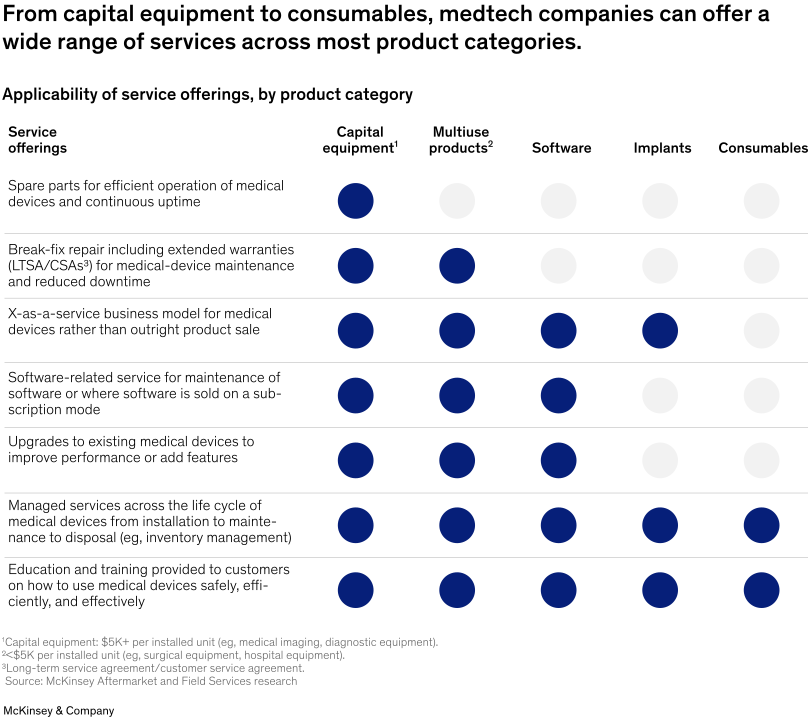
The medtech industry spans a broad range of segments, each with distinct equipment types and service intensity needs. Capital equipment, such as imaging and diagnostic systems, typically requires high-touch, ongoing service, while implants and consumables often demand less intensive support. Understanding these variations is essential to contextualizing how customer expectations have evolved across the industry (Exhibit 2).
McKinsey research has identified four key trends that reflect medtech customers’ evolving expectations over the past five years. Beyond more innovation, customers also want high-quality, long-term services that extend beyond basic maintenance and align with their clinical and strategic goals.
Customers value service quality as much as product performance
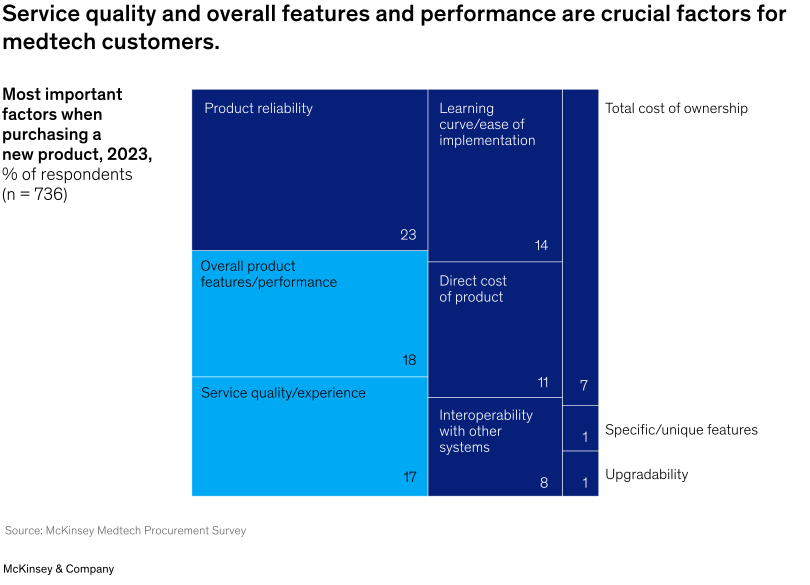
When selecting a medtech product, healthcare procurement teams place service effectively on par with features and performance and second only to product reliability (Exhibit 3). While reliability can sometimes compensate for gaps in service or features, the findings suggest that superior performance alone would not make up for poor service. Organizations that proactively design richer customer service experiences can improve their ability to sell additional products and services to existing customers, leading to higher margins, longer-term contracts, and greater customer lifetime value.
Customers want service solutions that advance their patient care objectives
McKinsey research shows that medtech customers increasingly expect “beyond the product” services that advance their broader clinical objectives, including procedure planning, data-driven insights, workflow optimization, and telehealth support. However, to capitalize on this opportunity, medtech vendors should first establish credibility by showing robust performance in foundational product-related services, such as maintenance, and achieving consistently high customer satisfaction scores. Only then can they position themselves to expand into higher-value offerings that deepen relationships and differentiate them in a competitive market.
Customers rank service value and delivery reputation above pricing
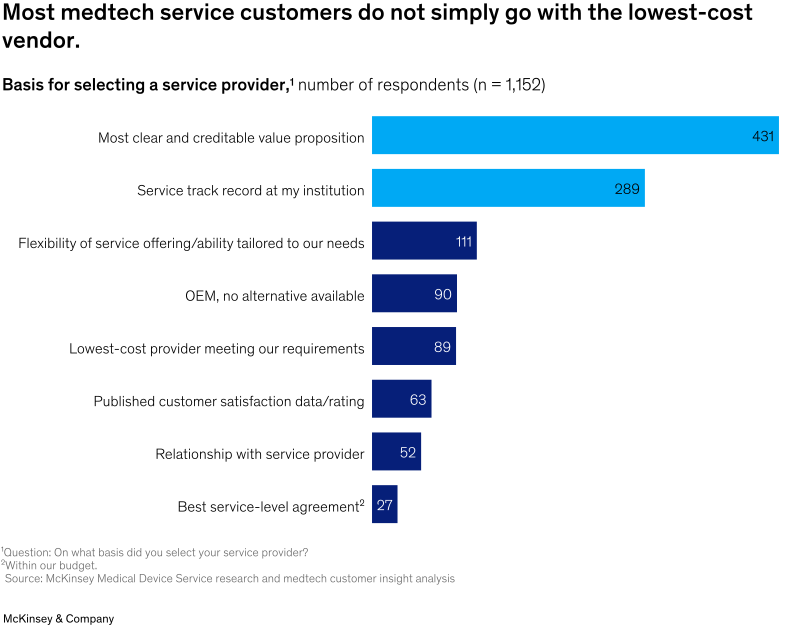
Medtech customers evaluating service contracts place far greater weight on the overall value proposition and on the vendor’s record of service than on price (Exhibit 4). Customers are looking for vendors with a proven history of reliability and operational efficiency and whose services advance their strategic priorities. Medtech service functions that clearly articulate the core value of the service offering and consistently deliver on its promise can strengthen a service provider’s standing as a vendor of choice.
Customers with paid service contracts are more brand loyal than those without
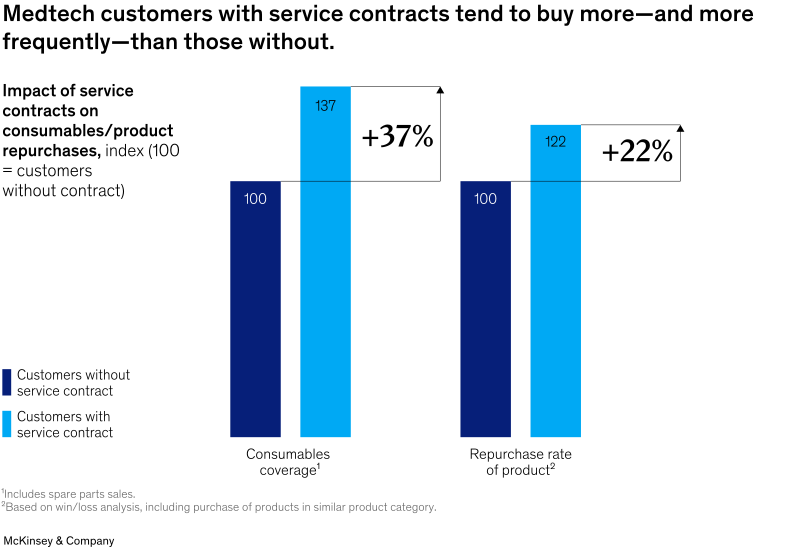
Research across various companies and medtech subsectors shows that customers that invest in paid service agreements report higher satisfaction, demonstrate stronger brand loyalty, and exhibit higher repurchase rates of products and product-related consumables than those without contracts (Exhibit 5). These agreements provide confidence in the equipment’s uptime and performance, which in turn reinforces trust and encourages repeat business.
Critical success factors for expanded medtech services
Unlocking the full value of expanded medtech services will require OEM organizations to make more than random, incremental improvements. They will need to shape a clear strategy, articulate a compelling vision, and invest thoughtfully to build the capabilities that enable new service offerings. Without this foundation, even the most advanced solutions risk overlooking customer expectations and falling short of sustainable enterprise value.
Leading OEM service organizations focus on a set of critical success factors, though each brings its own challenges. Progress often requires trade-offs—balancing competing priorities, adapting to evolving customer needs, and keeping pace with rapid technological change. Those that manage this complexity effectively are best positioned to realize the full potential of their service portfolios.
Differentiated and clearly articulated service value propositions
A clear and compelling value proposition is essential for any service offering that goes beyond traditional aftermarket services, yet many medtech companies underestimate its importance. Too often, these services are positioned as add-ons rather than as strategic enablers of the customer’s clinical and operational aims. This lack of clarity leaves customers uncertain about how the offering aligns with their priorities, reducing the likelihood of adoption.
As healthcare becomes increasingly consumer driven and technology enabled, the need for clarity will only continue to grow. Healthcare providers expect integrated, connected solutions that improve workflows and deliver measurable results. Emerging technologies such as biosensors, augmented reality, digital analytics, and AI will make interoperability and ecosystem integration critical to creating value.
We have observed leading OEMs taking one or more of the following approaches to enhance their service offerings:
- Developing customer-centric value propositions. To craft effective messaging, a cross-functional team should first segment the market. This allows them to create distinct customer personas, which then serve as the basis for developing tailored propositions that address each persona’s concerns while maintaining a coherent message across all segments.
- Aligning the service value proposition with product and service strategies. Customer-centric organizations seamlessly integrate their service strategies into the end-to-end product strategy. This involves embedding the service value proposition into the marketing and sales life cycle, aligning on policies governed by services for “placed” equipment, and synchronizing service delivery with product renewal cycles to ensure a common perspective between service and product teams.
- Securing leadership commitment to services. Leading organizations appoint an executive sponsor to own the service playbook, champion the value proposition, and advance the service agenda. The executive sponsor also enlists leaders throughout the organization to promote service visibility and embrace services as a core value.
Additionally, competitive dynamics in the medtech services market are being reshaped by the growing presence of independent service organizations (ISOs). Backed by increasing investor funding, ISOs are consolidating rapidly and are projected to register their highest compound annual growth rate of about 12 percent in the United States by 2029.1
Innovative commercial models and pricing strategies
Instead of relying on legacy, product-centric approaches, medtech organizations could develop service contracts that reflect the full strategic value of their offerings. By focusing on outcomes such as equipment uptime and clinical efficiency, these “beyond maintenance” contracts can provide more value. Too often, however, sales teams do not understand how to effectively price these advanced services, which results in a lack of a clear monetization strategy.
Other industries use models that could also be adopted in medtech. In advanced manufacturing and technology sectors, subscription-based and consumption-based “as-a-service” offerings are increasingly employed over the asset life cycle, as described in broader analyses of advanced manufacturing and industrial sectors, while consumer-facing industries more often rely on linear or “take-back” business models. Medtech OEMs can apply similar principles to accelerate growth and improve profitability.
Leading organizations are taking one or more of the following actions:
- Designing tailored, tiered service packages to meet varying customer requirements while allowing flexibility, including tiered services and à la carte contract and upgrading options.
- Formulating advanced pricing strategies, such as contract-based pricing, segmentation pricing, and dynamic deal scoring to capture value and sustain profit margins.
- Incentivizing service sales by identifying high-value opportunities through lead prioritization using analytics and gen-AI-powered tools.
- Clarifying go-to-market roles and processes to ensure accountability throughout the service sales cycle, from initial customer engagement to contract renewal.
Companies that align their service strategies with these best practices position themselves for short- and long-term success.
Consistent and reliable service delivery
Inconsistent service delivery can damage a company’s credibility. Customers become confused or frustrated when they are presented with conflicting policies or guidance. Dissatisfaction ultimately ensues, diminishing trust and weakening the overall value of the services provided.
Leading organizations achieve consistent service delivery by implementing some or all of the following approaches:
- Establishing a robust service delivery model that creates a seamless customer experience, for example, guiding customers to efficient support channels, service tools, and remote services; ensuring global spare-part availability; and building effective knowledge management systems that can deliver predictable, prompt responses and timely resolutions across all channels.
- Utilizing gen AI and automation to boost productivity, reduce manual, repetitive work, and enhance customer experiences. Examples include AI-driven tools for scheduling, route optimization, predictive troubleshooting, and adaptive standard operating procedures powered by data analytics. To fully capture these benefits, companies should reimagine their workflows—deconstructing tasks, reallocating responsibilities across humans, AI, and automation, and building an AI-integrated operating model that unites these capabilities for continuous improvement.
- Foster excellent communication and transparency by providing customers with clear escalation pathways, prompt status updates, and consistent messaging across all channels and customer segments.
Building the foundation to expand services across the enterprise is a complex undertaking. Leaders will need to navigate organizational constraints, align diverse stakeholders and global teams, integrate advanced technologies, and balance short-term performance with long-term transformation—all while sustaining operational efficiency and cost discipline. However, companies that confront this complexity head-on can strengthen the organizational backbone needed to scale services effectively and realize the full value of their expanded offerings.
Rising investor expectations for stronger growth and profitability are pushing medtech companies to find new sources of value. At the same time, customers are demanding more comprehensive services that go beyond basic maintenance. Together, these forces create a significant opportunity for medtech organizations to expand their service offerings and capture greater value from their product innovations. Leaders who embed services as a core priority, define a clear strategy, articulate a compelling value proposition, and mobilize champions across the organization can strengthen their services function—and, in doing so, propel growth, build competitive advantage, and enhance patient care.