Infrastructure is a rapidly growing asset class, both in Europe and around the world. The European Union continues to make investments to enhance the region’s resilience. Massive global investment needs (estimated at around $106 trillion from 2024 to 2040) are expected to put increased strain on public budgets moving forward.
To meet this demand, private capital will need to step in, as explored in McKinsey’s report The infrastructure moment.1 A wide spectrum of investment strategies has the opportunity to succeed in the coming year. This is particularly true as the scope of infrastructure investments expands to include assets such as infrastructure services (for example, predictive maintenance systems), telecommunications, and social infrastructure (for example, radiology chains or nurseries).
Although growing and broadening, the European infrastructure asset class still faces challenges. In recent years, returns from infrastructure have been strained, leading global infrastructure investors to deploy capital more slowly. As a result, investors today are contending with very high levels of dry powder. This is only expected to increase as fundraising momentum picks up.
In this article, we share our latest research on European infrastructure to help investors better understand today’s investment landscape (see sidebar “About the research”). Given this sector’s dynamism and recent challenges, investors will need to think outside the box to deploy capital at pace and achieve attractive returns. To help, we highlight ways investors can keep their fingers on the pulse of Europe’s infrastructure by building new research capabilities and AI-streamlined origination and execution processes.
European infrastructure is ‘coming of age’
Infrastructure assets under management (AUM) in Europe have grown from about €91 billion in 2014 (about 11 percent of private capital) to about €487 billion in 2025 (almost 20 percent of private capital), a CAGR of 16.5 percent (Exhibit 1). The energy transition and macro tailwinds, including low interest rates and government fiscal tightness, were major drivers of this growth, with investors supporting the expansion and upgrade of critical infrastructure assets (for example, fiber rollout and airport upgrades).
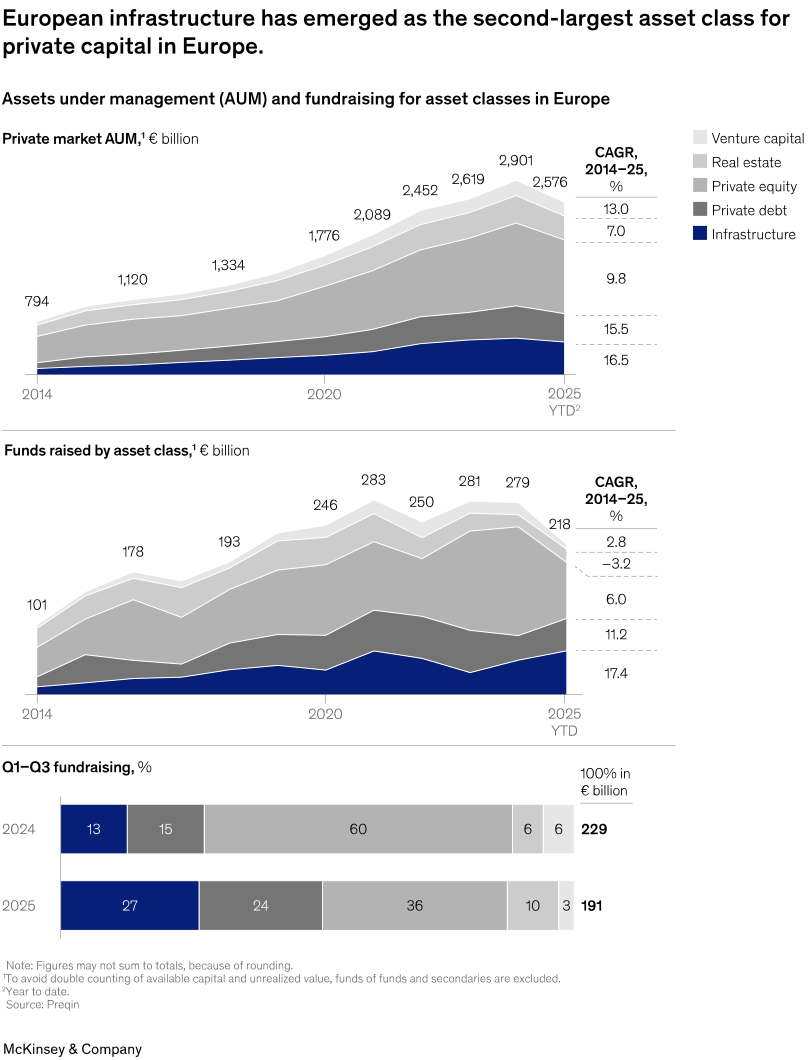
A number of trends are shaping this infrastructure investment growth in Europe:
- Decarbonization and energy security. The energy transition has driven a significant share of investments in European infrastructure over the past five to ten years. The European Union’s commitments to achieving climate neutrality by 2050 and the gradual introduction of the mechanisms to do so (for example, ETS2, the Energy Performance of Buildings Directive, and the Renewable Energy Directive) have increased investments in infrastructure supporting decarbonization. The energy shock of 2022 set back this ambition, shifting the focus to energy security versus decarbonization, which in turn has pushed investors to focus on near- and medium-term plans.
- Commerce reconfiguration. Global e-commerce is set to grow at 15 to 20 percent annually in the coming decade, creating significant demand for asset-intensive operations.2 At the same time, Europe is expected to increasingly face supply chain disruptions and tariff pressures, leading to greater nearshoring and shifts in transportation needs that could imply a realignment of infrastructure and supply chains.
- The rise of gen AI. The transition to cloud is still accelerating. Gen AI will also increase computational loads on the cloud significantly, spurring growth in Europe’s digital infrastructure.
- Demographic shifts affecting healthcare. Europe has a projected financing gap for healthcare systems that will require additional acute and subacute care infrastructure and nursing homes.
As Europe continues to invest in decarbonization technologies, push to nearshore critical manufacturing and energy infrastructure, address recent geopolitical developments, and anticipate gen AI–related demand, the region’s focus on infrastructure is only expected to increase.
With €700 billion in dry powder, there is an opportunity to reshape the European infrastructure sector
Boosted by the strong growth of infrastructure as an asset class (indicated by the growing percent of total private capital AUM) and the maturing of the asset landscape, limited partner (LP) sentiment remains very positive. About half of LPs in the United States and Europe say that they will increase exposure to the asset class in the next three years, according to McKinsey survey data (Exhibit 2).
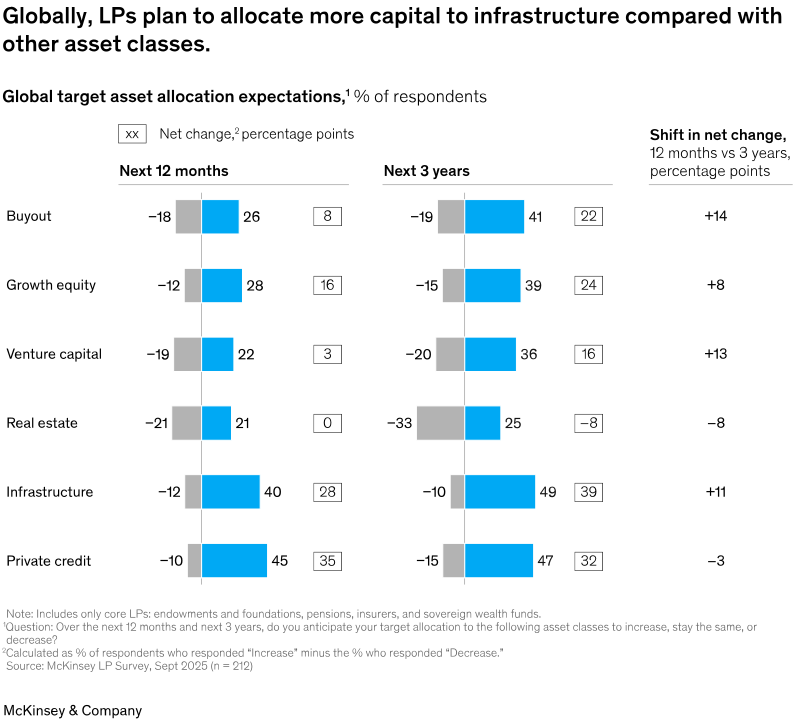
Because infrastructure is relatively new compared with other asset classes (coming to prominence in the mid-2000s3), allocation to infrastructure for most investors is still lower than target levels of around 15 to 20 percent, indicating further headroom for growth. However, deployment has slowed in recent years, with investments in Europe dropping by about 40 percent from 2022 to 2024. Meanwhile, fundraising for infrastructure has outpaced capital deployment.
As a result, dry powder has increased dramatically: Across investor types, investors held €789 billion in Europe in 2024 (Exhibit 3). This is likely to go up further, given that 2025 was another high watermark for infrastructure fundraising ($289 billion raised).4
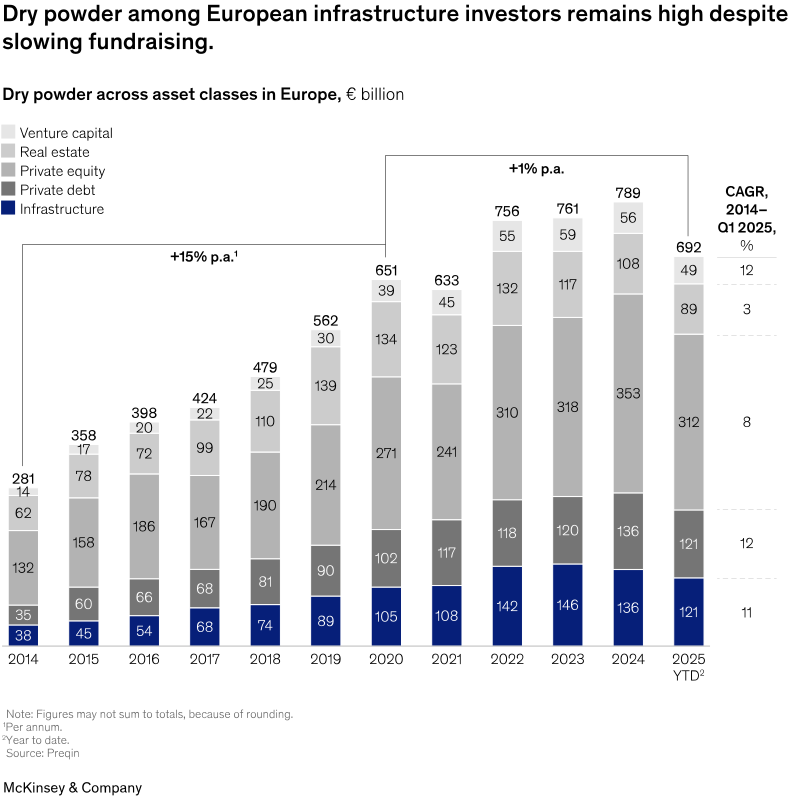
With these high levels of dry powder, infrastructure managers are under pressure to deploy capital. To do so, investors may need to think outside the box and broaden their attention on Europe’s infrastructure landscape.
Returns from infrastructure have challenged investors
At the same time as dry powder has accumulated, the concept of infrastructure has grown and evolved (see sidebar “Types of infrastructure investments”).5 Infrastructure now encompasses not only core assets, such as roads and bridges, but also assets that have infrastructure-like characteristics.
Across these asset classes, returns vary, but the trend is one of decline in recent years. From 2014–19, European infrastructure7 delivered better returns than the market (83 percent versus 36 percent TSR), which is notable considering that returns on infrastructure assets are typically expected to be lower than other types of assets. However, between 2019 and 2025, the picture was almost the opposite: Infrastructure stocks delivered a TSR of 35 percent versus the Euronext 100 benchmark of 82 percent. Moreover, for privately held assets, EBITDA margins declined by an average of two percentage points in 11 out of 17 infrastructure asset classes between 2019 to 2023, with the average return on assets during this period being only 3.5 percent according to McKinsey analysis. This is due in part to effects from the COVID-19 pandemic.
This has compelled investors to seek ways to meet return thresholds while ensuring capital is deployed at the required pace. Some techniques investors are exploring include expanding the list of asset classes, looking into new geographies, and taking on greater construction and operational risk. However, to meet the challenge of deploying ever-increasing capital, infrastructure investors may need to push the boundaries further.
Infrastructure investors need to be creative to capture the opportunity to deploy dry powder
When looking at today’s landscape, we see three areas where investors can substantially up their game to deploy capital while still delivering adequate returns: building strong research capabilities in new subsectors, leveraging AI to surface deals outside the typical pipeline, and getting sharper on value creation at the diligence stage.
Building strong research capabilities in new subsectors
In the not-too-distant past, infrastructure investing was mainly focused on relatively passive investments in a limited number of operating assets (for example, highways and renewables) with limited risk and very high cash flow stability. As asset classes expand to meet the requirements of increasing capital inflows, successful investors will need get comfortable investing in a wide array of businesses. Today, infrastructure investor portfolios feature more than 50 asset classes that are all different and that investors might not fully understand. Investing in these assets, therefore, requires investors to significantly ramp up their internal capabilities to understand key trends, value drivers, and risks.
For example, McKinsey analysis of infrastructure assets indicates midstream assets, renewables, and utilities have delivered the highest returns, driven by commodity prices, with some transport segments also delivering higher-than-average returns (Exhibit 4). Revenue growth has been highest in digital infrastructure (data centers), along with midstream assets and ports.
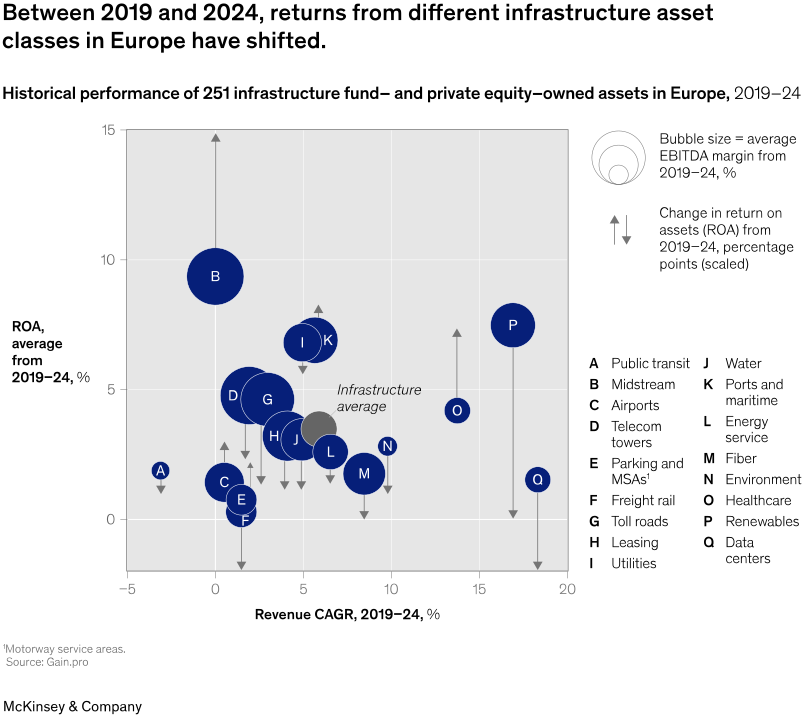
While past performance cannot predict the future, research into the performance of subasset classes outside the investor portfolio can lead to a better understanding of underlying drivers of performance. This information can then help investors derive insights on future performance.
Some investors are increasingly setting up dedicated research teams to deliver insights on attractive investment themes, returns drivers, and value creation strategies. This is a shift from the previous norm where investors left the research to investment professionals, who were often more focused on ongoing origination and execution efforts than stepping back and thinking beyond the short term.
Finding opportunities in each of these subsectors will be a key differentiator moving forward. Investors will need to be able to leverage similar analysis and insights as the infrastructure sector evolves.
Leveraging AI to surface deals outside the typical pipeline
There are numerous AI-driven opportunities for investors to improve decision-making across the investment life cycle, from fundraising and deal identification to due diligence, deal execution, and portfolio management. AI can provide visibility into data, use structured data sets to create forward-looking machine-learning models, and use large and unstructured data to create net new content.
A key use case for infrastructure investors is using AI tools in deal identification. Other sectors are already making inroads on this front. For example, one leading oil and gas company used AI tools to identify acquisition targets in a new market. The tools identified about ten prioritized targets per scan based on their technical capabilities, business model, historical growth, and customer base. Using gen AI, the company also developed detailed profiles for the highest-priority targets. This extensive set of “net new” targets grew the company’s existing target pipeline by 40 percent and helped the company select and acquire its top site—which was unknown to the company prior to using these tools.
Beyond finding differentiated insights, to be competitive, investors can also look to supplement auction processes with a pipeline of proprietary deals. This requires looking outside of deal lists from conventional sources and investing in identifying companies that are not yet rumored for sale.
Gen AI and large language models can help in this process by analyzing hundreds of data fields in automated scans to improve the efficiency of origination processes, allowing companies to spend more time on the right opportunities. These tools work best with extensive company databases that they can use to iteratively scan and generate insights.
Finally, gen AI can also be used beyond origination during the execution and underwriting process. For example, investors are starting to use it to get better insights from information in their virtual data rooms, prepare investment committee memos, build investment cases, and more.
Getting sharper on value creation at the diligence stage
Apart from enhancing research, origination, and execution capabilities, investors need to push the envelope on value creation during the deal stage. Operational due diligence (ODD) is a critical process for investors to uncover value creation opportunities in potential investments and maintain discipline on returns. ODD provides a structured approach to assess and identify areas where operational improvements can drive growth, enhance efficiency, and mitigate risks.
To build and improve ODD capabilities, investors can focus on a few key elements:
Prediligence preparation. Begin by identifying the operational areas to be assessed, such as supply chain, manufacturing, or corporate functions. This step involves forming a robust fact base through data requests for financial overviews, operational metrics, market insights, and more. Develop a financial and operational baseline model, and create hypotheses about potential value creation levers.
Operational assessment. Assess key drivers such as gross margin, supply chain efficiency, and other operational metrics to identify areas for improvement in the target company. Conduct interviews with functional leaders, and run benchmark analyses to compare the target company’s performance against industry standards. This helps identify gaps and areas for optimization. Evaluate external factors such as market trends, competitive dynamics, and regulatory risks that could affect the target company’s operations and value creation potential.
Identifying value creation levers. Explore market development, pricing strategies, and customer acquisition opportunities to drive revenue growth (for example, bolt-on acquisitions). Identify cost-saving opportunities through lean process methodologies, design-to-value approaches, and operational excellence initiatives. This includes evaluating general and administrative functions and other corporate operations for efficiency improvements. Finally, develop a road map for synergies, including integration architecture and standalone potential. This involves assessing how the target company’s operations align with the acquirer’s capabilities.
ESG and talent considerations. Systematically evaluate the target company’s environmental, social, and governance (ESG) performance regarding Europe’s current and forthcoming regulations. This includes benchmarking against industry standards and identifying ESG-related risks and opportunities. In addition, assess workforce-related risks and opportunities, including leadership capabilities and organizational structure.
Synthesis and value creation plan. Conduct functional workshops to debrief findings and prioritize value creation opportunities. This step ensures that the most impactful levers are addressed first. Next, create a detailed road map that outlines the steps needed to achieve the identified value creation goals. This includes validating the investment thesis and preparing for post-transaction implementation. Align this value creation plan with the overall investment thesis and the business case presented to the investment committee. This ensures a cohesive strategy for driving growth and efficiency.
Europe’s infrastructure sector is evolving rapidly, with significant dry powder chasing a limited pool of assets. With fundraising likely to rebound, the onus will be on investors to think outside the box to deploy capital at the required rate while delivering expected returns. Thinking creatively in terms of asset classes and leveraging gen AI to develop proprietary insights and a pipeline of deals will be critical to success.