This article was written in collaboration between McKinsey and the Indian Electrical and Electronics Manufacturers Association (IEEMA).
Global power consumption could exceed 60,000 terawatt-hours by 2050, effectively doubling 2025 levels.1 Riding the wave of this growth, the global electrical-equipment industry could expand from approximately $1.4 trillion today to about $2.5 trillion by 2035 (see sidebar, “What is the electrical-equipment industry?”).2
What is the electrical-equipment industry?
Electrical equipment spans the power value chain and includes generation, transmission and distribution, storage and grid management, and end use and consumption (exhibit).
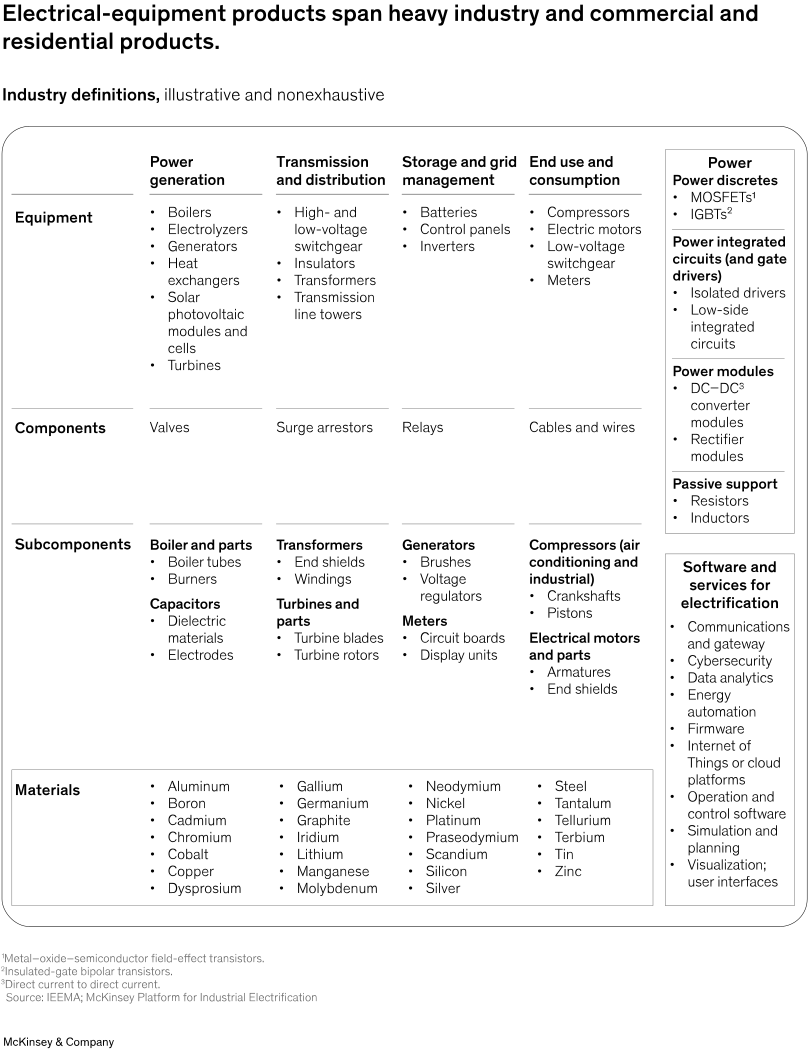
Two technologies cut across these life cycle stages: power electronics and power software. Power electronics includes power discretes, modules, integrated circuits, and passive components used for controlling and converting electrical power, and power software comprises “smart” software and services, such as transformers as a service with preventive maintenance and life cycle management.
This article envisions India’s role in this rapidly growing market and examines how coordinated progress across four critical enablers—cost and quality competitiveness, technology depth, export capability, and focus on electronics and software—can enable the country to capitalize on this opportunity. The production of electrical equipment in India could scale to more than $195 billion from the current roughly $50 billion, shrinking import dependence by half and expanding exports to more than $60 billion by 2035.
Capturing electrification-led growth in India
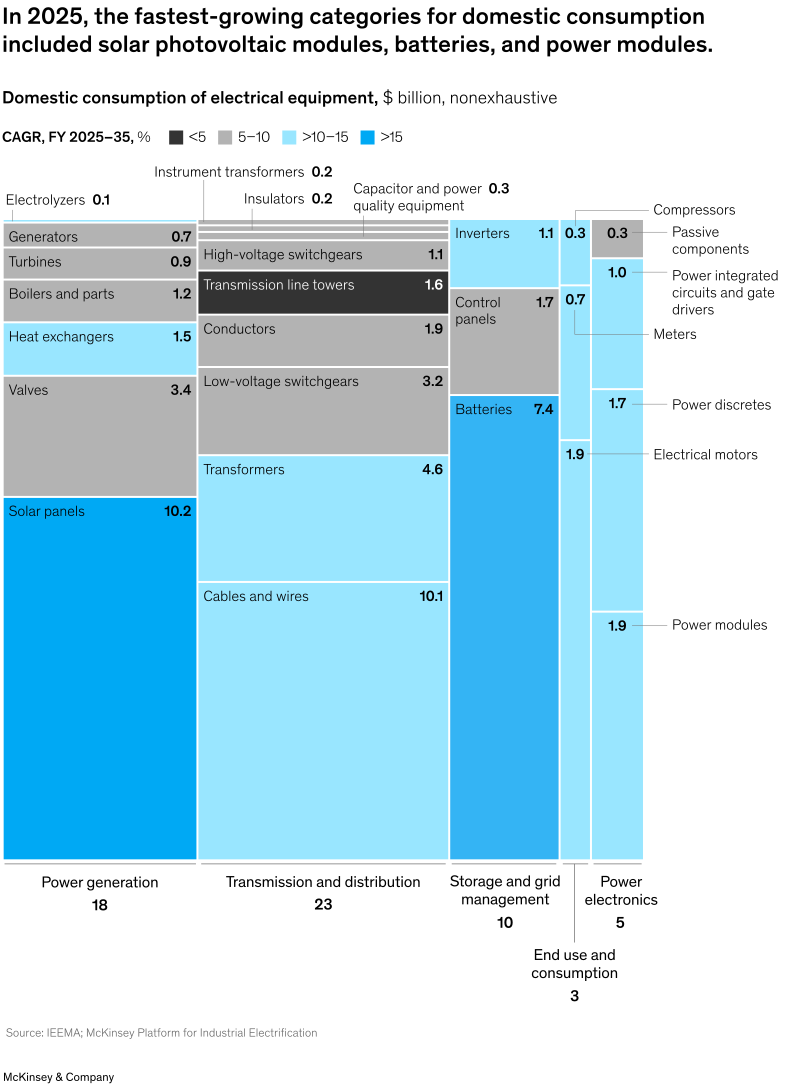
Demand for electrical-equipment in India grew at an 11 percent CAGR from 2020 to 2025, leading to $59 billion in domestic consumption (Exhibit 1). Transmission and distribution account for nearly 40 percent of the market, led by categories such as cables and wires, transformers, and high- and low-voltage switchgear. Storage, grid management, and power electronics will likely be the fastest-growing segments, with growth exceeding 14 percent CAGR, primarily driven by equipment such as batteries and power modules.3
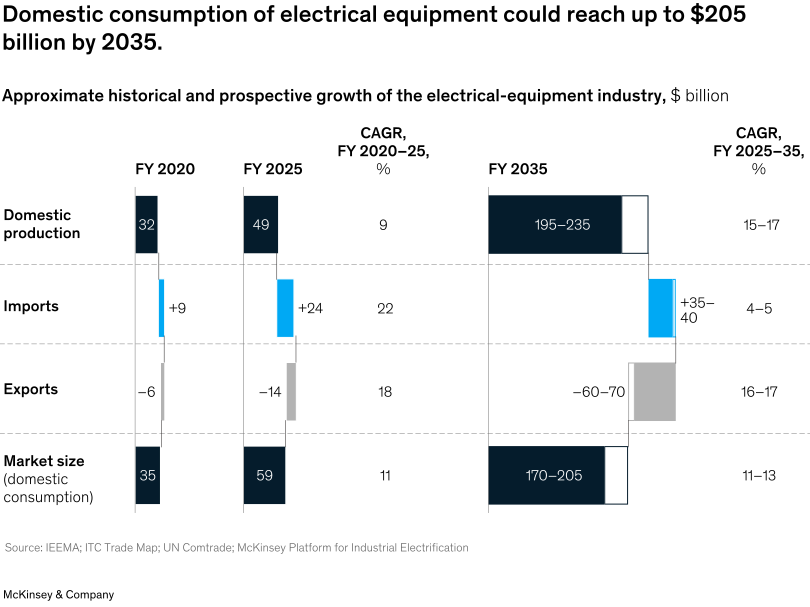
The Indian electrical-equipment industry could accelerate. We estimate 11 to 13 percent growth through 2035, tripling consumption to more than $170 billion (Exhibit 2). To capitalize on this opportunity, industry players will need to scale domestic manufacturing, enhance export competitiveness, and reduce import dependence.
Scaling domestic manufacturing capacity by five times
Between 2020 and 2025, India’s consumption of electrical equipment grew to $59 billion, an increase of $24 billion. In 2025, India produced only $32 billion for the domestic market (that is, excluding imports). As a result, India imported $15 billion more in 2025 relative to 2020, increasing its import dependence4 sharply from 22 to 33 percent.5
Under a business-as-usual trajectory, with domestic capacity growing at the historical CAGR of 9 percent, the industry could face a production shortfall of more than $130 billion, pushing import dependence to meet domestic and export demand beyond 70 percent and conflicting with India’s objective of self-reliance. This could become India’s largest import category, rivaling oil and gas.
To avoid this outcome, the industry would need to expand domestic manufacturing to more than $195 billion by 2035. This could reduce import dependence to 14 percent. The largest capacity additions are required in segments that are either heavily dependent on imports or where demand is expected to outpace domestic supply. The former includes power electronics and air conditioner compressors, the solar value chain (wafers, cells, and modules), and batteries, while the latter includes categories such as cables and wires.
- Power electronics. Domestic production could scale from less than $400 million today to $7 billion by 2035. A start could be made with passive components such as resistors, inductors, and capacitors (for which localization could increase from less than 30 percent to more than 80 percent), before expanding into higher-value segments such as power discretes (IGBTs and MOSFETs6), integrated circuits, and modules (for which localization could increase from less than 10 percent to more than 30 percent).
- Air conditioner compressors. Current capacity meets only about 65 percent of demand (about ten million units of production versus demand of more than 15 million units). Domestic production will likely need to grow by three to five times from today’s $2 billion. Rotary (more than 22 percent CAGR from 2025 to 2035, driven by retail demand), screw (more than 15 percent CAGR, primarily used in office buildings and data centers), and centrifugal compressors will all need capacity growth.
- Cables and wires. Domestic production needs to quadruple to supply growing domestic consumption as well as export demand. Priority subcategories include renewable-energy cables (such as solar direct-current cables), power cables (heavy voltage and extra-heavy voltage), and building wires, all growing at 10 to 15 percent CAGR. Capacity expansions in new technologies, such as electron-beam curing, may also be important to meet global performance standards and unlock exports.
However, capacity expansion alone will not be sufficient if it does not translate into globally competitive manufacturing. To achieve durable import substitution and build export strength, India will need to create capacity that can compete on total delivered value, not just scale. That means matching global benchmarks on cost, quality, certification, energy efficiency, and delivery reliability, while also developing the supporting supplier ecosystem for components, materials, tooling, and after-sales service.
Enhancing export competitiveness
Much of the electrical-equipment industry is globally traded. As an example, nearly 65 percent of global consumption in cables and wires is traded internationally.7 This creates a significant opportunity for India, further supported by tailwinds such as the China+1 shift in North America and Europe, as well as the country’s improving cost competitiveness in the segment. In fact, fiscal year 2024 saw $12 billion in exports, largely driven by categories such as cables and wires, solar photovoltaic (PV) cells and modules, switchgears, and generators (Exhibit 3).
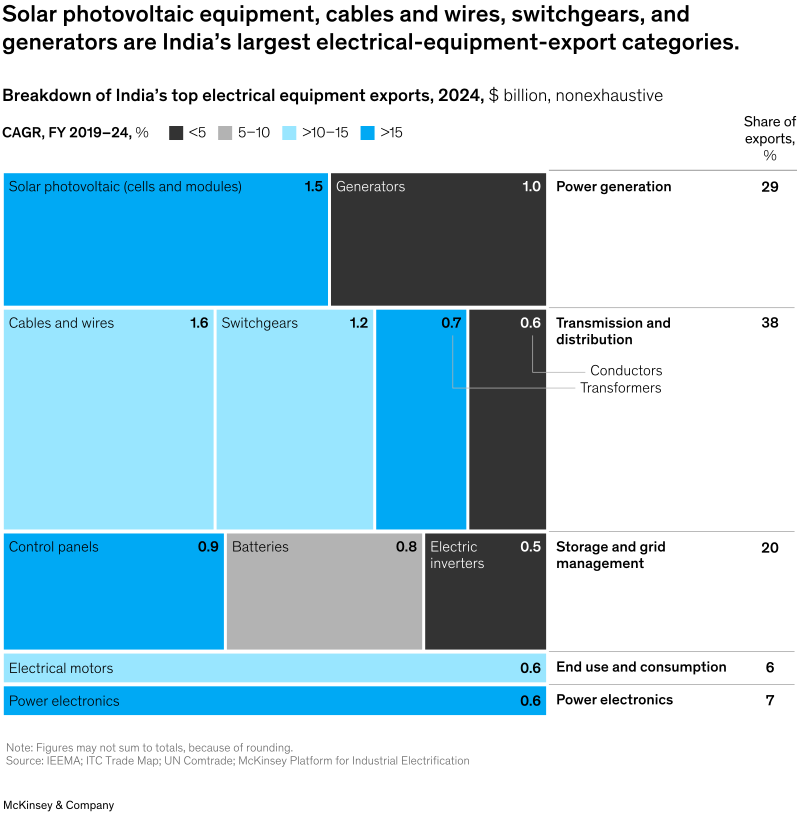
However, despite this, across top categories (solar photovoltaic, cables and wires, transformers, switchgear, and batteries) India has a clear underpenetrated opportunity to expand its footprint.8 Global trade in these categories was estimated at $500 billion in 2024. China captured nearly 30 percent of this market, exporting electrical equipment worth about $150 billion while India accounts for less than a 2 percent share of the market.9
In solar PV, India could aspire to capture more than 7.5 percent of global exports by 2035, up from approximately 2.5 percent in 2025, by improving cost competitiveness and diversifying export markets. Today, more than 90 percent of Indian solar exports go to the United States, but Brazil and Germany present themselves as alternative markets. Increasing the share will also require strengthening India’s position across the solar value chain (ingots, wafers, cells, and modules). Anchored in demand assured through India’s Approved List of Models and Manufacturers and Approved List of Cells and Manufacturers, the industry can build upstream capabilities, including domestic silica mining and processing (for example, by reviving abandoned mines in Ballari). It can also invest in alternative technologies such as thin-film solar cells (for example, cadmium telluride and copper indium gallium selenide), which offer lower-cost and lightweight alternatives to crystalline silicon panels.
Quality improvements are equally important. Defect levels in India remain high, at 5 to 7 percent in module assembly and 3 to 5 percent in finished panels, largely because of labor-intensive manufacturing. This gap can be addressed through AI-enabled manufacturing execution systems and digital quality-management tools. Strengthening domestic supply chains for glass, encapsulants, aluminum frames, and ribbons, along with stricter enforcement of safety and performance standards, can further enhance export readiness.
In cables and wires, for which India already has a strong manufacturing base, the opportunity lies in tripling global export share from 1 percent to more than 3 percent. This will require tighter quality standardization, stronger trade marketing, and improved cost competitiveness (Indian exports are currently priced 10 to 20 percent higher than Chinese counterparts).
In transformers, India can aim to raise its share of global exports to more than 7.5 percent, up from approximately 2.5 percent today. Doing so requires expanding the product proposition (such as transformer as a service or bundling with switchgear), strengthening local footprint in export markets (including testing and warehousing infrastructure), and stepping up trade marketing through partnerships with local OEMs and dealers.
Altogether, a concerted, multicategory export push could enable India to increase exports to more than $60 billion by 2035, capturing 4 to 5 percent of global trade.
Reducing dependence on imports from 33 percent to less than 14 percent
Focusing on localization can lead to both economic and strategic gains across the electrical-equipment value chain. Four segments depend heavily on imports today or will do so in future: power electronics, batteries, the solar PV value chain, and subcomponents.
Of the four, power electronics represents the largest localization opportunity. The segment is more than 90 percent import-dependent, with $4.7 billion of imports against $4.4 billion in domestic consumption and $600 million in exports in 2024. By 2035, domestic consumption could exceed $17 billion, a compelling rationale for an integrated manufacturing ecosystem spanning design, fabrication, outsourced semiconductor assembly and testing, and electronic manufacturing services. Although the Government of India’s $2 billion semiconductor Production Linked Incentive (PLI) scheme has begun to catalyze activity, more is needed. Globally, the industry is undergoing a shift toward compound semiconductors, with silicon carbide (SiC) and gallium nitride devices growing at more than 30 percent CAGR across data centers, electric vehicles, charging infrastructure, and renewable energy. Expanding domestic capabilities across these applications will likely be essential to creating a future-ready India. Certain niches, such as SiC MOSFETs, also offer high-margin, differentiated entry points with limited Indian competition and global proof points.
With domestic consumption of $7.3 billion growing at 15 percent CAGR, battery is among the largest and fastest-growing categories in the industry. It presents substantial localization potential, with import dependence exceeding 60 percent in 2025. By scaling domestic lithium-ion cell manufacturing supported by 50 gigawatt-hours of PLI-linked capacity additions, India could reduce this dependence to below 25 percent, potentially exporting more than $3 billion by 2035.
In solar PV cells and modules, import dependence remains high, at 40 percent (with imports of about $4 billion to fulfill $8 billion to $9 billion in domestic consumption). A comprehensive localization effort for domestic silica mining, ingot, wafer, and cell and module capacity could reduce import reliance to less than 17 percent by 2035.
It will also be essential to go beyond equipment and address subcomponent-level import dependence. For instance, India’s Smart Meter National Programme aims to replace 250 million conventional electricity meters with smart meters. These have a mandated domestic value addition of 60 percent.10 Although design and labor are fully localized, allowing manufacturers to meet this requirement, there is more than 60 percent import dependence at the subcomponent level. For instance, electronic components and communication chipsets, which together account for more than 20 percent of the bill of materials, are predominantly (more than 80 percent) imported from China, Japan, and Taiwan. Other subcomponents, such as latching relays, have more than 50 percent import dependence despite the availability of domestic capacity, owing to poor cost competitiveness and quality gaps (such as shock resistance and switching time).
By addressing these gaps, the industry can reduce overall import dependence from 33 percent in 2025 to less than 14 percent by 2035, helping bring India closer to self-reliance in electrical-equipment manufacturing.
Scaling globally competitive electrical-equipment companies
Only a small cohort of Indian electrical-equipment players operates at meaningful scale compared with global benchmarks. In fact, about ten companies have revenues exceeding $1 billion, and only five surpass $2 billion. Achieving more than $195 billion in domestic production therefore requires additional large, well-capitalized domestic champions and anchor investors. Encouragingly, established players are demonstrating strong performance, highlighting the potential attractiveness of the opportunity in addition to the scale of demand.
From an investor perspective, the electrical-equipment industry in India has outperformed local stock markets (BSE 100), delivering more than 1.5 times higher five- and ten-year CAGRs (Exhibit 4). B2B electrical-equipment suppliers (particularly in cables and transformers) have generated strong TSRs, with select segments delivering more than 80 percent CAGR over five years. Renewable-equipment manufacturers (such as for solar modules and wind turbines) and B2C electrical-equipment players (such as for batteries, building wires, and smart meters) have also outperformed the broader market.
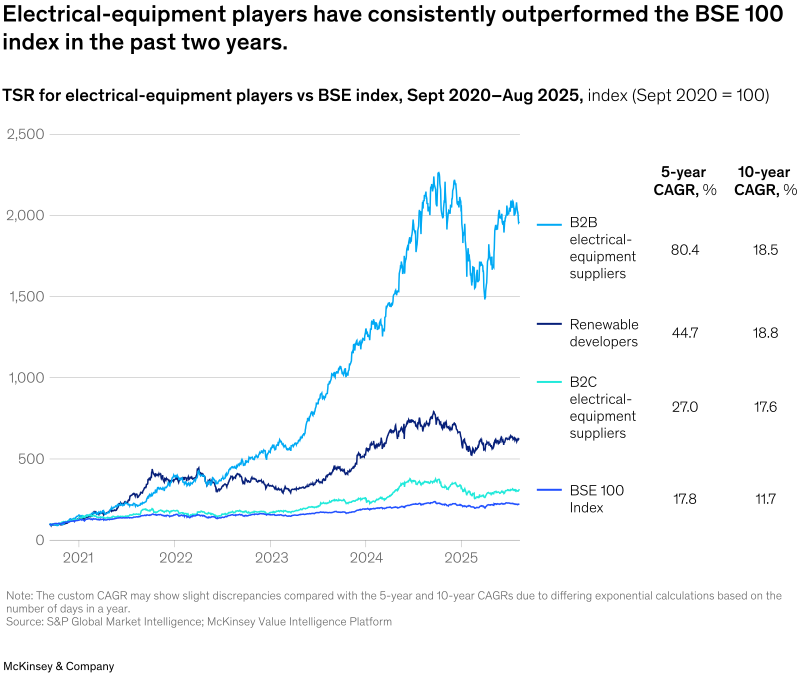
A line chart shows the TSR for electrical-equipment players compared with the BSE 100 index from September 2020 to August 2025. Numbers are indexed where September 2020 equals 100. Electrical-equipment players have consistently outperformed the BSE 100 index in the past two years. The TSR rose to about 2,000 by August 2025 for B2B electrical-equipment suppliers, to more than 500 for renewable developers, and to about 300 for B2C electrical-equipment suppliers, compared with about 250 for the BSE 100 index.
For B2B electrical-equipment suppliers, five-year CAGR was 80.4% and ten-year CAGR was 18.5%. For renewable developers, five-year CAGR was 44.7% and ten-year CAGR was 18.8%. For B2C electrical-equipment suppliers, five-year CAGR was 27.0% and ten-year CAGR was 17.6%. For the BSE 100 index, five-year CAGR was 17.8% and ten-year CAGR was 11.7%.
Note: The custom CAGR may show slight discrepancies compared with the five-year and ten-year CAGRs due to differing exponential calculations based on the number of days in a year.
Source: S&P Global Market Intelligence; McKinsey Value Intelligence Platform
As indicated above, India needs to address key challenges around supplier ecosystems, talent gaps, logistics and power costs, and long qualification cycles to drive industry scale. Coordinated progress across four enablers—cost and quality competitiveness, technology depth, export capability, and focus on electronics and software—is critical.
Improve cost and quality competitiveness (thermal, electrical, and mechanical durability and consistency across batches)
Even though Indian electrical-equipment manufacturers are improving on cost competitiveness, costs are still 15 to 20 percent higher than global benchmarks across categories such as cables and wires, solar panels, and smart meters. This gap is driven by the following structural factors:
- Import dependence for critical subcomponents (such as controllers and integrated circuits), and materials (such as fiber, CRGO, and polycarbonate granules)
- A high share of manual processes in domestic value addition (zirconium coating in fiber-optic cables), limiting scalability and increasing the cost of quality, for example
- Heavy reliance on imported capital equipment from China and Europe, coupled with challenges in training the local workforce to efficiently operate and maintain advanced machinery
Closing this gap requires a concerted industry response. Manufacturers can pursue selective backward integration and domestic vendor development to substitute imports—such as in electrical steel, AL-59, thixotropic jelly, and glass yarn—anchored in long-term local supply partnerships. Greater technology integration across production can help improve yields, reduce defects, and lower unit costs. Moreover, expanding practical training programs for technicians, delivered by collaboration with state governments and industry, can help upskill India’s workforce.
Further cost reductions can be achieved by borrowing from the automotive components industry’s playbook. Through the systematic deployment of the following classical and analytics-led design-to-value levers, manufacturers can reduce bill-of-material costs by 15 to 20 percent:
- Teardown and benchmarking to identify design and material optimization opportunities
- Analytics and AI-driven idea generation and supplier collaboration to reduce material and component costs
- Strategic sourcing levers, including e-auctions and advanced negotiation preparation
- Capability building across R&D and procurement teams to institutionalize cost-reduction approaches (design-to-value, design-to-light, and design-to-cost)
Increase access to R&D, innovation, and technology
R&D investment by Indian electrical-equipment companies remains low at less than half a percent of revenues, compared with 1.5 to 2.0 percent for companies in China. As a result, India’s industry is a technology follower, with limited capabilities in emerging technologies and precision manufacturing. Closing this gap can help the country capture both domestic growth and export opportunities.
To strengthen technology leadership, companies can focus on the following efforts:
- Forge global technology alliances with leading firms in advanced markets (such as Germany and Japan) to access frontier intellectual property and enable the transfer of capabilities.
- Pursue targeted cross-border M&A and strategic investments in niche technologies to acquire proprietary capabilities, shorten time to market, and access critical technologies.
- Establish dedicated R&D centers in priority areas such as smart grids and renewable integration, Industry 4.0 and digitally enabled manufacturing, circular economy solutions, and green certification.
- Grant greater autonomy to R&D teams to accelerate innovation cycles and decision-making (for example, attending events dedicated to chief innovation officers and internal R&D).
- Partner closely with end customers (grid operators and utilities) to test operational feasibility and validate new solutions.
- Pursue cross-disciplinary collaborations, including the codevelopment of advanced materials with academic institutions, partnerships with energy tech start-ups to pilot smart solutions, and technical joint ventures for capability building.
Strengthen export capabilities and global market access
Achieving $60 billion in electrical-equipment exports by 2035 requires investment in strengthening India’s global trade presence and capability. Exporters should therefore consider the following actions:
- Build local footprints in target markets such as Europe and North America (such as assembly, testing, and warehousing) to qualify for federal and state utility tenders, reduce shipping lead times, and provide faster after-sales support.
- Shift from product-centric selling models (such as specs, ratings, and price) to value-based models (total cost of ownership, quality, and service SLAs), especially in developed markets.
- Forge strategic local partnerships, including OEM alliances and distributor relationships for market access, tendering, and after-sales support.
- Drive export-oriented commercial excellence by building local sales teams trained in global tendering processes; engineering, procurement, and construction (EPC) buyer engagement; and foreign-exchange-hedged pricing strategies.
- Strengthen product portfolios (bundling transformers and switchgears or life cycle as a service) and quality assurance (electrical durability), aligned with international standards and certifications.
Early proof points already exist. Indian exporters now account for nearly 20 percent of non-European transformer imports into the United Kingdom, a position achieved by applying these best practices. Replicating and scaling this playbook across additional geographies and electrical-equipment categories could bolster export growth.
Double down on high-growth segments (such as clean energy, grid stabilization, and power electronics and software)
Clean, firm power sources and renewable storage technologies are likely to expand to provide two-thirds of the 2050 global power mix. Such power sources include geothermal power and hydropower, supported by storage technologies including batteries and pumped-hydroelectric-energy storage.11
To be competitive, it is critical for India to strengthen capabilities across the value chain, from design and development to manufacturing and marketing across these emerging areas of growth. High-end cables (subsea and high-speed rail applications) and renewable energy (including core equipment such as solar modules and wind turbines, as well as ancillary equipment such as renewable cables and transformers) could be a global opportunity ranging from $350 billion to $400 billion by 2035.
Power electronics and software could also emerge as twin engines of growth over the next decade. Globally, the power software market could exceed $260 billion by 2035, with power electronics reaching more than $140 billion. India has the talent advantage to lead on both fronts, provided it can extend into these areas—for example, from IT to power software or from semiconductor design to power electronics. Strengthening partnerships between industry and academia and attracting technology-focused foreign direct investments can also help capture this opportunity.
A coordinated national effort involving collaboration between industry leaders, policymakers, and relevant institutions could help accelerate the sector’s growth. An integrated industrial policy for electrical equipment—bringing together multiple schemes into a cohesive framework for capacity expansion, import substitution, and export growth—could potentially provide the industry long-term direction.
In sectors such as IT services and auto components, India has already demonstrated that global leadership is achievable when policy, entrepreneurship, and innovation align. Adapting a similar approach to the electrical-equipment sector could support the country’s transition from being a major consumer of electricity to becoming a significant player in the technologies that enable its delivery.