Global electricity demand has surged over the past two decades. In fact, it nearly doubled from 2000 to 2023.1 In 2024, demand continued to accelerate, rising by approximately 4 percent (about 1,000 terawatt-hours [TWh]) and approaching the 30,000 TWh threshold for the first time.2
What has fueled this robust growth? Global demand has surged due to rapid economic growth, industrialization, and urbanization as well as the increased use of digital infrastructure. Rising living standards in combination with increased use of air conditioning, electric vehicles (EVs), and heat pumps are also contributing factors.
Despite the boom, dynamics play out differently across sectors and geographies. While power infrastructure investments are surging, renewable and hydrogen generation projects have been reassessed and delayed due to shifting priorities, economic challenges, and bottlenecks within the equipment supply chain.
The implications for global OEMs are considerable. While electrification hardware revenues are projected to continue to grow by 2035, the pace of that growth has moderated compared with earlier projections. OEMs specializing in high-complexity technologies for growth segments such as power infrastructure and data centers continue to see strong market momentum, while those with more-commoditized portfolios face weaker growth and rising cost pressure.
In this article, we examine the implications of McKinsey’s 2025 energy outlook for the electrification equipment supply chain (see sidebar “About the Global Energy Perspective 2025”). First, we review how power demand is developing globally, spurred by GDP growth and electrification. Then, we dig deeper into the trends that will shape equipment value pools in the next wave of electrification.
Global power demand growth
Looking ahead, McKinsey’s Global Energy Perspective forecasts sustained electricity demand growth at nearly 3 percent per year through 20353—equivalent to adding the whole power demand of Japan annually.4 Emerging and developing economies are expected to prompt 70 percent of the increase.
Indeed, McKinsey Global Institute modeling shows a strong and well-established link between GDP growth and power demand, with rising economic activity typically driving higher energy consumption across industries, households, and services. Historically, growth in global electricity demand has been roughly at or slightly below GDP growth, with elasticity varying by country and stage of development.5 In emerging economies, the link is especially strong: For example, in India and parts of Southeast Asia between 2001 and 2024, a 1.0 percent increase in GDP has been associated with a 1.1 percent rise in electricity demand from expanding industrial output, developing infrastructure, and rising living standards.
In contrast, in mature economies such as the United States and the European Union, electricity demand grows more slowly than GDP—between 0.5 and 0.8 percent per 1.0 percent of growth—due to energy efficiency improvements, a shift in industry mix, and reduced demand from energy-intensive industries. However, as digitalization, electrification of transport, and the expansion of AI and data centers accelerate, electricity demand is beginning to rise even in advanced economies, despite moderate GDP growth.
In this environment of growing power demand, electrification continues to gain momentum as a catalyst for industrial and economic change. As a result, we expect not only absolute growth in power demand but also a shift toward power in the global energy mix. Electricity’s share in final energy consumption has increased from 18 percent in 2010 to 22 percent today and could reach 24 percent by the end of the decade, according to our modeling. This trend underscores electrification’s growing importance to future energy systems and supply chains, though the outlook varies by region (see sidebar “Regional differences: From stagnation to explosive growth”).
Regional differences: From stagnation to explosive growth
Despite strong global momentum for electrification, regional patterns show a more nuanced picture shaped by policy, economic structure, and industrial change (exhibit).
In the United States, electricity demand has been almost flat, moderately growing for the past 15 years at 0.6 percent annually.1 The next decade will likely show a step change in demand growth to up to 3 percent per year,2 driven mainly by data centers and electric vehicles. Additionally, the share of renewables in power generation was at 24 percent in 2024 and is projected to reach 45 percent by 2035.3 Because of its aging infrastructure (more than 50 percent of the grid has been in operation for more than 20 years4), the power system faces growing challenges in meeting new demand and integrating renewables.
In Germany, by contrast, electricity demand has declined in recent years despite electrification trends and population growth, mainly due to economic headwinds and efforts to improve energy efficiency. Recent trends indicate stability and moderate power demand growth of 1.9 percent per year until 2035. Additionally, renewables are playing a critical role in Germany’s National Energy and Climate Plan, projected to grow from 64 percent to 89 percent by 2035, driven by wind and solar generation.
India is one of the fastest-growing electricity markets globally due to sustained economic growth, industrial expansion, and rising living standards. Over the past 15 years, power demand increased 6.4 percent per year and is projected to grow by 4.6 percent per year until 2035, which might accelerate even further, particularly in residential and industrial sectors.
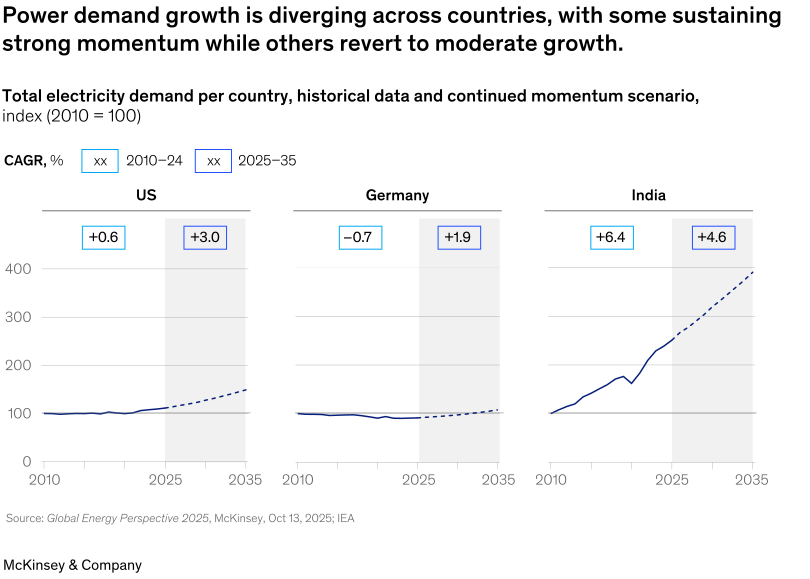
Three line charts show the total electricity demand per country from 2010 to 2035 for the United States, Germany, and India. The prediction is based on historical data and a continued momentum scenario. Though mostly flat for the past two decades, the United States’ power demand is expected to grow 3% CAGR between 2025 and 2035. Germany’s power demand is expected to grow much slower at 1.9% CAGR between 2025 and 2035. India has had increasing power demand for the past two decades and is expected to continue this pattern, growing by 4.6% CAGR between 2025 and 2035.
Source: Global Energy Perspective 2025, McKinsey, October 13, 2025; IEA
Shifting supply chains: Defining the next era of electrification equipment
While power demand is surging and electrification is still progressing globally, the dynamics for electrification equipment have shifted. Growth remains, but the rules of value creation are changing. After years of rapid expansion, OEM value pools are entering a more disciplined phase in which some segments see all-time highs in profitability levels while others face increased scrutiny.
New tailwinds: Unprecedented data center growth and the emergence of business models to support flexibility and hybrid systems
New pockets of growth are shaping the electrification landscape and affecting OEM value pools:
Data centers. The estimated global data center capacity is expected to more than double from 2025 to 2030.6 This growth is fueled by significant investments from data center operators and large infrastructure funds. The impact on power consumption is considerable: Data centers could account for more than 5 percent of electricity consumption and more than 20 percent of growth in electricity demand through 2030.7 Locally, however, build-out could be constrained by grid connections and supply chain bottlenecks. To boost energy independence and resilience while supporting demands for data center build-outs, operators and investors are seeking to deploy energy supply alternatives such as on-site renewable-energy generation (“behind the meter”), energy storage, or microgrids. Given that these dynamics are expected to continue, increasing data center capacities may prompt additional competition for component supply.
This is especially true for the United States, where electricity demand from data centers is expected to rise significantly and account for more than 10 percent of total US power demand by 2030 (Exhibit 1).
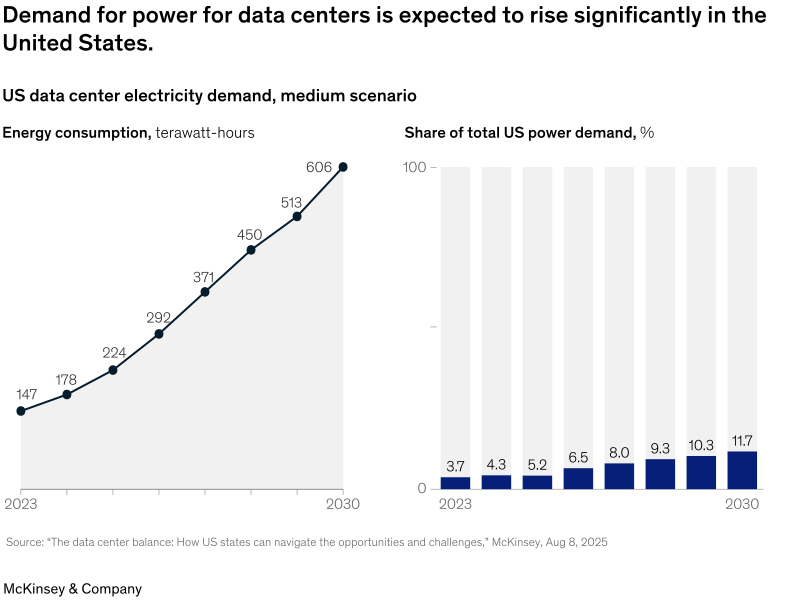
On the left-hand side, a line chart shows the expected amount of energy consumption in the United States from data center electricity demand. Between 2023 and 2030, energy consumption is expected to grow from 147 terawatt-hours to 606 terawatt-hours.
On the right-hand side, a column chart shows the share of data-center electricity demand compared with the United States’ total power demand. While data centers required 3.7% of total power demand in the United States in 2023, they are projected to require 11.7% of total power demand by 2030.
Source: “The data center balance: How US states can navigate the opportunities and challenges,” McKinsey, August 8, 2025
Hybrid systems and flexibility. Hybrid systems that combine electric and conventional technologies have been gaining popularity as a flexible pathway to reduce emissions and manage grid impact during the transition to fully electric solutions. In the Netherlands, for example, heat pumps are increasingly installed alongside gas boilers, especially in buildings with lower thermal efficiency or high reliability requirements.8 In industrial settings, hybrid systems using e-boilers unlock arbitrage potential through dynamic energy prices, which can be further supported with thermal energy storage. Overall, the industrial heat pumps segment is expected to grow at 13 percent per year until 2035, with the largest relative growth expected in Germany, Italy, and Japan.
As systems grow more complex, flexibility in both electricity and heat is becoming essential for grid stability and cost efficiency. A survey of 400 German B2B companies identified 10 to 15 percent in technical flexibility potential to reduce peak load by five to seven gigawatts (GW), 60 percent of which is expected to be accessible within the next three years.9 In contrast, upward flexibility—that is, increasing consumption during periods of oversupply—is currently considered by only one-third of companies. For example, in 2024, California recorded more than 1,180 hours of negative wholesale electricity prices (about 13 percent of the year’s total hours). This is more than double the 530 hours recorded in 202310 and highlights not only the opportunity for flexibility but also the growing need for local balancing and redispatch capacity.
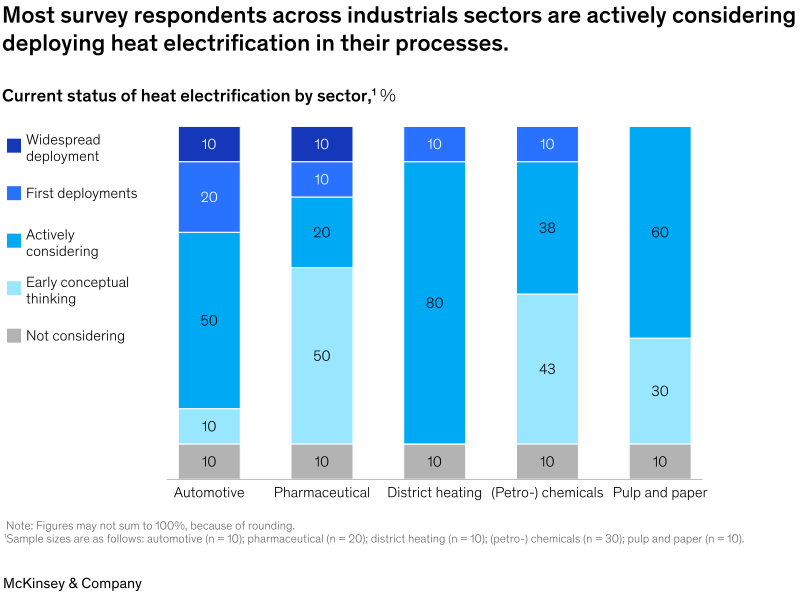
Electrification of heat is the basis for any flexibility opportunities. In a survey among about 100 industrial customers in Europe, we found that a majority are actively considering heat electrification in their processes (Exhibit 2). The actual deployment is most prominent in sectors oriented around the end customer, such as automotive, while deployment is not widespread in chemicals and petrochemicals and pulp and paper because of high reliance on high-temperature processes.
A historic opportunity to scale power infrastructure—though not without challenges
From 2025 to 2035, significant infrastructure upgrades will be needed to integrate decentralized renewables; connect loads from sources such as data centers, EVs, and heat pumps; and replace aging infrastructure. Asia, Europe, and North America are expected to lead this build-out. Grid infrastructure modernization has already been prioritized in many national energy plans. The European Commission, for example, projects €730 billion in distribution and €480 billion in transmission power grid investment by 2040.11
However, availability of equipment puts the timeline of these plans at risk. Manufacturing capacities for major components such as transformers have not kept up with growing demand. According to McKinsey analysis, lead times have surged significantly, peaking in 2023 (Exhibit 3). For transformer manufacturers, these dynamics have pushed margins to record levels. Over the past months, the shortage situation has eased as a result of manufacturing optimization and slowing demand. Nevertheless, the segment is expected to continue delivering strong returns for OEMs.
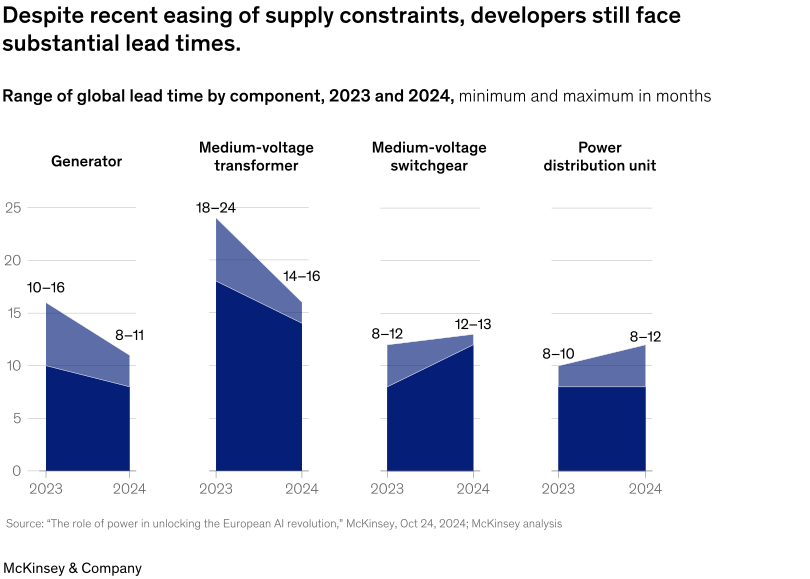
A stacked column chart shows a range in global lead times by component from 2023 to 2024, showing the minimum and maximum amount of time in months. Generators and medium-voltage transformers experienced a reduction in lead times, going from 10 to 16 months to 8 to 11 months for generators and 18 to 24 months to 14 to 16 months for medium-voltage transformers. Alternately, lead times for medium-voltage switchgears and power distribution units have increased despite supply constraints easing, going from 8 to 12 months to 12 to 13 months for medium-voltage switchgears and 8 to 10 months to 8 to 12 months for power distribution units.
Source: “The role of power in unlocking the European AI revolution,” McKinsey, October 24, 2024; McKinsey analysis
Extended timelines are related, in part, to the fact that transformers are usually made to order with customized specifications. Leading manufacturers have announced record backlogs. For example, Siemens Energy reported a €38 billion order backlog in grid technologies in the third quarter of 2025—higher than the €31 billion backlog reported in the third quarter of 2024.12 Shortages in raw materials such as copper, aluminum, silicon, and steel add further pressure.13 Technical labor, too, is in short supply. Globally, about 8.0 million people are currently employed in grid-related roles; however, according to the IEA, existing national energy plans necessitate adding 1.5 million people to the global workforce by 2030.14 These constraints in inputs and talent have triggered substantial cost increases. Since 2019, transformer unit costs have increased by up to 77 percent for power transformers and up to 98 percent for distribution transformers, depending on specifications.15
Tariffs and regulatory interventions heighten uncertainty in supply chains and international trade flows
Project pipelines for clean technologies such as offshore wind and solar photovoltaics (PV) face multiple headwinds: rising input costs, persistently elevated interest rates, and shifting policy frameworks. At the same time, trade interventions and investment restrictions are fragmenting global supply chains and reshaping competitive dynamics. These disruptions affect project viability as well as deployment, and they challenge supply resilience. This has contributed to corrections to the outlook for capacity additions. For example, operational offshore wind capacity expected by 2035 decreased from 398 GW in 2023 to 365 GW in 2025.16
Solar PV is facing rising trade barriers and investment constraints. Tariffs and investment restrictions are affecting cross-border flows of equipment. The effects can be particularly well studied when looking at the solar PV supply chain. Interventions, particularly by the United States and the European Union on Chinese solar products, have triggered a fragmentation of global supply chains. Historically, the global solar PV supply chain has been strongly reliant on Chinese production. The country holds an 82 percent share in global silicon metal supply and in 2023 led panel production with a market share of around 85 percent.17
The primary effect of recent interventions is an increased effort to source components locally. For solar projects, transformers, inverters, and nonelectrical balance-of-plant components are most likely to shift to local suppliers because the price arbitrage from imports is limited. However, imported modules continue to have a significant cost advantage over local production. Some estimates indicate that Chinese solar modules are roughly 50 percent cheaper than those produced in Europe and about 65 percent cheaper than those manufactured in the United States.18
To preserve this competitive edge amid rising trade barriers, Chinese OEMs have long pursued a strategy of relocating parts of their production outside China—particularly to Association of Southeast Asian Nations (ASEAN) countries—to maintain market access. Recent tariff developments have added a new dimension to this strategy: Leading manufacturers are now also evaluating or initiating production in the United States to avoid the emerging tariff wall and to secure continued access to the US market. This evolving footprint may indirectly benefit other regions, such as those in the Middle East, by improving overall supply availability as global capacity expands.
A secondary effect, however, is that renewable-project developers face higher costs, longer lead times, and limited supplier diversity, leading to a slower rate of deployment. Recent reports19 note that the current US tariff environment has raised utility-scale solar costs by 10.4 percent (while also increasing storage project costs by 13.7 percent and wind costs by 8.5 percent).
Offshore wind is experiencing headwinds through tighter market conditions and policy shifts. The offshore wind industry is faced with increased interest rates and cost inflation. As a result, some projects have been postponed or reassessed. For example, in Denmark, Germany, and the United Kingdom, there have been no bidders in auctions due to tougher economic and market realities.
In the United States, the planned phase-out of federal tax credit support is expected to reduce US offshore wind deployment by 60 percent in the forecast period from 2025 to 2030.20 In addition, a federal moratorium on new offshore lease auctions and permitting puts around 60 GW of capacity at risk, on top of the seven GW in capacity already lost due to canceled projects.
In addition, security-related concerns and limiting exposure to geopolitical risk are becoming more relevant in procurement decisions. For example, a German offshore wind developer revoked a supply deal with a Chinese wind turbine manufacturer, citing both operational and security reasons.21
Implications for OEM value pools
Our analysis indicates two important takeaways for OEMs.
Electrification continues to offer substantial opportunities for OEMs, though dynamics differ by component
Global OEM revenues in electrification hardware are projected to grow further, reaching more than $1 trillion by 2035, representing an increase of 35 percent relative to today and highlighting the sector’s continued expansion. However, the pace has moderated compared with earlier projections.
Across this landscape, a concentrated group of nine key components—including compressors and controllers—continues to capture the lion’s share of value, generating 60 to 65 percent of the total revenue pool and driving roughly 75 percent of overall revenue increases between 2025 and 2035. Exhibit 4 illustrates the breakdown by application and component.
What drives the recent changes? Major capital expenditure projects, such as wind energy, are experiencing delays or cancellations, and hydrogen projects are stopped or progressing more slowly than expected,22 which is dampening overall investment until 2035. Similarly, the revenue pool for battery energy storage systems (BESS) has been revised downward, as well—from $126 billion to $87 billion23—due to expected market saturation, reducing the profitability of balancing assets. Despite lowered expectations, the BESS segment still maintains strong momentum, with projected annual growth of 14 to 15 percent, underscoring its long-term strategic role, even under a moderated investment outlook.
The growth trajectory for industrial heat pumps has also been adjusted. The application is expected to grow from $3.0 billion today to $6.5 billion (compared with $12.0 billion in previous projections)24 as decarbonization ambitions are revisited and gas becomes a competitive option again for many industrial applications.25 Space and water heat pumps follow a similar pattern; OEM revenues are expected to reach $129 billion by 2035 (instead of $160 billion),26 linked to cuts in incentive programs, regulatory uncertainty, and weaker economics versus fossil fuel alternatives.
Some pockets of acceleration exist despite the overall moderation. Solar PV, propelled by utility-scale installations in Asia, has been adjusted slightly upward to $164 billion, from $161 billion, despite rapidly falling unitary capital expenditures.27 Power grid hardware OEM revenues have also risen to $392 billion, from $356 billion, underpinned by surging power demand from data center growth and increased commitment to transmission grid upgrades. These more established technologies—including transmission and distribution—are projected to grow substantially over the next decade.
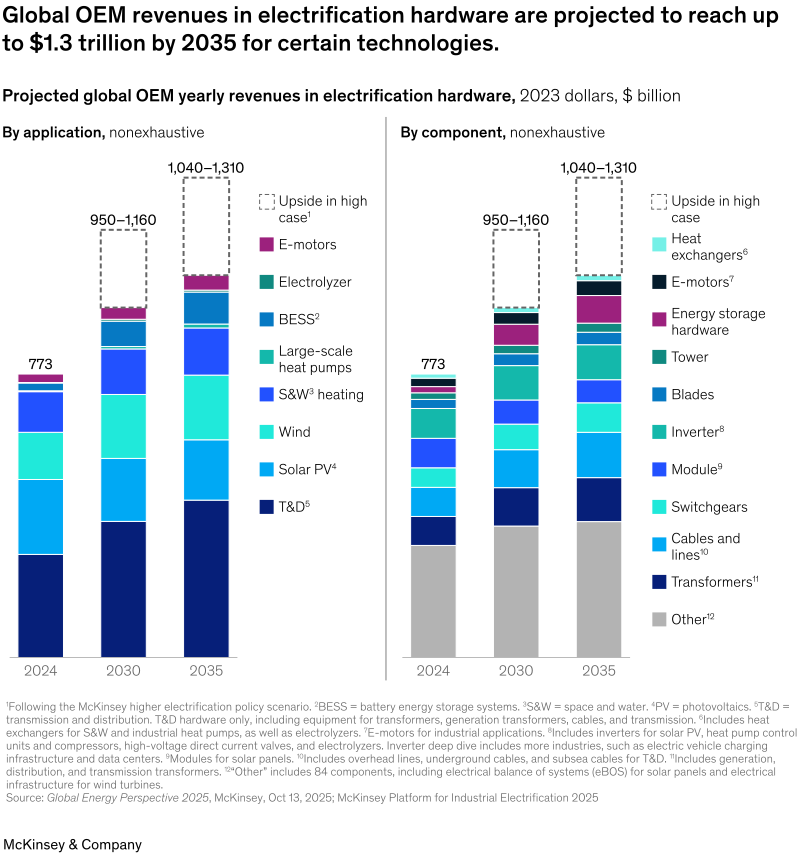
Two stacked column charts show the projected global OEM yearly revenues in electrification hardware for 2024, 2030, and 2035 by application (on the left-hand side) and by component (on the right-hand side). Applications including transmission and distribution, solar photovoltaics, wind, and space and water heating are expected to make up the largest share of revenue. Components including transformers, cables and lines, and switchgears, as well as other components, are expected to make up the largest share of revenue. In total, global yearly OEM revenues for electrification hardware applications and components are expected to reach between $1,040 and 1,310 billion by 2035, up from $773 billion in 2024.
Source: Global Energy Perspective 2025, McKinsey, October 13, 2025; McKinsey Platform for Industrial Electrification 2025
Profitability and expansion prospects vary significantly across components
The most recent perspective reflects a market evolution from expansive growth to a more tempered trajectory emphasizing profitability and market stability. This shift underscores the importance of strategic positioning in high-barrier segments to capitalize on sustained margins in the evolving electrification landscape.
Exhibit 5 depicts EBIT margins and market growth rates across components and technologies until 2035. Margins for high-value items such as compressors, HVDC subsea cables, and controllers remain attractive at up to 15 percent EBIT. Given temporary shortages in the market, short-term margins for some of these components could reach up to 30 percent. Meanwhile, commoditized components such as solar PV modules or wind turbine towers continue to generate substantial revenues with margins between 5 and 10 percent. Nevertheless, shifts in the supply chain configuration, partly driven by policy interventions, provide pockets of opportunity to optimize margins. While differentiation is limited, economies of scale and timing remain vital for OEMs seeking to sustain value capture.
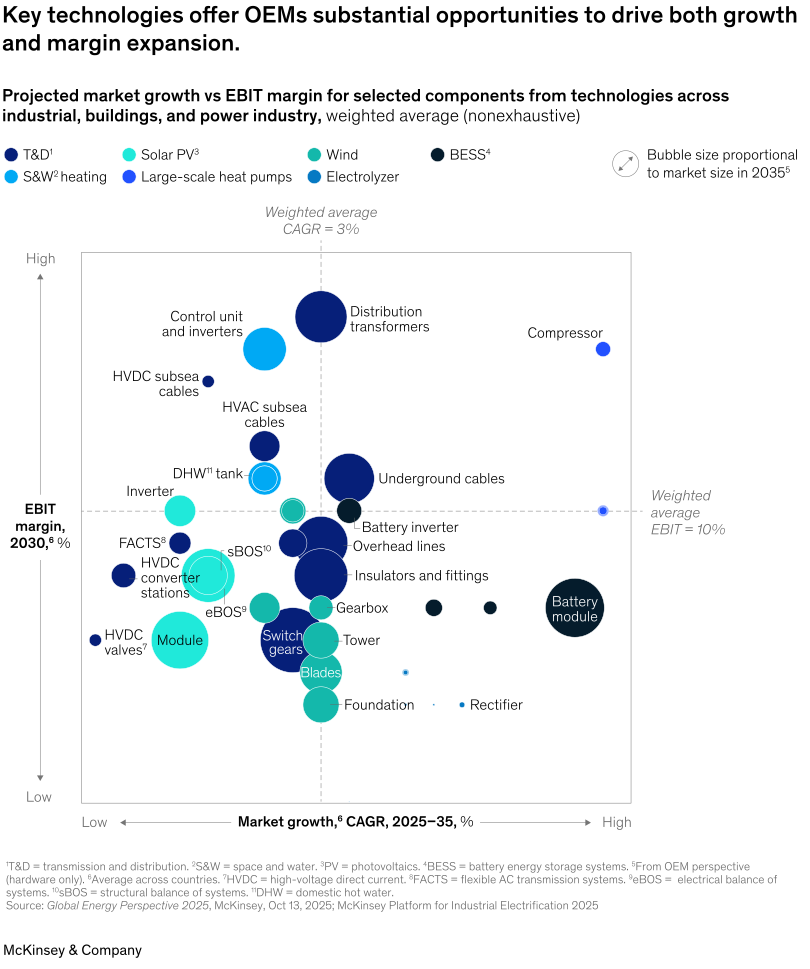
A bubble chart shows the opportunities for selected components from technologies across industrial, buildings, and the power industry based on projected market growth from 2025 to 2030 and EBIT margin for 2030. In the large-scale heat pumps sector, compressors show some of the highest potential; in the transmission and distribution sector, distribution transformers and underground cables show the highest potential; and in the battery energy storage systems sector, battery modules show the largest market growth potential with a lower EBIT margin.
Source: Global Energy Perspective 2025, McKinsey, October 13, 2025; McKinsey Platform for Industrial Electrification 2025
Recent shifts have collectively led to a more tempered—but still upward—trajectory for OEM value pools. Low-complexity products face continued pressure on margins in an increasingly competitive and cost-aware environment. Meanwhile, high-complexity technologies and components, such as transformers, are poised to offer the most compelling returns, with profitability levels at an all-time high. Opportunities still abound for OEMs; they just need to know where to look.