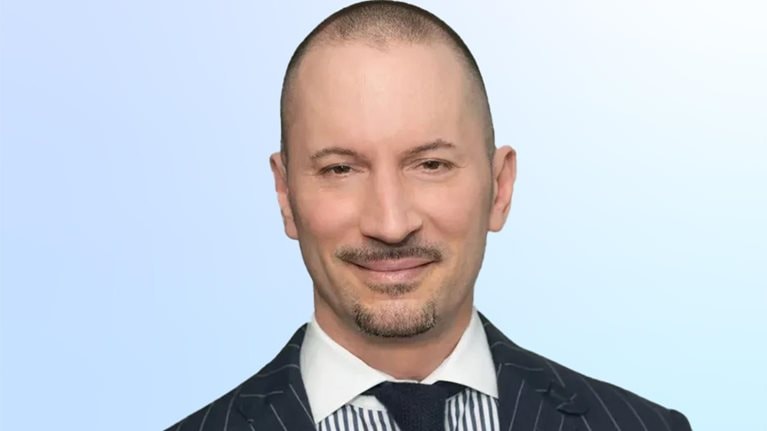
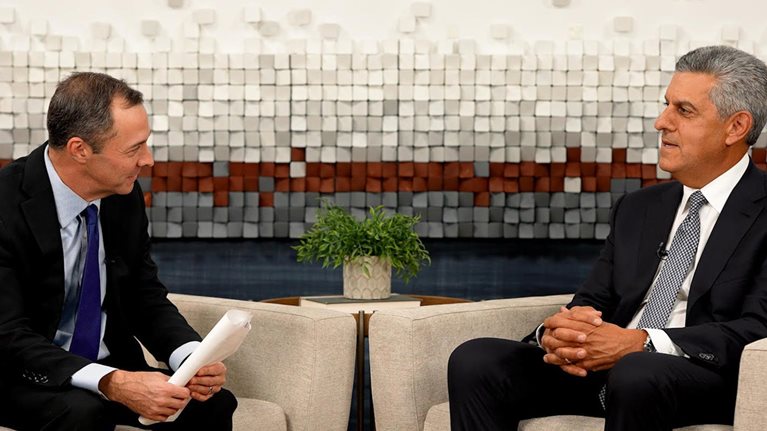
Amid rising costs, diminishing margins, and accelerating technological change, how can healthcare organizations balance long-term strategic goals with short-term revenue headwinds? In this episode of the McKinsey on Healthcare podcast, McKinsey Senior Partner Drew Ungerman speaks with Phil Ozuah, president and CEO of Montefiore Einstein, about the challenges and opportunities facing healthcare organizations today.
Ozuah, who started his career as a practicing pediatrician in some of New York City’s most underserved communities, shares his own leadership journey and discusses how technology can improve patient care. A condensed and edited version of their conversation follows.
Balancing growth with financial stability
Drew Ungerman: How do you think about prioritizing long-term strategic objectives while also addressing the short-term performance headwinds that health systems are facing?
Phil Ozuah: At Montefiore Einstein, it’s about staying true to our mission, which is to heal, to teach, to discover, and to advance the health of the people we serve. Today, we need to focus on the short term—doubling down to ensure financial stability—while actively investing in a broader vision, including transformative technology, to ensure financial sustainability for the long term.
We begin with clear financial goals and break those down into function and facility so everybody has absolute clarity on our areas of opportunity and metrics. But it’s not only about cost—it’s also about growth. We don’t believe that we can cut our way into being a dynamic, forward-leaning organization.
Drew Ungerman: What are some of the most significant transformational priorities that will define your organization’s next chapter?
Phil Ozuah: We’re aggressively and strategically investing in our ambulatory footprint. Patients gravitate to ambulatory settings that are efficient, are more accessible, and don’t look like doctor’s offices.
We’ve entered into a key partnership with Amazon One Medical to expand our ambulatory offerings and bring in a unique and exciting model of care. But it is also, for us, an avenue and opportunity for innovation and growth.
Expanding patient access to care
Drew Ungerman: Patient access remains one of the toughest problems facing the healthcare system. Where do you see opportunities to address gaps in the care delivery model?
Phil Ozuah: We are drawing inspiration from best-in-class consumer workflows within healthcare—and more importantly, outside of healthcare—and we are working with partners and experts to develop workflows with our patients in mind. Patients are coming to us from other experiences and expectations, and we need to meet those expectations.
For example, we have AI-enabled resources now that help identify patients who need cancer screening. Rather than waiting for patients to make an appointment, we can reach out to them with a tech-enabled resource to facilitate that. If there are barriers to making an appointment, the resource can direct the patient in an automated way to the right function or department to address those barriers.
Harnessing the promise of technology
Drew Ungerman: There’s so much excitement in the industry about using data, AI, automation, and technology to deliver not only better outcomes but also a better experience. How are you and Montefiore thinking about the role of technology in driving growth and efficiency and improving the patient experience?
Phil Ozuah: Technology is a critical enabler to our long-term strategy, and we’ve outlined a strategic vision to create an efficient, easy, accessible health system for both patients and providers. For every dollar that we spend investing in future growth, we prioritize intelligent, digital, tech-enabled platforms. Healthcare lags way behind in this regard. In aviation, for example, passengers have come to depend on their mobile devices to get through almost all of their interactions and transactions with the industry.
Drew Ungerman: What are some of the transformational technology bets that you’re making, and how are partners helping make that a reality for you?
Phil Ozuah: One, our strategic partners are helping us rewire the non-patient-facing operations to drive efficiency and modernize our foundational tech platforms. An example of this is our partnership with Amazon Web Services, through which we’re improving our infrastructure to achieve greater resiliency and unlock access to innovative technologies such as high-performance computing.
Second, we are improving patient- and provider-facing technology. We’re building AI solutions to give patients better access to our entire health system—not just scheduling but checking test results and communicating with providers. At the same time, we’re giving our clinicians tools to be more effective and more efficient.
Drew Ungerman: What is the role of a health system’s CEO in setting a bold agenda in technology?
Phil Ozuah: It’s about setting the bar high, demanding innovation, and challenging the team to take a digital-first lens in reimagining all the respective domains through the use of digital AI or other technology. It’s also about making bold investments—and reinforcing those bets by telling and retelling the story of how these investments will enable our vision for an efficient, easy, and accessible health system.
Drew Ungerman: Montefiore Einstein enjoys a rich legacy as a leading academic health organization. What role do you see academic health systems playing in driving innovation technology, especially in the new world of AI?
Phil Ozuah: First, we’re a hub for research and a hub for some of the brightest, most talented thinkers and problem solvers. In addition, we have a close view of existing and emerging patient needs. At Montefiore Einstein, we have nearly eight million patient interactions a year. That gives us a lot of opportunity to see what works and what doesn’t work.
Ultimately, academic health centers are going to be the end users of emerging health technologies and innovations. And we can provide a clear voice on developing technology responsibly. There are a lot of considerations and other dimensions that one must consider even as we accelerate innovation in technology.
Leading with purpose
Drew Ungerman: You began your career as a pediatrician, and you spent much of your clinical career caring for underserved populations. How does that personal history inform your approach to leadership, not only for Einstein but for the healthcare system as a whole?
Phil Ozuah: I spent over three decades as a clinician, including 18 years as a community doctor in the South Bronx. I worked in emergency rooms at night and made home visits by day to patients and families in some of the most underserved parts of the Bronx. That experience gave me a firsthand look at potential impediments to care and showed me how simple, lower-cost solutions can prevent many higher-cost problems later.
For example, we have a system that reaches out to patients who are due for mammograms to bring them into care. If transportation is a barrier, we provide a MetroCard so they can take the bus or the subway to the facility. This $5 MetroCard can lead to early detection of a potential problem, avoiding hundreds of thousands of dollars in cost—not to mention morbidity and potential mortality. The fact that we do that as an organization is informed by my experiences on the front lines as a practicing community doctor.
Drew Ungerman: What excites you most about the possibilities of healthcare? And what gives you confidence as you look ahead to the next chapter?
Phil Ozuah: What excites me is that there will be greater and greater opportunity to make a meaningful difference. As the complexity of care increases and people live longer, the need for world-class care is only going to grow. We as a system have a fundamental and important role to play in meeting that need, especially as the largest private safety net provider in New York.
I’m also excited about what we can learn from other industries and how we can partner to deliver on bigger and bolder aspirations, including making bold bets and using technology to provide excellent patient experience.
What gives me confidence is our fidelity to our mission. It also gives me confidence that we’ve already been through the fire in the past decade with the COVID-19 pandemic, the greatest healthcare crisis that humanity had faced in a hundred years, and our organization has been transforming since then in an accelerated way. Over the next several years we will continue to accelerate, transform, innovate, grow, and make a difference.