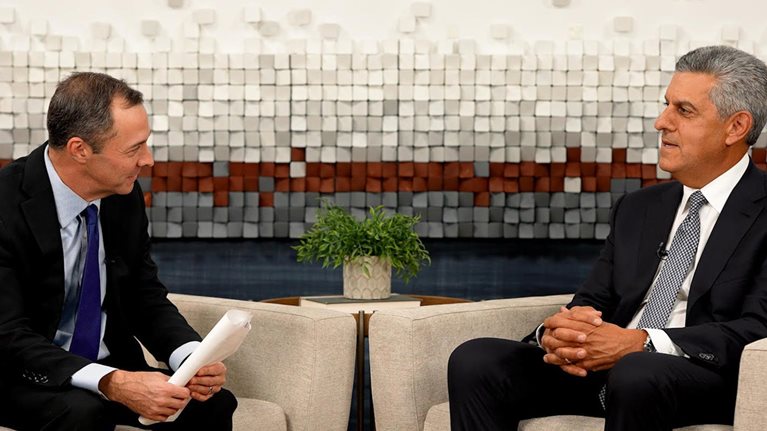
With more than 40 hospitals across three states, UPMC (University of Pittsburgh Medical Center) is a vital touchpoint for many patients. In addition to being a traditional care-delivery organization, UPMC offers insurance to millions of members, allowing it to have a comprehensive “payvider” model. This model allows the system to better coordinate affordable care among its patient population and helps foster innovation efforts within UPMC’s walls.
As UPMC’s president and CEO, Leslie Davis sees the opportunity the organization has to train the next generation of clinicians; treat patients with high-quality, specialized care; and establish itself within underresourced communities. In this episode of McKinsey on Healthcare, Davis speaks to Drew Ungerman, McKinsey senior partner and global coleader of McKinsey’s social, healthcare, and public sector entities group, about how UPMC is thinking about its next moves, including communicating the value it can offer to the public, setting meaningful but specific priorities, finding areas for ambulatory-care settings, and charting the next path for innovative treatments and technologies.
An edited version of their conversation follows.
Coordination that leads to higher quality care
Drew Ungerman: The future role of academic medical centers [AMCs] will not just be research and training. They also must reinvent care delivery and collaborate with others across what is becoming a complex healthcare ecosystem. What do you think the blueprint looks like for the next generation of AMCs, and how will UPMC differentiate itself in that landscape?
Leslie Davis: For us, the future of care starts with harnessing the strength and scale of UPMC’s integrated delivery and financing system. There are many challenges in the industry, as you mentioned. Going forward, having these different parts of our system differentiates us and helps us to drive the next generation of care and create the life-changing medicine that we are known for.
UPMC has an interesting model. First, we are a traditional AMC, offering tertiary and quaternary care, with a growing outpatient ambulatory footprint. The other part of UPMC is the payer side. We call this model “payvider.” We insure over four million members. We have the opportunity to coordinate the payer side with the provider side, which allows us to offer a higher level of care.
Over the past 20 years, we’ve been developing our Enterprises division, where we take innovations created within UPMC, the University of Pittsburgh, and the School of Medicine, and use those innovations to develop new pharma and technologies. That opens paths to discovery and additional revenue streams. We’ll continue to invest in those areas.
We also have a small but important international division. We are developing new treatments, technologies, and bilateral learning approaches in Italy, where we have a large transplant center; in Ireland, where we have a group of cancer centers and hospitals, as well as the largest sports medicine hospital in the country; and in Croatia, where we have a new cancer center. These sites allow us to administer affordable care to populations that need it and serve as centers for learning and innovation.
Drew Ungerman: You mentioned UPMC’s payvider model. The degree to which you serve as a payer, a provider, or both varies across the regions you serve. How do you balance these roles as you’re making strategic decisions for the organization? And what are some of the benefits of serving the communities as both a payer and a provider?
Leslie Davis: When you’re a provider, you feel like you’re throwing money over the fence to the payer; and the payer feels the same way.
We run them like they’re separate businesses, but the leaders of each coordinate and are part of the same team. We all want to do what’s best for UPMC, our patients, and our members. Our cultures are aligned, which is different than being a regular provider. This creates a tremendous opportunity to bridge the gap between the payer and the provider. It’s important to us to provide the right amount of care to each patient—no more or less—and work seamlessly across the payer and the provider.
Drew Ungerman: When you come back to your mission, you come back to the consumer. Having that degree of alignment, coordination, and information sharing should create a lot of value and root waste out of the system. It ultimately serves the patients in the best possible way.
Meeting patients inside and outside traditional settings
Drew Ungerman: How do you think the evolving expectations of your consumers are changing how AMCs and health systems are approaching their go-forward strategies?
Leslie Davis: Between the internet and social media, consumers get information instantly. So we have to be better communicators, especially to the public. The expectations in general of consumers have continued to grow. When I get a scan, I look at my phone for the next two hours to find out what the results are. So, I always think, “How do the thousands of people that get tests every day feel?”
We are implementing Epic across all of our sites to easily access records for patients who move from site to site. We’re also creating more outpatient and ambulatory sites for blood work, imaging, and physician visits. That’s what consumers want. We are responding to what consumer expectations are today, but we’ve got to be ready for tomorrow because they may change again.
Drew Ungerman: The foundation UPMC has in the United States and internationally gives it a unique perspective into what’s shaping healthcare today. What challenges do you think are most affecting your ability to drive clinical innovation and deliver on your mission to deliver high-quality care?
Leslie Davis: The rising cost of healthcare and labor are challenges. Our Enterprises division allows us to self-fund our work without requiring federal funding. We try to focus on the things that we can control at UPMC, such as the quality of the care we provide, the experiences our patients and members have when they interface with us, patient access, and innovation.
There is also a chronic shortage of healthcare professionals. And a lot of people go into nursing, for example, but don’t necessarily want to work at the bedside. Or people go to medical school and don’t want to be clinical physicians in a rural community. But there are many opportunities in healthcare outside of the traditional hospital and ambulatory centers. Through technology, telemedicine, and our training programs, I think that can be overcome.
Drew Ungerman: You recently acquired Washington Hospital in Washington, Pennsylvania, as well as over 80 urgent care centers across several states.1 What role does inorganic growth play to combat some of these challenges?
Leslie Davis: We’ve had relationships with many independent community hospitals. We’ve provided behavioral-health services and transplant services in many of these hospitals if they are not equipped to do so. Our relationship with UPMC Washington hospital is an example of one. It’s positive for us because we can ensure their community will have the care they need in the future, and we can also introduce service lines they didn’t have. Our health plan ensures those members have access to better care.
If we get to a point where we can be in every community, and patients can be seen quickly in urgent care centers, they won’t have to come to our emergency rooms, and that will reduce costs. Many of our specialists and primary care physicians can use these urgent care centers for their practices and as telemedicine centers.
Innovation as the throughline
Drew Ungerman: UPMC’s robust innovation engine and commercialization arm has allowed it to create and scale new technologies and partnerships in the healthcare ecosystem. Why is innovation so critical, and what’s your vision?
Leslie Davis: Innovation is the core of UPMC. We have an opportunity to recruit scientists and use these innovations to understand the best way to take care of diseases. Our Enterprises division allows us to do that.
Our innovation focuses on three areas. First is pharma, such as highly personalized immunotherapies for leukemia and gene therapy. Second is digital. Pharma is life-changing, but new therapies can take up to 15 years to create, the success rate is much lower,2 and the investment is much higher. In the meantime, we’re populating the portfolio of the digital solutions that help with discovery and treatment. Third is called the Health Technology Advancement Program, which is run by a few of our elite physician-scientists and incubates ideas through UPMC, so they don’t get hindered by outside processes and supply chains.
Drew Ungerman: Clinical programs also foster innovation and attract patients. How does UPMC approach innovation through its clinical programs? What lessons have you learned from your experience in building out these programs?
Leslie Davis: One exciting program is our transplantation program. It started with Dr. Thomas Starzl, a pioneer in early organ transplantation medicine who spent much of his career at UPMC.3 Liver transplantation is dependent on organ donors and cadaveric organs. Fortunately, with seat belts and fire safety, we don’t have as many organs donated as we’ve had in the past, so patients are limited by waiting lists. We’ve grown our live-donor liver transplantation capabilities, and we remain one of the busiest liver transplantation systems in the country. We educated the community, hepatologists, primary care physicians, and consumers on what live-donor liver transplantation is, and we’re creating better care across the country and world, which is our goal. We focus on education to replenish the care that we have.
Drew Ungerman: UPMC has been early to test, implement, and refine AI solutions to drive better outcomes and greater efficiency, which is essential in this environment. How do you think about implementing these new AI solutions?
Leslie Davis: We have to make sure we have our priorities straight. It’s a matter of thinking, “Where do we want to spend our time? How long will this take? And what will the outcome be and how will we measure success?” Those are key milestones for any new product or program. So, thinking about operational efficiencies, what is the clinical opportunity, and what can we do to enhance the clinical experience of a patient, the outcome, or the physician’s ability to do their job? How do we extend that expertise? We also have to be open to thinking differently in how we use them.