




The data points in this blog post are based on research by McKinsey Panorama
AI, particularly agentic and gen AI, is rapidly reshaping how financial institutions create and capture value.
To understand the impact of this evolution in financial services, we analyzed more than 600 AI initiatives, sorted into about 30 idea clusters, using Idea Analytics, McKinsey Panorama’s new gen AI–enabled platform for tracking banking innovations (see sidebar, “More about McKinsey Panorama and Idea Analytics”).
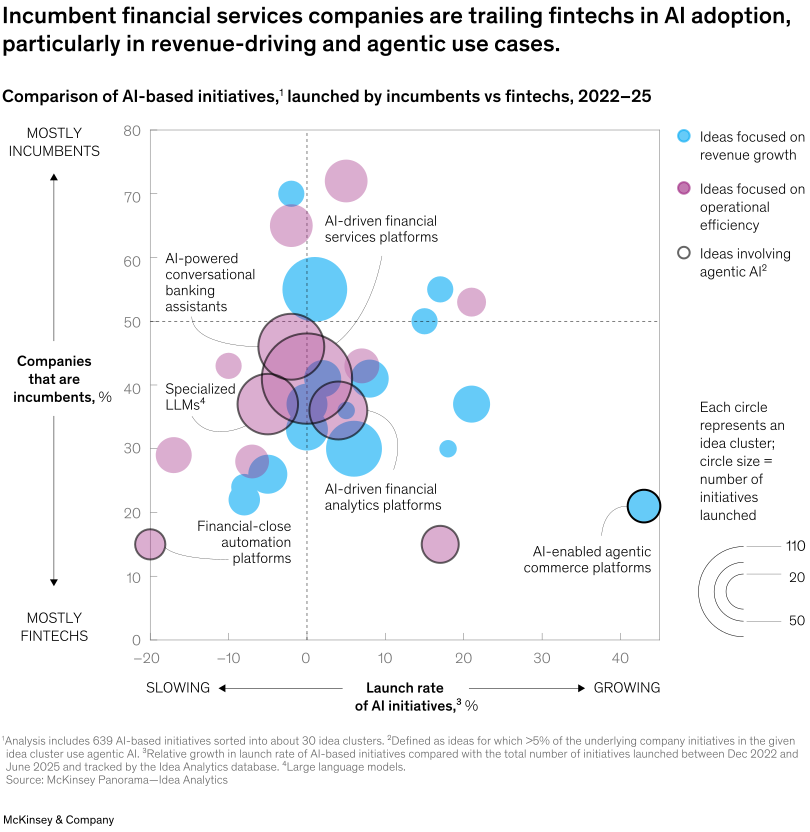
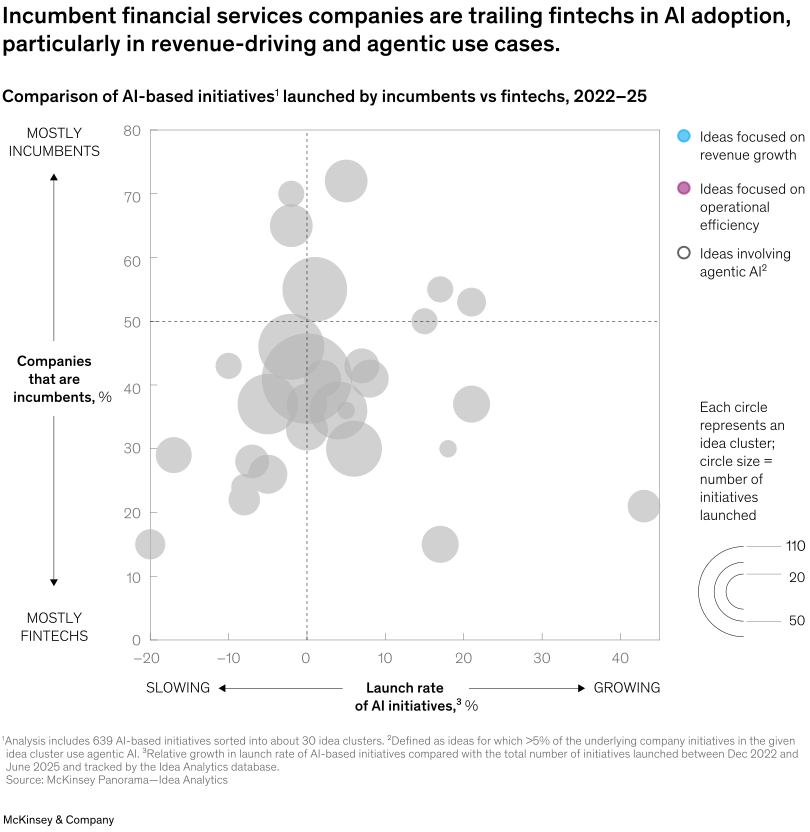
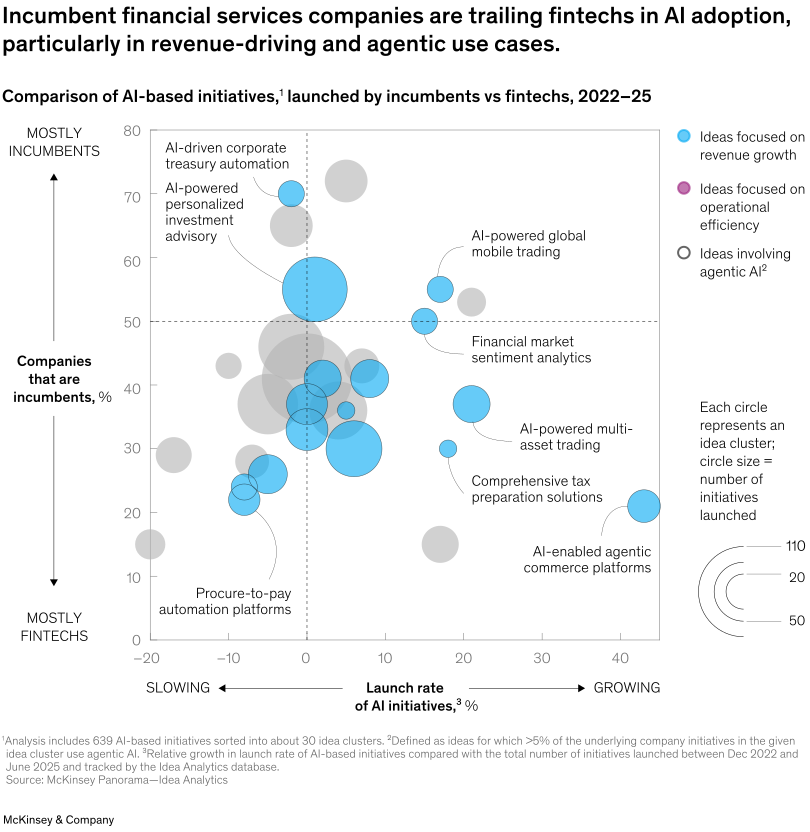
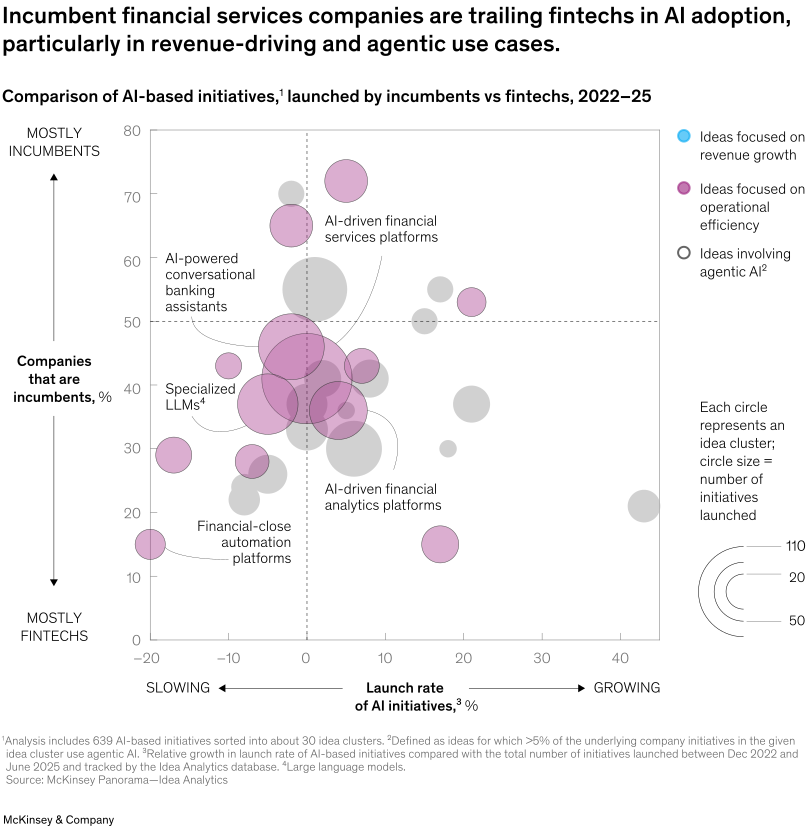
We tracked initiatives launched between late 2022, when ChatGPT was released, and summer 2025. The aim was to contrast initiatives coming from fintechs and those from incumbent financial services firms, including banks and payments companies (exhibit).
Our analysis yielded the following main findings.
Fintechs are outpacing incumbents
Despite their scale and data advantages, incumbent banks trail fintechs in deploying AI with measurable business impact. Our data set includes roughly 4,000 of the largest fintechs globally, based on revenue (if available), funding, and valuation.
Fintechs account for a disproportionate share of the AI initiatives tracked. Although fintechs make up just 40 percent of the data set, they account for nearly 70 percent of the AI initiatives, helped by their agility and focus, as well as by having fewer legacy constraints than banks.
Banks, in contrast, face greater regulatory complexity, fragmented technology stacks, and organizational inertia. While fintechs have rapidly operationalized AI in analytics, trading, and portfolio management, many banks remain stuck in pilot mode, testing promising concepts but struggling to move them into production.
The AI adoption curve is stabilizing
After a period of rapid experimentation, the pace of AI adoption in financial services is leveling off. Many early applications, such as AI-powered conversational assistants and financial-close automation platforms, are now relatively standard and are being launched at rates similar to those for products and services that aren’t focused on AI.
Meanwhile, the use cases where adoption rates are growing the fastest mostly involve agentic AI and revenue-driving applications, such as AI-powered multi-asset trading platforms and advanced predictive decision management tools, which use AI and data to identify patterns, predict risks and opportunities, and help organizations with decision-making. Fintechs are on stronger footing than banks when it comes to these types of applications.
The divergence in adoption trends likely reflects some hesitation from banks to launch AI-driven offerings, as illustrated by the relatively small number of launches in our data set. The roughly 600 AI-focused launches in our data set account for only about 3 percent of the total launches of products and services in the Idea Analytics database during the period from late 2022 to summer 2025.
Growth is concentrated in agentic, high-value use cases
Our analysis shows that fintechs are defining the more experimental and fast-evolving frontier of AI innovation, pushing further into agentic, autonomous AI. The most transformative potential lies in agentic AI and revenue-driving use cases—areas where fintechs dominate. These include advanced predictive decision management, AI-driven financial analytics, and multi-asset trading platforms.
For instance, an AI-powered global mobile trading platform used by fintechs enables real-time, algorithmic decision-making, improving trading outcomes. Banks, meanwhile, use AI mainly to improve reliability and trust. Most incumbent initiatives are defined by narrower applications such as treasury automation, chat-based banking assistants, and advisory personalization, which, while useful, risk commoditization and miss the transformational upside.
PayPal’s Agent Toolkit, launched in 2025, exemplifies the emerging shift to dynamic, multi-agent commerce ecosystems that will be able to transact, decide, and execute with minimal human input. The toolkit enables developers to build agentic AI workflows directly integrated into PayPal’s payments infrastructure, allowing agents to manage invoices, payments, and shipment tracking. In our analysis, the toolkit appears in the “AI-enabled agentic commerce platforms” segment, which is experiencing rapid adoption, mainly among fintechs rather than incumbents.
Hybrid financial institutions blur the lines between incumbents and fintechs, combining regulated banking with advanced personalization. The most widely used idea cluster in our analysis is AI-driven financial services platforms, which use AI to automate processes, analyze huge amounts of data, and personalize services for customers.
One interesting example within this cluster is a widely used financial wellness tool from Discovery Bank, which was launched by South Africa–based insurer Discovery Group in 2019. A full-service digital institution built on a fintech framework, Discovery Bank operates without branches or proprietary ATMs. The financial wellness tool, Discovery AI, allows customers to track their budgets and get personalized recommendations, reminders, and the like via WhatsApp. The voice-enabled tool can answer questions like “How much did I spend on coffee last month?” to help customers track their spending and work toward financial goals.
The strategic imperative: Move from automation to autonomy
AI is more than just another automation wave. It acts as an equalizer that allows agile players to challenge incumbents in revenue-rich areas. Unless banks move beyond incremental pilots and fully embrace agentic AI, they risk ceding customer relationships and long-term growth prospects to nimbler fintech competitors.
To close the gap, incumbents must rethink where and how they deploy AI, using approaches such as the following:
- prioritizing revenue-generating use cases by focusing investments on customer-facing opportunities that expand growth
- scaling beyond pilots by building the data foundations, governance, and cross-functional delivery models needed for enterprise-wide deployment
- investing in agentic capabilities by moving from automating tasks to creating agentic systems that can perceive, decide, and act independently
Incumbents that quickly embrace AI can transform it from a threat into a strategic advantage. By using AI to reinvent themselves, incumbents can match the speed and innovation of fintechs while harnessing their own inherent reach and reliability to lead the next wave of growth. Banks that hesitate, however, could be left watching from the sidelines as AI reshapes the next era of financial innovation.
For a PDF version of this article, click here.