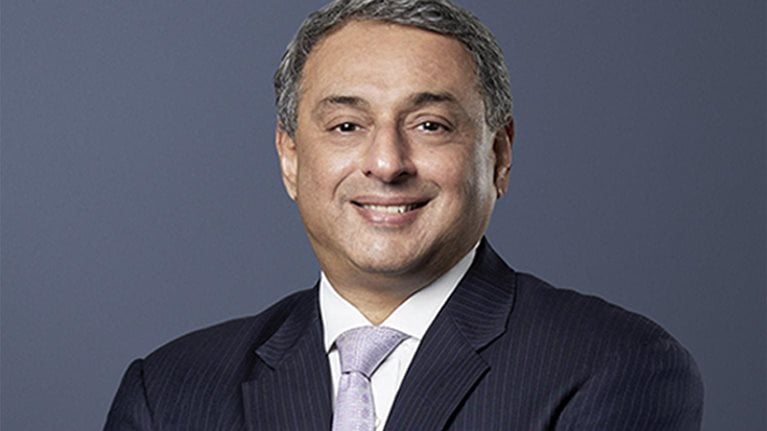
Just three years after Marcel Cobuz took the helm of building materials company TITAN Group, its EBITDA climbed more than 80 percent, exceeding €600 million in 2025. The company, which operates in more than 25 countries across four continents, achieved its 2026 strategic targets a year ahead of schedule. It is on track to hit €4 billion in sales in 2029, up from €2.6 billion last year.
Cobuz is TITAN’s first CEO from outside the founding family. As he tells it, the company’s recent success has required “deliberately making ourselves uncomfortable” and “not being constrained by what seems rigid and fixed.” Although he joined TITAN with 25 years of industry experience, including as CEO of the European business of multinational company Holcim from 2018 to 2021, he had never before led a family-controlled business. Reflecting on his tenure so far, he feels he moved too fast in some areas and too slowly in others.
He recently spoke with McKinsey’s Eleftherios Charalambous and Patrick Schulze about his decision to join TITAN, the pillars of the company’s transformation, and what he’s learned about leading a century-old institution that remains family-controlled while also being publicly listed. (TITAN Group is incorporated in Belgium and listed on Euronext Brussels, Paris, and Athens; Titan America is listed on the New York Stock Exchange.) The following are edited excerpts from the conversation.
‘A fresh push’
McKinsey: You’d spent decades at large corporations. What drew you to a midsize family company?
Marcel Cobuz: In the words of Dimitri [Papalexopoulos, the fourth-generation CEO who led TITAN from 1996 to 2022 and currently chairs its board of directors], the decision to hire an outside CEO was one of the most difficult he has had to make in his life. But he and his family had come to the conclusion that the company needed a fresh push to navigate three trends in particular: decommoditization, decarbonization, and digitalization.
I spent weeks studying TITAN’s assets, markets, and people. What I found was a company that was strong where it mattered. It had a strong safety culture, which, in heavy materials, is the moral bedrock. The operational capability and balance sheet were strong. It had a deep brand in its chosen markets. But the company was running below its potential. The gap between what existed and what could be was large enough to matter but not so large that I would be rebuilding from scratch. To say yes, I needed to believe that the family truly wanted the company not just to grow but to change in new ways.
Coming to TITAN, I felt prepared in terms of my leadership experiences and my ability to assess what needs to be done and how to do it—but in a large corporate environment, not in a midsize, family-controlled company. So, my biggest challenge when joining TITAN was to listen, consider the perspectives of stakeholders who had been there for decades, and figure out how much change the company could absorb at once. I had to marry a quarterly mindset with long-term value creation.
Continuity and renewal
McKinsey: What have you found to be the biggest difference between leading a large corporation and being CEO of a family-controlled business?
Marcel Cobuz: The time horizon is the most important difference. Long-term family ownership enables a capital allocation discipline that is genuinely different from what quarterly reporting pressure allows. For example, doubling down on alternative cementitious materials and investing in IFESTOS—our carbon capture project in Greece, which has a long payback time—requires exactly that kind of patience.
Dimitri and I worked with the same executive coach during the leadership transition. That’s an unusual thing to do, but it reflects how seriously we both took the question of how an outside CEO integrates into a family institution without disrupting what makes it distinctive. I took this role knowing that I would be here not to teach lessons, or to copy the corporate world I knew into the modern company I wanted to create—but to perfectly blend continuity with renewal.
McKinsey: One outward sign of renewal was TITAN dropping “cement” from its name and reframing itself as a materials producer. Did the name change have an impact internally? What changed day to day?
Marcel Cobuz: The name change had an internal effect I had underestimated. When your company is called “cement,” people filter new ideas through that lens, and it quietly limits what they believe is possible. Remove that word and people give themselves permission to go beyond their roles and their previous strategies.
We have also deployed a fuller identity shift: a revitalized set of values—“We care, we dare, we build to last, we walk the talk”—and a new visual identity anchored to our purpose, which is “making the world around us a safe, sustainable, and enjoyable place to live.” We launched it simultaneously on four continents in March 2024. That simultaneity mattered enormously. A transformation becomes real when the plant team in Athens and the commercial team in New Jersey are working from the same sense of who they are on the same day.
Conversations about the growth of the wider construction materials market, our new products, new customer segments, and new services became easier to have. To enhance the company’s innovation culture, among other actions, we established a company-wide ideation challenge. In the first round, employees submitted 220 ideas in less than 40 days. The winning idea came from two plant-floor employees, and it was funded and developed. In year three of the challenge, nearly 10 percent of our global workforce participated. Combined with our ecosystem initiatives, our innovation culture is now locked in.
The transformation road map
McKinsey: Very soon after joining TITAN, you introduced a new strategic framework and started a transformation effort. What were the pillars that defined the new strategy—and what did you stop doing?
Marcel Cobuz: It is in TITAN’s DNA to be an integrated specialist—to own the full value chain in the markets we play in, rather than spreading ourselves thin across many geographies. So we reshaped our portfolio and exited some geographies, choosing to concentrate capital in higher-return markets with structural advantage: Southeastern Europe and the US East Coast. We redeployed capital into three cement acquisitions and several bolt-ons in concrete and aggregates. We completed Titan America’s NYSE IPO, creating strategic optionality.
Another pillar of our transformation road map was decarbonization. Sustainability shouldn’t be a trend that peaks and fades. TITAN is building a differentiating strength in alternative cementitious materials, which can both reduce costs and accelerate decarbonization in a lighter asset model. Our calcined clay program at Roanoke, Virginia—backed by a $61.7 million US Department of Energy award—will cut CO₂ per ton by up to 50 percent. IFESTOS will produce three million tons per year of zero-carbon cement when operational.
A third pillar was to enhance our leadership in digitalization. We’ve now invested in three digital start-ups and our own internal start-up, we have more than 300 digital champions across the company, and 90 percent of our assets are digitally enabled. At our Pennsuco plant in Florida, we operate a full 3D digital twin, and we use AI-driven cement quality prediction that compresses a 28-day cycle into hours. For our US ready-mix concrete supply chain, we developed an AI-enabled logistics optimization solution that I believe is among the first of its kind in the building materials industry. CemAI, which we recently spun out, takes these tools to other cement manufacturers.
The next chapter is digitalizing customer interfaces. And by the end of this year, we aim to have all our 6,700 employees trained in digital dexterity, which will democratize AI knowledge and bring us to the next level of embracing more tech-savvy tools.
McKinsey: What did the technology bet look like at the kiln face? Were there some things that didn’t quite work as well as expected?
Marcel Cobuz: Several members of our executive team and board had gone to Singularity University. We came back changed; we saw what other industries were already deploying. That trip became the model for innovation expeditions we now run systematically to San Francisco and Seattle for AI and physical systems, Munich for industrial tech, and China for what is happening at the intersection of manufacturing and AI at scale. We go to stress-test our assumptions about timelines. The industry is transforming, and our job is to transform faster.
Honestly, not every early deployment worked. For example, to capture manufacturing efficiencies with machine learning, we installed around 2,000 sensors per plant. We had to go back and rework the sensor infrastructure in some European plants to generate data inputs before the AI models could do anything useful. It cost more than budgeted and took longer than planned, because we underestimated how much data quality work would be needed before the algorithms could trust what they were seeing. That is the most common mistake industrial companies make: They invest in the model and neglect the foundation. I learned that the hard part of industrial AI isn’t the algorithm—it’s getting data you can trust.
On discipline and pace
McKinsey: Cement is heavy, capital intensive, and local. Some constraints are physical. How do you determine what is truly fixed and what isn’t?
Marcel Cobuz: You cannot move a kiln, compress the chemistry of clinker, or make limestone less heavy. Those things are fixed. What is almost never as fixed as it appears is the business model built around those physical facts. The geography of distribution, the customer segments you serve, the product categories adjacent to cement, the way you price, the way you deploy capital—all of that has been shaped by decades of industry convention, not physics. I try to ask this question every time I hear “can’t”: Is this “can’t” because of physics, or because of legacy or history? Or are we not looking deeply enough into our end-user customer segments?
McKinsey: It must be a challenge to build alignment and execution discipline in a highly decentralized, asset-heavy business. How does TITAN do it?
Marcel Cobuz: Heavy materials are a strategic platform for development, which enables transition and resilience. It is, by nature, a decentralized business. About 60 percent of our business is in the United States and 40 percent is split across Greece and Western Europe, Southeastern Europe, and the Eastern Mediterranean. A kiln in West Virginia and a quarry in Bulgaria have almost nothing in common operationally. We work with hyperscalers to build data centers in Virginia, and with local contractors for bridges and warehouses in Egypt and Kosovo. We also have a long supply chain in some markets, where products from one geography get transported to another, so on any given day we have the equivalent of one cement plant on a boat.
You cannot run these plants from headquarters. If you try, the only thing you will do is make headquarters larger and the plants slower. So, what should you centralize and what should you localize? My answer has been consistent: Centralize the framework—financial performance standards, safety non-negotiables, sustainability commitments, capital allocation criteria—and push everything else, including execution, to the people closest to the asset.
McKinsey: Were there moments when you felt the transformation could have gone awry?
Marcel Cobuz: Our pace was off in some areas. I should have moved faster on the technology front. Approximately 18 months in, we had a working model for digital manufacturing, but the results were not yet convincing to the plant operations community. The easy path would have been to leave it as a pilot until there was full consensus. Instead, we committed and integrated it as part of an industrial performance plan, and six months later the operational results the plants needed were there—but they wouldn’t have been if I had waited for them before committing. I spent the first year building the case; I should have committed and built the case simultaneously. In a digital transformation, you have to be one step ahead of your own proof points.
But on the commercial side, I would have moved more slowly. I underestimated how long it takes for a new commercial framework to prove itself. I heard from plant managers and commercial teams that the speed of change in product development and service was straining relationships with longtime customers. Some of those relationships took years to build, and we did not want to risk losing them.
I came in believing that organizational change would follow strategic clarity almost automatically. I learned that it does not. They are separate disciplines with separate timelines—and conflating them is expensive.
‘A leader who coaches’
McKinsey: You define yourself as a coaching leader in a decentralized industrial business. What does that actually look like?
Marcel Cobuz: I believe leaders should build teams as early as possible in their tenure, empower people right away, and ask questions rather than bring answers. Over the past three years, around 40 percent of our top 150 leaders changed roles or joined from outside—so my leadership style had to quickly match this magnitude of change. When someone brings me a problem, I resist giving the solution I can already see and instead ask the question that helps them see it. That is slower in the moment, but its impact compounds across an organization over years. A leader who coaches grows an organization; a leader who directs creates dependency.
Also, the internal story you tell matters as much as the external strategy. The people working the midnight shift at your plants need to believe in the destination as much as the investors do. You have to hold genuine optimism about where you are going while being honest about where you are. To me, optimism is not a soft skill; it is the fuel for a transformation.
McKinsey: What do you hope TITAN will be known for in three years? And what advice would you give to leaders transforming legacy industrial businesses?
Marcel Cobuz: In three years, I believe there will be even stronger evidence that business model changes produce superior returns, and that green industrial products are profitable products. Our alternative cementitious platform will be value adding. On the digital side, I believe our operating model will be built around AI agents across the supply chain, our digital platform will be a competitive moat, and physical AI will be a reality in quarries and on plant floors.
Industrial leaders need to understand this: Your industry will transform, and you can either be ahead of it or behind it. The companies moving first on decarbonization and AI in heavy materials are pushing boundaries in a conservative industry—and are building advantages that could take competitors years to match.
If I had to distill the playbook into three moves, here’s what they would be. First, set stretch targets that require new approaches, not just more effort. We set ambitious targets in 2023 and raised them in 2025, because achieving the previous plan early told us the ambition ceiling was still too low. Second, move on technology before you have full consensus. Third, protect the specialist model: Resist the temptation to grow geographically at the expense of depth in the markets where you genuinely have an advantage.
In 1994, when I was 23, I joined the National Bank of Romania. We built the Bucharest Stock Exchange. The conventional wisdom was that the conditions were not right, the institutions were not ready. We built it anyway.
That tolerance for starting before the conditions are perfect has never left me. Thirty years later, I am again working with my teams to build new things, in a company that has been in business for 124 years. The tools and the scale are different, but the underlying question is the same: Do you wait for perfect conditions? Or do you move and, with your team, figure out the rest? I have only ever known one answer to that question.