For decades, automakers have treated warranty risk as a manageable by-product of scale and innovation. That assumption is becoming harder to sustain. Warranty-related costs have nearly doubled since 2012, reaching roughly $58 billion globally in 2024—about 2.2 percent of industry sales. For some OEMs, warranty costs now exceed 4 percent of revenue, rivaling annual R&D spending.
The scale of these costs signals a structural shift in how vehicle quality risks emerge and propagate. Development cycles have shortened as automakers race to deliver electrification, advanced driver-assistance systems, and, increasingly, software-defined architectures amid intensifying global competition. At the same time, supply chains have grown more intricate and regulatory requirements have tightened, increasing the cost of delays.
Together, these forces increase both the likelihood of defects and their potential to spread rapidly across fleets. But most automotive OEMs continue to manage quality largely through retrospective, warranty-led processes, despite having access to unprecedented volumes of vehicle and customer information. Fragmented data and siloed expertise mean that issues are often identified only after failures occur in the field, triggering time-consuming investigations that further delay containment. The result is a widening gap between the scale and speed of quality risks and the processes used to manage them.
To understand how automakers are responding to these pressures, we surveyed 40 senior aftersales and quality executives across passenger-car, commercial-vehicle, and agricultural OEMs (see sidebar, “Our methodology”). The survey suggests that replacing reactive containment with proactive quality processes built on unified data and AI-enabled analytics can materially change outcomes. OEMs pursuing this approach expect to reduce warranty costs by 5 to 10 percent or more, while also improving customer satisfaction and reinforcing quality by design in future programs.
Reactive processes in a data-rich environment
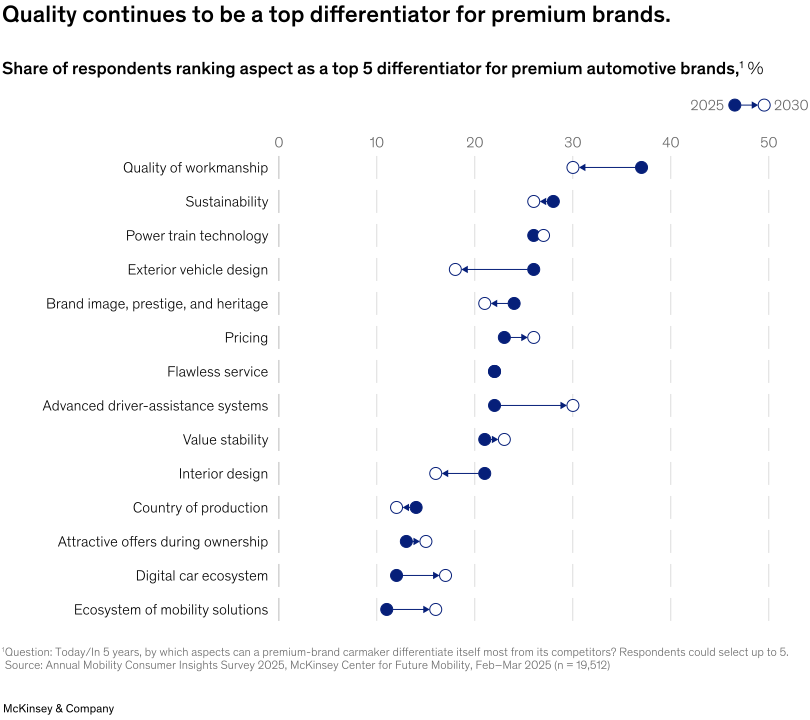
Quality has long been central to brand positioning—particularly in the premium segment, where it remains one of the strongest predictors of customer loyalty and willingness to pay (Exhibit 1). As vehicles become more technologically sophisticated and expectations rise, customers are less tolerant of defects, repeat visits, or inconsistent service experiences. Warranty performance, therefore, is not only a cost issue but also a determinant of customer satisfaction, retention, and acquisition economics.
Slow detection and containment
The survey results suggest that many OEMs are managing these rising expectations suboptimally. While vehicles generate unprecedented volumes of telematics and diagnostic data, quality workflows in most organizations still rely heavily on warranty claims as the primary trigger for investigation. Issues are typically escalated only after failures occur in the field, and sufficient claims accumulate to indicate a pattern.
In many cases, root-cause analysis begins once faulty components are retrieved and examined in laboratory settings. On average, survey participants report that it takes roughly seven weeks from initial issue reporting to establish a confirmed root cause. Developing and deploying countermeasures can take an additional nine to ten weeks. During that interval, vehicles continue to enter the field, incidents accumulate, and exposure grows—financially and reputationally.
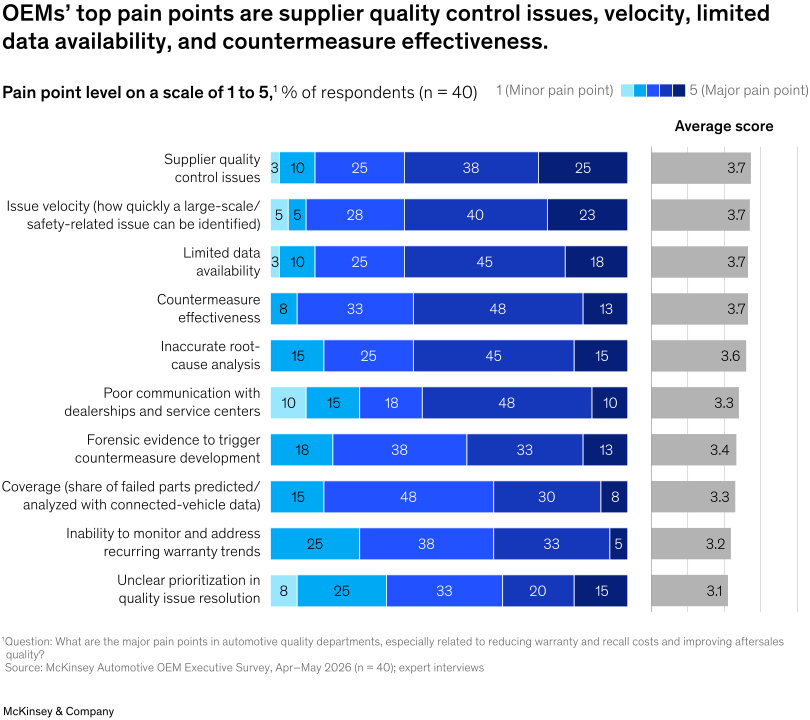
The operational strain is reflected in how executives characterize their most pressing challenges. Weak supplier quality control, slow identification of large-scale or safety-relevant issues, and limited data availability rank among the most frequently cited pain points (Exhibit 2).
Patchwork data and stalled AI adoption
A common thread across these challenges is the difficulty of translating early signals into action. While most OEMs draw on multiple data sources—ranging from warranty claims to telematics and dealership records—respondents emphasize that these inputs rarely form a unified view (Exhibit 3). Fragmentation across systems, functions, and governance boundaries continues to limit OEMs’ ability to translate signals into decisions and effective countermeasures, exacerbating slow response times.
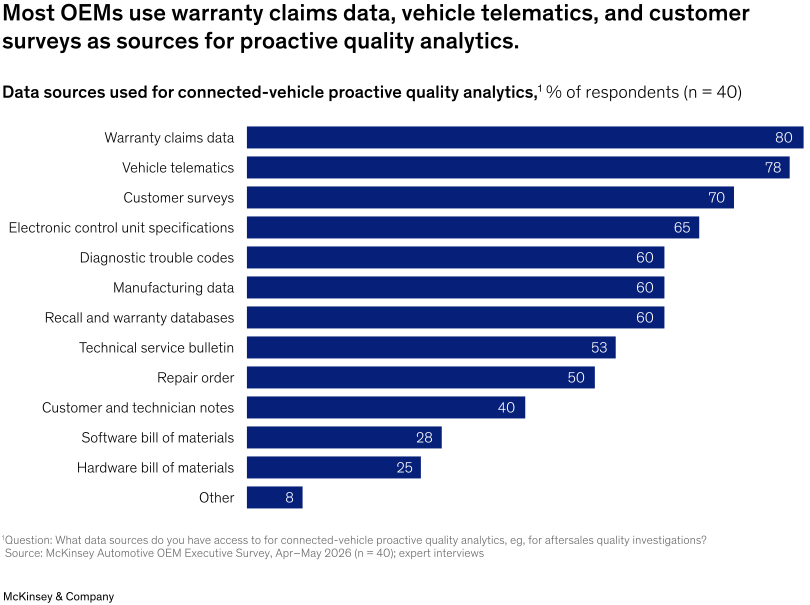
Most organizations acknowledge that closing the signal-to-action gap requires integrating quality-relevant data across telematics platforms, diagnostic trouble codes, claims systems, and dealership records. Yet this connectivity remains immature: 85 percent of survey respondents describe their organizations as being in early or intermediate stages of consolidating these data into a comprehensive data lake or data mesh, and only 15 percent report having centralized all relevant quality data. Without that foundation, advanced-analytics initiatives struggle to move beyond the experimental stage. Addressing this challenge will require deeper integration with supplier data sources to enhance traceability and cross-tier insight sharing, especially where failures originate in third-party components.
Other asset-intensive industries have responded to similar dynamics by embedding real-time monitoring and predictive diagnostics into core operations. Applying AI to these data allows earlier anomaly detection, sharper prioritization, and faster root-cause identification—compressing detection cycles and reducing overall warranty exposure. For example, battery analytics—of 12-volt batteries in internal combustion engine vehicles or high-voltage cells in electric vehicles—offer an especially promising application, preventing costly repairs, roadside incidents, and even vehicle buybacks in some cases.
Yet few automotive OEMs have reached this point. Only 18 percent of respondents report that their organization uses AI or machine learning in production to predict quality issues before failure or to accelerate root-cause identification. In most cases, AI remains confined to pilots or isolated use cases. Respondents cite familiar barriers: data-sharing limitations across functions and suppliers, insufficient data quality or labeling, integration complexity, and budget constraints.
How AI enables predictive quality
For OEMs that overcome their data and organizational constraints, AI can create value at multiple points along the warranty life cycle, from early anomaly detection to accelerated root-cause analysis, targeted campaign design, and closed-loop feedback into engineering. Even at early stages, it can also help companies start to rethink how entire quality processes should work.
Moving detection upstream
AI-enabled approaches begin by moving detection upstream. Rather than waiting for claims volumes to signal a pattern, advanced models continuously monitor telematics data, diagnostic trouble codes, and service records to identify anomalies across vehicle populations. In many cases, early detection depends on correlating multiple signal types rather than relying on a single indicator, particularly in more complex, software-driven systems.
Building on that foundation, claims clustering and pattern recognition across structured and unstructured data—including technician notes, repair order data, and call-center descriptions—allow organizations to surface emerging issues earlier and triage them more effectively. This not only compresses the time to confirmed root cause but also helps prioritize investigations based on incident rates, cost implications, and potential customer impact, directing engineering resources toward the issues that matter most.
Targeting interventions more precisely
Beyond detection and diagnosis, AI also improves the precision of intervention. Predictive models can help identify the specific vehicle populations most likely to experience a given defect, reducing unnecessary replacements and limiting campaign scope. In some cases, quick identification enables resolution through over-the-air updates before customers experience a failure, avoiding service visits altogether. At the same time, insights generated through proactive monitoring can feed back into supplier management and product development, strengthening quality by design and reducing recurrence in future vehicle programs. The result is not simply faster containment, but a more targeted and economically disciplined approach to managing quality risk across the vehicle life cycle.
Most survey respondents (58 percent) expect proactive quality analytics to reduce warranty costs by 5 to 10 percent. They expect savings to come from three main sources: earlier detection that limits fleetwide exposure, more precise identification of affected vehicle populations, and reduced manual effort in root-cause analysis and campaign management. Together, these improvements shift quality management toward targeted, economically disciplined intervention.
Industries managing similarly complex, safety-critical assets are already embedding real-time monitoring and predictive diagnostics into core operations. Airlines use live aircraft and engine health data to detect in-flight anomalies and schedule corrective action during turnaround periods. Maritime operators use AI to analyze vessel and engine sensor data, enabling early anomaly detection and remote troubleshooting to prevent downtime. Rail maintainers combine onboard diagnostics and fleet data with AI-supported decision systems that trigger corrective workflows and accelerate root-cause resolution. In each case, continuous monitoring replaces episodic inspection, and predictive intervention limits operational and financial exposure.
Momentum is also building within the automotive sector. Several Chinese OEMs are developing AI-enhanced aftersales quality platforms that monitor live vehicle data, issue early warnings, and coordinate response across the prevention–response–remedy cycle. While implementation maturity varies, these initiatives signal a shift toward continuous, data-driven quality management rather than claim-triggered containment.
From pilots to production
If the value case for AI-enabled predictive quality is increasingly clear, why do so few OEMS realize it at scale? Survey responses suggest that the constraint is largely operational. While most OEMs—75 percent—say they’re experimenting with AI-driven quality analytics, few have embedded these capabilities into day-to-day processes at production scale. Only 10 percent report that their organizations have implemented satisfactory solutions. A possible reason: slow progress in overcoming the mindset barriers that keep leaders from reimagining quality from end to end—from data collection through design, manufacturing, sales, and aftersales. That’s where AI offers the greatest potential value.
Building the capabilities to scale
Moving from experimentation to sustained impact requires more than technical proof of concept. Leading companies’ experiences suggest that a set of reinforcing capabilities can help distinguish scalable programs from isolated pilots (Exhibit 4).
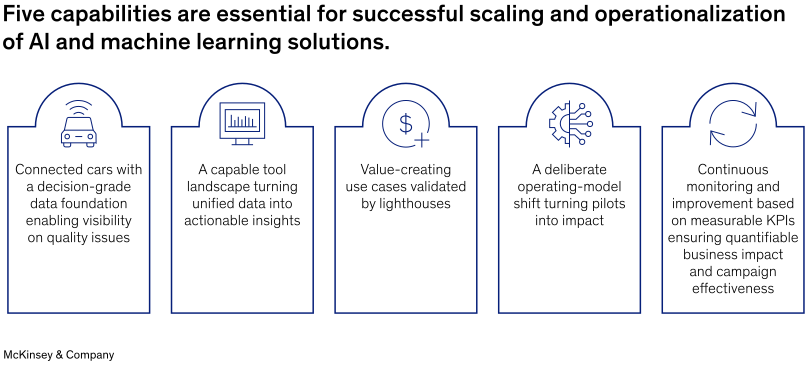
The first requirement is having the decision-grade data environment that connected cars require. This brings together telematics, diagnostic trouble codes, repair orders, and warranty claims under consistent definitions and governance—supporting decisions that cut across functions and suppliers. Without that coherence, models remain brittle and insights difficult to operationalize.
Equally important is a tool landscape capable of reaching beyond detection to explanation. Advanced analytics engines that combine pattern recognition with component-level benchmarking can identify underlying relationships across failure modes, supporting faster and more reliable root-cause identification. OEMs can then apply economics-driven prioritization to allocate resources to quality issues based on objective evaluations of exposure, risk, and short- and long-term financial impact, rather than on who complains loudest. Tools that enable the organization to build multiple solutions at once, rather than sequentially, are essential to accelerate results.
In parallel, leading organizations anchor their efforts in a small number of “lighthouse” use cases—carefully selected to demonstrate measurable impact and designed for replication from the outset. These use cases serve as a foundation for reusable data products, models, and workflows that can be extended across components, regions, and vehicle programs.
Finally, scaling AI successfully means changing current operating models and performance management so that AI is truly embedded into operational workflows. Clear ownership, defined decision rights, and embedded workflows are essential to prevent analytics from remaining an advisory layer. Leading organizations track impact rigorously through KPIs that measure velocity, effectiveness, customer experience, and financial return, ensuring that pilots translate into sustained operational improvement.
From pilots to enterprise impact
AI-enabled predictive quality does not require an enterprise-wide redesign from the outset. Instead, leading organizations build capabilities progressively across technology layers—physical data, digital twin, AI, and agentic execution—starting where value is most visible and improvement signals are strongest. For example, over-the-air updating capabilities—which many OEMs have already deployed—can transform the economics of quality management by enabling continuous fleet learning and remote intervention.
Even limited integration—for example, linking data from physical sources such as vehicle sensors with a basic digital representation and targeted analytics—can generate value quickly. One OEM linked battery-drain telematics signals with warranty claims data and identified approximately $20 million in savings through earlier detection, targeted interventions, and reduced recurrence.
Initial deployments often rely on targeted AI and analytics capabilities, built internally or sourced externally, to demonstrate measurable impact quickly. Once value is proven, programs expand across additional components, models, and regions, supported by increasingly standardized data products and reusable workflows.
As capabilities mature, OEMs can generate even more value by applying digital-twin models and AI-generated insights into broader quality and manufacturing workflows (Exhibit 5). Early-detection signals, such as from component sensors, warranty claims, and repair orders, inform quality-by-design decisions, feeding lessons back into engineering and production processes. This phase typically requires tighter connections to manufacturing and quality systems, along with more coherent data environments that bridge operational boundaries.
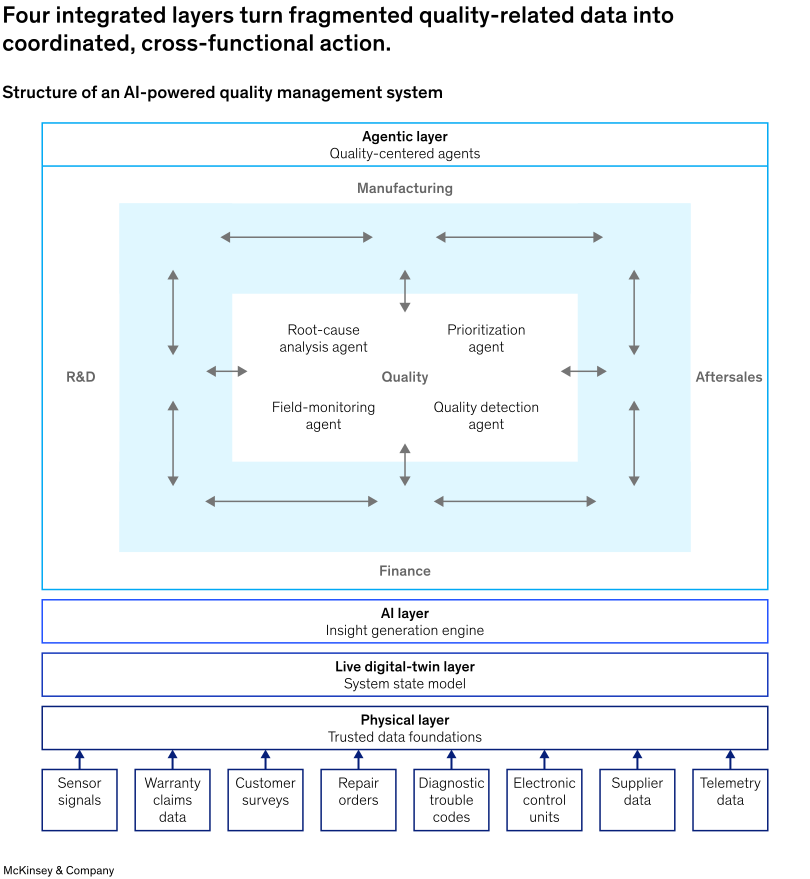
Ultimately, the greatest impact emerges when quality management operates across domains. At this stage, organizations connect all four technology layers, top to bottom and end to end—from data ingestion at the physical layer to AI agent-driven execution across functions at the top. Data architectures evolve toward more integrated enterprise environments, and quality analytics becomes embedded in decision-making rather than confined to aftersales operations.
Regardless of business function, the sequencing of AI initiatives matters as much as technology. Starting with focused use cases builds momentum and funding; expanding methodically ensures that data, tooling, and governance mature in parallel. Organizations that manage this progression deliberately are better positioned to move from isolated pilots to sustained operational impact.
As vehicles grow more connected and complex, delayed warranty responses carry greater consequences. OEMs that apply AI-enabled quality in day-to-day operations have a clearer view of developing risks and greater control over how they respond in an industry now defined by software.