Demographic shifts over the past 25 years have reshaped global health and are expected to accelerate over the next 25. All this week, we explore how health trends will likely evolve due to aging populations and the interventions that could reduce disease burden worldwide.
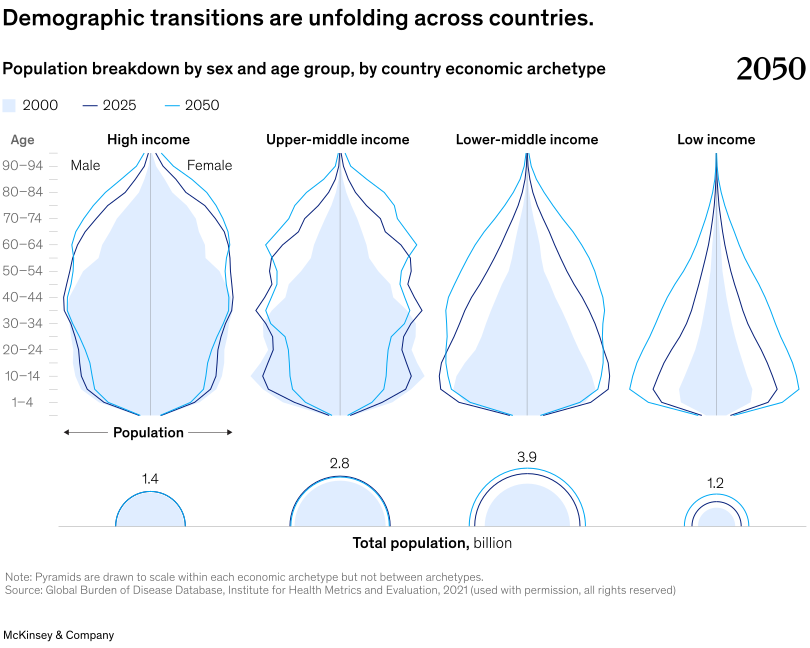
Disease burden is set to evolve differently across income archetypes, as demographic shifts accelerate worldwide, note McKinsey’s Alex Beauvais, Brad Herbig, Matt Wilson, and Pooja Kumar. Over the past 25 years, populations globally have aged, life expectancy has risen, and fertility rates have declined. These trends are projected to become more pronounced over the next 25 years, transforming the composition and distribution of the working-age population (typically aged 15–64). By 2050, the workforce in high- and upper-middle-income countries is projected to shrink by 5–7 percent but grow 9–12 percent in low-income countries (LICs) and lower-middle-income countries (LICs). This shift, combined with continued population growth in LICs and LMICs, will alter global health needs and how countries foster healthier populations and economic productivity.
To read the report, see “The health of nations: Stronger health, stronger economies,” February 17, 2026.