Clinical-care organizations across the United States have turned to AI as a potential solution to persistent workforce shortages, rising patient acuity and demand, and growing administrative burdens. Despite nurses’ recognition of AI’s potential and growing use, however, adoption is not widespread, according to the 2026 McKinsey Nursing AI Insights Survey. Contrary to common assumptions, lack of awareness or training is not the dominant barrier, say McKinsey’s Gretchen Berlin, Mhoire Murphy, and coauthors. Instead, broader adoption will likely require patient data security and privacy, evidence of AI’s safety and effectiveness in real-world settings, clear accountability and oversight, transparency on how AI tools function and generate outputs, and thoughtful integration to align with patient-centered workflows.
Image description.
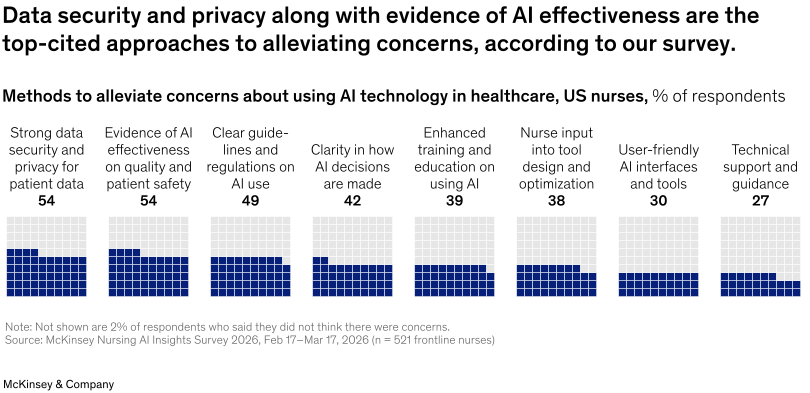
Survey results showing which actions would most help alleviate US nurses’ concerns about using AI in healthcare. The most-cited approaches are strong data security and privacy protections for patient data (54%) and evidence that AI improves quality and patient safety (54%). Other leading responses are clear AI guidelines and regulations (49%), transparency in how AI decisions are made (42%), enhanced AI training and education (39%), nurse input into AI tool design and optimization (38%), user-friendly AI interfaces and tools (30%), and technical support and guidance (27%). The chart indicates that trust, safety, and evidence of effectiveness are more important to nurses than usability or technical support.
Source: McKinsey Nursing AI Insights Survey 2026, Feb 17–Mar 17, 2026 (n = 521 frontline nurses)
This image description was completed with the assistance of Writer, a gen AI tool.
End of image description.