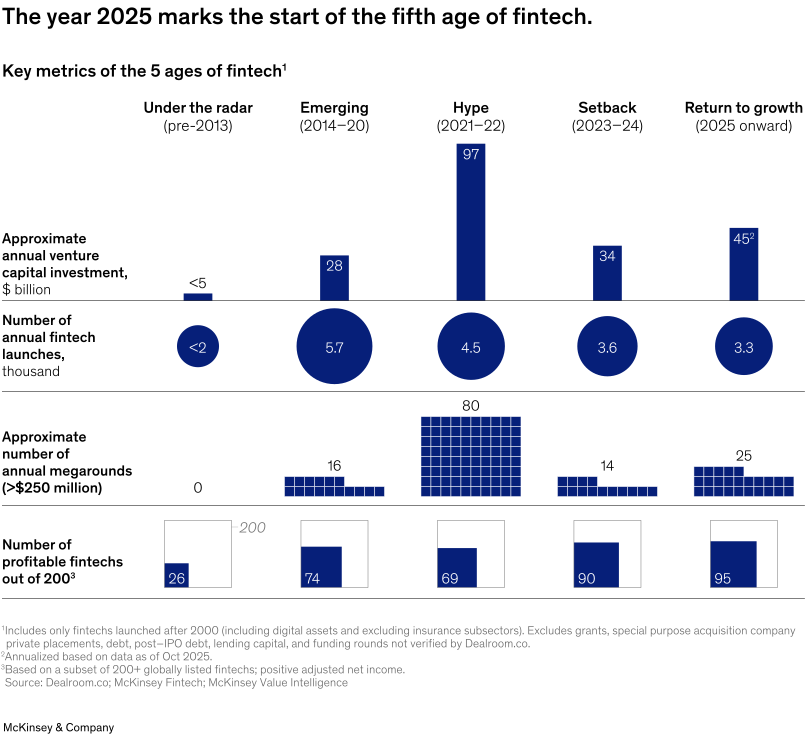
The fintech industry is in its fifth distinct era, characterized by year-over-year growth and improved profitability. The first fintechs launched before 2013 and grabbed little attention, but in less than a decade there was a huge surge in venture capital (VC) investment, with more than 80 rounds of large-scale financing exceeding $250 million. That was followed by a broader VC market reset as interest rates rose sharply worldwide and investor focus pivoted to cost control. McKinsey’s Jon Steitz, Max Flötotto, Uzayr Jeenah, Vikram Iyer, and Edward Allanson note that 2025 marked a return to growth, and if that continues, fintech could represent a $2 trillion industry by 2030—three times its current size—and account for about 9 percent of the overall financial-services value pool.
Image description.
Infographic titled “The year 2025 marks the start of the fifth age of fintech” comparing five eras of fintech evolution across four metrics. The five eras are: Under the radar (pre-2013), Emerging (2014–20), Hype (2021–22), Setback (2023–24), and Return to growth (2025 onward). Approximate annual venture capital investment rises from less than $5 billion pre-2013 to $28 billion in 2014–20, peaks at $97 billion in 2021–22, falls to $34 billion in 2023–24, and rebounds to $45 billion from 2025 onward. Annual fintech launches increase from fewer than 2,000 to 5,700 during the Emerging phase, then decline to 4,500, 3,600, and 3,300 respectively. Annual megarounds over $250 million rise from zero before 2013 to 16, peak at 80 during the Hype phase, decline to 14 in the Setback period, and recover to 25 in the Return to growth era. The number of profitable fintechs out of 200 increases steadily from 26 before 2013 to 74, then 69, 90, and 95 in the latest era.
Source: Dealroom.co, McKinsey Fintech, and McKinsey Value Intelligence.
This image description was completed with the assistance of Writer, a gen AI tool.
End of image description.