Demographic shifts over the past 25 years have reshaped global health and are expected to accelerate over the next 25. All this week, we explore how health trends will likely evolve due to aging populations and the interventions that could reduce disease burden worldwide.
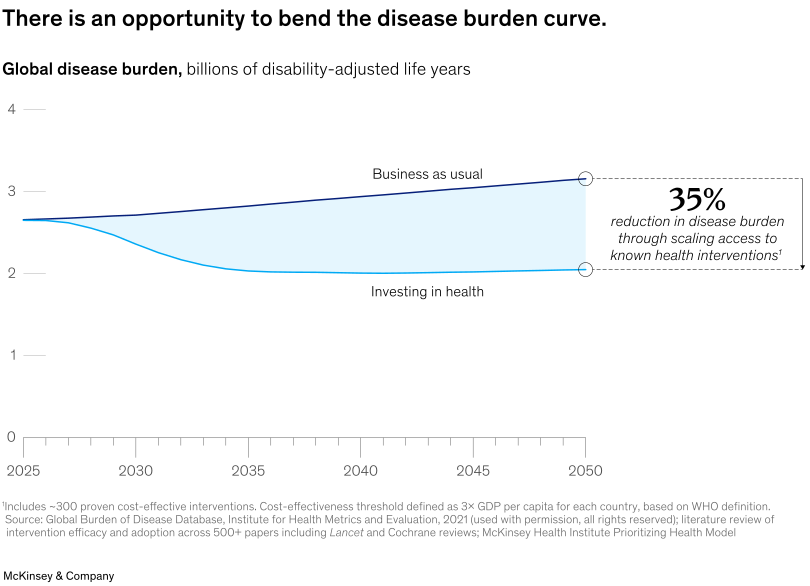
Over the past 25 years, profound demographic shifts have reshaped global health—and those changes are expected to accelerate over the next 25. McKinsey Health Institute examined the potential impact of approximately 300 interventions, encompassing about 85 percent of the global disease burden. The analysis shows that by 2050, scaling these interventions globally to an aspirational best-practice adoption level could reduce total disease burden by 35 percent, preventing 33 million premature deaths and averting more than 461 million years lived with disability annually. This represents a significant bending of the global disease burden curve, decreasing premature mortality and enhancing quality of life across diverse populations, note McKinsey’s Alex Beauvais, Brad Herbig, Matt Wilson, and Pooja Kumar.
To read the report, see “The health of nations: Stronger health, stronger economies,” February 17, 2026.