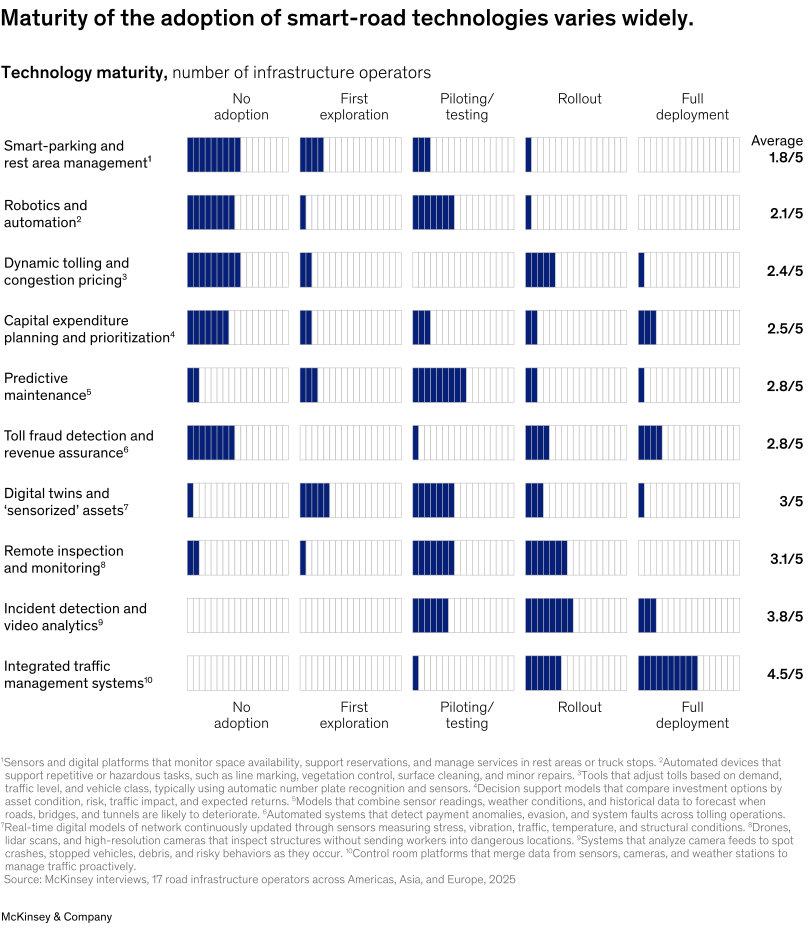
Road operators are under strain from traffic congestion, aging infrastructure, and safety risks. Technologies to address many of these issues exist, but adoption and scaling remain uneven, explain Senior Partners Alastair Green, Nicola Sandri, and coauthors. For instance, smart-parking and rest area management solutions can reduce illegal parking and improve logistics flows, but they are still at an early stage of adoption. In contrast, incident detection and video analytics tools are more mature, although capabilities and integration vary significantly. Road operators may achieve the greatest impact by first scaling proven solutions, strengthening their data foundations, and preparing their networks for future infrastructure demands.
Image description:
A series of bar charts illustrates the maturity of adoption of 10 smart-road technologies across infrastructure operators, grouped into stages from no adoption to full deployment. Adoption is uneven, with most technologies still in early phases, such as no adoption, exploration, or piloting. Less mature areas include smart parking and robotics, while midlevel maturity is seen in congestion pricing, capital planning, and predictive maintenance. More advanced technologies include digital twins and remote monitoring, which are moving into rollout. The most mature categories are incident detection and video analytics, and especially integrated traffic management systems, which are widely deployed. Note: This image description was completed with the assistance of Writer, a gen AI tool.
Source: McKinsey interviews, 17 road infrastructure operators across Americas, Asia, and Europe, 2025.
End of image description.