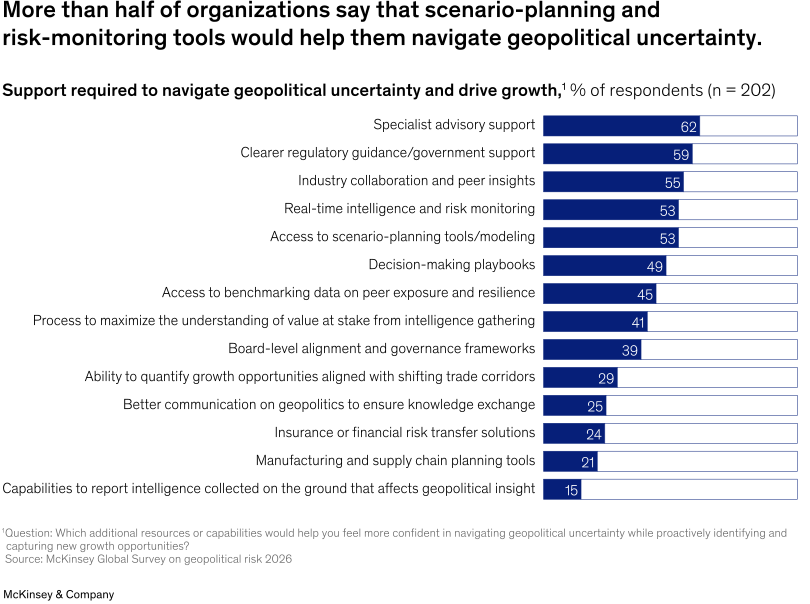
In recent years, geopolitics has evolved from a risk and public policy issue into a core aspect of corporate strategy and board considerations. To navigate geopolitical uncertainty and find growth opportunities, organizations are seeking specific kinds of support. In a recent McKinsey survey, specialist advisory support is respondents’ most-cited need, with 62 percent of executives saying it would help them feel more confident, according to McKinsey’s Ezra Greenberg, Ziad Haider, and coauthors. More than half of respondents also point to the need for clearer regulatory guidance, industry collaboration, real-time intelligence and risk monitoring, and scenario-planning tools. However, only 5 percent of respondents say their organizations have conducted simulations to understand their exposure to geopolitical risks.
Image description.
Horizontal bar chart titled "More than half of organizations say that scenario-planning and risk-monitoring tools would help them navigate geopolitical uncertainty." Survey of 202 respondents shows the most requested forms of support are specialist advisory support (62%), clearer regulatory guidance or government support (59%), industry collaboration and peer insights (55%), real-time intelligence and risk monitoring (53%), and access to scenario-planning tools and modeling (53%). Lower-ranked needs include decision-making playbooks (49%), benchmarking data (45%), governance frameworks (39%), growth opportunity quantification (29%), communication on geopolitics (25%), insurance solutions (24%), supply chain planning tools (21%), and on-the-ground intelligence reporting capabilities (15%).
This image description was completed with the assistance of Writer, a gen AI tool.
Source: McKinsey Global Survey on geopolitical risk 2026
End of image description.