Demographic shifts over the past 25 years have reshaped global health and are expected to accelerate over the next 25. All this week, we explore how health trends will likely evolve due to aging populations and the interventions that could reduce disease burden worldwide.
Demographic shifts across the globe over the last 25 years have been closely linked to a transition in the global disease burden. While some infectious diseases have declined, noncommunicable diseases (NCDs) such as cardiovascular diseases, diabetes, mental disorders, and cancers have risen. In 2050, cardiovascular disease, cancers, and musculoskeletal disorders are expected to lead the disease burden. Scaling interventions could reduce the total burden by up to 35 percent, though impact varies by condition based on disease prevalence, treatment availability and efficacy, and the gap between current and best-practice standards, explain McKinsey’s Alex Beauvais, Brad Herbig, Matt Wilson, and Pooja Kumar. Within NCDs, chronic respiratory diseases, mental disorders, and cardiovascular conditions offer the greatest potential for impact. Among communicable diseases, maternal and neonatal disorders, enteric infections, and nutritional deficiencies represent the areas of highest impact, particularly in low-income settings.
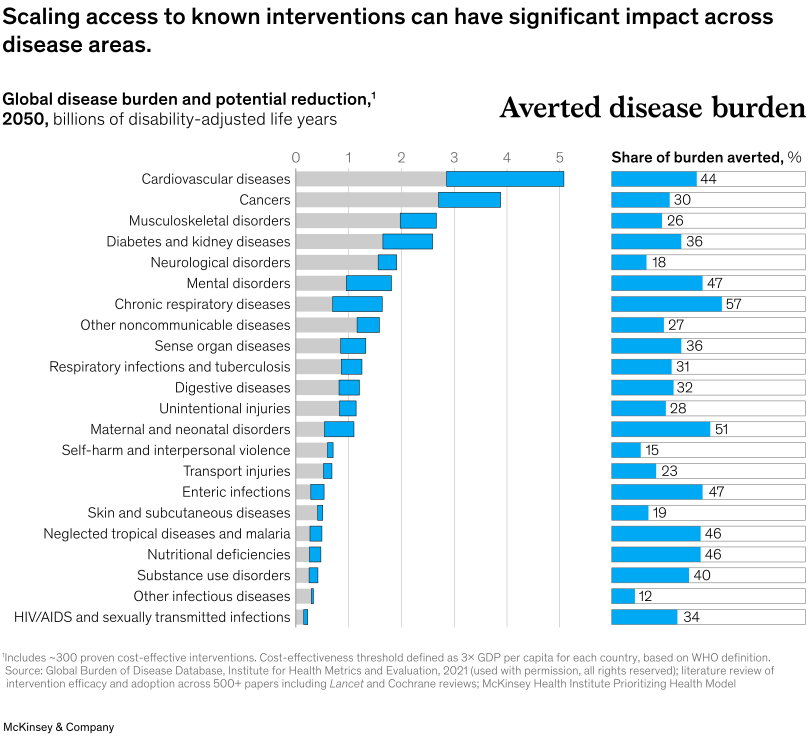
To read the report, see “The health of nations: Stronger health, stronger economies,” February 17, 2026.