Geopolitical instability has emerged as the leading threat to global economic growth, becoming the most-cited risk among executives in the latest McKinsey Global Survey. While trade policy concerns have become less prominent, focus on energy prices has intensified, according to McKinsey’s Arvind Govindarajan, Shubham Singhal, Jeffrey Condon, and Krzysztof Kwiatkowski. Recent responses were less optimistic about domestic and global economic outlooks, but expectations for company growth have remained mostly positive.
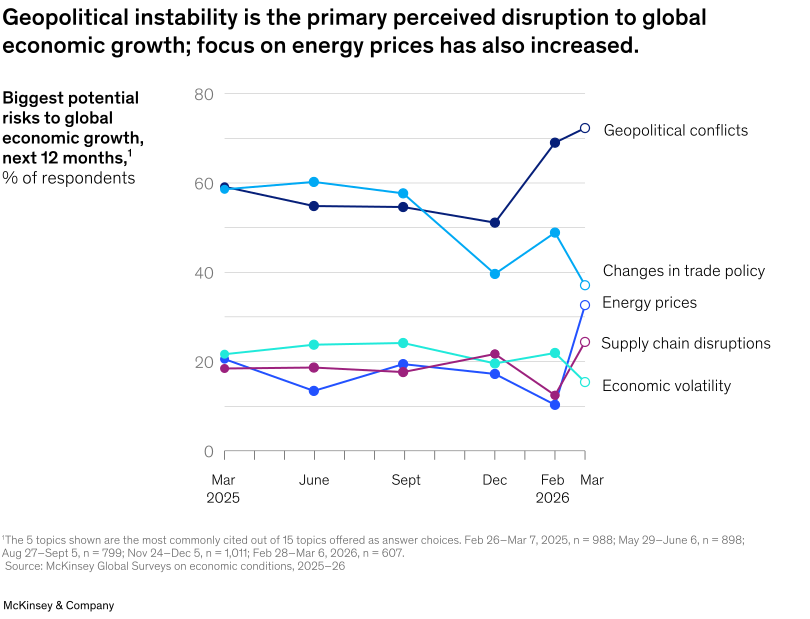
Image description.
Line chart titled “Geopolitical instability is the primary perceived disruption to global economic growth; focus on energy prices has also increased.” The chart shows the percentage of survey respondents citing the biggest potential risks to global economic growth over the next 12 months across five survey waves from March 2025 to March 2026. Geopolitical conflicts rise from about 59% in March 2025 to roughly 72% in March 2026, becoming the dominant concern after a sharp increase between December 2025 and February 2026. Concerns about changes in trade policy begin near 59% and fluctuate downward overall, ending around 37% in March 2026. Energy prices remain relatively low through February 2026, generally between 11% and 21%, before jumping sharply to about 33% in March 2026. Supply chain disruptions stay mostly stable around 18% to 24%, ending near 24%. Economic volatility trends slightly downward overall, moving from about 22% in March 2025 to 16% in March 2026.
This image description was completed with the assistance of a gen AI tool.
Source note indicates data are from McKinsey Global Surveys on economic conditions conducted between February 2025 and March 2026.
End of image description.
To read the article, see “Global Economics Intelligence executive summary, March 2026,” April 24, 2026.