Geopolitics, policy changes, and rising energy demand are transforming the global energy landscape. McKinsey’s tenth Global Energy Perspective analyzes how long-term structural forces and short-term realities could shape this transition, outlining three possible pathways: Slow Evolution, Continued Momentum, and Sustainable Transformation. Across all these scenarios, power demand is expected to rise, note Senior Partner Humayun Tai and coauthors. Renewables and gas are expected to dominate new power supply in 2050. Clean, firm power—such as nuclear, geothermal, and hydropower—and storage technologies like batteries and pumped hydro are set to expand.
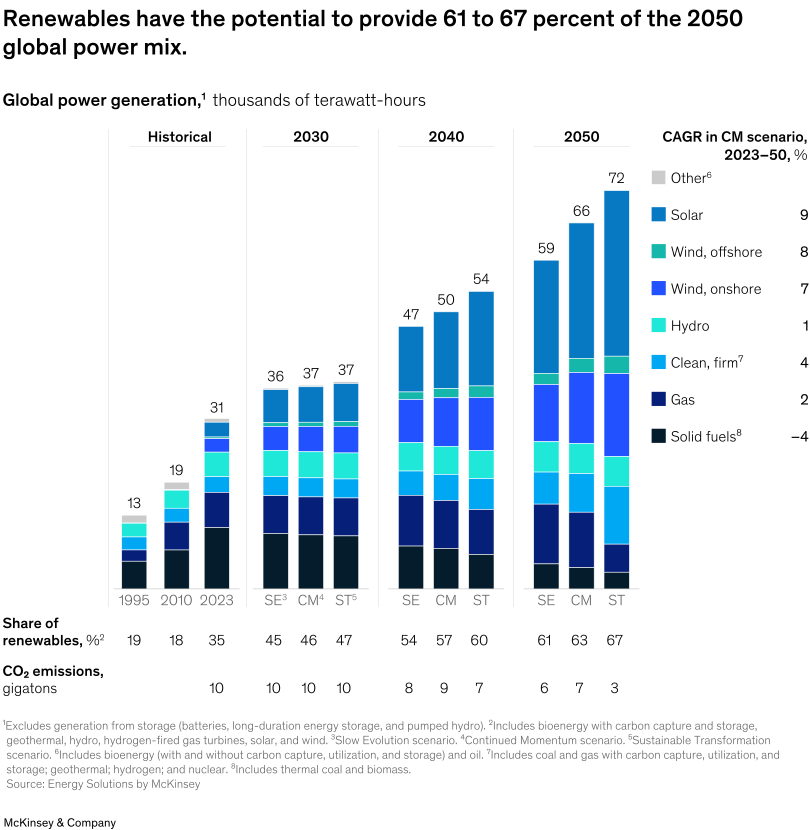
Image description:
A stacked bar chart illustrates the historical and projected global power generation from 1995 to 2050, categorized by energy source. The chart is divided into 4 sections, representing the years 1995, 2030, 2040, and 2050. Each section displays the total power generation in thousands of terawatt-hours (TWh), broken down into various energy sources, including solid fuels; gas; clean, firm; hydro; wind onshore; wind offshore; solar; and other. In 1995, the total power generation was 19,000 TWh, with solid fuels accounting for the largest share. By 2050, the total power generation is projected to increase to 59,000–72,000 TWh across 3 scenarios: Slow Evolution (SE), Continued Momentum (CM), and Sustainable Transformation (ST). The share of renewables is expected to rise from 19% in 1995 to 61–67% in 2050, with the ST scenario showing the highest share at 67%. The chart also includes a table showing the CAGR for each energy source from 2023 to 2050 in the CM scenario, with solar energy expected to grow at a CAGR of 9%, while solid fuels decline at a CAGR of –4%. Additionally, the chart notes that CO2 emissions are expected to decrease from 10 gigatons in 2023 to 3–7 gigatons in 2050 across the 3 scenarios.
Note: This image description was completed with the assistance of Writer, a gen AI tool.
Source: Energy Solutions by McKinsey.
End of image description.
To read the report, see “Global Energy Perspective 2025,” October 13, 2025.