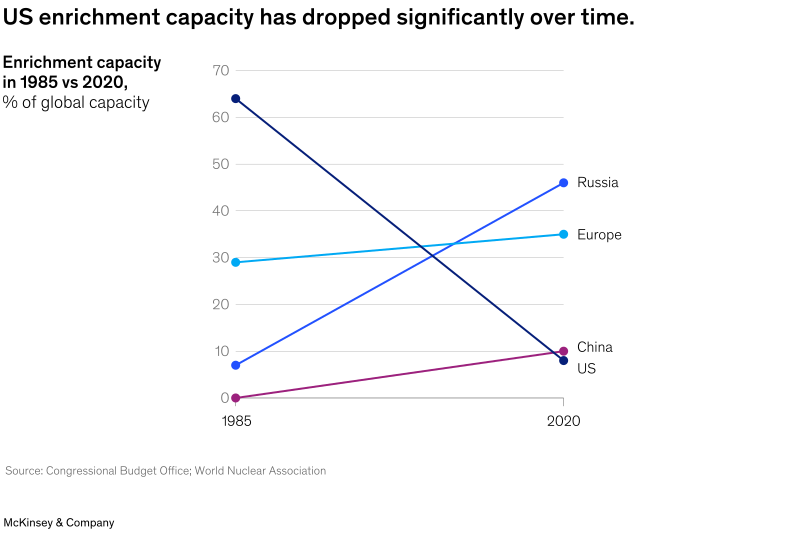
The United States is a leading nuclear energy producer, with US plants generating about 20 percent of the country’s electric power. Yet improving energy security may require an additional 100 to 300 gigawatts of nuclear capacity by 2050. Meeting this growth commitment has become more challenging amid geopolitical and trade shifts, note McKinsey’s Bill Lacivita, Chad Cramer, and coauthors. In 1985, the United States was the global leader in enrichment capacity, accounting for 64 percent of total production. Since then, enrichment production has concentrated in China, Europe, and Russia. In 2023, the United States imported 27 percent of its enrichment services from Russia. To ensure the continued operations of its current nuclear capacity and achieve 300 gigawatts of incremental domestic capacity by 2050, the United States would need to invest $105 billion to $170 billion in the nuclear fuel supply chain, based on McKinsey analysis and estimates.
To read the article, see “Understanding domestic nuclear fuel production options in the United States,” May 4, 2026.