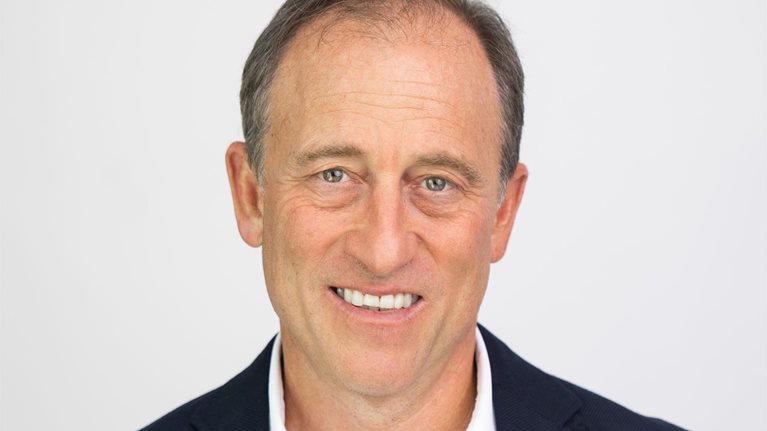
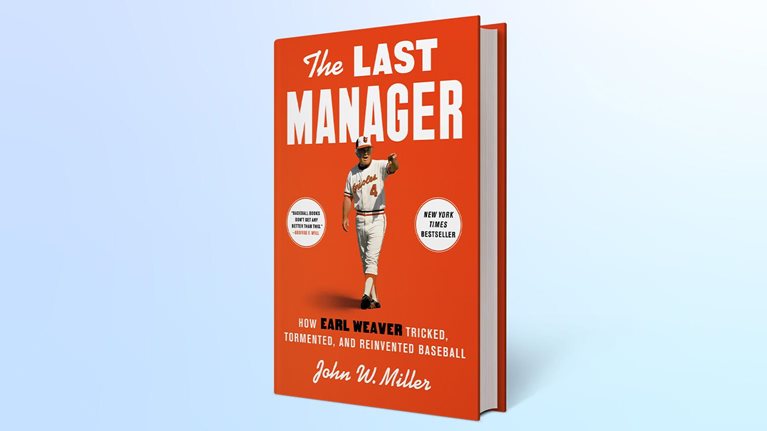
In this edition of Author Talks, McKinsey Global Publishing’s Raju Narisetti chats with David M. Rubenstein, owner of the Baltimore Orioles and cofounder and cochair of the Carlyle Group, a global investment management firm, about Inside the Owner’s Box: Conversations on Power and Leadership in Sports (Simon & Schuster, September 2026). Through discussions with leading team owners (see sidebar, “The owners behind the teams”) and insights
from his own experience, Rubenstein reveals the financial forces reshaping professional sports and the leadership decisions that can determine a franchise’s success. He examines why investors increasingly see teams as valuable assets, as well as how competitive performance, culture, and community shape the ownership experience. An edited version of the conversation follows.What is the difference between owning a business and owning a sports team?
First, in business you’re not usually facing 29 other competitors in every product you sell. Here, we have 29 competitors. Second, people pay much more attention to how the team does every day than how a business does every day, as a general rule.
Therefore, you will be subject to more questions, criticisms, commentaries, and objections to what you’re doing. Also, there’s less you can do to change the day-to-day or week-to-week output of a team than you probably can do to change the output of a business.
If a business isn’t doing well, we can quickly bring in someone else, change a strategy, or do other things. It’s much harder to change a baseball team midseason. Sometimes, it’s hard to make trades, players sustain injuries, and you can’t just replace the team overnight because it’s not doing very well. So, owning a sports team is much more difficult, much more challenging, and produces much more gray hair.
What, if any, are common characteristics among successful sports team owners?
In the business world—and obviously, professional sports is a business—people are measured by their earnings and profitability: when you sell a company, if you sell it, or how profitable it is if you hold on to the company. You’re often measured by increased quarterly earnings and profitability.
In the sports world, you don’t measure yourself quarterly. The people who do well are people who care deeply about their local community. They represent that community. They are not as focused on the quarterly earnings or even the profitability overall on a short-term basis as one would be in the business world. That’s a big difference.
Generally, in the sports world, when you sell the team you make the bulk of your profits, if you’re going to make them. You don’t make the bulk of your profits on quarterly earnings distributions. Virtually every team in baseball does not make an operating profit; perhaps one or two do.
Yet, people still want to buy these teams, still like owning the teams, and don’t want to sell them regularly. So it’s enjoyable, though a little complicated. It’s much different than everything I’ve done at Carlyle.
Clearly, the National Basketball Association’s Los Angeles Lakers were just sold about a year after they were bought. But as a general rule, people own sports teams for five, ten, 15, 20 years or longer. George Steinbrenner bought the New York Yankees in 1972, and the family still controls it somewhat, 50 years later.
Team owners need to have a long-term mindset because very rarely do you buy a team and then suddenly win a championship the next year. Generally, it takes a long time to build a team on and off the field and to develop all the attributes you need to win a championship.
I’m now in my third year, and I haven’t done as well as I would like. The team that I bought, the year before I bought them, they were in first place in Major League Baseball’s American League East Division. I’ve managed to get them down to last place in the American League East Division.
So going from first to last is not generally a prescription for success. It’s frustrating. In 2026, we’re still trying to get to the playoffs, but it’ll be complicated to get there.
Generally, it takes a long time to build a team on and off the field and to develop all the attributes you need to win a championship.
So why is private equity, with shorter time horizons, so keen on sports teams now?
Private equity’s principle interest is in making money for its investors. Over recent years, the prices of sports teams have gone up so much.
For reasons I described, they’ll continue to increase significantly in the future. They are now seen as an area of profitability. Previously, sports team ownership was considered a vanity play. It is now seen as an income producing, profitability venture.
That’s why you see organizations, such as private investment firm Arctos Partners, raising to have partnerships that will buy minority stakes in teams. Increasingly, you see private equity professionals buying these teams for their firm, in some cases, or for themselves.
This is a dramatic change. When I was a boy in Baltimore, circa 1957, there were no baseball teams west of Missouri. The westernmost team was St. Louis.
Now there are three times as many baseball teams, and, in total, there are probably four times as many football, basketball, hockey, and baseball teams as there were in the 1950s. There are more opportunities to buy. Also, the television and streaming revenues are so high that it is expected that the increase in revenues and earnings will be such that you can justify buying these at relatively high prices.
The National Football League’s Seattle Seahawks were sold for $9.6 billion. The LA Lakers were sold for $12.5 billion. The Boston Celtics sold for $6.1 billion. I believe Jeff Bezos and others just bought a 40 percent stake in Liverpool Football Club but are valuing the team at roughly $7 billion. So these entities are worth a lot more than they used to be, and that attracts private equity.
When you have private equity, it’s not quite the same as people like me who bought with personal money. When you have private equity firms buying stakes in teams—and the NFL allows private equity to buy up to 10 percent minority stakes—they are obviously interested in a profit within roughly five, six, or seven years. I’m sure you will see exits in five, six, seven years from the private equity firms that have invested in these assets. The owners who are private equity professionals buying the teams themselves will probably hold on much longer.
Is there anything owners can do about player injuries, which can really impact a season?
Some teams have more injuries than others. The Baltimore Orioles have had a lot of injuries—not the most, but close. There are some health prevention steps to take. Maybe players could train better, avoid taking risks off the field, or steer clear of things that seem dangerous on the field, such as sliding head-first into first base or running into a wall to catch a ball.
But, on the whole, there’s no doubt that injuries are more significant than they used to be. Cal Ripken, a former baseball player who’s now an investor associated with our team, played 2,632 games consecutively. He didn’t miss a game for 17 years, and he played through some injuries. Today, if someone said they were going to play 17 years in a row without missing a game, everyone would say, “It’s not possible.”
In pitching, Little League boys are being taught how to throw curves, sliders, and other kinds of balls that require them to twist their arms. In high school baseball and in college and Minor League Baseball, these young boys are told, “If you’re really going to be successful, it’s nice to have the curve, nice to have the slider, but you need to spin and you need to throw the ball fast.”
There’s a big emphasis on pitching above 90 miles an hour. When slight arm strain from twisting in childhood is compounded by throwing 90 miles an hour for six or seven innings, it tends to produce what we call “Tommy John surgery.”
When I was growing up, the surgery did not exist. If it had, pitchers like Sandy Koufax could’ve played longer. Today, Tommy John surgery seems to be a rite of initiation for a pitcher.
Now, we also have better medical records, MRI techniques, and CAT scans than we did 25, 30 years ago. We can detect problems much better than we could before.
Can you find ways to reduce injuries relative to other teams?
We’re trying but we haven’t succeeded in that yet. Again, we’ve had among the most injuries ever. Baseball teams carry 26 players on the roster. Last year, our roster reflected 71 players at one point, due to injuries. The Major League record was 72; that was not a record that we wanted to break. There are lots of statistics that show you how much teams are affected by those injuries.
Last year, we were second worst in what’s called WAR, or Wins Above Replacement. Without the injuries, we would’ve won many more games, as much as anyone else in baseball.
Can AI reset what is a data/analytics-level playing field in the short term?
Yes, we are using AI to help analyze the statistics that we gather. And AI is increasingly going to be an important component of baseball, basketball, football, and, I assume, hockey analytics. As I suggested in the book, if everyone’s using the same AI software and the same techniques, it may not give someone an advantage.
Inevitably, some people are better at AI or better at analytics than others, so there probably is some advantage still. For a while, the teams that did quite well in analytics were actually winning championships. Then everyone else caught up.
As a businessperson, what is your view of the quality of business talent in US professional sports?
The quality is very, very good. For example, Baltimore Orioles Business Operations President Catie Griggs attended Dartmouth, which is a very good school, and played soccer there. She then attended Dartmouth’s Tuck School of Business and earned an MBA. Increasingly, people in charge of the business side of baseball and other sports businesses have MBAs from very good schools. In addition, people who are really skilled in business are now being recruited into sports and away from private equity firms, other money management firms, or other operating businesses.
As a result, the quality of management is much better than it was before, because the business skill set is much more sophisticated. You need far more business analytical skills than before.
I don’t know whether McKinsey, an excellent firm, really loses people to the sports world. People who do leave often go to other businesses. I recruited one of the best McKinsey alumni into my firm many years ago—Lou Gerstner, a former McKinsey partner. Years ago, I also recruited Glenn Youngkin, a young McKinsey associate who later became governor of Virginia.
So McKinsey has an extraordinary amount of talent.
Where do you see fan experience going over the next decade or so?
Now you can see most games, if not free on TV, then on a regional sports network by subscription. So why do people come out? People tend to be social animals, and they like to take their children and families out. It’s a bonding experience. People like to eat food at stadiums. They tend to think that the caloric intake of stadium food doesn’t count.
People also like new and free options. We can typically attract people through giveaways—by giving bobbleheads, Hawaiian T-shirts, straw hats, and more. We sometimes will sell out the stadium if we have one of our Hawaiian T-shirt giveaways. We once gave away a bobblehead of the famous rapper Tupac, who had spent some time in Baltimore. Everyone wanted the Tupac bobblehead. We’ve never seen such demand. They could not give away that many bobbleheads of me. So that’s another example of a fan experience.
Also, we try to get as many fans to participate as we can. We have fans sing the national anthem, honor a military veteran, and do many things to encourage children to run around the field. Everything is designed to make people feel it’s more than the experience of just sitting there and watching a team.
What is a good model for new stadiums?
Undoubtedly, there are different models. In some cases, the local stadium is built by the state, a state authority, or a local government entity. For example, Camden Yards was built by the Maryland Stadium Authority as was the Baltimore Ravens’ stadium.
In some cases, people are wealthy enough to build the arenas that they want to host their teams.
They may want some concessions in the local community. Today, people realize that if you have a good stadium and people visit, you can really help a community if there are also stores, theaters, and other events in the adjoining area that people can go to see. Other attractions bring more and more people to that area.
Can owners shape team culture that impacts on- and off-field behavior?
You obviously try to hire people who are talking to the players more regularly than I am about what’s important to represent the city, the team, and the community. In the famous 1960s baseball book Ball Four, Jim Bouton, who was a teammate of Mickey Mantle and Roger Maris, wrote about what players did when traveling. And it wasn’t a pretty sight. Those activities related to women and alcohol and other kinds of things that seem to have gone away, largely.
I’m told that today’s Major League Baseball players each have their own room. To my amazement, I’m told that they tend to play videogames or get on their computers in their rooms. In the past, they went out to dinner. Now, DoorDash brings dinner from their favorite restaurant. They’re not out carousing the way they apparently did 20, 30, 40, 50 years ago.
Generally, as you know from McKinsey’s work, the most important thing that keeps an organization vibrant and going from one generation to another is a good culture. It’s very hard to keep a really good culture established by a founder from one generation to the next. But those organizations that can do so really have a vibrant organization that’s going to survive. That’s true in baseball, as well as in football, and in other major sports. If you have a good culture, and if it starts from the top and it permeates the organization, that’s a good thing.
How can one create a good culture? To some extent I’d like to be a role model myself. I don’t want to do things that will bring trouble. I also try to communicate my values and those of the community to the players. It’s like raising children. You can give your children the right values, but sometimes, something might go wrong. And you can’t quite explain it.
The most important thing that keeps an organization vibrant and going from one generation to another is a good culture.
Why is there such tension between big and small city sports team owners?
In 1966, when the NFL and the AFL [American Football League] merged, they followed a concept of one nationwide television contract. Everyone in the league, big city or small city, would share ratably in that.
Each one got a pro rata share of the number of teams. Baseball went in a different direction. It had regional sports networks, and each team developed its own television contract. There were some national television contracts, but that didn’t apply to the majority of the baseball games.
Now Major League Baseball is moving in the direction of the NFL. We’ll have roughly one nationwide contract. Working out those details may take until 2028 or so. But having a nationwide TV contract, where everyone’s sharing ratably in it, would be a good thing for baseball. And therefore, the big cities won’t have a benefit over the smaller cities.
Why is it so hard to watch a team’s televised games in one place?
It’s an issue. It’s arisen most recently in the NFL because when the NFL merged with the AFL, it said that most of the games would be on free TV to get the US Congress to agree to it.
Now, I believe the statistics are roughly only 50 percent or 60 percent of the games are on free TV, and the other 40 percent require subscriptions. That produces more fan concerns. In baseball, we aim to have the best, fairest deal for everyone, and that’s something we have to work through. The challenge is that everything is about economics. In the end, the economics are sometimes such that you might have to pay rather than have everything for free.
What else do you wish for from Major League Baseball?
They should host the next All-Star Game in Baltimore. I’d be happy with that. Obviously, there is ongoing negotiation between the players association and Major League Baseball on a collective bargaining agreement. I’m not involved in that. No owner really is. The Major League Baseball commissioner is really leading that effort. We’re hopeful that we’ll be able to get a resolution that would enable baseball to go forward next year uninterrupted. We just don’t know yet.
I’m trying to be very guarded because the commissioner would prefer that the owners not talk about this so much. So, I’ll just say the commissioner is working on this. Hopefully, there’ll be a resolution that everyone will be happy with before the season starts.
You are 77. What happens to the Orioles next?
I expect I’ll be able to do this for a number of additional years. I bought the team with a partner, Mike Arougheti [CEO of Ares Management], who is about 20 years younger than me. When I am unable to do what I’m doing now, Mike will inevitably be my successor.
I didn’t want to make it a family business because my children all have their own occupations, and it’s just not something that was realistic. It’s not a family enterprise.
How has owning the Orioles changed you?
Well, I did gain ten pounds. I’m now in the process of trying to lose them. It’s hard to resist the food in owners’ suites. Aside from that, owning has reconnected me with friends from Baltimore.
This weekend, I’m hosting ten friends I grew up with 60 years ago. As I write in the book, one woman who contacted me was in my sixth-grade class. I hadn’t heard from her or seen her since that time. And now I’ve met with her. A person who gave me his application to apply to my alma mater, Duke University, met me by happenstance at an Orioles game. I’ve stayed connected to him.
Owning the team has also connected me with the community in Baltimore. Now I make a lot of speeches in Baltimore and am getting more involved in philanthropic activities here. Overall, owning has been a good experience for me, and I enjoy it.
I wish I had owned when I was younger. Then I was afraid that investors in Carlyle would say, “You’re supposed to worry about our investments, not worry about sports teams. You’re not focused on our investments.” Until I gave up being the co-CEO of Carlyle, I didn’t feel I could do this.
Do a sports team’s fans offer any lessons on bridging growing divisiveness across America?
Undoubtedly, the country is bitterly divided. The concept of bipartisanship is not very common in Washington anymore. Legislators used to be seen as good when they could do bipartisan legislation. If you’re seen as too bipartisan today, I’m not sure you will advance in your own party.
As divided as some communities are, when a sports team wins, it does bring people together. When the New York Knicks won their first championship in 50 years, it united the city in a really terrific way. It didn’t solve all the social problems of New York, and it didn’t eliminate divisiveness. Yet it does show the popularity of sports and the role it can play in bringing people together—hopefully, for more than just championship celebrations.
Are you eyeing other sports now?
Someone asked me to invest in a deal, which I did not because I found it expensive. The deal was to buy a major cricket league team in India, which was sold for roughly $1 billion plus. It seems that cricket is among the more popular sports in the world.
My son once said to me that he thought a good opportunity was to invest in cricket. And there was going be a cricket league in the United States. But I didn’t really believe it. I was wrong, as I often am.