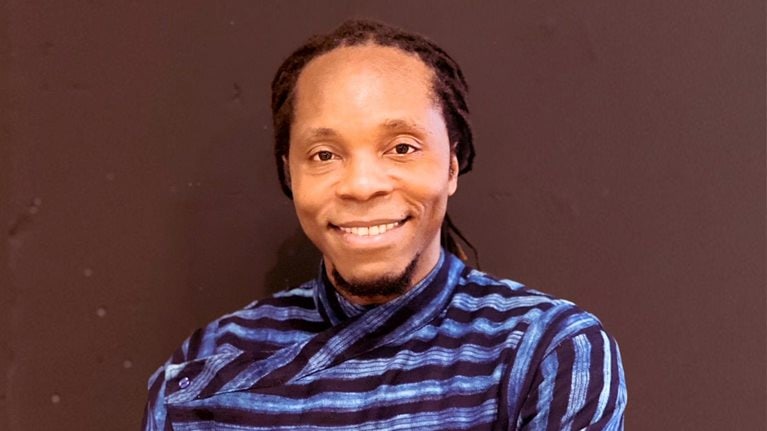
In this edition of Author Talks, McKinsey Global Publishing’s Christine Y. Chen chats with Jeff Chang, author and cultural strategist, about Water Mirror Echo: Bruce Lee and the Making of Asian America (Mariner Books/HarperCollins Publishers, September 2025). Chang shares Bruce Lee’s story of humble beginnings and how ostracism and a quest for belonging shaped Lee’s identity and defined Asian America. Chang moves beyond the myth to humanize Lee, uncover the philosophy that drove his resilience, and illuminate the struggles of those who remain in the shadows. An edited version of the conversation follows.
Why did you decide to write this book?
Since Bruce Lee is a celebrity, we all feel like we know him a little bit. But what’s so interesting to me is that I knew nothing about much of his actual life. That’s probably true of most fans of Bruce Lee.
He may be the most famous person who’s ever lived whom folks know almost nothing about. Exploring Lee’s story and trying to find out more about him, I thought, “Wow, there are so many parallels.” There are so many aspects of his life that are reflected in my own family experience and in the stories of so many other Asians, Pacific Islanders, and Native Hawaiians who are in the continental United States.
As Lee encountered obstacles while trying to break through into Hollywood, he told himself constantly, “Be like water.” Just move around these obstacles.
How do you describe Bruce Lee’s life and influence?
The amazing thing about Lee’s story is that he only lived 32 years, but he crammed so much into that life. He lived ten lives during his 32 years. He began as a child born in the US to parents who were here on work visas. He went back to Hong Kong and almost starved to death.
Lee was a war child. There was war raging in China at that particular time. During Lee’s teen years, Hong Kong was a British colony that was open to refugees fleeing the Chinese Civil War. There was a massive expansion of the colony, and there were a lot of young people.
When young people are present in large numbers, they tend to do two things: party and fight. Lee did both as a teen. That’s the context in which he became a martial artist. He got into so many fights that he was exiled at the age of 18. His parents said, “That’s it. You’re done. We’re sending you back to the US.”
Lee moved to San Francisco’s Chinatown. He found trouble there, so his parents sent him to Seattle, where there were fewer Chinese, fewer Asians overall, and fewer distractions. He went to work as a waiter. In that new environment, he began to meet many people. He met underdogs: poor White, Black, and Japanese Americans who told him what it meant to be marginalized in the US. I think this is where he began to take on a lot of the aspects, the worldview, and the values of someone who would fight for the people, for the classic underdog. That is reflected in his work.
Lee then went to Hollywood and, unexpectedly, he was called to audition. He landed a role as Kato, the sidekick in The Green Hornet, a groundbreaking TV series in the 1960s. In Hollywood, Lee eventually learned that the way he saw himself was not the way that Hollywood saw him. Hollywood had very limited roles in mind for him, all of which were supporting roles, subservient roles. Even the role of Kato, who can use kung fu to protect the Green Hornet and save the day, is a subservient role. Kato is actually a servant and a cook.
At some point, Lee realized that he would not receive the kinds of roles that he desired, and he thought, “I’ve got to go back to where I can be seen.” He moved back to Hong Kong, where he immediately became a superstar during a period of resurgence of the martial arts in movies.
As a result of Lee’s rise, Hollywood called him back and requested to make a movie with him. But he was caught in many battles to represent Asians and Asian Americans in roles in the way that he desired.
Lee said very early on that he didn’t want to be in any stereotypical roles. Rather, he wanted to be in the lead role. He held and experienced many different types of struggles with the Hollywood infrastructure to make the movie that he wanted to make.
That movie turned out to be Enter the Dragon. Yet about one month before the movie’s release, Lee tragically died in Hong Kong. Since he was not there anymore to make more movies, his absence fueled the mythology of Bruce Lee.
You can’t understand who Bruce Lee was or what he means if you don’t understand the story of Asian America.
How does telling the story of Bruce Lee tell the story of Asian America?
When the public thinks of Bruce Lee, we think of the on-screen hero, the person who seems invincible. He’s the one who takes the opposition and turns it into dust, which makes him a type of superhero.
Since Bruce Lee became larger than life, it may be hard to imagine his real life. When I delved more deeply into the story, I found that his story was like the story of a lot of Asians in America. He had an immigrant experience. He was born in the US during a time when the Chinese Exclusion Act1 was still active. His parents were detained at Angel Island, an immigration choke point of sorts. Since he returned to Hong Kong in infancy but re-emigrated to the US as a teen, he had to master English very quickly.
Lee resided in segregated communities, in Chinatowns. He experienced many of the things that Asian Americans have there. Is Bruce Lee’s story the story of all of Asian America? No, but there are so many kinds of stories. Yet the collective stories are similar to Lee’s, where we, as Asians, experience a process of trying to figure out our identities—where we try to secure our place in America.
In that way, Bruce Lee’s story, even on a subterranean level, is something to which a lot of Asian Americans can relate. As people come to learn more about his story, they will find that they have a lot in common with it. It’s a universal story—a universal American story—in some ways. Yet it’s specifically rooted in Bruce Lee’s Asian-in-America experience.
During the COVID-19 pandemic, there was a large rise in violence against Asians. That caused an Asian American identity crisis. Asians may seek answers to the question, “How do folks really see us?”
That search has led to more research. A 2021 study that was conducted by the nonprofit organization LAAUNCH Foundation [Leading Asian Americans to Unite for Change] asked a group of Americans to name a prominent Asian American.2 Yet 42 percent of the surveyed Americans could not name a single prominent Asian American.
One year into the pandemic, where there was a new US vice president, Kamala Devi Harris, who is half Asian American, many Americans couldn’t name one Asian American. The largest number of people who could name someone—7 percent—named Jackie Chan. Yet Jackie Chan is not American and has never claimed to be. The next choice was Bruce Lee, who died in 1973. The study illustrated the shocking point: that Asian Americans are not necessarily being seen, even in a moment where there is a hypermedia focus on them and on violence that was being perpetrated against them.
There’s a long list of recognizable Asian Americans, including Andrew Yang, who ran for president; Kamala Harris, as mentioned; and entertainment stars Jimmy O. Yang, Hasan Minhaj, and Sandra Oh. Yet none of them were mentioned.
As a result, as Asian Americans, we had to ask ourselves: “What is it that we really represent? And how can we represent ourselves even more?” Those questions were the impetus for an outpouring of amazing Asian American art, particularly in the movies. For example, in the film Everything Everywhere All at Once, there’s an expansion of all kinds of representations of different characters on the screen, almost as if to say, “Here’s who we are, all at once.”
I did the bulk of writing Water Mirror Echo in the last three years, postpandemic. Before the pandemic, the book would have been just a biography of Bruce Lee. In addition to an upsurge in violence, the pandemic led to a reimagining of, and reawakening for, Asian Americans. I decided instead to use the book to write about Lee as an Asian American and to write about Asian America through the story of Bruce Lee.
You can’t understand who Bruce Lee was or what he means if you don’t understand the story of Asian America.
I was really surprised by how vulnerable Bruce Lee was. His image is one of invincibility; nothing could beat him.
You’ve written award-winning books about hip-hop and cultural identity. How does Bruce Lee’s cross-cultural journey reflect or influence your own as a writer?
Bruce Lee was a hero to me, not just because of what he did on screen, but because of what he did off screen, in terms of being able to connect with, inspire, and represent people of all backgrounds.
Lee was very open and genuinely curious about people around him and their backgrounds. This is how he became close friends with people such as Kareem Abdul-Jabbar and why his story resonates from here to Bosnia and Herzegovina. In that region, a statue of him was erected that symbolizes the ability of different ethnicities to persevere. He was that symbol of unity and solidarity, and it was exciting to consider how he became that person.
He grew up the son of relative privilege. His father, Lee Hoi-Chuen, was a major Chinese opera singer and film star. Then Bruce Lee was thrust into segregated communities in the US. He was working in the kitchen as a cook and then as a busser and a waiter in a restaurant in segregated Seattle.
He became friends with Black and Japanese Americans who came back from World War II or were trying to piece together their lives following internment. From them, he learned what it meant to be someone who lives on the margins of America.
That’s where his heart opened, and he began to adopt his teachers as close friends. They taught him about America, and he internalized that. That’s what allowed him to appear on the screen as he does in multiple kung fu movies: as someone who was working—sometimes reluctantly—on behalf of the underdog, of the oppressed.
I’ve written about hip-hop. I’ve written about kids from the inner city who forged a culture out of nothing and had a breakthrough. I’ve written about Black artists and artists of color who were knocking on the door of the art world for years. The art world wasn’t letting them in, but they figured out a way to bust the door down. And now I’m writing about Bruce Lee and the rise of Asian America.
I’m interested in window openings—to portals, to a different kind of way of living for all of us, to moments of inflection—where there are new ideas, new possibilities, and new voices that come into the picture. I’m interested in the movements and the people who make those openings in the culture possible.
What is the meaning behind the title of your book, Water Mirror Echo?
Bruce Lee’s most famous epigraph is, “Be water, my friend.”It’s a phrase that’s been cited by athletes, by corporate leaders, by cultural organizers, by many folks who are in the streets leading movements for freedom and change all around the world—from Hong Kong to Catalonia to even here in the US.
As I was going through his writings, I learned something interesting: That saying is only a fraction of a larger excerpt from a Taoist work, the Liezi. The full quotation is: “Moving, be like water. Still, be like a mirror. Respond like an echo.”
During my review, I was fascinated by Lee’s focus on this particular passage from the Liezi from a very young age. He was probably 17 or 18 when he first encountered it. He initially thought, “I can apply this to martial arts,” given his involvement. He was trying to think about how he could explain this to martial arts trainees when he was telling them about different types of techniques, thinking, “You want to be like water; you want to be adaptable.”
For example, you want to be in the fight, able to respond, and able to change in order to get the best of your opponents. I think this is what athletes, such as LeBron James, Klay Thompson, and others, take away from the part about water.
But there’s the second part, which is, “Respond like an echo.” Bruce Lee began to say to people, “You're never going to attack first. That’s not the right thing to do from a fighting point of view, and it’s not the right thing to do maybe even from an ethical point of view, from a living point of view.”
He developed the idea of jeet kune do, which is the “intercepting fist,” and that became the philosophy that he began to teach. The tragedy of Bruce Lee’s life is that he never had the chance to understand how he could apply these principles to his own life.
As Lee encountered obstacles while trying to break through into Hollywood, he told himself constantly, “Be like water.” Just move around these obstacles; figure out ways that you can get around this. He tried to reach a point where he could be in control of his circumstances.
When he returned to Hong Kong and began making huge movies, he found that he was mirroring the dreams, ambitions, and hopes of people in Southeast Asia who were experiencing anticolonial fighting. They were trying to win nationhood for their countries—a sense of purpose and empowerment. Similarly, “being still like a mirror” means reflecting the situations of others.
Finally, Lee aspired to get to the point where the relationship between him and his audience was just instinctive so that he’d be able to respond like an echo. But, unfortunately, he died on the eve of the release of Enter the Dragon, which became, perhaps, the biggest success in the history of Asian Americans in film, until today.
Lee was not able to see that success and reach the point where he could be still or responsive or have a relationship with his audience from a place of centeredness and calmness. He experienced quite a struggle to break through in Hollywood, and in some ways, it took a lot out of him. It took the life out of him.
Did anything surprise you while researching and writing this book?
I was really surprised by how vulnerable Bruce Lee was. His image is one of invincibility; nothing could beat him. The seven-foot fighters could not beat him, nor could any number of other people.
While Lee was unbeatable on screen, his papers revealed a picture of someone who had a lot of doubts and who struggled often through very difficult moments in his life. He wrote inspirational notes to himself, including four-character Chinese sayings or inspirational quotes from Napoleon Hill and other American self-help gurus, to give himself the spirit to overcome periods in which people said, “No, you can’t.” Lee’s story gives us a lot of inspiration to be able to take into our own lives about how we approach life and the daily microfights that we experience.
If Bruce Lee were looking back now, I hope he’d be proud of his achievements. In many ways, he made multiple sacrifices. He paid the ultimate price for being able to knock down the walls in Hollywood that were holding Asian Americans back—to enable us to have greater representation on the big screen and on the small screen as well.
Looking back two generations later and more than 50 years now since Bruce Lee’s breakthrough in Enter the Dragon, it’s powerful to see how much Asian America has expanded and how influential we’ve become.