This interview is part of the Leading Asia series, which features in-depth conversations with some of the region’s top value-creating leaders on what it takes to realize bold ambitions and take them further.
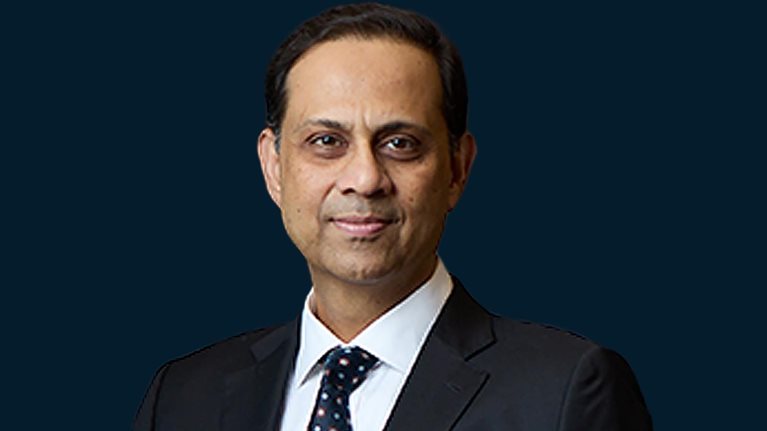
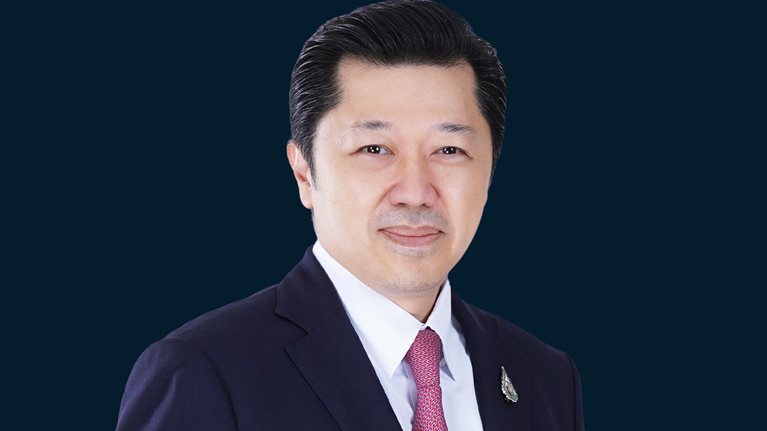
In this Leading Asia interview, Joseph Tsai, vice chair of both Cathay Financial Holdings and Cathay United Bank, and McKinsey senior partners Joydeep Sengupta and Violet Chung discuss Tsai’s role in transforming the bank into a customer- and technology-focused institution.
Tsai is a third-generation leader within Cathay Financial Holdings, which was founded in the 1960s by his grandfather and has grown into one of Taiwan’s largest financial entities. Having studied and worked in the United States, Tsai returned to Taiwan in 2005 to join the family-run business, which had by then become a publicly listed company. He started at a relatively junior level in the real estate department and soon moved to Cathay Life Insurance to help build the alternative investment portfolio.
He became the vice chair and chief strategy officer of Cathay United Bank in 2015 with a focus on strengthening the bank’s digital, data, and innovation capabilities, during which time the group scaled considerably. Over the past ten years, Cathay United Bank has built the largest digital banking platform in Taiwan, currently with more than 6.8 million users and 47 million logins per month. From 2015 to 2025, Cathay Financial Holdings’ total assets grew from $240 billion to $457 billion. In June 2025, Tsai was appointed vice chair of Cathay Financial Holdings.
In his words: “There was certainly a sense of family duty. But for me, it never felt like pure obligation . . . the chance to help move the organization forward and shape its future is something I find genuinely fulfilling.”
I’ve always believed that if you take care of your customers and employees, the numbers will follow.
Joydeep Sengupta: You’ve inherited a business shaped over generations, with a strong reputation and a clear philosophy. How do you balance the responsibility that comes with that legacy with the need to evolve and grow in a changing environment?
Joseph Tsai: I think there are both advantages and burdens that come with it. On the positive side, I’ve inherited a business with a very strong reputation, built over generations by my grandfather and my father. In financial services, that kind of trust is incredibly important, and I feel a responsibility to protect it.
At the same time, scale is both a benefit and a challenge. It gives us the platform and resources to do things smaller players cannot, but it also makes growth harder. When you’re already this size, especially in a market that is only so large, you have to think differently about where growth comes from.
At the core, our focus has always been helping customers create and protect wealth in a thoughtful and conservative way. It starts from a simple idea: We are managing people’s life savings. That goes beyond a technical fiduciary duty.

Leading Asia
Violet Chung: With your focus on the customer, how do you balance the short term with the long term?
Joseph Tsai: I’ve always believed that if you take care of your customers and employees, the numbers will follow. That sometimes means sacrificing short-term profit to do the right thing over the long term. Being a family-owned business helps us take that view, although as a public company, there are still constraints.
We try to be clear with investors about our long-term perspective. For example, in a difficult year, we might prefer to retain capital rather than pay a dividend, but those expectations are part of the reality of being public.
We continue to have conversations about the importance of a long-term relationship with the customer, and where this shows up is in the decisions we make. We’ve been deliberate about avoiding products that place too much burden on customers or make promises that are hard to sustain. I think the customers will be safer and happier, and the money will be safer. This also helps us as managers and employees as we don’t get negative customer blowback.
My philosophy always has been that if you offer something that’s better for the customer in the long run, the rewards will come.
Joydeep Sengupta: Building on that, there’s a lot of disruption happening now in financial services. How do you think about your role in that?
Joseph Tsai: We see ourselves as early adopters. We try to understand what is happening, learn from it, and adapt to it in ways that make sense for us. At heart, I believe we can be better than we are today. There is always more to learn and more we can do.
One challenge in Taiwan is that many leading [international] companies don’t naturally come here, so we’ve had to be proactive in going out and finding what matters. That requires a willingness to invest, to experiment, and to accept that not everything will work.
More broadly, we’ve become more customer focused and more willing to experiment. That means building capabilities that didn’t exist before in areas such as data, customer service, and digital. We have also turned to support our agents better so that they can serve customers better, rather than agents doing it by themselves. To achieve this, there had to be a culture change, which took time. Not that there was anything wrong with the culture, it was just very traditional and sales oriented. I think the culture change is still ongoing.
Violet Chung: Banks are having to innovate constantly in this digital environment. How do you feel about innovation?
Joseph Tsai: What I’ve come to realize is that innovation is not just about ideas. You need the infrastructure and the confidence inside the organization to act on them. We had to upgrade the digital and data side of the organization for it to become more world class.
Once we had done a lot of the infrastructure building, we needed a team that had the mindset to be able to say, “Hey, we want to take on this challenge.” I’m proud of the fact that we’ve got an environment that encourages them to do that. We must be willing to take risks and work on a project that, honestly, might not make money. And if it doesn’t work, we need to move on but also consider what we learned from it.
Our work with Nvidia is a good example of innovation. We’re collaborating with Nvidia on AI-agent protocols for financial services in Taiwan. These efforts don’t generate immediate returns, but they position us closer to where the industry is going and create a more engaging environment for our people.
Joydeep Sengupta: How do you think about talent today, especially as expectations have changed over time?
Joseph Tsai: The goal always is to hire the best people. But at our scale, with about 52,000 employees, the real challenge is putting the right people in the right roles, understanding their strengths and limitations, and building around that.
The environment has changed. In the past, this was the company people wanted to work for. Lifetime employment was more common back then. Today, people may come for a few years, build skills, and move on. We have to recognize that. Our focus is on creating an environment where people can learn and grow. If they reach a point where they no longer feel they can do that here, it’s understandable that they leave.
One advantage we do have is stability. In many organizations, leadership changes frequently. Here, consistency at the top gives people a sense of reassurance and allows them to plan over the long term.
We’ve also been fortunate that our alumni network has become influential across financial services. Many people who have left us have gone on to do very well and we’ve maintained strong relationships with them.
At this scale, I don’t think you can assume you have all the answers. My role is to gather enough perspective to make the best decisions I can, and that only works if people are willing to speak honestly.
Violet Chung: You’ve talked about how the organization has evolved. How have you evolved as a leader over that time?
Joseph Tsai: When I first came back [from the United States], I was quite impatient. I remember early on sitting in meetings with 20 people in the room while someone simply read the slides aloud. After an hour, the meeting would end with very little discussion. I found that very frustrating. But part of it was also the environment I was walking into, as in Taiwan, people didn’t offer their views directly. I remember my father telling me, “This is how we do things here.”
At the time, I probably pushed too hard. I had to learn to adjust my own style. What I was trying to do was understand what people actually thought—not just what was on the page, but what mattered and what I should be paying attention to.
Over time, I think both sides have adapted. I’ve become more patient and the organization has become more open. At this scale, I don’t think you can assume you have all the answers. My role is to gather enough perspective to make the best decisions I can, and that only works if people are willing to speak honestly.