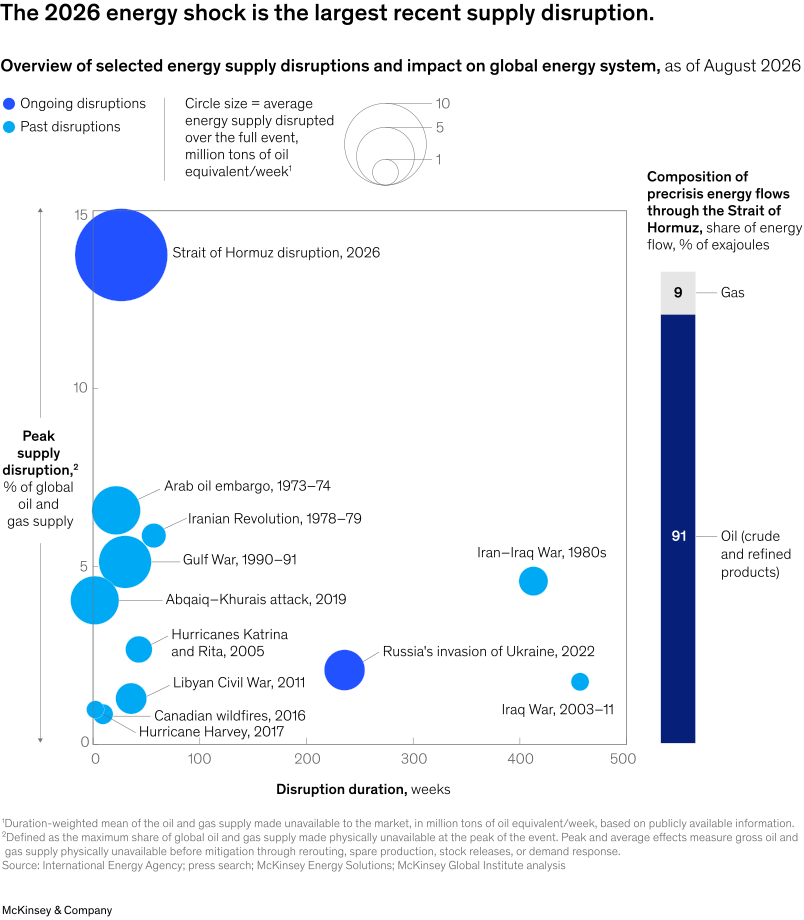
The Strait of Hormuz crisis in 2026 stands apart from other major energy supply disruptions. At its peak, the closure of the Strait disrupted 14 percent of global oil and gas supply, more than double the relative size of the 1970s oil shocks and over six times the peak impact in 2022 of the war in Ukraine in 2022. Yet the energy system has proven more resilient than feared, cushioned by inventories, bypass pipelines, and other shock absorbers built up after past crises. But those measures have limits: for example, inventories are thinning and pipelines have been exposed to disruption, caution McKinsey’s Tiago Devesa, Mekala Krishnan, Humayun Tai, and their coauthors. Decision-makers who understand the current disruption and its likely aftershocks will be better positioned to navigate what comes next.
To read the report, see “Aftershocks: Energy security beyond the Strait of Hormuz crisis,” September 17, 2026.