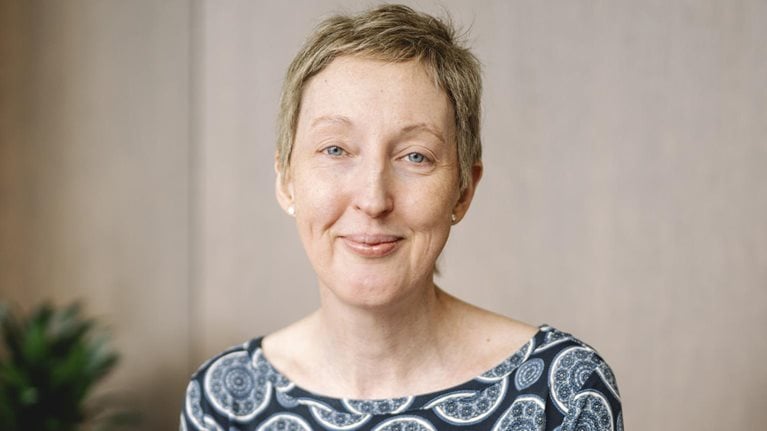
Harmit Singh has been the CFO of Levi Strauss & Co. for 13 years and has since added the title of chief growth officer. In this interview, he shares lessons from his journey helping to transform the iconic clothing company into a “denim lifestyle” leader. He spoke with McKinsey Senior Partner Steve Begley about how Levi’s returned to growth, strengthened profitability, and shifted toward a direct-to-consumer model while staying true to its purpose-driven heritage. The two discussed Singh’s “Magic of the And” approach to driving both top- and bottom-line performance, the process of building a performance culture, and the challenges of navigating volatility and tariffs while adopting AI in finance.
The following transcript of their conversation, which took place at the McKinsey Global CFO Forum in London, has been edited for clarity and length. For more discussions on the strategy issues that matter, follow the series on your preferred podcast platform.
Steve Begley: You’ve been in the CFO role at Levi’s for 13 years, and you’ve held the position at other companies before that. Yet our research shows that the average CFO’s tenure is three and a half to four and a half years. What keeps you in the role? And what keeps you excited?
Harmit Singh: One reason is that I love the Levi’s brand. The company’s been around for 170 years, it invented denim jeans, and the product is still relevant. Another is that Levi’s is a purpose-driven company, and its values resonate with me. We embraced ESG [environmental, social, and governance] as a way of life years ago, when Levi Strauss, from his first profit, decided to donate a part of it to charity. We really have DE&I woven into our fabric. A third reason is that we’ve had tremendous growth. The company I joined 12-plus years ago was skewed toward the US, menswear, and wholesale. We hadn’t grown the top line and the bottom line in any one year at the same time for about two decades. And our balance sheet was four times levered, so highly constrained. We were not investing for growth. But over the last 12 years, our revenue has been up 50 percent. Our profits have more than doubled. Our market cap is up five or seven times. Our growth margin’s up 1,000. So growth has been a big piece of the journey.
Subscribe to the Inside the Strategy Room podcast
Steve Begley: What about transformation?
Harmit Singh: That’s also a big piece of what keeps me engaged. This is probably my third transformation. The first was getting the company back to growth and taking the company public. The second was a pandemic-induced digitization of the company and expansion of e-commerce. Before the pandemic, our e-commerce accounted for about 2 percent of the business and was losing money. Now it’s up to 10 percent and making money.
And the third transformation is what we’re doing now, which is a pivot to putting direct to consumer [DTC] first and being a best-in-class retailer. DTC was maybe one-fifth of our business when I joined, and it is now close to 50 percent. And a big piece of this third transformation is expanding my role from a pure CFO to a growth officer. Taken together, all these factors keep me on my toes and engaged every day.
Steve Begley: Tell us more about your thinking around expanding your role. About two years ago, you expanded your role to include chief growth officer, and even more recently, you’ve taken on the transformation office. That’s a lot of responsibility. Why do you believe CFOs are best positioned to take on those mandates?
Harmit Singh: One, I think the best CFOs I’ve interacted with embrace growth while they manage risk. The second is that what attracted me to the finance function was my belief that finance people see everything, and that raises the question of whether they can impact everything in the company. To do that, you have to learn the business. I came from a totally different industry, and in my 12-plus years here, I keep learning every day, and I have worked to build trust with the board, the CEOs, and my peers. That has allowed me to expand my role. Being a growth officer is about accelerating the top line, but doing so in a way that also enables you to excel in profitability.
Steve Begley: You have a concept you call the “Magic of the And.” Tell us about that.
Harmit Singh: The “Magic of the And” refers to growing the top line and the bottom line at the same time. That’s a journey that continues. When you accelerate the top line, you have to grow it profitably, so that means growing our domestic and international businesses at the same time. I express this by talking about what’s working and not. It’s simple language that people can understand. Soon after I started this, I learned that my list of what’s not working was making people cringe and feel uncomfortable. I was talking about this with Carol Dweck, who wrote Mindset: The New Psychology of Success (Ballantine Books, 2007), and she suggested I change “what’s not working” to “what’s not yet working.”
That was really good, because “not yet” demonstrates there’s an opportunity. That got people a lot more comfortable. Our Europe business, for example, was in the “not yet” category in the first half of last year. Then they started growing. And they moved from the “not yet working” list to the “what is working” list. I talked publicly about the change and how it happened. That’s the “Magic of the And,” where you’re focusing on a combination of things that need to improve, and that’s an example of why I believe finance people can do just about everything.
When you accelerate the top line, you have to grow it profitably.
Steve Begley: How much does the company culture and history fit into making this work? How do you manage transformation while respecting the heritage that’s so core to how the business operates?
Harmit Singh: You need a culture of heritage and performance. My dad always used to remind me, “Never forget your roots,” and that’s important to this company, too. We know we have to grow our US business because we started there. And we know we have to grow wholesale while we’re growing our DTC. We know we have to grow our core, which is the 501s, or the 511s, that you’re wearing, while we’re bringing in the looser, baggier fits.
And being purpose-driven means we keep our focus on sustainability and ESG even in an environment like today’s, because these are important to us. A lot of times, it is important to do the harder right versus the easier wrong. A lot of us can gravitate to making a decision that’s easy, but as an organization, we pride ourselves on doing the harder right. For example, we’ve taken a stand on people’s right to vote. We’re not saying vote X or Y. We’re just saying go and exercise your right. In the same way, we think we’re a brand that’s fairly democratic. People can wear us when they go on a date. They can wear us to the office.
Steve Begley: Apparently, they can wear Levi’s to a wedding, as you told me.
Harmit Singh: Yes. Last year, I went to a nephew’s wedding in Sri Lanka and wore our linen product. That’s just who Levi’s is. We have something for everybody, which is important.
Steve Begley: We’ve all had a lot of volatility to cope with recently. You’re obviously in the height of navigating tariffs at the moment. Tell us a little bit about how Levi’s is managing this.
Harmit Singh: First, having a tenured team is critical. Some of our board members were there when we were private. And having two family members on the board is important, because they help us think long term while we’re having to think short term. On the tariffs, we set up a task force led by my transformation office, but it could have been led by FP&A [financial planning and analysis]. It was cross-functional with people from commercial, product, and finance, and looked at different scenarios because it’s an evolving situation that changes by the day.
Steve Begley: So that’s another form of transformation muscle that you continue to strengthen. Transformation can mean many things, including digital, financial, and technological transformation. What does it mean to you?
Harmit Singh: It’s not easy to evolve from being a US-centric organization to a global organization. It’s not easy to evolve from a wholesale-skewed operation to a balanced operation. It’s not easy to evolve from a men’s fashion focused organization to a more balanced focus. It’s not easy to evolve from a bottoms-only to a denim lifestyle, which is what we are trying to build a business on. So it takes a little time. And that’s where our transformations have been more focused on transforming the business and evolving into a more global denim lifestyle player.
A big piece of our success has to do with evolving the performance culture. Our core values included empathy, courage, and integrity. We needed to add a performance piece to that, and that was one of our CEO, Michelle Gass’s initiatives. It sounds simple, but it’s difficult. We had to define what performance meant. For some people, it is about growing the top line. For others, it is about growing the bottom line. The combination is what is important. Our strategic goal is to take a $6 billion company and grow it to $10 billion. But at the same time, take operating margins, which are 11.5 percent, and grow them to 15 percent. Those are our two important metrics. That emerged in part from our third transformation—we had to identify areas where we needed to exit because not everything is high margin and high growth.
Steve Begley: You have a diverse set of stakeholders to work with. In addition to the usual people that a CFO has to work with, you’ve also got major wholesale partners, thousands of front-line employees working around the world, and you’ve also got the family council, which has a voice in these things. How have you managed to bring these various stakeholders along to rally the organization around the transformation that you’re making?
Harmit Singh: The first imperative is to be clear on the strategy, which in our case, we developed when [former CEO] Chip [Bergh] was here. Then, when Michelle took over as CEO about two years ago, we refined it. To her credit, she really involved the executive team in further developing the strategy.
We kept the $10 billion notion, and the 15 percent operating margin. So the outcome was very similar. But we really focused on denim lifestyle. It is not lifestyle for the sake of lifestyle. It had to be denim-inspired, which narrowed the focus in a way, but it actually allowed us to unlock a lot of innovation around it.
Steve Begley: What are some of the techniques you used for carrying that strategy out?
Harmit Singh: Long ago, one of my old bosses talked about the three levels of commitment in an organization. There is the political commitment when a senior leader says something, and everybody nods, but very little happens. Then there is intellectual commitment, which is when you engage everyone’s minds by explaining the why. A little bit more happens after that. The third level is where you really see a difference: when you get people emotionally committed to the change, and they understand their role in the process. I think that’s where people are today. We have to be willing to shed businesses that aren’t working for us, and we have to celebrate wins.
That looks like my sharing the “what’s working” and “not yet working” in our communications, whether it’s town halls or other engagements. Every time we do an earnings call, we talk about what is transforming. Every quarter, we meet with the board, and now the transformation office is really in-house and a way for us to communicate what needs to happen, and the wins we can celebrate.
Steve Begley: I often say that any well-run organization that is going to succeed needs to have what we would call a world-class finance function. What does that mean to you? And what does that look like at Levi Strauss & Company?
Harmit Singh: I was born, raised, and educated overseas, and if someone had said to me, maybe 30-odd years ago, “Harmit, you’ll be in the US, you’ll take two iconic American brands public, and you’ll be CFO of these companies,” I would’ve bet against it. I did not wake up one morning saying, “This is what I want to do.” It happened over time because I was lucky and because I had people who believed in me and took a chance on me. And so, over time, what I’ve done is take chances on people.
And I’m a big believer that one hires talent for what they can do today, and for their ability to grow into other roles in the future. If you take my direct reports, for example, not many of them are doing now what they did a couple of years ago. I’ve tried to move people across different roles, so they can learn. One person had been a controller for a long time when I joined, and I moved her into a finance director role. She went on to be the transformation head and now runs that business while sitting on the executive team. I just feel great when I can help people unleash their potential. And so hiring talent and developing people is important.
Steve Begley: How is AI evolving within the finance function for you?
Harmit Singh: Everyone needs to really understand what’s relevant to your business if they are going to find success adopting AI. Will it improve the shopping experience? Will it help improve the interaction with our stylists on the floor? Forecast accuracy is a huge opportunity for every CFO. An accounting vendor we used back in 2018 was using machine learning to improve its forecasting, and I thought we should start trying it out. We tested it out for a year, and it was clear that the algorithm was forecasting better than the manual forecasts, because it’s more objective. Harvard wrote a case study on the work we did on revenue forecasting, which is now taught to second-year MBA students. My advice is to think it through carefully. Have some use cases to test before you scale. And carve a little money out to invest in it.
Steve Begley: What advice would you give aspiring financial professionals about building a career in finance?
Harmit Singh: First, know the business goal. Second, help influence growth and mitigate risks in the organization. And try to ensure you can impact your function or the organization. Finance leaders see everything, so we can impact everything. I would also say it’s important to play out of your comfort zone. You may not have experience in the industry you’ll be in. You learn in the process. Use every role as a learning opportunity. It’s about getting experience and building your repertoire.
Steve Begley: Harmit, before we let you go, I’m hoping you can help settle the fashion debate: skinny or baggy jeans—which should we be buying?
Harmit Singh: Both. It’s the “Magic of the And.” If you want to be trendy, you’ll buy the looser, baggier fit. But if you have to go to a meeting or work, you’ll want a slimmer, skinnier fit. Being a democratic brand and offering something for everybody and all occasions is important.
Steve Begley: Harmit, thank you for joining us today.
Harmit Singh: Thank you, Steve.