Artificial intelligence (AI) is reshaping the global economy and redefining productivity and competitiveness. McKinsey estimates that the technology could add between AU $3.9 trillion (US $2.6 trillion) and AU $6.8 trillion in annual value to the global economy.1
But with global compute demand expected to grow at least three-and-a-half times by 2030,2 success depends on a critical enabler: the ability to build and operate large-scale digital infrastructure. Nations that are best positioned to capture the economic dividends of AI adoption may be those that can deliver infrastructure in a sustainable, reliable, and scalable way.
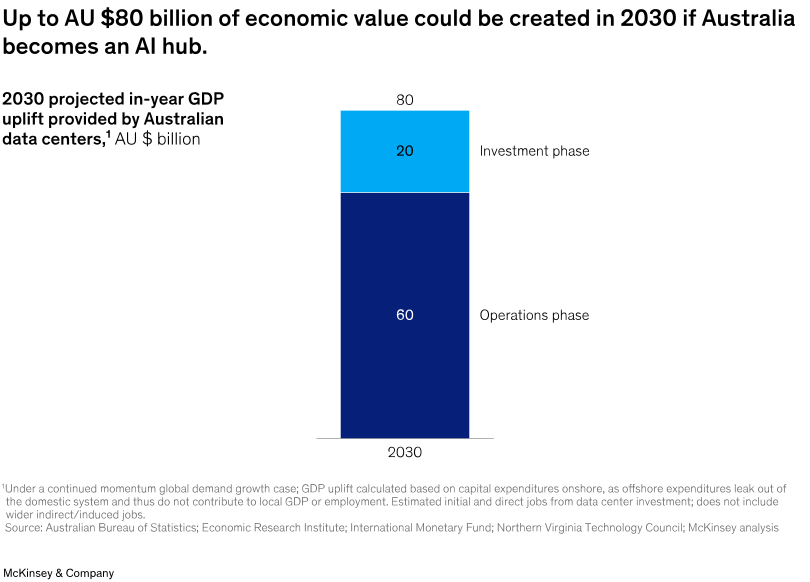
Australia has a real opportunity to become an Asia–Pacific center for digital infrastructure—allowing it not only to meet domestic AI compute demand and contribute positively to Australia’s national interests, but also to capture a share of regional AI workloads. The rewards could be significant, potentially translating into approximately AU $80 billion in additional GDP annually from 2030 and 100,000 new jobs across construction, operations, and supporting supply chains, according to our analysis. Yet, capturing these rewards will require Australia to overcome a number of constraints.
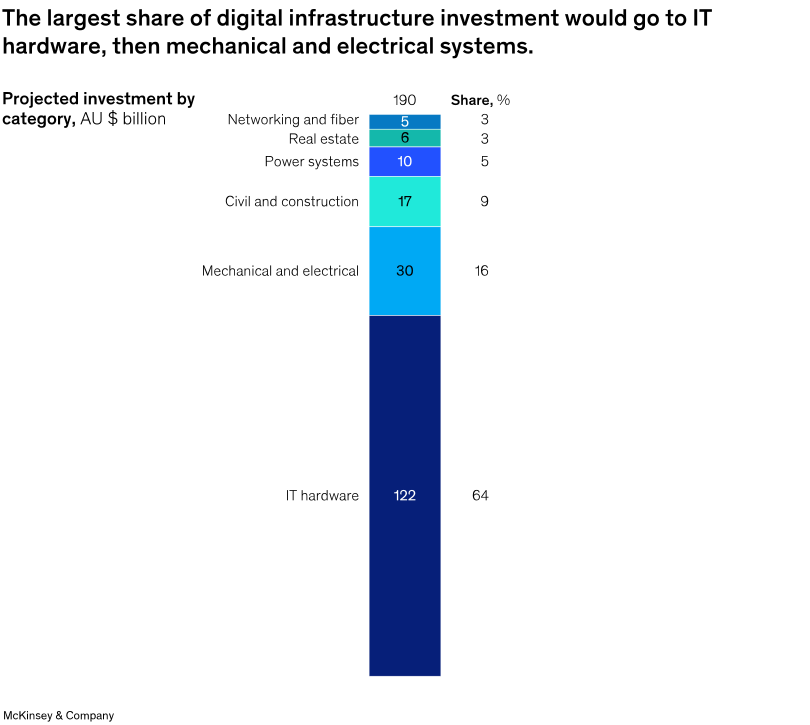
To unlock the opportunity, we estimate that new capital investment of up to AU $190 billion would be needed to increase Australia’s compute capacity from 1.5 gigawatts (GW) to 5.0 GW by 2030. This represents almost two-fifths of the uplift needed to restore Australian capital investment to levels historically associated with high-productivity growth.3
Australia has many advantages for digital infrastructure build-out: ample land, political stability, and strong renewable energy potential.4 It also has a long-standing position as a trusted technology partner to its global allies, often facing comparatively fewer constraints on advanced technology collaboration and transfer.5
That said, growing headwinds, including energy availability and affordability, time-to-power delays, high build and labor costs, and a nuanced regulatory landscape, would need to be addressed—quickly—to capture this opportunity. The coming decade may determine whether Australia can act with sufficient speed and coordination to become a regional AI hub.
In this article, we outline the scale of the AI opportunity, the constraints to be solved, and the strategic actions required to enable sustainable AI-driven growth in Australia.
The data center infrastructure opportunity and challenges
The opportunity for Australia is multifaceted. As technology accelerates, so do the considerations for infrastructure, workload, demand, investment, and productivity.
Redesigning infrastructure for a shifting workload mix
By 2030, more than half of global data center workloads are expected to be AI-related, either for training or inferencing for large AI models.6 These workloads differ substantially from traditional computing and cloud workloads, requiring higher power densities, faster networking, and advanced cooling technologies.
Standard enterprise racks operate at 4.0 to 9.0 kilowatts (kW); in contrast, AI racks require between 40 and 300 kW, depending on model complexity and hardware configuration.7 This dramatic increase is driving a fundamental redesign of infrastructure. Liquid and immersion cooling are replacing conventional air-cooling systems where feasible, and power distribution units and backup systems are being reengineered to handle continuous high-density loads.8
Like many markets across the globe, Australia’s historical data center infrastructure has been focused on serving general cloud and enterprise workloads. To meet future demand, new facilities will be required to cater to AI’s specific compute requirements. For Australia to remain regionally competitive, this expansion would need to be achieved swiftly, with implications for the investment and enablers required.
From global surge to regional spillover
The demand for AI infrastructure is reflected in the accelerated global build-out seen across major markets in recent years. According to our analysis, data center capacity in the United States has expanded more than threefold since 2020. In Europe, FLAP-D (Frankfurt, London, Amsterdam, Paris, and Dublin) has grown into the largest data center hub in the region, with all but Amsterdam showing development pipelines exceeding 500 megawatts (MW).9
Yet these major markets face a range of factors that may contribute to supply shortages. Our analysis of the three largest data center hubs—Europe, Singapore, and the United States—indicates that while capacity expansion is accelerating, power and land availability, permitting timelines, and cost escalation are increasingly becoming restraints on data center rollout.
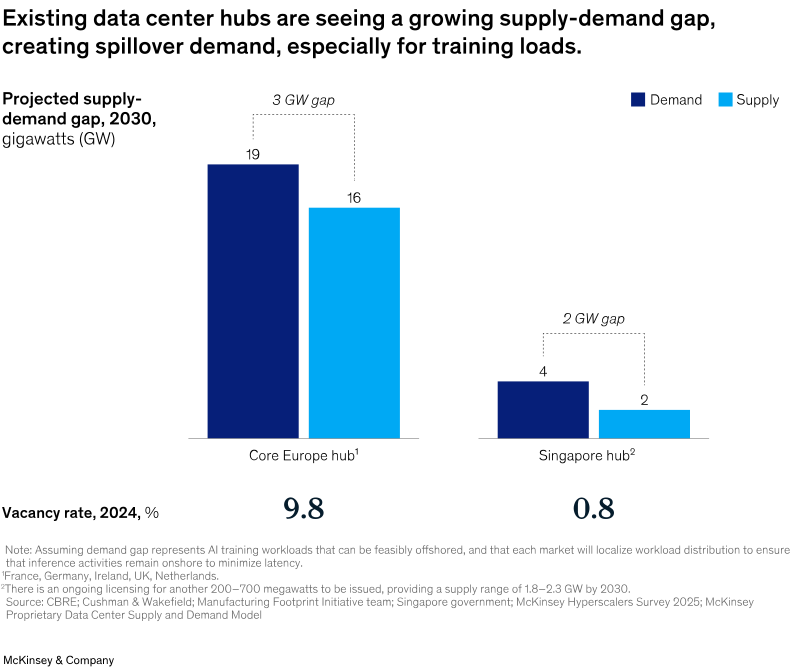
For example, land and energy constraints that limit new capacity in Europe could create around a 3.0 GW deficit. As a result, about 60 percent of new AI-related demand is starting to shift to Nordic markets, such as Iceland and Norway, as operators seek fewer limitations.10
In the Asia–Pacific region, Singapore historically has been the leading digital gateway. However, restrictions have affected data center build-out. In 2019, when data centers reached an estimated 7 percent of the country’s national electricity consumption, the government imposed a temporary moratorium on new data center developments.11 Although the moratorium was lifted in 2022 with stricter power-usage effectiveness standards, our analysis shows that new projects in Singapore still can be hampered by limited land, water, and available energy12—resulting in an anticipated capacity gap of approximately 2.0 GW (Exhibit 1).
These conditions have influenced capital allocation, with investment flowing elsewhere in the region. As an example, in the first ten months of 2024, Malaysia secured over US $20 billion of investments from North American hyperscalers, with Johor in particular benefiting from its close proximity to Singapore.13 In the first half of 2025, Thailand approved approximately US $10 billion in data center investment applications.14 These countries, along with Indonesia, have started to capture Singapore’s spillover demand in the Asia–Pacific region.
This presents Australia with a significant opportunity: Australia’s economic growth and productivity could benefit if it were to capture a portion of the spillover demand from the Asia–Pacific region. However, Australia is operating alongside faster moving—and less costly—regional peers. Some, such as India and Malaysia, have already introduced targeted fiscal and zoning incentives to attract data center development.15 Australia’s relative attractiveness as a digital infrastructure destination is at risk of declining; the pace of its response and the selective capture of demand will likely determine whether it can attract the spillover and redirected investment.
Realizing future demand through digital infrastructure
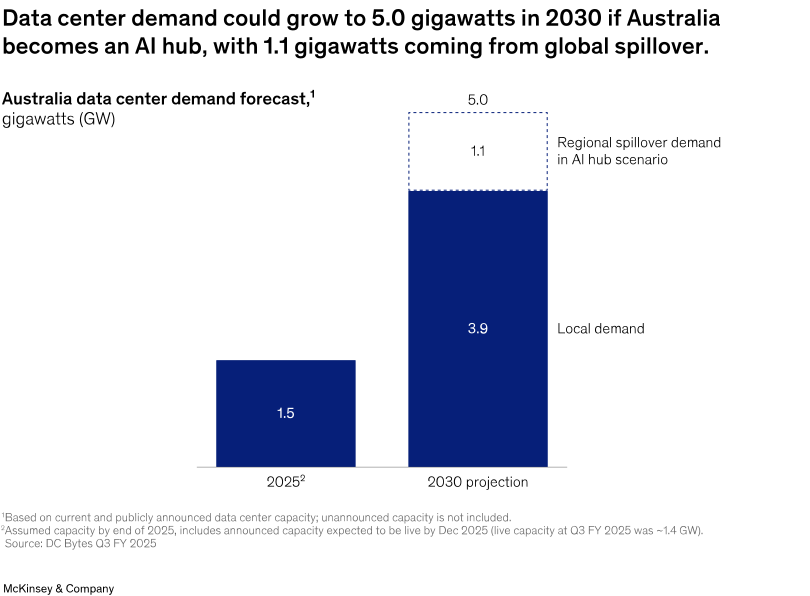
Australia’s current share of global compute is approximately 1.8 percent, and our analysis suggests that its data center demand could grow 2.6 times from 1.5 GW in 2025 to 3.9 GW in 2030. This would meet local AI inferencing demands, local AI training needs, and traditional non-AI workloads.
If Australia could further capture spillover demand and become a regional AI hub, data center demand could grow beyond 3.9 GW to 5.0 GW in 2030.16 Australia’s data center capacity would then be able to support local AI needs, as well as a portion of regional spillover AI training workloads. While projected supply is likely to grow about 2.4 times in this period, the level of demand growth could outstrip supply by almost the entire capacity in the market today (Exhibit 2).
Given that capturing the full potential demand of 5.0 GW by 2030 would require around AU $190 billion in digital infrastructure investment across Australia, this would represent one of the larger industrial investment programs, in both scale and diversity, in recent Australian history.17 While Australia remains attractive as a destination for institutional capital, mobilizing investment at this scale will depend on delivery certainty, speed, and clear and predictable investment economics.
The largest share of investment would go to IT hardware, particularly graphics processing units (GPUs), application-specific integrated circuits (ASICs), and high-density server racks. Mechanical and electrical systems represent another substantial portion, covering generators, switchgear, substations, and cooling systems (Exhibit 3).18
Although data centers require water for cooling, 5.0 GW of forecast capacity using traditional air-cooled and water-cooled systems would represent a small share of Australia’s total annual water consumption.19 Impacts on water are likely to be concentrated in metropolitan areas such as Melbourne and Sydney, where much of the data center capacity is expected to be built.20 A mitigating factor is that newer solutions, including closed-loop liquid and immersion cooling, are less water intensive and can operate effectively using nonpotable water sources.21 As such, water is unlikely to be a systemic national constraint but will increasingly require a project-level approach and social license consideration. Local supply, infrastructure capacity, and community and government expectations could all influence how growth is accommodated.
Investing to close the productivity gap
If the projected investment needed materializes, our analysis shows that data center infrastructure development could generate an additional AU $80 billion in GDP annually from 2030 and support approximately 100,000 new jobs (Exhibit 4). Growth in employment would occur in both the construction and operational phases. The initial phase would require construction, engineering, and logistics roles, while employment demand would later shift to digital operations, network management, security, and facilities maintenance.
This investment could be part of the answer to Australia’s productivity challenges. Since 2016, Australia’s economic engine has been running out of steam. Over the past 30 years (from 1994 to 2024), per capita GDP grew at 1.7 percent a year. Yet the post-2016 growth rate averaged just 0.6 percent, and since 2020 has been negative.22
Recent McKinsey research on Australian productivity highlighted that low private sector investment has been a major contributor to the slowdown.23 Restoring investment levels is a prerequisite, albeit not a guarantee, for lifting long-term productivity growth. According to our analysis, capital investment in digital infrastructure could account for up to 40 percent of the investment needed to restore Australia’s market sector productivity growth rate to its 30-year average of 1.7 percent a year.
The benefits of increased productivity could extend beyond digital infrastructure development. Scalable compute infrastructure would enable AI adoption and deployment across industries such as mining, logistics, finance, and healthcare, with these second-order gains lifting output per worker and improving economic productivity—although these effects are not included in the economic impact estimates above.
Key priorities for increasing Australia’s attractiveness
According to a McKinsey survey of hyperscalers and enterprises conducted in 2025, hyperscalers—data centers’ core customers—currently prioritize time to market above all else when choosing new locations.24 In large part, how soon a data center can be operational depends on how quickly power and approvals can be secured. Other factors hyperscalers look for in new locations include ease of doing business, land availability, network connectivity, and investment costs. Some of these present challenges in Australia (Exhibit 5).
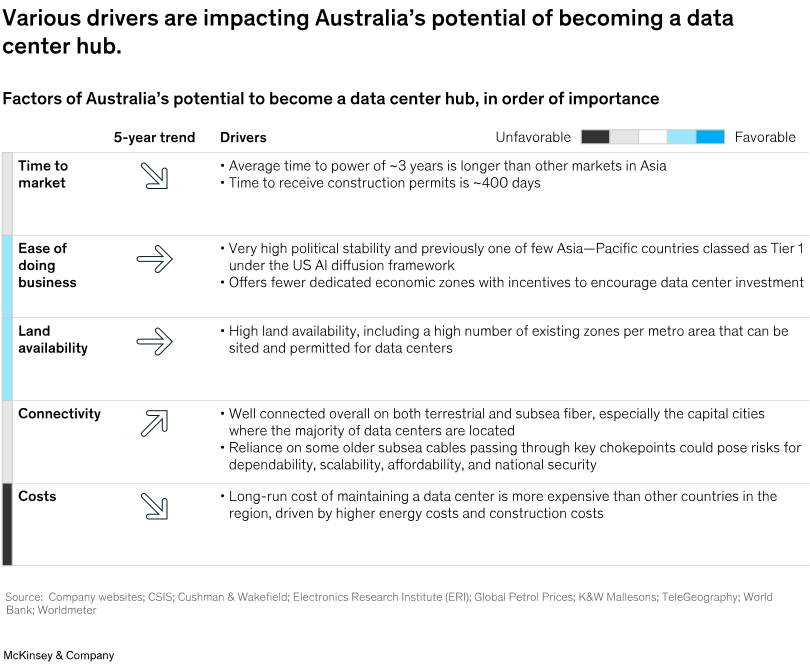
Australia’s natural advantages include land availability, political stability, and abundant renewable energy potential. However, it currently trails a number of countries in the region on time to market, cost, and financial incentives.25 This trend could continue unless these challenges are addressed: Average time to power, cost of energy, and cost of construction labor in Australia have all increased over the past five years.26
Australia’s ability to capture digital infrastructure investment depends on addressing the following constraints:
- Time to power: Australia’s grid connection times are among the slowest in the Asia–Pacific region, with new data center power connections taking two to three years in key locations.27 Our analysis suggests that data center power use could triple by 2030, outpacing planned grid capacity, unless faster approvals and direct connect models can be introduced (see sidebar, “Deep dive: Energy and the grid outlook”).
- Cost of energy: Australia’s average business electricity prices are 56 percent higher than the current Asia–Pacific average. Its higher power prices mean the long-run marginal cost of building and operating a data center in Australia is around 15 percent above the Asia–Pacific average.28
- Labor costs: Construction worker labor costs are 159 percent above the regional average, and shortages in electrical and mechanical engineers, in particular, could restrict delivery.29
- Ease of doing business: Project delivery in Australia can be slowed by multilayered approvals, long permitting processes, and limited fiscal incentives. Delays in regulatory approvals can push out development timelines, and Australia’s extensive foreign investment review process could deter global investment.30
- Connectivity: While Australia is well connected, especially in major cities where most data centers are located, dependency on a small number of aging subsea cables passing through key chokepoints could pose risks for dependability, scalability, affordability, and national security.31
Establishing a national blueprint for capturing the AI opportunity
Australia is now at a critical inflection point. Capturing the next wave of AI-driven digital infrastructure investment may depend on immediate and coordinated action across regulation, energy, workforce capability, and national policy to address the constraints to growth. Without this, Australia risks losing investment to regional peers that offer lower costs, quicker approvals, and stronger energy certainty.
The Hyperscalers Data Center and AI Usage Survey showed that markets become more attractive for digital infrastructure investment by accelerating time to market and improving ease of doing business.32 Australia could improve its performance in these areas through action across four themes: clear and predictable regulation, innovative energy systems, specialized skills pipelines, and long-term planning.
1. Clear and predictable regulation: Create an environment that supports growth
Consistent, streamlined regulation is central to investor confidence, and global case studies show that regulatory reform can materially accelerate infrastructure delivery. For example, the US Executive Order, “Accelerating federal permitting of data center infrastructure,” explicitly prioritizes digital infrastructure and associated transmission projects, and Ireland’s “private wire” model allows data center operators to construct direct transmission lines to renewable generators.33
Targeted fiscal incentives have also been used to complement regulatory efficiency, with some markets providing direct tax incentives to capture data center demand. Sweden has reduced electricity tax for data centers by 97 percent, and Malaysia has instituted a ten-year corporate tax exemption under its Multimedia Super Corridor program.34
Other regional markets have initiated mechanisms to speed up projects. India, the Philippines, and Vietnam have introduced automatic or simplified foreign investment approvals, allowing 100 percent overseas ownership and reducing entry timelines for data center projects.35
Current Australian approval processes for large-scale data center projects can involve multiple jurisdictions and extend over several years.36 Australia could become more attractive for investment by modernizing permitting and approval processes across all levels of government. The federal expectations for data center development signal a shift toward prioritization of projects aligned with national interests. For investors, this introduces a clearer—though still evolving—set of signals on how proposals may be assessed within existing approval processes.
2. Innovative energy systems: Explore solutions to meet demand
Power availability and energy costs are among the most significant constraints on data center expansion.37 Addressing the anticipated steep increase in data center power use by 2030—while maintaining progress toward Australia’s 82 percent renewable generation—will require accelerating the delivery of grid-scale generation, storage, and transmission, as well as speeding up innovations in data center energy solutions.38
One model that could help alleviate part of the challenge involves co-location with renewable generation. Examples include Dubai’s 100-MW solar-powered data center within a 3.0 GW solar park, Norway’s hydroelectric campuses, and Kenya’s geothermal facilities, each of which has been designed to minimize transmission losses and ensure clean, stable energy supply.39 Ireland’s DUB20 campus includes a 293-MW on-site energy center, and a project in Singapore integrates solid-oxide fuel cells as part of a hydrogen-ready pilot.40 Similar digital precincts could be developed adjacent to Australia’s Renewable Energy Zones, with preapproved land and grid access, for example.
Load balancing and demand flexibility is another pathway that could enable data centers to function as active grid participants. In the United States, hyperscalers have signed demand-response agreements to reduce or shift compute loads during peak demand.41 In Belgium and Taiwan, operators modulate consumption based on real-time grid conditions.42
Encouraging these mechanisms in Australia could reduce strain on its energy infrastructure.
3. Specialized skills pipelines: Build a competitive workforce
Labor supply is a growing constraint for large-scale data center development and construction, and Australia faces shortages of engineers and high construction costs relative to peers.43
Several countries have adopted targeted programs to address similar gaps. Specialized migration frameworks, such as Israel’s high-tech expert program and Singapore’s Tech.Pass, streamline entry for professionals in AI and digital infrastructure engineering.44 Introducing a dedicated Australian visa stream for data center specialists could provide near-term capacity, while enabling skills transfer.
Long-term labor sustainability could depend on education and training. Ireland’s mechanical and electrical apprenticeship programs, the Netherlands’ Data Center College, and the United Kingdom’s employer-backed National Data Centre Academy demonstrate how public–private education models can expand domestic talent pools.45
In Australia, operators are already expected to contribute directly to workforce development. Comparable partnerships between Australian universities, Technical and Further Education (TAFE) institutions, and industry could align curriculums with technology in areas such as liquid cooling, power management automation, and sustainability analytics. Australia could also consider expanding existing programs such as the Key Apprenticeship Program to include digital infrastructure.46
4. Long-term planning: Continue developing a clear national strategy and policy intent
Countries such as India, Singapore, and the United Kingdom have introduced national strategies linking data center development to industrial, energy, and digital policy. As examples, Singapore’s Green Data Centre Roadmap ties new capacity releases to energy-efficiency thresholds, while India’s National Data Center Strategy establishes governance, single-window clearances, and power supply coordination.47
With the release of the National AI Plan, Australia has begun outlining its approach to digital infrastructure, and opened the door for coordinated action by policy, business, social, and union leaders as Australia navigates its place in the global AI landscape.48 The expectations framework for data center developers further lays out conditions for project prioritization, though stops short of accelerating approvals.49
As a next step, Australia’s digital infrastructure strategy could be expanded by setting capacity, energy, and connectivity targets to 2030 and 2035, with a single framework spanning federal and state responsibilities. This could help provide a clear line of sight between domestic compute infrastructure and longer-term capability objectives—including any sovereign AI ambitions—while remaining integrated with global AI ecosystems and partners.
With an expanded cross-sector remit, existing bodies such as the National Artificial Intelligence Centre could act to coordinate policy across government, utilities, and private investors. It could also monitor delivery against key metrics and streamline cross-sector decisions, similar to advisory models in Canada, South Korea, and the United Kingdom.50
International partnerships would be essential for securing sustained demand. The United States’ cooperation with the United Kingdom through the US–UK Technology Prosperity Deal, Italy’s collaboration with the United Arab Emirates (UAE) on a supercomputing hub, and Bahrain’s “data-embassy” arrangements have anchored cross-border workloads.51 Adopting comparable agreements could position Australia as a trusted host for regional AI training and inference, and would build on existing progress such as the G7 Energy and AI Work Plan.52
Community benefits could be a further enabler. Northern European markets demonstrate that transparency can strengthen social license for ongoing data center expansion, along with creating community and environmental benefits—such as Denmark’s and Sweden’s reuse of data center waste heat for district heating.53 Embedding similar community outcomes in Australian projects could align growth with public needs and expectations.
Australia has the resources, institutional capability, and regional position to become a leading provider of scalable compute infrastructure. But the window to act on this opportunity is narrowing.
Decisions made in the near term may determine whether Australia becomes an Asia–Pacific AI hub or a secondary market. Incremental progress will not be enough to achieve the former: Realizing this ambition will depend on the swift coordination of regulatory, energy, workforce, and strategic choices over the remainder of the decade.
Australia could implement a fact-based, systematic approach to ensure that digital infrastructure development contributes not only to AI innovation, but also to the broader national productivity and energy objectives needed to secure Australia’s long-term, sustainable growth.