Is no news good news? As the end of the year approached, consumers in Europe felt largely the same about their respective economies as they have for much of 2025: About half of consumers, on average, reported mixed feelings, around a quarter of people felt optimistic, and the rest felt pessimistic.
More encouragingly, consumers across the EU-5—France, Germany, Italy, Spain, and the United Kingdom—reported confidence in their personal finances, even as optimism about the broader economy remained relatively low. This observation is now a long-term trend and is true in the United States, too.
Inflation remained consumers’ top concern, but its slower pace across much of Europe allowed households to sustain some discretionary spending and holiday indulgences.
The following charts highlight findings from our latest ConsumerWise research, conducted in November. The research examines how consumers across the EU-5 are feeling about the economy, managing their finances, and planning their spending.
Consumer confidence across the EU-5 has remained broadly stable heading into the holiday season. The most notable exception is France, where the share of consumers reporting optimism fell from 21 percent in the third quarter to 16 percent in the fourth quarter, while the percentage of respondents saying they feel pessimistic rose from 34 percent to 40 percent—a significant swing likely tied to the country’s ongoing political discord. And while a smaller percentage of consumers in Spain reported feeling optimistic in the fourth quarter compared with the previous quarter, the share of consumers in Spain who felt optimistic grew five percentage points year over year.
In the United Kingdom, Germany, and Italy, shifts in consumer sentiment remained relatively stable. Across the Atlantic, more consumers in the United States remained optimistic than in Europe overall—40 percent of US consumers reported optimism in the fourth quarter—but that share has declined steadily from 47 percent a year ago.
Across the EU-5, consumers’ hierarchy of concerns looks much the same as it did a year ago. The share of consumers who rank inflation as their greatest concern held steady at last year’s levels in every major market—ranging from 42 percent in Germany to 52 percent in the United Kingdom. Other economic concerns remained elevated but largely unchanged: Worries about making ends meet or job security have not moved significantly across countries. (In the United States, meanwhile, concerns over job security jumped significantly from the previous quarter.)
The most notable year-over-year change was in the share of consumers concerned about climate change, which declined across all markets and most evidently in Italy.
Overall, the data suggest that European consumers have been focused on persistent price pressure and, to a lesser degree, on political or social uncertainty.
Households reported taking savings measures that were similar to what they reported doing at the same time last year. Consumers in France, Germany, Italy, and Spain did not make significant new adjustments to their savings habits—a marked contrast with the United States, where more households reported taking savings measures amid shifting finances.
The United Kingdom stands out as the only market with statistically meaningful change in consumer savings behavior. The share of UK consumers using credit cards to cover essentials rose by about five percentage points year over year, while the share of those who dipped into savings to meet expenses and those who tracked expenses more carefully each increased by more than four points.
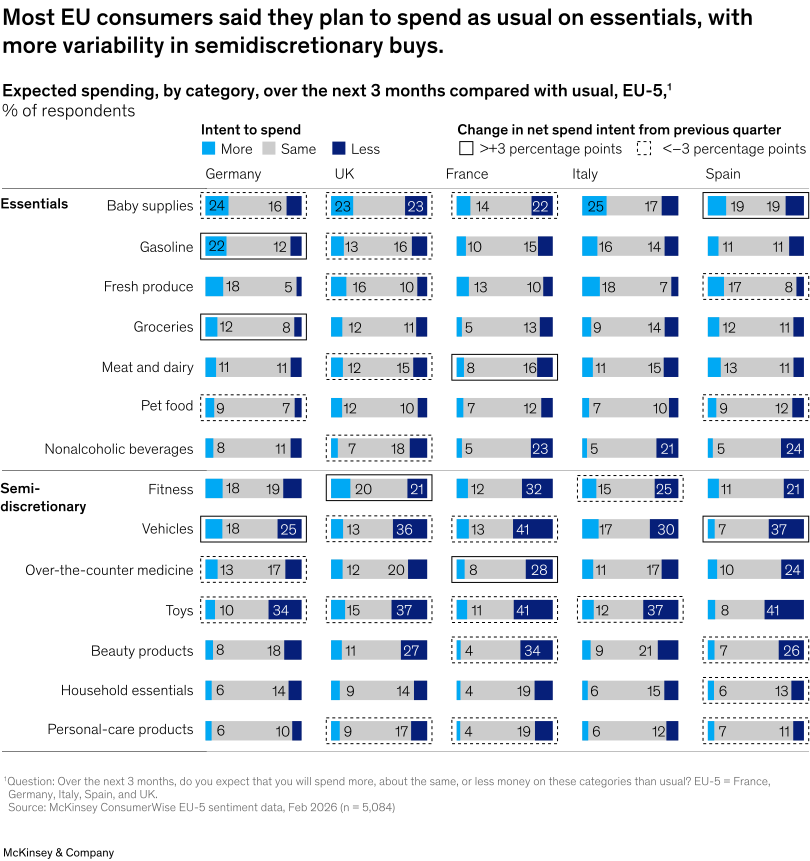
Consumers’ intentions to spend on essentials and semidiscretionary items remained mostly unchanged from the previous quarter. The few statistically significant shifts were limited to seasonal categories, such as vehicles and toys, which saw the biggest quarter-over-quarter increases.
Elsewhere, movement was minimal. Intent to spend in categories such as groceries and household products remained mostly flat. Even in categories where a greater share of consumers expressed their intent to spend more, these changes were below the prior-year's fourth-quarter surges.
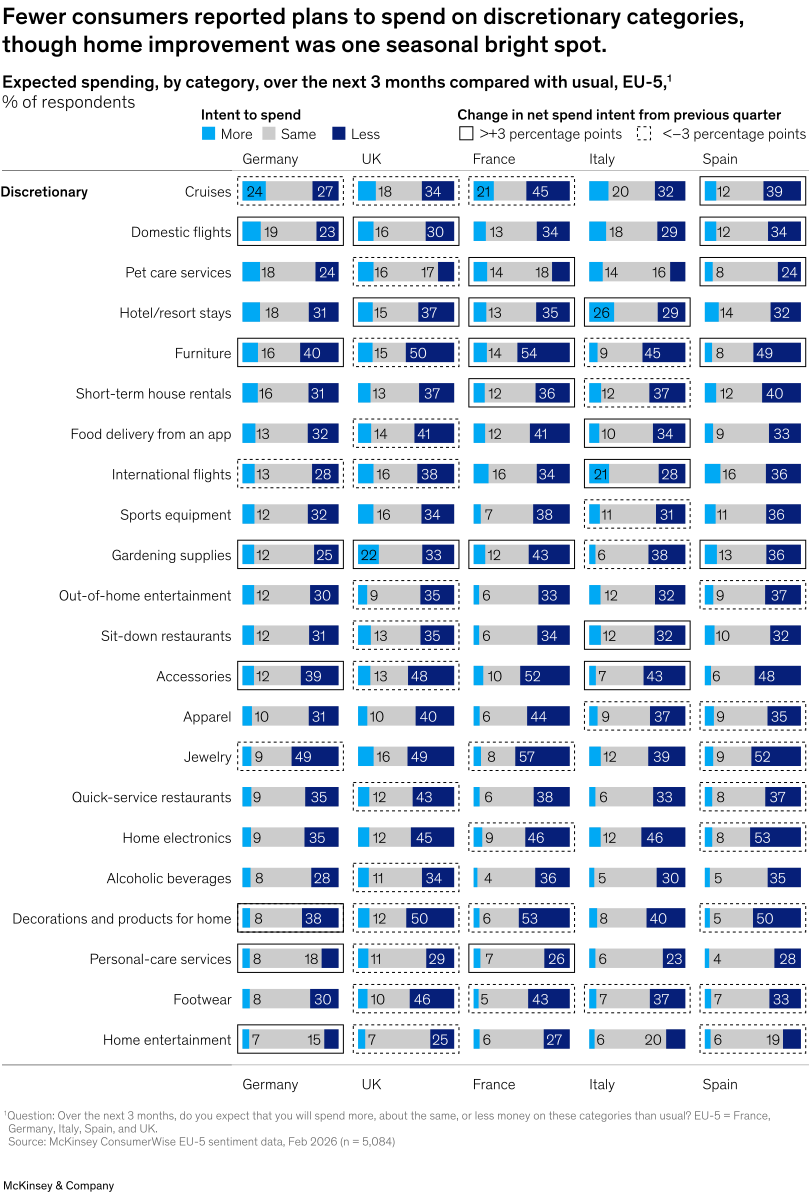
As for discretionary spending, more consumers expressed their intent to spend more on cruises than any other category. Intent to spend on cruises rose significantly in four of the five EU-5 markets, marking one of the strongest positive swings in this quarter’s data. Baby boomers, whose net intent1 to spend on cruises increased by 22 percentage points since last quarter, led this shift.
In contrast, net intent to spend on hotels and resort stays declined in all five countries by more than five percentage points from the previous quarter. Similar dynamics are visible in the United States, where more baby boomers also expressed plans to book cruises over other vacation accommodations.
Among UK consumers, net intent to spend fell across several discretionary categories— especially hotel stays, domestic flights, and jewelry—consistent with earlier signs of household pressure. These declines suggest that while UK consumers may still indulge in smaller “at home” or comfort-oriented splurges—such as ordering food delivery from an app or decorating their homes—they plan to pare back on higher-ticket experiences and travel.
Across Europe, intent to splurge rose compared with last quarter. This was particularly evident among UK consumers, more of whom reported plans to splurge across several categories. While some of the categories on which a greater share of UK consumers planned to splurge were discretionary—such as entertainment at home—they also planned to splurge on essentials, such as groceries.
Generational spending patterns show divides in how consumers in Europe plan to treat themselves over the next three months. Gen Z stood out as the generation most likely to have plans to splurge, particularly in categories tied to self-expression and entertainment at home. They were nearly two times more likely than baby boomers to express plans to splurge on apparel, more than twice as likely to plan to splurge on beauty and personal care, and six times more likely to indulge in at-home entertainment such as streaming.
Older generations, meanwhile, were more likely to report plans to splurge on essentials and dining out. Baby boomers were almost twice as likely to plan grocery splurges compared with Gen Zers, and 1.5 times more likely to report restaurant splurge plans compared with Gen Zers and millennials.
The outlook for early 2026 suggests continuity rather than change: Mixed feelings about the economy, stable finances, and cautious spending characterize the consumer experience across much of Europe. European consumers’ ability to balance financial restraint with small, meaningful indulgences suggests resilience—and an opportunity for brands that can meet demand for quality, value, and meaning.
Check out our ConsumerWise page and contact us for more information and additional insights.
ABOUT THE AUTHOR(S)
Jessica Moulton and Pavlos Exarchos are senior partners in McKinsey’s London office, where Gizem Ozcelik is a capability and insights specialist and Nadya Snezhkova is a senior expert; and Fleur Porter is an associate partner in the Paris office.
This article was edited by Alexandra Mondalek, an editor in the New York office.
An update on European consumer sentiment: Cautious, but gearing up for the holidays
Consumer sentiment and spending intentions remain steady this holiday season, even amid global uncertainty and inflation concerns.
Despite geopolitical and economic uncertainty, European consumer sentiment is holding steady heading into the holiday season—with spending intentions remaining in line with last year’s levels. Inflation remains the top concern for consumers, but its gradual stabilization in the eurozone has allowed many shoppers to maintain their holiday budgets.
For consumer businesses, the holiday season offers a mix of challenges and opportunities. The growing popularity of gift cards is an important trend for retailers—as well as restaurants and service providers, which have not historically had a strong option for gifting participation. The continued importance of omnichannel shopping underscores the need for companies to excel at each stage of the purchase journey, including online and in-store touchpoints.
Regional nuances further define the season’s dynamics. In the United Kingdom, consumers are prioritizing at-home indulgence, driving demand for food, alcohol, and comfort-driven purchases. Meanwhile, shoppers in continental Europe say they are using the holidays to stock up on postponed purchases.
These insights, drawn from McKinsey’s latest ConsumerWise research across key European markets—France, Germany, Italy, Spain, and the United Kingdom (EU-5)—offer a roadmap for businesses to navigate shifting consumer behaviors and maximize engagement during the year’s most critical shopping period.
Across EU-5 nations, net consumer sentiment—the difference between optimism and pessimism—remains relatively unchanged compared to previous surveys. Stable inflation rates and a resilient job market are likely strong drivers for this trend. However, France stands out as the exception, experiencing a significant uptick in pessimism with minimal corresponding movement in optimism.
In contrast, sentiment in the United States has been more volatile, though it remains higher than European levels.
Inflation remains the top concern for European consumers, but its impact has softened on average compared to last year. The United Kingdom is the only market in the EU-5 that saw an increase in concerns about rising prices, although this difference (two percentage points) is marginal. Stabilizing inflation rates across much of the eurozone—particularly in France and Germany—have provided consumers with some relief. However, the United Kingdom faces renewed challenges, with a recent spike in inflation1 that could dampen spending confidence.
Across the EU-5, 70 percent of respondents plan to maintain or spend more than their 2024 holiday spending levels, a figure five percentage points higher than in the United States. In terms of those expecting to spend more, the United Kingdom leads the European nations at 23 percent.
Omnichannel shopping continues to be a defining feature of shopping behavior. Most consumers across the EU-5 are opting for a hybrid approach, combining the convenience of online with the experiential aspect of in-store purchasing.
Plans for when to start holiday shopping varied significantly by country. Just over half (54 percent) of respondents across Europe said that they intend to begin their holiday shopping before the end of November (a figure that jumps to 67 percent when factoring in Black Friday weekend). Eleven percent of consumers said they have already started their holiday shopping, and UK consumers are particularly early planners (21 percent of those consumers reported already shopping for the holidays). Consumers in Italy were most likely to say they will begin their holiday shopping on Black Friday weekend (21 percent versus 13 percent on average).
That said, a notable portion of survey participants reported no intention of participating in holiday shopping at all. Across Europe, 14 percent of consumers indicated that they would opt out of holiday shopping this year, a figure that rises to 18 percent of consumers in Germany and 17 percent in Italy.
Consumers report that groceries will account for the largest portion of their holiday budgets. Nearly half (46 percent) of UK shoppers identified groceries as their primary expense category. Apparel, gift cards, and toys rank next, although preferences vary by country. The growing popularity of gift cards as a priority purchase suggests an emphasis on practical gift giving—a trend that could emerge as a key factor for retailers this holiday season.
Splurge behavior has seen a slight decline compared to the previous quarter, with the United Kingdom the only market remaining steady at 34 percent. Germany leads the continent—and even outpaces the United States—with 43 percent of respondents planning to treat themselves. France and Italy recorded the sharpest declines, dropping three percentage points each, while Spain saw a more modest decline of one percentage point.
However, the overall decline is within the margin of error, suggesting stability in consumer spending patterns.
As with previous ConsumerWise surveys, a greater percentage of Gen Z respondents said they intend to splurge compared to other age groups. Younger generations continue to channel their splurge behavior toward goods rather than services, with discretionary spending concentrated on items such as apparel, electronics, and home essentials. In contrast, baby boomers are more inclined to splurge selectively on experiences, particularly dining out.
This generational divide underscores distinct spending priorities: younger consumers gravitate toward tangible, material purchases, while older generations prioritize experiential indulgences that offer memorable, social, or leisurely moments.
With inflation concerns gradually easing, spending intentions are holding firm across key categories. Holiday shopping behaviors and splurge patterns reveal notable differences across generations and countries, highlighting a mix of caution and optimism. As the holiday season approaches, European consumers continue to balance practicality with moments of indulgence, reflecting their adaptability in an evolving economic environment.
Looking ahead, companies can focus on offering value-driven options, enhancing omnichannel experiences, and tailoring strategies to meet the distinct spending priorities of different demographics and regions.
ABOUT THE AUTHOR(S)
Jessica Moulton and Pavlos Exarchos are senior partners in McKinsey’s London office, where Gizem Ozcelik is a capability and insights specialist, and Nadya Snezhkova is a senior expert; Fleur Porter is an associate partner in the Paris office.
An update on European consumer sentiment: Outlook holds, despite dismay abroad
While US consumers closely tracked tariff news and were less optimistic about their economy, European optimism ticked up marginally, as did intent to spend.
In the second quarter of 2025, following tariff announcements, European consumer sentiment remained relatively stable. As the rate of inflation continues to slow, European consumers’ concerns on this front have abated slightly. Consumers reported a slight increase in their likelihood to spend in both discretionary and nondiscretionary categories.
This picture is in contrast to what consumers in the United States told us, namely that their pessimism grew in the weeks following the tariff announcements. It also stands in contrast to the European consumer sentiment dips observed during past major disruptions—including the COVID-19 pandemic, the start of the war in Ukraine, and recent inflation spikes.
The following charts highlight findings from our latest ConsumerWise research, conducted at the end of April. The research examines consumers’ overall outlook, trade-down practices, spending intent by category, and willingness to splurge. Our research covers France, Germany, Italy, Spain, and the United Kingdom.
European consumers appeared to be less focused on the impact of tariffs compared with their peers in the United States. Instead, they reported relative confidence in their respective economies, mainly due to positive economic indicators within the region. Looking ahead, it will be critical for consumer companies to monitor whether this optimism persists amid shifting global trade dynamics and potential economic headwinds.
ABOUT THE AUTHOR(S)
Jessica Moulton and Pavlos Exarchos are senior partners in McKinsey’s London office, where Gizem Ozcelik is a capability and insights specialist and Nadya Snezhkova is a senior expert; Fleur Porter is an associate partner in the Paris office.
This article was edited by Alexandra Mondalek, an editor in the New York office.
An update on European consumer sentiment: Caution prevails, but some are ready to treat themselves
Across Europe, consumers intend to limit their spending, but they deem some categories to be splurge-worthy.
In the first quarter of 2025, consumers in Europe expressed caution over their respective economies. At the same time, consumers said they maintained their household income, savings, and spending rates from the previous quarter.
The following charts highlight findings from our latest ConsumerWise research, which considers consumers’ overall outlook, trading-down practices, spending intent by category, and willingness to splurge. We cover France, Germany, Italy, Spain, and the United Kingdom (EU-5).
Food delivery apps, entertainment away from home, and restaurants were three discretionary categories in which consumers expressed an intention to spend less.
As spring nears, consumers reported a predictable increase in spending intentions for home and gardening supplies, as well as in categories related to summer holidays (such as hotel bookings).
It is worth noting that consumers’ intent to spend on travel was higher in the first quarter of 2025 compared with the same period in 2024, though how and where European consumers said they intended to spend on travel varied. Consumers in Spain said they intended to spend more on cruises and hotel stays. Meanwhile, consumers in France and Italy said they intended to spend more on international flights. Compare that to German consumers, who said they planned to increase spending on domestic flights and hotel stays (these same consumers expressed a ten-percentage-point decrease in intent to spend on international flights from the previous quarter). There was one outlier in our data: In the United Kingdom, consumers reported a decrease in intent to spend on most travel-related expenditures.
At the beginning of the year, consumers in Europe expressed sentiment about their spending that largely tracked with seasonal trends. Looking ahead, the outcome of elections in Germany, international relations, and tariffs could affect how consumers across these five European nations feel about their wallets. Check out our ConsumerWise page and contact us for more information and additional insights.