Latin America and the Caribbean (LAC) is grappling with a persistent learning shortfall. Seventy-nine percent of sixth graders cannot comprehend basic texts, positioning the region among the highest in global “learning poverty,” a measurement used by the World Bank to assess learning outcomes.
Despite improvements in access to education, learning outcomes in LAC have largely stagnated or deteriorated since 2015.1 While most countries have achieved near-universal primary enrollment and expanded access to secondary education, performance indicators remain low: 75 percent of 15-year-olds lack basic proficiency in mathematics, and 55 percent are less than proficient in reading.2 Evidence suggests the COVID-19 pandemic amplified preexisting deficiencies.3 Socioeconomic disparities also persist in education: High-income students are five times more likely to finish upper-secondary school than low-income students. Because most countries in LAC have not yet developed long-term education plans, administrators and students are less able to manage their academic careers. Education systems also struggle with allocating budgets and overall administrative efficiency, with 0.27 percent of the GDP lost due to implementation errors or leakages.4
Access to postsecondary education has improved, but employability remains a challenge. Enrollment in tertiary education has increased, especially in higher-income countries, with enrollment rates reaching 82 percent.5 However, lower- and upper-middle-income countries still face significant challenges, with a gross tertiary enrollment rate of about 27 percent, compared with about 65 percent in upper-middle-income countries.6 Quality also remains a challenge at this level. And a high proportion of youths are neither employed nor in education or training (NEETs): In Brazil and Colombia, 36 and 32 percent of youths, respectively, are in this category, compared with the OECD average of 16 percent.7
Addressing this reality remains urgent. Investments in human capital are crucial for accelerating economic growth in the region: Reducing the share of early school leavers or students without basic skills by just 10 percent could increase annual GDP growth by one to two percentage points.8 New technology could also make a significant contribution to improving learning outcomes and unlocking the value at stake.
The opportunities and challenges of harnessing edtech to improve learning outcomes
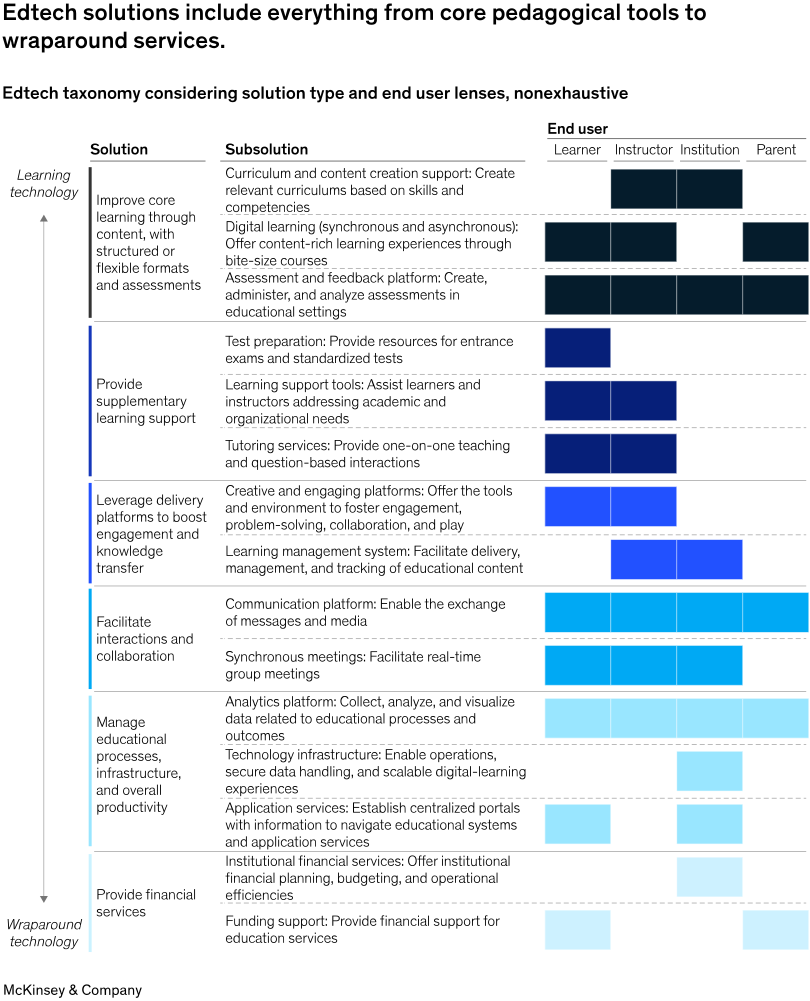
We define edtech as for-profit or nonprofit organizations that fully or partially develop technology or technology-based solutions to transform teaching, learning, and educational management at any education level. Globally, edtech has shown potential to improve education by bridging access gaps in underserved regions, improving learning outcomes, and enhancing operational efficiency. To better understand the range of solutions offered by edtech organizations, we have used a taxonomy9 that categorizes solutions along a spectrum, ranging from core pedagogical tools to wraparound services. The taxonomy also identifies end users, offering a view of the edtech playing field (Exhibit 1).
In LAC, there is a potential $1.0 billion to $1.5 billion market in K–12 core learning that is currently dominated by traditional players but that could be captured by edtech in 2030.10 However, this potential has yet to be realized. The K–12 level requires the most attention out of the different education segments. Edtechs experience the most barriers to achieving adoption, scale, and sustainability in this segment because it has the greatest disparity in quality outcomes, as well as a less dynamic market.
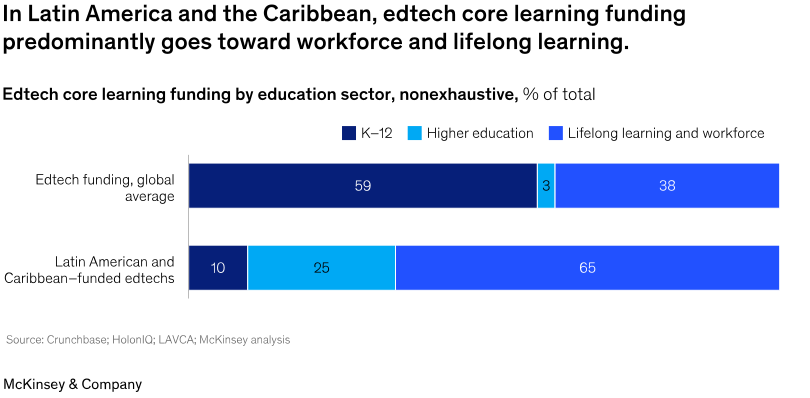
Despite evidence of edtech’s potential to improve outcomes, impact at scale has been difficult to achieve in LAC. To understand these challenges, we surveyed more than 140 people in for-profit and nonprofit organizations in the edtech ecosystem. One insight emerged consistently from these surveys: Edtechs are not reaching their potential at the K–12 level in LAC,11 and access to funding is a critical limiting factor. Even though most of the funding in LAC is directed toward core learning, only 10 percent of funding is allocated to K–12 solutions in this area (Exhibit 2). By comparison, in the rest of the world, more than 55 percent of core learning solution resources go to this segment.
The prevalence of business-to-government (B2G) business models contributes significantly to funding challenges for K–12 edtechs. About 80 percent of K–12 students attend public schools in LAC.12 But investors in LAC prioritize private market (B2B and B2C) models over public ones (B2G) due to greater perceived potential and security in terms of ROI.
Beyond funding challenges, structural challenges also hinder uptake of educational technologies. Demand for edtech solutions in K–12 is limited among buyers and key decision-makers due to budget constraints and competing priorities, digital infrastructure limitations, lack of knowledge, and cultural barriers. Private schools face fewer barriers, but their reach is not large enough to have a material impact on education outcomes or to become a dynamic market. Plus, the sector lacks standardized outcome measurements and a clear definition of quality education, making it challenging to maintain consistency and accountability.
For the K–12 LAC market, these factors create a reinforcing cycle: Limited funding slows both innovation and data measurement, which in turn leads to the deprioritization of innovative solutions within education agendas. This lack of prioritization further discourages investor interest, perpetuating the challenges that hinder the sector’s growth and impact potential.
Philanthropy’s role in enhancing market efficiency and addressing areas for improvement in edtech in LAC
Addressing challenges in education and accelerating the impact of edtech in LAC will require actions from multiple stakeholders, including governments, school systems, investors, and innovators. Philanthropies can play a catalyzing role to accelerate impact and generate a virtuous cycle in LAC by selectively investing in strengthening markets and initiatives that the private sector does not fund, with the goal of maximizing impact. Philanthropy has already demonstrated its ability to achieve these impacts in other sectors, such as healthcare and connectivity, by successfully enhancing markets and making them more vibrant.
Philanthropy funding is not reaching the areas where it is most needed to improve education outcomes in LAC. LAC represents more than 10 percent of the world’s students, but despite the region’s low education outcomes, it has received only about 7 percent of global education philanthropic funding in 2022 and less than 1 percent from US private donors.13 Although philanthropic capital could play a pivotal role in advancing edtech impact, most providers lack the networks and access required to secure such funding.
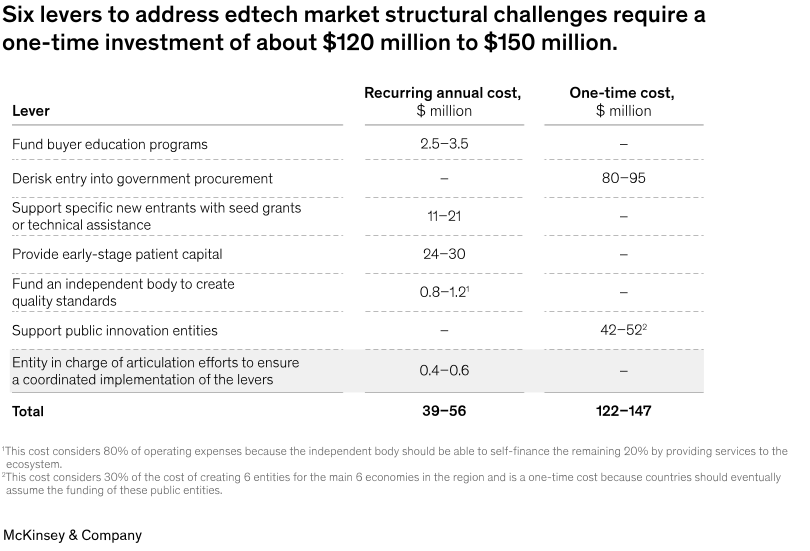
To maximize its impact, philanthropic investors could target areas where funding could promote a more robust edtech market in LAC education. We see six specific opportunities across demand, supply, and market influence (Exhibit 3):
- Stimulating demand for edtech solutions
- Fund education for teachers and buyers, such as school administrators across education levels and policymakers, about the benefits and limitations of various edtech solutions to inform their decision-making and increase adoption.
- Improving the supply of effective edtech solutions
- Provide resources and mechanisms to derisk entry into government procurement processes for edtech solutions.
- Support promising new entrants with seed grants or technical assistance to help new solutions gain traction and scale.
- Provide early-stage, patient capital aimed at validating business models, theories of change, and potential for scalability.
- Strengthening the environment around education innovation
- Fund an independent body to create consistent quality standards for edtech, with regional reach, to establish trust about the reliability of educational technologies.
- Support the creation and expansion of public innovation entities focused on education to drive systemic change and foster innovation.
Philanthropy has the potential to be a driving force for educational innovation in the LAC region. By addressing critical gaps in funding, infrastructure, and policy, philanthropic initiatives can unlock opportunities for broader participation and investment in educational technologies. This, in turn, can lead to significant improvements in educational outcomes, fostering economic growth and development in the region.
Related Articles