Authors’ note: This article reflects publicly available information as of November 3, 2025. Future-state funding estimates are highly subject to change pending further donor country announcements and iteration on existing budget proposals.
Africa is at a crossroads. Already grappling with constrained domestic resources and structural headwinds, including decades of underinvestment, the continent is facing an additional pressing challenge: stark cuts to official development assistance (ODA). ODA has long played a stabilizing role in the budgets of several African countries, yet the risk of its withdrawal is dwarfed by the continent’s fiscal deficit, which is six times larger than the projected decline of ODA.1
This fiscal crunch, exacerbated by ODA withdrawal, highlights the fragility of Africa’s fiscal model, but it can also be a catalyst for course correction. African countries have an opportunity not only to fill the budget shortfall left by the withdrawal of ODA but also to consider reforms that narrow budget deficits and build long-term resilience. Our analysis finds that the opportunity is considerable, spanning revenue mobilization, efficiency, strategic systemic shifts, and growth. But to what degree are African countries set up for success?
Many of the interventions required to mobilize revenue and improve efficiency are proven solutions that can be implemented in the near term. This article explores the key steps governments can take to deliver cash flow within budget cycles and signal credibility to markets and investors. To help each country sequence relevant reforms and actions based on their structural realities, we also offer a framework of four country archetypes.
Using this framework, African leaders can look to build, not borrow, a more prosperous tomorrow. A proactive agenda founded on evidence-based consensus and executed synergistically by relevant stakeholders could ensure that African countries pivot from aid transactions to build durable, market-ready public finance systems that fund sustainable and inclusive development and improve lives and livelihoods across the continent.
Africa’s squeezed fiscal space: A $200 billion gap
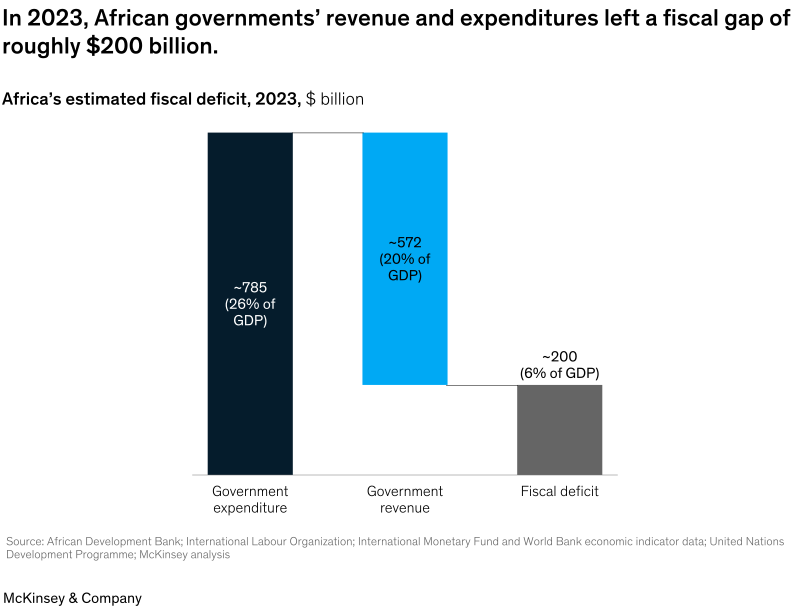
In 2023, African governments generated approximately $572 billion in revenue and recorded $785 billion in expenditure, leaving a fiscal gap of roughly $200 billion (Exhibit 1).2 As governments seek to meet this shortfall, public external debt has climbed to roughly $746 billion—about 25 percent of the continent’s gross national income.3 And with 22 countries in debt distress or at high risk of debt distress, the margin for error is small.4 Interest payments now consume nearly one-sixth of government revenues, the highest burden among developing regions, with many governments allocating more to creditors than to classrooms.5
Hurdles in domestic revenue mobilization, challenging financing conditions, and structural headwinds (including narrow productive bases, large informal sectors, and underinvestment) compound the challenge.6 While growth across the continent is projected to reach 4.4 percent by 2026, fiscal fragility will likely persist without diversification and stronger domestic capital markets.7
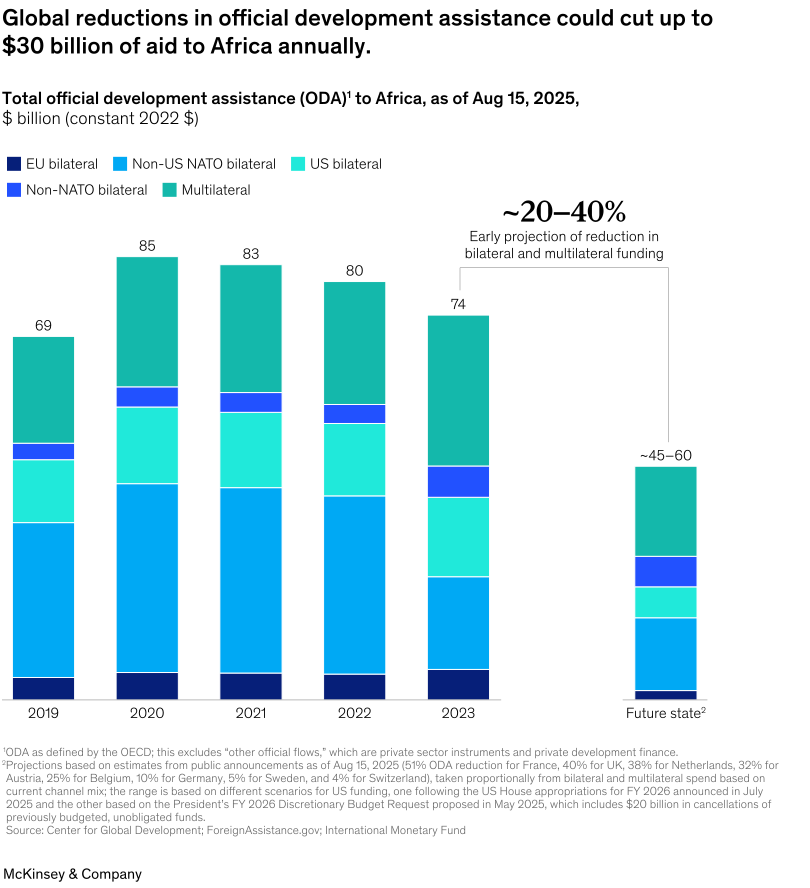
On top of this, publicly announced cuts to ODA suggest that global aid could decrease from 2023 levels by between 19 and 29 percent, with Africa alone losing up to $30 billion (Exhibit 2). Critical development areas such as health and emergency response, which together account for 42 percent of total ODA funding in Africa, are particularly exposed.8
These cuts highlight the precariousness of several African countries’ fiscal models. Forty-two out of Africa’s 54 countries rely on ODA for more than 10 percent of their government revenues.9 Nigeria, for example, receives $3.8 billion in at-risk funding that will be difficult to replace quickly, with implications across core sectors.10 The high concentration of aid intensifies the risk: In 2023, 35 percent of ODA came from multilateral institutions, with major contributions from the US government. An additional 21 percent flowed through bilateral agreements from the US government.11
Seizing the moment: Turning constraints into opportunity
Calculating Africa’s $200 billion public-finance opportunity
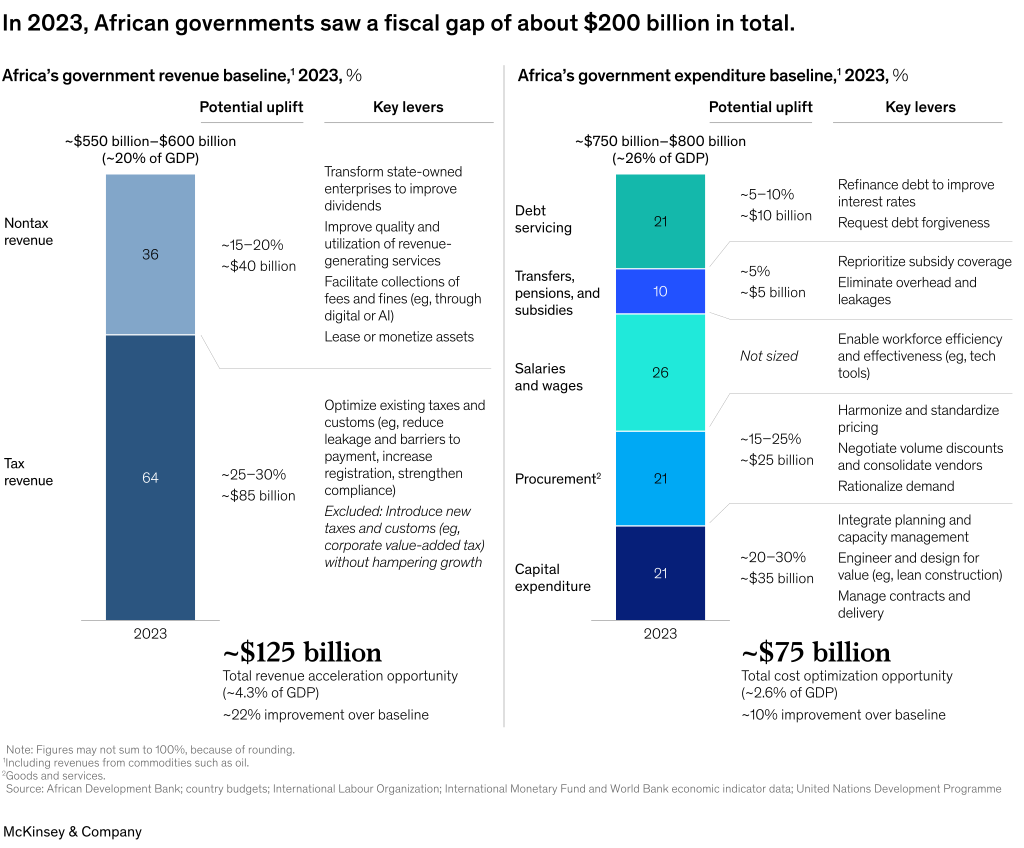
This analysis used available data on African public finances and applied evidence-based assumptions to quantify the potential gains from enhanced revenue collection and improved spending efficiency (exhibit).
The $125 billion revenue opportunity
Africa’s tax-to-GDP ratios remain below the World Bank’s 15 percent minimum threshold for growth, signaling an $85 billion annual opportunity to increase tax revenues by optimizing existing taxes and customs.1 An increase of even one percentage point could yield $30 billion annually, or $150 billion by 2030.2 Nontax revenues, such as improved state-owned enterprise performance and monetization of government assets, could add $40 billion.3 These levers mirror the fiscal initiatives commonly used by peer emerging economies.
The $75 billion efficiency opportunity
Governments can optimize expenditures and use their resources more efficiently to maximize the value of each dollar spent across four key categories:
- Procurement. Up to 25 percent of global procurement budgets are lost due to inefficiencies and irregularities in financial management.4 Addressing these leakages through measures such as pooling procurement to improve volume and timing, renegotiating supplier contracts, and adopting open contracting systems could save $25 billion annually.
- Capital expenditures. African governments spend about 13 percent of GDP, or $160 billion, on capital projects.5 Prioritizing high-value projects, improving project design, and adopting digital tools such as e-procurement could unlock $35 billion in annual savings.6
- Transfers, subsidies, and pensions. Redirecting inefficient subsidies to targeted programs, such as cash transfers, and reducing leakages through tools such as biometric validation could save $5 billion annually.7
- Debt service costs. With debt service costs exceeding $160 billion in 2024, refinancing or renegotiating debt could save $10 billion annually.8
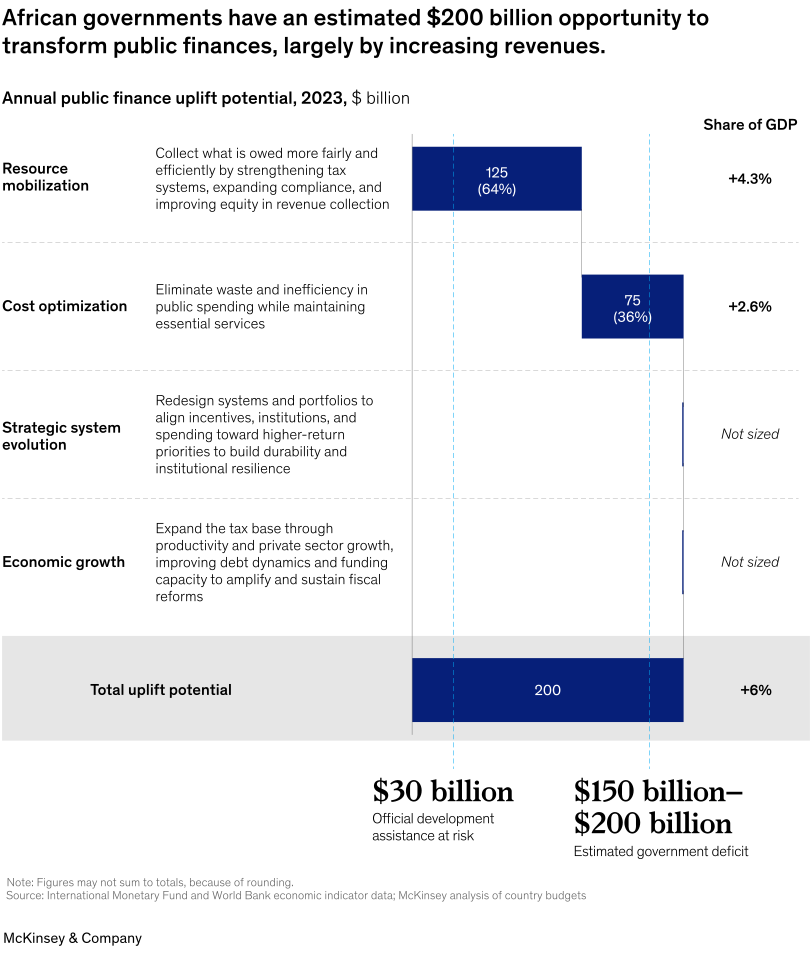
As the situation evolves, governments and other stakeholders are seeking to mobilize additional revenue to sustain programmatic impacts in this resource-constrained environment. They also have an opportunity to use the momentum to build greater self-reliance for the longer term. Our analysis suggests that four mutually reinforcing strategic levers—domestic resource mobilization, cost optimization, strategic system evolution, and economic growth—can help put public finances in Africa on a more sustainable footing, with the potential to generate more than $200 billion over the coming decade (Exhibit 3, and see sidebar “Calculating Africa’s $200 billion public finance opportunity”).
Africa’s fragile starting point impedes the raising of domestic resources
The current state of Africa’s economies will influence the timing and practicality of action. Ultimately, a country’s path toward growth can be determined by three pillars: its fiscal and debt capacity, its access to financial markets, and its productive capacity. Additionally, the crosscutting factors of institutional capacity and policy agility determine how quickly countries can translate financing opportunities into tangible outcomes. On all these measures, the vast majority of African countries face challenges.
Narrow fiscal headroom: Nineteen countries, including Angola and Ethiopia, face a dual burden of high debt service and low domestic revenues, leaving little fiscal space to absorb shocks. Another 27 countries, including Togo and the Democratic Republic of Congo, also struggle with low revenues despite lower debt costs. Furthermore, by 2025, 25 African countries had exceeded the 20 percent debt-service-to-revenue risk threshold, with some, such as Mozambique, spending more than 50 percent of revenue on debt.12 Only four countries—Botswana, Morocco, Algeria, and Namibia—combine low debt service with relatively strong revenues, placing them in a comparatively resilient position.
Shallow access to affordable capital: By 2021, private creditors held 44 percent of Africa’s external debt, up from 30 percent in 2010.13 Sovereign borrowing costs for African countries averaged nearly 10 percent between 2020 and 2024, compared with 0.8 percent in Germany and 2.5 percent in the United States, effectively shutting 21 countries, including Sudan and the Republic of Congo, out of international markets, while 22 rely on nonconcessional funding.14 Even the more investable economies, such as Egypt and Senegal, face high sovereign yields, which deter refinancing and long-term investment.15 Domestic markets are equally thin: Only 21 countries have issued Eurobonds, just two (Botswana and Mauritius) have investment-grade ratings,16 and many still lack meaningful access to sovereign debt.17
Narrow productive capacity: Raw commodities account for more than 60 percent of exports in 46 countries. Thirty-seven economies, including Ethiopia and Comoros, have fragile, undiversified exports; 11, including Senegal and Namibia, have some private sector depth but concentrated exports; and only five, including South Africa and Egypt, combine diversified exports with robust private sectors. Manufacturing has stagnated below 13 percent of GDP, on average, in Africa, with five countries (Nigeria, Egypt, South Africa, Algeria, and Morocco) accounting for the majority of the continent’s manufacturing output.18
Together, these realities create a constrained starting point for many countries. However, they also highlight where reforms can yield the greatest payoff.
A map of the territory: Four archetypes to understand the relative starting points of African countries
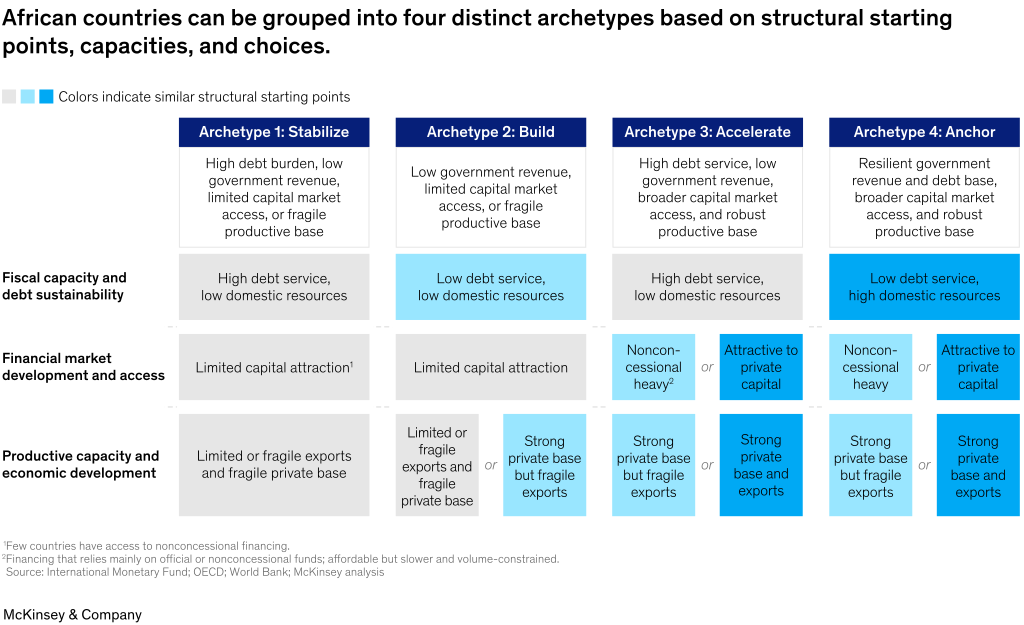
While the fiscal opportunity is clear, the path to realizing it will differ across countries. Africa is not a single fiscal story: Some nations face urgent stabilization challenges while others are positioned to accelerate reforms or sustain gains through strategies that prioritize sustainable and inclusive growth, a core objective for many countries. To help each country sequence practical and relevant reforms, we have defined four archetypes—groups of countries that share similar structural starting points, capacities, and choices—that can serve as a framework for action (Exhibit 4, and see sidebar “Methodological note: Determining country archetypes”).
Building on insights from two recent McKinsey reports,19 eight common levers across the pillars of fiscal headroom, access to capital, and productive capacity have had demonstrable success in building self-sustaining public finance landscapes, which can also inform African countries’ routes to resilience. These levers are as follows: stabilize and create predictable debt, raise traditional domestic revenues without hurting growth, broaden nontax and innovative public revenues, use market-based financing instruments wisely and predictably, attract capital through innovative and catalytic finance, create productive investments, expand formalization and business participation, and stabilize trade and external earnings (see sidebar “A common toolbox: Eight levers to build fiscal strength”).
The four archetypes can guide decision-makers to match the right levers to the right contexts, detailing waypoints along the path to self-reliance based on the country’s capacity to act. The logic builds with each step: Stability buys time, delivery builds credibility, and depth secures resilience, while skipping steps risks eroding fragile gains and investor trust.
Archetype 1: Stabilize—restore balance under debt and revenue pressure
This archetype is typified by high debt burden (30 to 50 percent of government revenues), low government revenues, limited capital market access, or a fragile productive base. Example countries are Nigeria and Angola.
Countries with this archetype can prioritize pursuing debt relief or restructuring, strengthening tax administration, and rationalizing subsidies. For example, Nigeria lifted value-added tax (VAT) from 5 percent to 7.5 percent to expand receipts, and Angola introduced VAT and trimmed fuel subsidies to raise non-oil taxes.20 On this pathway, ODA can be reimagined to act as short-term stabilization and a springboard to exit. By front-loading support that digitalizes tax administration, broadens the base, and strengthens debt management, countries can progressively finance themselves.
Archetype 2: Build—fortify a low and volatile revenue base before debt stress emerges
Countries in this archetype have low government revenue, limited capital market access, or a fragile productive base (with a more sustainable debt situation). Example countries are the Democratic Republic of Congo, Niger, and Tanzania.
These countries can start by mobilizing domestic tax and nontax resources more effectively while fostering an environment that attracts investment and spurs growth. They can expand the tax net and improve compliance while formalizing the informal economy. Tanzania, for example, implemented structural tax reforms, including a simplified income tax law, which increased collections by about 3.5 percentage points between 2000 and 2009.21 The country continues to modernize its tax administration and broaden its tax base through improvements in compliance and reductions in exemptions.22 As in Archetype 1, on this pathway, ODA can be reimagined as short-term stabilization and a springboard toward self-financing.
Archetype 3: Accelerate—leverage emerging market access to refinance and reform
Countries in this archetype experience high debt service (often more than 25 to 30 percent of revenues), low government revenue, broader capital market access, and a robust productive base. Example countries include Egypt and South Africa.
The priorities in Archetype 3 countries are to make borrowing cheaper and safer, improve local financial systems, and boost key, investment-intensive sectors to increase tax income. For example, Egypt’s 2016 program—currency float, VAT, and fuel subsidy reform—helped reduce deficits and restore investor confidence.23 In this archetype, ODA can be reimagined to encourage a country to make further important economic changes.
Archetype 4: Anchor—deepen and sustain resilience and crowd in private capital at scale
Archetype 4 is typified by resilient government revenue and debt base, broader capital market access, and a robust productive base. Morocco is one example.
Archetype 4 countries can maintain fiscal discipline, build buffers, and borrow selectively for high-return infrastructure and social investments. They can also lower the cost of capital by widening domestic investor bases, lengthening repayment terms in local currency, and maintaining a predictable borrowing schedule. Additional private finance can be raised via catalytic tools and instruments—including pipelines for public–private partnerships, guarantees, and green, blue, or social bonds—while project appraisal and delivery can be tightened to ensure value for money. On the real-economy side, countries can expand higher-value tradables and services, strengthen industrial ecosystems and skills, and keep growth inclusive to sustain legitimacy. For example, supported by strong revenues, prudent debt management, and International Monetary Fund support, Morocco has maintained international market access and secured a €1 billion Eurobond in 2020.24 In Archetype 4 countries, ODA can be reimagined as an evolution toward partnership and derisking.
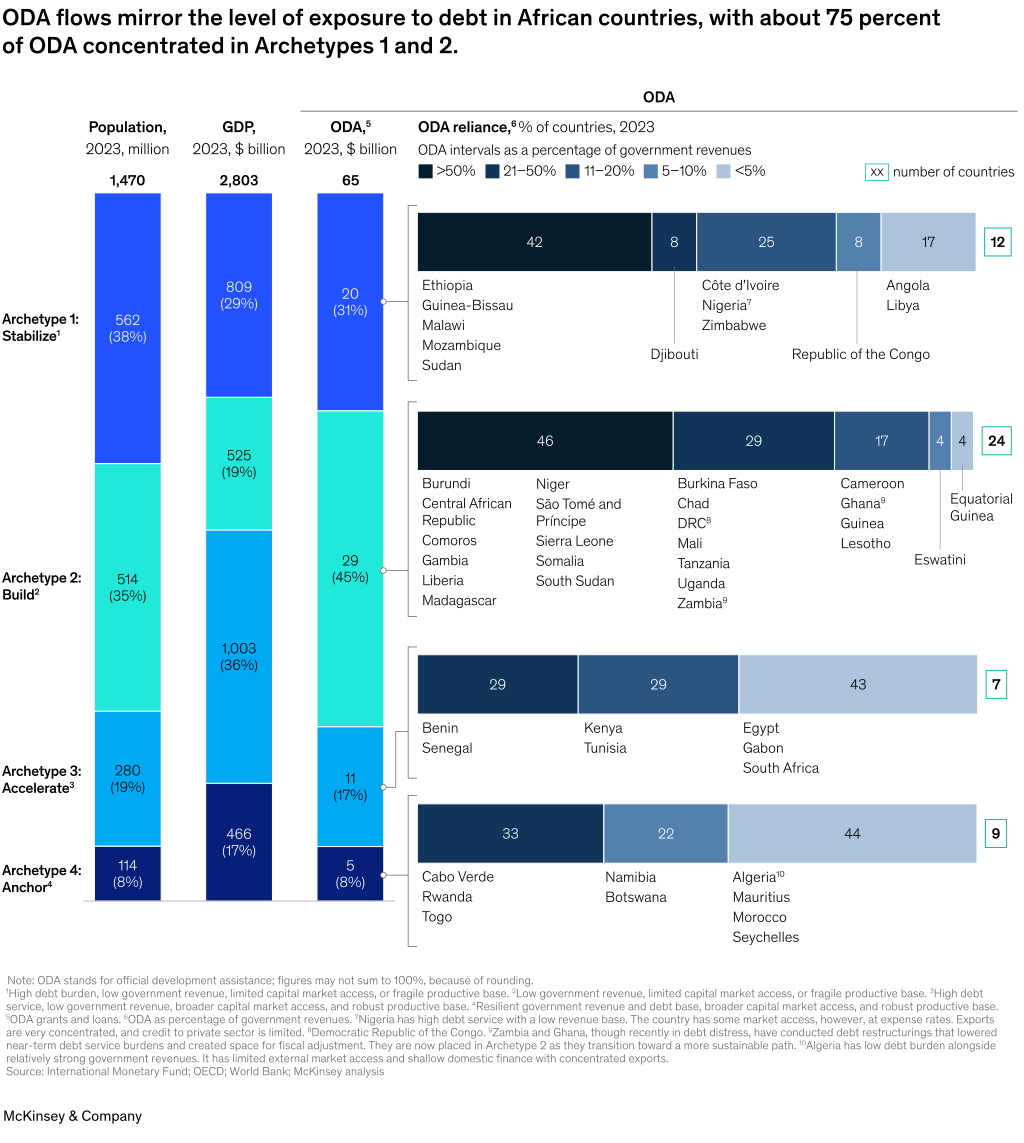
Taking an archetype view, it’s clear that the distribution of both vulnerability and opportunity across Africa is skewed. Thirty-six countries (Archetypes 1 and 2)—home to nearly three-quarters of Africa’s population but generating less than half of its GDP—face constrained fiscal space, low domestic revenue, and limited market access. In contrast, the 16 countries in Archetypes 3 and 4, which together account for more than half of the continent’s GDP but less than a third of its population, exhibit greater fiscal resilience and diversified financing options.
Aid flows mirror this divide: Three-quarters of all ODA is concentrated in Archetypes 1 and 2, underscoring the scale of dependence in countries least equipped to absorb external shocks (Exhibit 5).
A call for synergistic action
Africa’s fiscal squeeze is severe—but not insurmountable. The road ahead requires clarity on priorities, disciplined sequencing, and a common toolbox of reforms executed collectively by relevant stakeholders.
Five key stakeholder groups are likely to be critical:
- National public institutions—from finance ministries and central banks to budget authorities and social protection agencies—can advance fiscal reform and inclusive growth by launching flagship interministerial programs that reinvest verified gains in public services and ensure money reaches priority investments swiftly. For example, a revenue gains reinvestment facility could finance high-return tax, customs, and spending-efficiency upgrades and then recycle a share of independently verified revenues and savings. A national investment fast-track program could offer a single front door for investors and ministries, with standard permits and templates for public–private partnerships and built-in derisking. These programs could help to create a visible track record of delivery, fund targeted social protection and human capital investments, and signal investor credibility that lowers borrowing costs and crowds in private capital.
- Regional blocs and institutions in Africa can act as integrators and accelerators in cases of clear investment returns, especially for cross-border infrastructure projects. For example, a regional corridor platform—with one rule book, one front door, and a pooled derisking window—supported by a dedicated team to ensure swift delivery, could help to shorten approvals, lower borrowing costs, crowd in private capital, and function as a public finance instrument. Corridor VAT and excise, transit fees, and wheeling charges could be routed through ring-fenced regional accounts linked to national treasuries. If executed effectively, the results could include quicker clearance at borders and earlier revenue from cross-border assets.
- The private sector can power jobs and productivity by mobilizing capital, transferring technology, and delivering a double dividend: competitive returns that expand opportunity and demand as well as social impact through partnerships that deliver infrastructure, services, and skills. For example, the Southern African Power Pools Regional Transmission Infrastructure Financing Facility—a $1.3 billion fund launched jointly by public utilities and private investors—is helping address regional infrastructure bottlenecks by investing in the power grid and creating transmission lines at scale.25
- Development finance institutions (DFIs) can design instruments that scale investments by cutting risk and compressing timelines. For example, they can use guarantees and political-risk cover with local-currency solutions and foreign-exchange hedging to raise private capital and lengthen tenors, in addition to directing blended finance to delivery systems (e-permitting or e-procurement) to shorten approval-to-close time. DFIs can also anchor pooled, revolving windows that recycle repayments and link concessional support to reform milestones. This approach can lower spreads, extend maturities, and build a coordinated, self-sustaining market architecture.
- South–South partners can unlock symbiotic gains by expanding trade and market access through African Continental Free Trade Area–aligned deals, sharing technology and knowledge, and broadening the financing ecosystem through partnerships with the New Development Bank, AIIB, the Islamic Development Bank, and others. Such partners can also play a key role in the reallocation of special drawing rights to provide African countries with additional liquidity without increasing their debt burden.
Together, these five key stakeholders can turn today’s constraints into a springboard for self-sustaining public finance. Momentum is the missing ingredient. Actions by stakeholders are clear, and many are already underway, but there is an opportunity to accelerate. The imperative now is to align fiscal reform with social protection, human capital investment, job creation, and infrastructure delivery to unlock deeper market integration and scale growth. Africa has what it needs to redefine its fiscal future to move forward and deliver better.



The authors wish to thank Ammar Busheri, Adrian Mertens, Brandon Shi, Brendan Bertagnoll, Bruna Neto, Connor Rochford, David Meredith, Gerhard Nel, Gregor Theisen, Harald Pöltner, João Rodrigues, Jonathan Davis, Kartik Jayaram, Kemi Onabanjo, Marilyn Kimeu, Matt Craven, Mehdi Lahrichi, Michael Conway, Olivia White, Sarah Dewilde, Selma El Manser, Tola Sunmonu-Balogun, Yassir Zouaoui, and Yaw Agyenim-Boateng for their contributions to this article.
Related Articles

Global aid at a crossroads