Raising the bar in care
Ohio is navigating a major demographic shift: its population aged 60 and older is growing four times faster than the rest of the state. This surge will reshape everything from fiscal priorities to workforce demand and healthcare delivery. What’s more, the COVID-19 pandemic highlighted challenges in care, and Ohio identified opportunities to enhance nursing home quality—which spurred the state to act.
It’s not only about adding years to life but adding life to years.
Under Governor Mike DeWine’s vision to make Ohio the best place to age in the nation, and recognizing the opportunity to boost the health and well-being of older adults, the Ohio Department of Aging (ODA) worked with McKinsey to co-create a comprehensive aging strategy.
Recognizing an opportunity to boost the health and well-being of its older residents, ODA worked with McKinsey to build a strategy focused on improving long-term nursing home care, strengthening home- and community-based services, and promoting healthier, longer lives.
“Our vision is strategic, with a goal of setting a new benchmark for aging care through a well-designed, well-executed, well-supported plan,” says Ursel McElroy, Director of ODA.
We believe everyone can lead a healthy and thriving life as they age, and we are committed to providing the support and services to make that a reality.

Driving change with data-backed solutions
McKinsey worked with ODA to operationalize strategies across the care continuum with the goal of improving the experience of aging in Ohio. One priority: supporting the state’s task force on nursing home quality, which identified solutions to establish a new care standard that prioritizes residents’ quality of life, strengthens their rights, and improves care center efficiency.
This involved setting quality standards, expanding technical assistance, and creating data-driven dashboards to track quality and changes over time. The task force’s more than 20 recommendations were informed by over 100 interviews and convenings across seven cities and best practices from all 50 states.
We focus on data because we are committed to demonstrating real results.
“It’s one thing to have a hunch about what will happen, but data allows us to measure and understand the impact of our interventions, so we can continually improve and make a tangible difference,” says Meredith Philabaum, chief of staff at ODA.
The team also helped reimagine home- and community-based care—making it easier for individuals to receive care where they preferred to get it.
“It’s so important that people get the right care and support they need when they need it,” says McKinsey partner Katherine Linzer. “We wanted to make it as easy as possible for people to find a facility that works for them.”
The team investigated strategies grounded in the existing home- and community-based programs to improve resident-centric services like incorporating behavioral health, modernizing operations, and continuously improving program quality by establishing performance management systems.
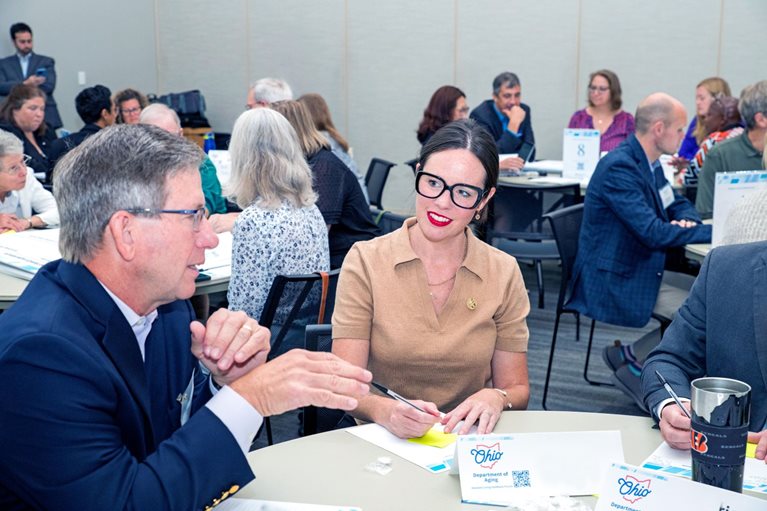
Finally, the team focused holistically on healthy aging to help adults continue to flourish as they grow older. This included building the economic case for investing in healthy aging, highlighting how investing in older adults not only improves lives but also strengthens communities and economies. Throughout this process, ODA provided localized context and insights, while McKinsey contributed expertise from the McKinsey Health Institute’s healthy longevity research, ensuring solutions were evidence-based and focused on specific population needs.
“As a society, we’ve seen so much progress on increasing lifespan, which is amazing,” says Pooja Kumar, a McKinsey senior partner and global leader of the McKinsey Health Institute. “Now we want to make sure we raise the number of years spent in good health.”
A new approach for aging well
Ohio is steadily working toward becoming a model for redefining what it means to age well—and the innovations underway are already gaining traction.
One standout: the Long-Term Care Quality Navigator. Launched in February 2024, this digital platform has received national recognition and assists residents and families in navigating Ohio’s nursing homes based on location, ratings, and healthcare coverage. The platform has been used by over 100,000 individuals to drive decisions on nursing home selections, with an expansion in February 2025 to include assisted living facilities.
Another successful undertaking has been the creation of an internal command center for use by ODA, the Ohio Department of Health, and other state entities to make data-informed decisions on nursing home care. These state agencies collaborated to define an Ohio-specific quality standard that goes beyond federal compliance. Grounded in millions of data points and measured across dozens of metrics, the standards focus on four pillars: quality of care, quality of life, residents' rights, and system performance.
To support nursing homes in achieving this new quality standard, the ODA team planned direct technical assistance and a new strategy to recruit and retain a quality workforce in nursing homes. The team also enhanced the state’s ombudsman resources to broaden resources for residents and their families.

“In our healthcare system, so many actions and investments on aging are reactive,” says Director McElroy. “We want to shift that mindset. Instead of only providing ‘sick care,’ which focuses on treating symptoms, we also aim to offer healthcare that is proactive and preventive.”
Looking ahead, Ohio is exploring ways to further strengthen home- and community-based services—such as modernizing waiver programs, expanding the Program of All-Inclusive Care for the Elderly (PACE), and installing systems to track operations and outcomes.
Perhaps most powerfully, we worked to build an economic case that quantifies the return on investment of healthy aging across eight key areas, including housing, transportation, and community participation.
Director McElroy continues, “When taken to scale, these investments in aging can lead to a reduction in healthcare costs and an increase in GDP for Ohio. Based on this analysis, the Ohio Department of Aging can make evidence-backed, fiscally responsible investments in healthy aging with more confidence.”
Get in touch
Dr. Pooja Kumar
Senior PartnerBoston

Katherine Linzer
PartnerChicago

Dr. Neeraja Nagarajan
Associate PartnerWashington DC

Ramya Parthasarathy
PartnerNew York

Parvathy Menon
Associate PartnerNew York

Emily Lurie
Associate PartnerNew York
Related Case Studies

How Apple is helping unearth a path toward increasing the global use of circular materials

Accelerating decarbonization across the farming supply chain