The world needs infrastructure more acutely than ever. A cumulative $106 trillion in investments is imperative to meet global infrastructure requirements through 2040, not only for traditional assets such as roads, ports, bridges, and power grids but also for the next generation of those assets—and an emerging intersection of systems and facilities across verticals, including data centers, charging stations, fiber-optic networks, and more. This unprecedented call for capital can no longer be answered by the public sector alone.
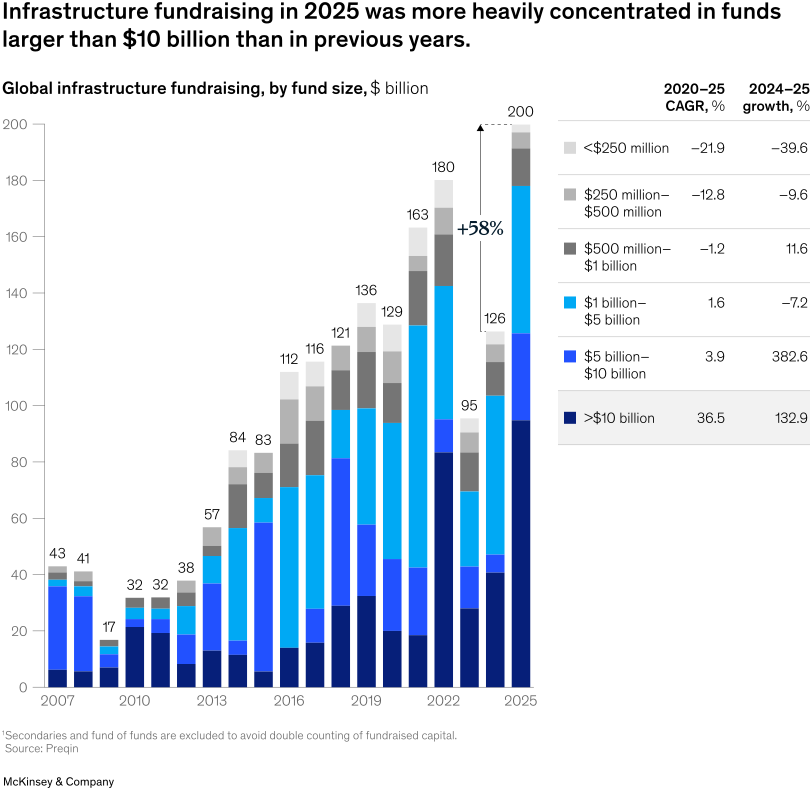
Private capital is meeting the moment. In 2025, global infrastructure fundraising reached a record of nearly $200 billion, surpassing the previous high of $180 billion in 2022. Limited partners (LPs) continue to name infrastructure as the asset class they most want to increase their allocations to (increasingly for both diversification and performance) and are also displaying a willingness to move up the risk curve. General partners (GPs) are doing larger, more complex deals, with notably large funds (several holding $5 billion or more of committed capital) gaining share as the industry matures.
While overall trends in fundraising and deployment are positive, potentially tougher conditions ahead are evident, particularly as holding periods lengthen and investors seek commensurate, risk-adjusted returns. The ability to drive value creation will become increasingly foundational.
A prodigious need for infrastructure and a promising response from investors
The world has an immense need for infrastructure, a global mandate that is being met in large part with a massive influx of private capital. Over the past few years, private capital has been flowing into infrastructure assets at an unprecedented rate. In 2025, the surge set a record for fundraising and deployment.
The world’s $106 trillion infrastructure need
As we’ve recently detailed, to meet the demands of global population growth and enable parabolic technological advancement, the world requires an estimated $106 trillion in infrastructure investment by 2040. This enormous capital requirement coincides with an evolving landscape where the very conception of “infrastructure” is expanding across multiple verticals and emerging, intersecting sectors—from dams to data centers and railways to renewables.
Moreover, across geographical regions, certain infrastructure categories are growing notably faster. Energy and power will require $23 trillion in infrastructure investment through 2040, driven by the dual forces of the global energy transition and demand growth. In the United States, after almost 15 years of growth below 1 percent, power demand is expected to increase by more than 3 percent a year—with the sector needing to overcome challenges such as energy affordability, energy supply chain issues, extreme weather, labor availability, project permit bottlenecks, and resource adequacy. Nearly $7 trillion in data center investment (part of digital infrastructure) may be needed through 2030 to keep pace with the demand for compute power.
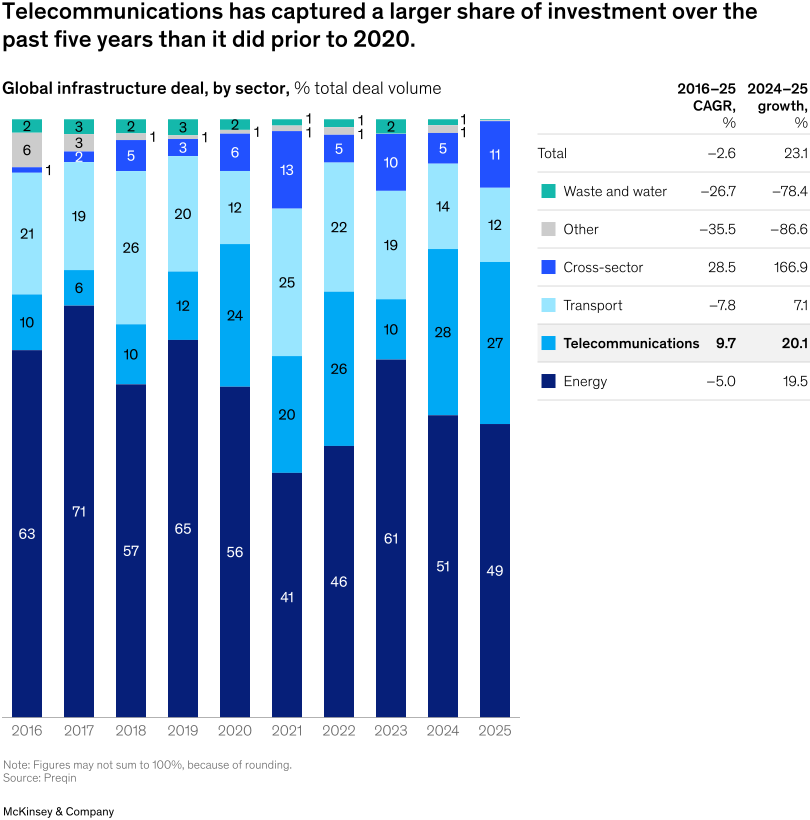
Compared with total global infrastructure needs through 2040 (where the energy and digital sectors account for about 40 percent of the $106 trillion needed), the composition of recent deal value shows an outsize presence of private capital in these infrastructure verticals (about 75 percent). Energy and power needs were collectively responsible for nearly half of 2025 infrastructure deals by value, with the digital and telecommunications sector capturing an additional quarter of total infrastructure deal activity (Exhibit 1). At the moment, the scale and speed of required capital deployment in these spaces may favor private investment, as public capital can encounter longer approval cycles and significant funding constraints.
2025: The surge of private capital
Even by global standards, $106 trillion is a staggering amount. But private capital, by its nature, flows toward demand and—in a virtuous cycle—serves as a critical enabler of long-term economic growth.
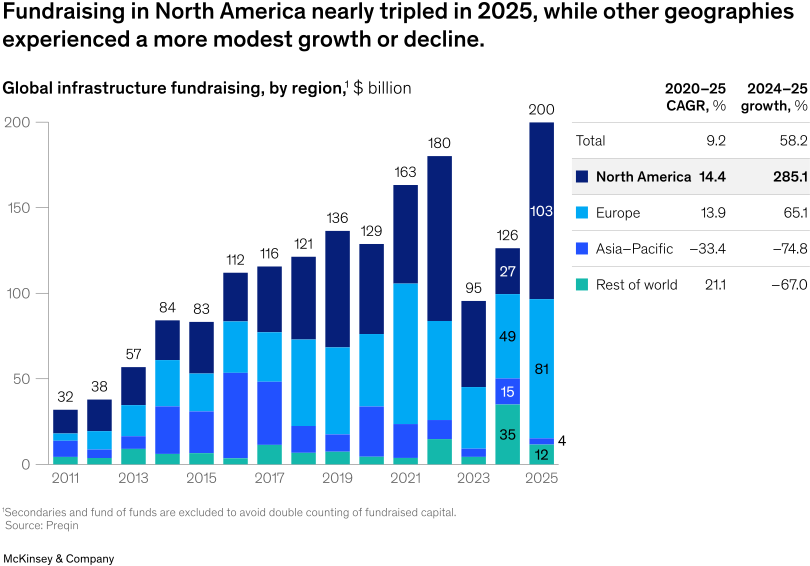
The year 2025 marked a record for infrastructure fundraising. Closed-end fundraising in infrastructure rose to nearly $200 billion—a new high, and a nearly 60 percent increase over 2024. This surpassed the previous record of $180 billion in 2022, which preceded a fall in 2023 (when interest rates rose and some investors, at least temporarily, pivoted to debt-based alternatives). Yet, as has been the case for decades, infrastructure investments corrected to an upward course. In 2024, global private investments in infrastructure climbed from $95 billion in 2023 to $126 billion—and then accelerated to 2025’s record of nearly $200 billion.
Deconstructing 2025 data, we can observe that fundraising dipped in the Asia–Pacific regions but grew robustly in Europe, rising by approximately 65 percent. In North America, it increased by approximately 285 percent (Exhibit 2). And in both Europe and North America, the large capital deployments were significantly enabled by “megafunds” (that is, funds with $5 billion or more in committed capital).
LPs increase allocations
LPs are increasingly including infrastructure investments in their core strategies. Indeed, in McKinsey’s recent survey of approximately 300 global LPs, we found that 51 percent of respondents plan to raise their allocations to infrastructure over the next three years—results that strengthen the category’s position as the leading asset class by this metric, notably ahead of buyout (35 percent) and real estate (30 percent). Among different groups of LPs, respondent sovereign wealth funds, insurers, and family offices show the highest increase in plans to increase their infrastructure allocations, displaying a robust ten-percentage-point increase compared with 2024.
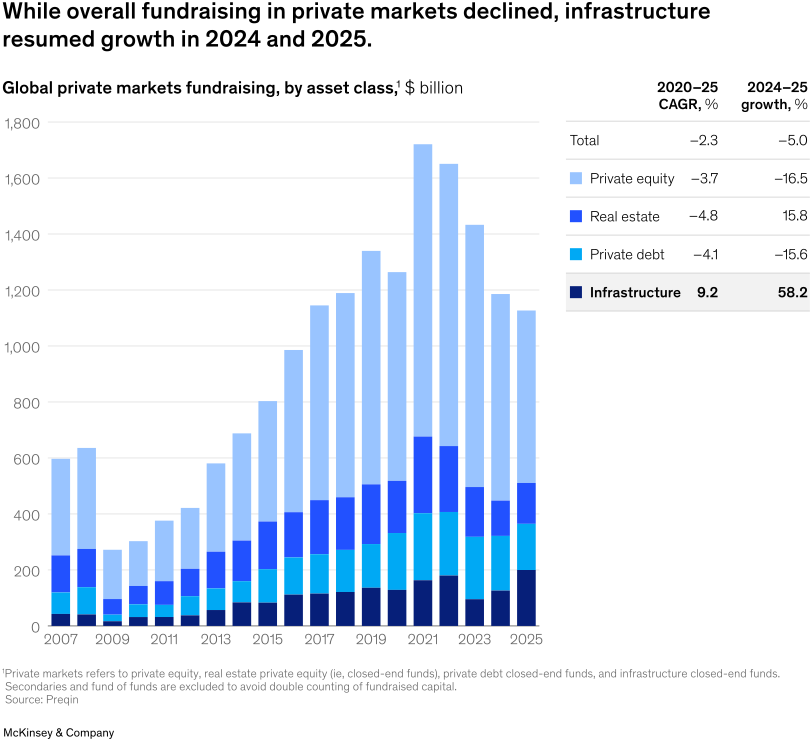
As a result, infrastructure is outpacing other private-market categories, with fundraising growing at a 9 percent CAGR (2020 to 2025) compared with declines of about 3 to 5 percent across other asset classes. This trend was even more pronounced in 2025 when, compared with 2024, infrastructure fundraising grew more than 58 percent. By comparison, real estate grew by about 16 percent year over year, and fundraising for several other asset classes declined (Exhibit 3).
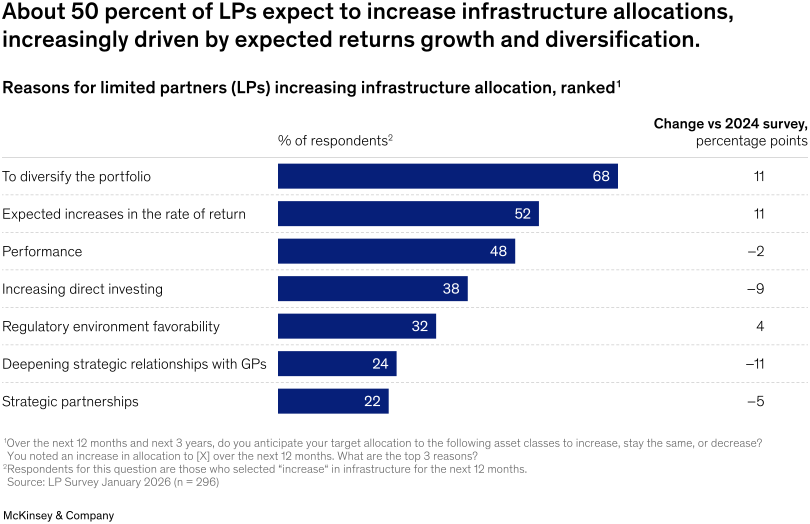
While diversification remains a primary motivation for LP asset allocation (68 percent), more than one-half of the LPs we surveyed place expected return improvements (52 percent of LPs, an 11-point jump compared with our 2024 survey) and asset class performance (48 percent of LPs) among their top three reasons for intended boosts to infrastructure allocations (Exhibit 4).
As the infrastructure sector matures and investors seek higher returns, they are increasingly willing to shift from “traditional core” up the risk curve—to “core plus” and “value added”—to pursue higher returns (Exhibit 5).
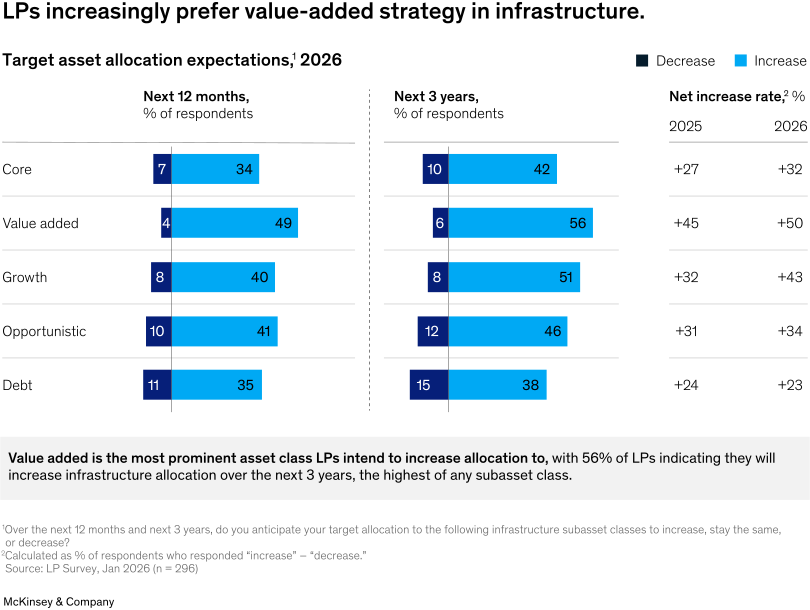
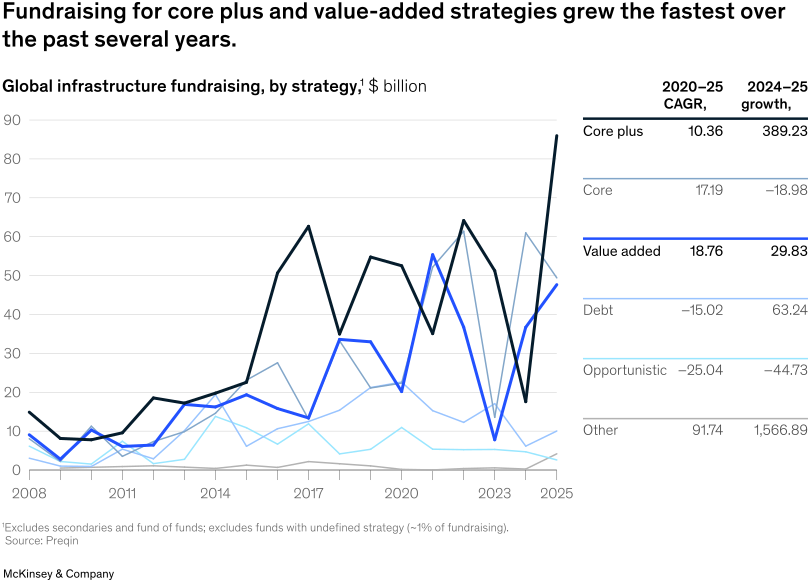
In fact, most infrastructure fundraising occurred in the value-added and core-plus categories, which grew approximately 30 percent and 390 percent, respectively; core, by contrast, declined by nearly 19 percent (Exhibit 6).
Of course, while higher-risk strategies offer greater upside, they carry greater risk. Such investments may include greenfield and brownfield projects, as well as the acquisition of assets that require turnarounds or stronger operating capabilities. Investing in these strategies can also include allocations toward infrastructure-adjacent services and technology providers. Yet private capital is decidedly moving toward those and other less traditional areas.
Markers of a maturing industry
There are strong indications that the infrastructure industry is maturing. Those markers include levels of dry powder—which are moderating—and an increasing willingness by GPs to deploy more capital and strategically pivot toward bigger, more sophisticated transactions. Moreover, deal theses are broadening as GPs respond to LPs’ needs.
Dry powder moderates
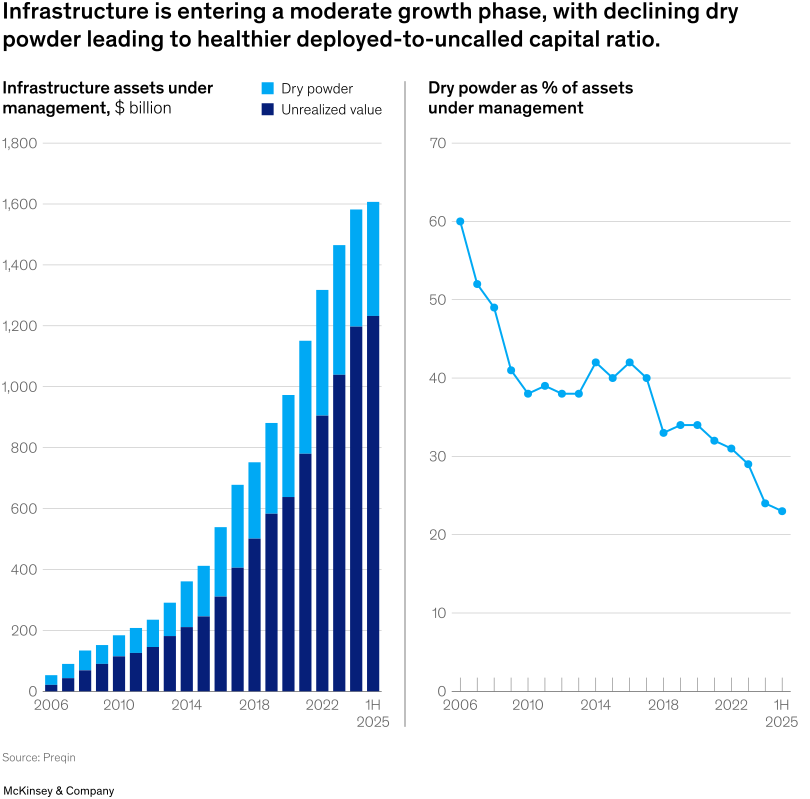
In recent decades, LPs’ demand for infrastructure has outpaced deal supply, contributing to fund fragmentation and increasing the level of dry powder. For much of 2009 to 2017, unallocated funds hovered around 40 percent of assets under management (AUM). This reflected, in part, a shortage of the “right deals” for GPs; more than a third of the committed capital was not deployed.
More recently, however, dry powder has moderated as signs of structural maturity have emerged. Capital deployment is better at keeping up with fundraising. Infrastructure dry powder is decreasing as a percentage of AUM and has nearly halved from the prior decade’s highs to 23 percent by the middle of 2025 (Exhibit 7).
Bigger, more innovative deals
GPs are not only deploying more capital, they are concentrating more of it on big deals. As the market matures, total deal value in 2025 rose by 23 percent (even as deal count declined by about 24 percent), and average deal sizes increased 78 percent year over year. Liquidity mechanisms are strengthening, as well; the number of secondary infrastructure funds rose in 2025 from a single $5.3 billion fund to four funds totaling $4.3 billion in 2025. Private and public investors are also funding investments together. Several telecom players, for example, have partnered with private sponsors over the past few years to commit to multibillion-dollar projects for fiber infrastructure expansion, providing more reliable, higher-speed internet access in millions of locations in the United States.
Broadening deal theses
Deal theses are broadening across key dimensions: up the risk spectrum (driven by LP demand), into intersections between infrastructure verticals, and into infrastructure services. That dynamic is consistent with the expanding conception of what “infrastructure” now encompasses. Increasingly, deal theses include not only traditional targets (such as transport and energy assets) but also more interconnected and complex models. Consider the overlap of energy, digital, and transportation. Energy and digital intersect for data centers; multiple large funds have been raised with clear mandates to invest in both data centers and supporting power infrastructure, given the criticality of power access. Digital and transport intersect for electric-vehicle networks, such as deploying 5G connectivity on highway corridors. Energy and transport intersect for waste management, such as by processing waste to produce sustainable aviation fuels. Larger and more diversified platforms are well positioned to take advantage of these trends; we observe that capital is concentrating in bigger funds that can deploy capital in multiple situations and tend to outperform smaller peers across multiple sectors (Exhibit 8).
Challenges and opportunities under evolving conditions
As the infrastructure market matures, private capital faces the complex challenge of aligning risk with returns over increasingly extended holding periods. Industry tailwinds won’t be sufficient to maintain and accelerate the amounts of capital required to be deployed over the longer term. Instead, managers will need to accelerate their shift toward active value creation. A few market leaders are already showing the way.
Capital investment for the long term
Infrastructure investments, by their nature, have never been a short-term undertaking. They represent a deliberate choice to prioritize durable, generational returns over instant liquidity.
Yet as infrastructure evolves from traditional assets to more complex, intersecting verticals, challenges will mount as holding periods lengthen. Capital cycles in infrastructure investing are already trending longer, characterized by more measured exit activity and effectively longer holding periods; the average age of holdings (that is, investments made and not yet exited) has elevated from 3.1 to 3.3 years in 2017–22 to 3.5 to 3.8 years in 2023–24.1
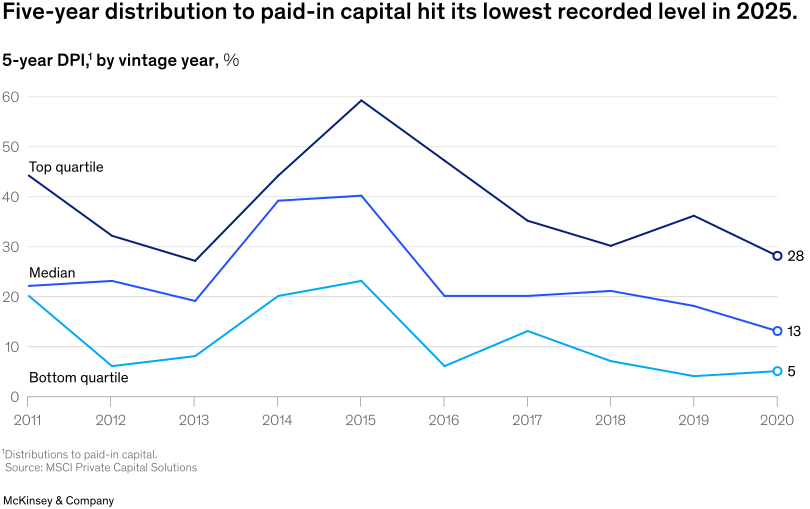
Liquidity pressures will likely mount—not just for infrastructure but across asset classes. In our survey of 300 of the world’s leading LPs, distributions to paid-in capital (DPI) is now tied with multiple of invested capital (MOIC) for the second-most-important metric shaping LPs’ allocation decisions. Precisely because the lengthening capital cycles in infrastructure can become so pressing, it’s to be expected that infrastructure investors would pay increasing scrutiny to net cash on cash. Five-year DPI peaked (at a median of about 40 percent) during the elevated exit cycle of the mid-2010s; it has since declined to approximately 13 percent (Exhibit 9). While DPI for infrastructure is less volatile than for private equity, its clear downward trend aligns with tightening liquidity conditions more broadly.
Investors also continue to prioritize internal rate of return (IRR); indeed, the LP investors we surveyed identify it as their most important metric. While DPI measures realized distributions to investors, IRR seeks to capture the annualized percentage return of an investment, considering the magnitude and timing of cash flows over the length of the investment period. This makes it a favored metric for LPs and GPs alike.2 Yet traditional IRR targets face mounting pressure, both from a higher cost of debt—exceeding 2009–20 levels—and elevated public and private multiples that drive up purchase prices for infrastructure assets. Challenges are further compounded by the “crowded auction” processes of a maturing field, and more selective exit conditions. These dynamics strengthen the need for robust value creation programs that can improve asset performance even (or perhaps, especially) when investments take longer to pay off compared with a more regimented, fixed approach of paying down debt.
Solving for value creation
As liquidity needs heighten and mandates for robust returns amplify, the days when private capital could passively ride market tailwinds or just “check the box” as a sectoral or diversification play are gone. Infrastructure now finds itself on new terrain.
Increasingly, investors will need to generate true alpha. Return drivers are shifting from multiples expansion and financial structuring to operational performance and capital productivity. As LPs expect higher returns from infrastructure, they are placing greater emphasis on managerial excellence. And as infrastructure investments shift from core to core plus and value added, sponsors are acquiring stakes in earlier-stage investments (including greenfield and brownfield platforms and assets) and higher-complexity businesses at the intersection of verticals—as well as services businesses. Delivering returns for those types of investments requires the ability to design, build, and support more complex operating models. For example, a large-scale data center may require one or more off-the-grid power sources to ensure utility-scale power is available regardless of regional supply-and-demand dynamics. We’re seeing strategic-minded players who seek to identify and, at times, even build a power source—a significant expansion from traditional, infrastructure-investing ground rules—often investing in green- or brownfield projects.
Distinctive owners and operators are pursuing value creation across the entire life cycle of infrastructure assets. This starts with capital expenditures and moves across planning and site selection for new greenfield projects and optimizing build timelines. It then extends to operations, including advanced predictive maintenance and reduction of contract leakage. Finally, creating value goes beyond just cost savings to include top-line levers, such as more effective pricing and expansion into adjacencies.
Moreover, and increasingly critically, value creation leaders are beginning to leverage advanced technology, particularly AI. The infrastructure sector has historically lagged in digital adoption, but it now stands to benefit disproportionately given its reliance on complex, unstructured data. Specific, asset-performance-focused use cases of AI are now being piloted and are likely to become a major part of value creation programs in the future. For example, AI-enabled capital productivity is emerging as a key lever; multiple businesses for which capital expenditure deployment is critical are now employing generative scheduling tools that use advanced analytics to model resource-loaded project plans, test multiple “what if” scenarios, and optimize sequencing to reduce build timelines and costs. Moreover, in renewables projects (such as wind farms and solar power), AI can support the full greenfield cycle, from site identification and permitting analysis to construction sequencing, enhancing capital efficiency. Those types of value enablers are particularly important because a growing share of infrastructure investment is greenfield (such as renewable build-outs), where execution discipline directly drives IRR.
Private capital will be essential to help meet the $106 trillion needed for global infrastructure investments through 2040. In 2025, fundraising reached new heights, as the market continued to mature. Yet, even though overall trends for fundraising and deployment are positive, more challenging conditions may lie ahead—particularly as holding periods lengthen and investors seek robust, sustainable returns. Fortunately, investors and operators across the expanding infrastructure ecosystem are stepping up to drive value creation—and meet the world’s acute infrastructure needs.