The energy landscape in the United States and Canada is entering a defining decade. Electricity demand is outpacing supply, driven by data center consumption, industrial electrification, and population growth. Meanwhile, the use of renewables and nuclear energy is expanding too slowly to fill the gap. As a result, natural gas is becoming a more important part of meeting the region’s electricity needs. Gas already provides baseload generation in many places and will play an increasing role in managing demand peaks.
With this increase, regional imbalances in gas demand and pricing mean that stakeholders will need to prepare strategically to capture part of the trading opportunity—a projected $7 billion by 2040—within the natural-gas-industry value pool. In this article, we explain the main sources of these market imbalances and offer strategies for companies to harness returns from natural gas trading—both today and as the sector shifts in the future.
The gas industry in the United States and Canada
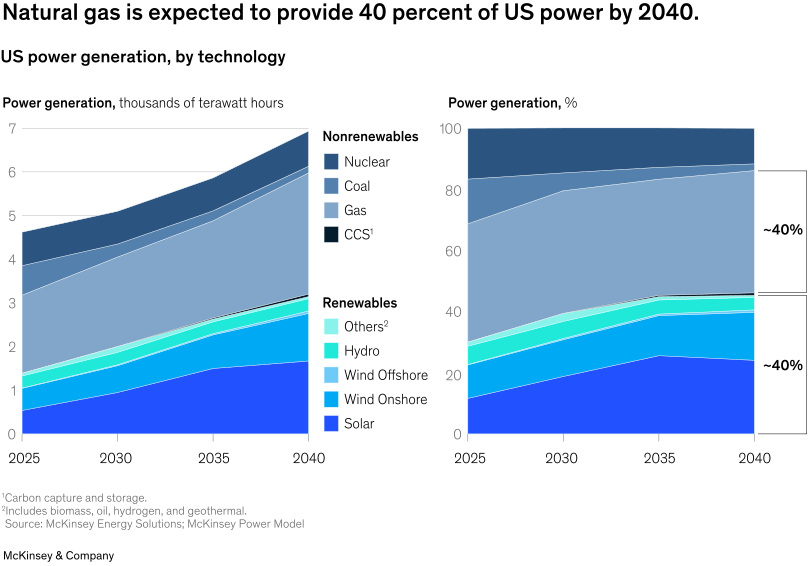
In the United States alone, power demand is expected to grow by up to 3.5 percent per year through 2040, and emerging power sources can offer only limited near-term relief.1 Proprietary McKinsey analysis suggests that such sources will provide approximately 30 percent of total power generation by 2030 (Exhibit 1). The next wave of nuclear capacity, including small modular reactors, is unlikely to arrive until the late 2030s. Renewables, predicted to continue to expand in the United States, may face slowed deployment as incentives expire and as the reemergence of nuclear power stokes competition for long-term power contracts.
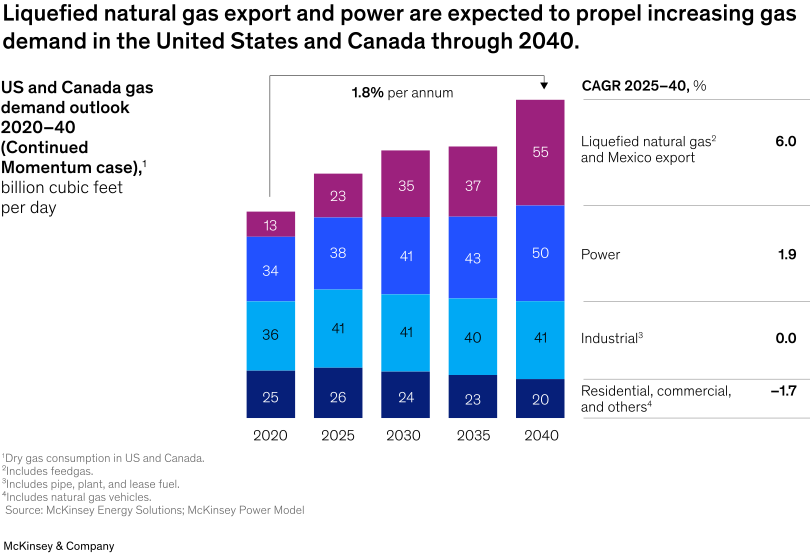
Against this backdrop, our analysis shows about 4.1 billion cubic feet per day (BCFD) of additional gas demand expected for power generation across the United States and Canada by 2030 (Exhibit 2). We expect gas demand for liquefied natural gas (LNG) exports to increase rapidly, as well.
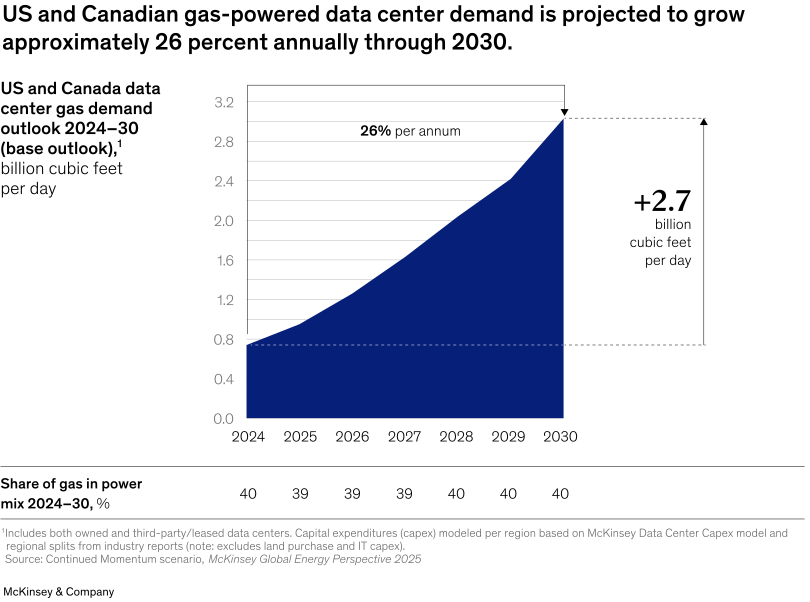
Demand for roughly three BCFD—more than half of the additional gas demand for power—is expected to come from data centers. These centers will likely cluster in corridors near natural gas supplies, such as the PJM interconnection in the eastern United States and supplies in Texas and the US Southeast (Exhibit 3).
Gas is well positioned to meet the coming demand but will have some difficulties. Gas-turbine-manufacturing backlogs are delaying new generation capacity. Permitting hurdles, cost inflation, and community opposition are slowing pipeline and transmission development. Following the addition of pipelines in the region, the Permian Basin now risks overbuilding and declining returns from oversupply, while pipeline-constrained US regions such as Appalachia and the Gulf Coast lack the infrastructure to carry gas to regional demand centers. The result of these competing pressures is a market defined by volatility, regional divergence, and physical bottlenecks.
Opportunities for trading, arbitrage, and optionality
Understanding the crosswinds of volatility, regional divergence, and physical bottlenecks can enable well-established traders to acquire value through arbitrage and optionality in the following areas:
- Wider nodal spreads: Distinct regional consumption patterns, from seasonal heating to consistent 24/7 loads from clustered data centers, are expanding price gaps between grid nodes.
- Shifting spark spreads: The difference between the electricity price and corresponding gas price varies by location and time, largely because of load variation, power composition mix, and uneven infrastructure development.
- Volatility from LNG exports: Expanding export capacity along the US Gulf Coast is producing fresh price differentials, including the influence of global gas prices and transport risk premiums. The large gas needs for LNG production create concentrated demand in a few locations in western Louisiana and eastern Texas. This concentration can generate additional dislocations and increase potential volatility.
- Natural gas equivalents as proxy hedges: Equivalents, such as compressed gas and emerging e-methane, are gaining traction as proxy hedges for power market exposure, creating an additional lever for portfolio diversification.
- Optionality through physical holdings: Fuel and land assets offer important optionality. Stored onshore gas holdings hedge against unexpected load or outages from extreme weather. Land near major interconnections or pipelines is gaining strategic importance, particularly where infrastructure access aligns with data center or industrial development.
These opportunities are dynamic. The underlying drivers will change over time, creating new spreads and hedges for trading and value creation.
Essential capabilities for stakeholders
Navigating these persistent yet shifting structural differentials will require organizations to react quickly across a range of financial and physical markets. Success at securing the potential benefits will likely depend on three capabilities—sufficient trading scale, infrastructure access, and analytics-driven optimization:
- Trading scale: Leading organizations are building scale and breadth by expanding both their positions and their trading desks across commodities. Scale allows traders to improve their capture of market opportunities and management of risk across markets.
- Infrastructure: Owning or controlling access to key infrastructure (including pipelines, backhaul capacity, and storage) allows traders to balance portfolios, manage event risk, and create their own optionality. These assets also enable participation in secondary capacity markets, which often remain liquid in downturns and can reduce exposure to long-term take-or-pay contracting. Investing to ease congestion and align asset locations with deliverability can unlock additional advantage. Integrating gas connectivity into power plant and data center planning can help ensure reliable fuel supply and price stability.
- Data and analytics: Advanced data platforms ingest comprehensive data sets and leverage AI-powered analytical tools and dashboards to provide traders with fresh and reliable market insights. They combine weather, production output, logistics, and regional demand patterns into real-time forecasts that enable traders to anticipate volatility. These capabilities can improve trading outcomes through higher decision speed and accuracy. They also help organizations design long-term fuel and tolling agreements and optimize behind-the-meter supply contracts to stabilize returns.
The coming decade will be a defining one for US and Canadian gas. Rising energy demand, constrained power infrastructure, and the limited pace of scaling for renewables all create risk—but they also create a rich trading environment. Organizations that act decisively now will be in a position to capture an outsize share of this expanding energy value pool, not just today, but for years to come, as opportunities shift in this rapidly evolving sector.