The remarkable success of Glucagon-like peptide-1 (GLP-1) agonists for weight loss is driving patients toward elective medical aesthetics at scale. Yet the market picture is more dynamic than headline growth suggests. New oral formulations,1 evolving insurance coverage,2 direct-to-consumer care models, and expanding clinical indications3 are all changing how patients access and stay on GLP-1 therapy.
These factors are also shaping GLP-1 patients’ aesthetic treatment journeys. For example, our previous research revealed that most GLP-1 patients sought to address three primary concerns4—skin laxity, skin quality, or facial fullness—leading to accelerated adoption of combination protocols such as hyaluronic acid fillers (HA), biostimulatory fillers, and energy-based devices across both premium and cost-conscious segments. More recent data reveal that 20 percent of GLP-1 users have opted for “lifts and tucks,” with 39 percent of those who had already undergone nonsurgical treatments saying they were also considering surgical options.5
Even more dynamic patterns have emerged in underlying GLP-1 patient weight loss journeys that are shaping their aesthetic choices. For example, fewer than 10 percent of observed patients remained on GLP-1s for 24 consecutive months (and over half discontinued within five to six months); more broadly, patients frequently switch therapies as they cycle through treatment courses.6 Such sporadic usage, or ending treatment altogether, can lead to significant weight fluctuations.7
To understand how these dynamics affect when, why, and how GLP-1 patients pursue aesthetic treatments, we surveyed 127 aesthetics providers in the United States at the end of 2025.8 This article presents the key takeaways from that survey. We identify five factors that shape aesthetic demand among GLP-1 weight loss patients and four patient archetypes that emerge from those factors. We then describe how providers and manufacturers adapt their services and products to GLP-1 patients’ evolving preferences and constraints to support safe and desired aesthetic outcomes, strengthen long-term engagement, improve patient–consumer satisfaction, and, ultimately, create value for their businesses.
Five factors shaping aesthetic demand after GLP-1 weight loss
Our survey identifies five factors that influence GLP-1 weight loss patients’ aesthetic decisions. These factors can be grouped into three categories: medical factors, aesthetic preferences, and budget considerations.
Medical factors
Medical factors, including degree of weight loss, stage in the weight loss journey, and overall medical status, can determine treatment eligibility and timing.
Degree of weight loss: In addition to impacting overall medical status, the extent of weight loss directly affects changes in appearance, including the degree of skin laxity, reduction in facial fullness, and decline in skin quality: Patients who lose a significant percentage of body weight are more likely to present with skin laxity that may require surgical intervention, whereas those with more moderate weight loss may respond well to nonsurgical approaches alone.
Stage in the weight loss journey: Aesthetic needs differ substantially across stages—at initiation, during ongoing weight loss, during maintenance, and after cessation of GLP-1 agonists. The stage of a patient’s weight loss journey directly informs the desired degree of permanence of potential solutions. Patients still actively losing weight may prefer reversible treatments—such as HA fillers—while those in maintenance may be ready for biostimulatory fillers, energy-based devices, or surgery. Because GLP-1 patients frequently cycle through stages, treatment plans must be designed with adaptability in mind.
Medical status: Age and comorbidities—such as diabetes, which is common among GLP-1 users—affect wound healing, treatment tolerability, and eligibility for certain options, including body contouring surgery.
Aesthetic preferences
Patients may prioritize treatments, such as skin laxity, facial fullness, or skin quality, based on their desired outcomes.
Aesthetic goals: When it comes to personal image preferences, GLP-1 patients seeking aesthetic care are almost evenly split: Roughly 56 percent seek a “natural look” closer to their pre-weight loss baseline, while 44 percent are exploring new looks and techniques.9 The relative importance placed on addressing skin laxity, facial fullness, and skin quality further shapes which modalities are appropriate. Aesthetic goals are closely intertwined with treatment permanence: A patient’s position in their weight loss journey shapes both what they want to achieve and how long they want results to last.
Budget considerations
The costs of ongoing GLP-1 therapies are continuing to evolve across insured and cash-pay options10 and can create budget constraints for some patient–consumer archetypes as they balance spend across other categories. More broadly, budget considerations for medical aesthetics serve as the primary differentiator across the patient archetypes described below, with aesthetic goals as the secondary decision point.
Taken together, these five factors underscore why a standardized approach to aesthetic care for GLP-1 weight loss patients falls short. This is a patient population whose medical status, aesthetic goals, and financial constraints are not only diverse but also actively shifting. As the number of GLP-1 users grows and their journeys become more varied, the case for a structured, archetype-driven approach to care becomes stronger.
Four patient archetypes for GLP-1 aesthetic care
Based on the five factors, four distinct patient archetypes emerge from the survey data, each with characteristic goals, treatment preferences, and spend patterns (Exhibit 1).
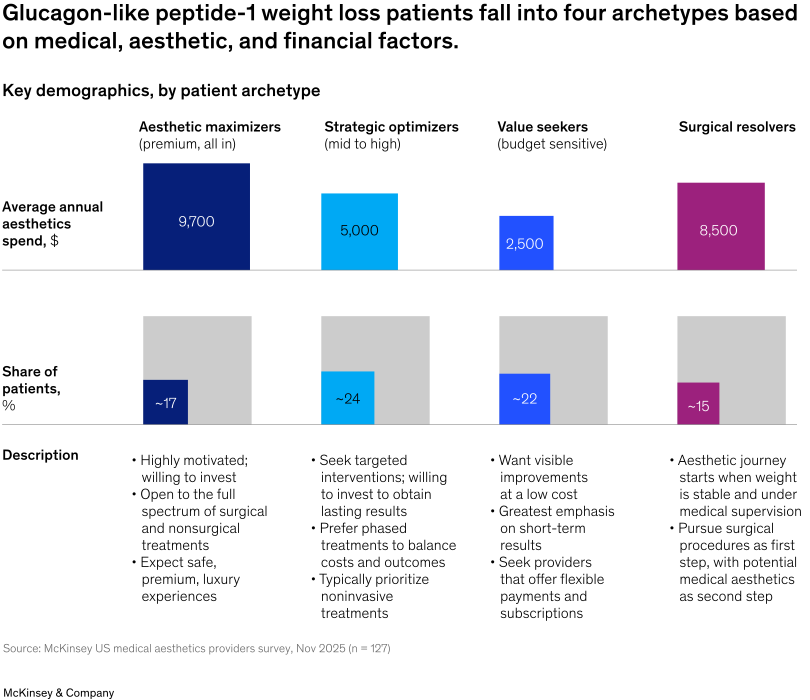
Aesthetic maximizers want to look and feel their best and are willing to invest in noticeable, lasting results. They are comfortable across the full range of invasive and noninvasive treatments—surgery, injectables, energy-based devices, and skin care—as well as combination treatments over time. They pursue premium services and demand high standards of safety and quality of outcomes.
Strategic optimizers seek targeted interventions to address their areas of greatest concern and are willing to invest in select treatments to achieve lasting results. They prefer phased approaches that balance costs and outcomes—for example, HA or biostimulatory fillers followed by energy-based devices—and typically prioritize noninvasive treatments.
Value seekers want visible improvements at lower cost, with a greater emphasis on short-term results. They are limited by budget as they balance the costs of GLP-1 medications and aesthetics, and they seek providers that offer flexible payment options, including financing and subscriptions.
Surgical resolvers typically begin their aesthetic journey once weight is stable and under medical supervision. They pursue surgical aesthetic procedures to address skin laxity as the primary challenge—ranging from facelifts to full-body contouring—and may pursue additional medical aesthetic procedures, such as injectables, as a second step.
Neuromodulators, HA fillers, and skin care are standard treatments across all archetypes. But the archetypes diverge sharply in treatments with a longer duration of impact. The survey results yielded a treatment heat map that correlates aesthetic options by their duration of impact—from low-permanence options such as skin care and neuromodulators to high-permanence approaches like surgical skin tightening and fat grafting—and shows the percentage of patients in each archetype who pursue them (Exhibit 2).
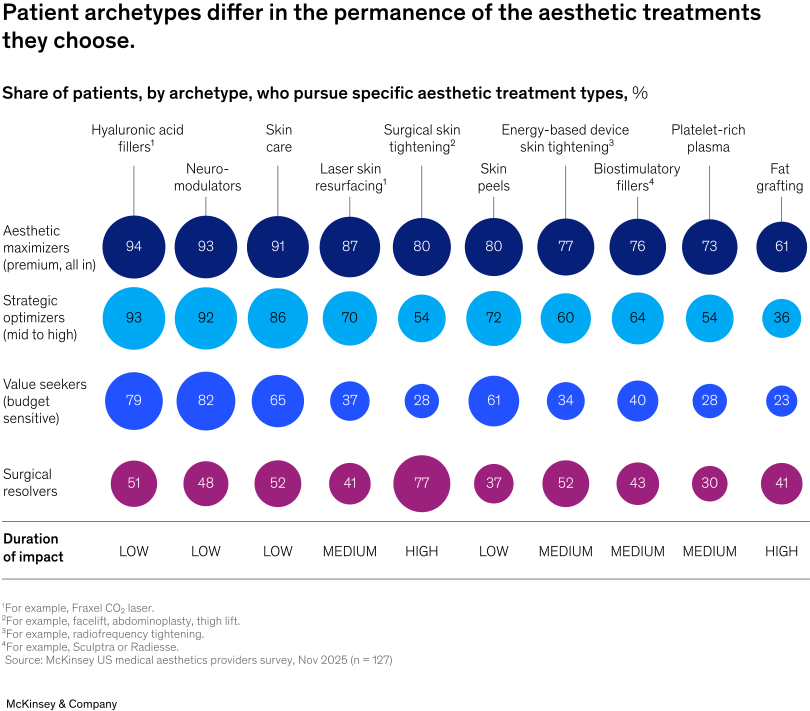
For example, aesthetic maximizers adopt treatments at high rates across the full permanence spectrum. Strategic optimizers are more selective, concentrating on medium-duration options such as biostimulatory fillers and laser resurfacing. Value seekers cluster around low-permanence, lower-cost treatments. And surgical resolvers show a distinctive pattern: high adoption of surgical and energy-based options but comparatively low use of the nonsurgical staples that dominate other archetypes.
What motivates aesthetic decisions for GLP-1 patients?
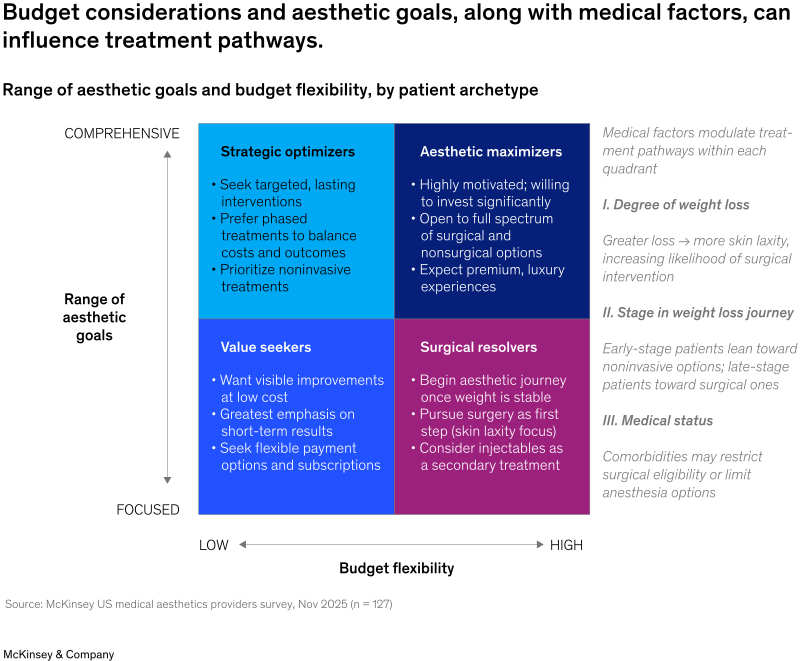
The five factors interact in a structured way. Budget considerations and the breadth of aesthetic goals are the two defining dimensions that determine which archetype a patient most closely resembles. The three medical factors—degree of weight loss, stage in the journey, and medical status—then modulate the specific treatment pathway within each archetype, shaping which aesthetic treatments are appropriate and when (Exhibit 3). This framework provides a basis for more tailored, longitudinal aesthetic treatment plans and points to the specific actions that providers and manufacturers can take to serve each segment more effectively.
Segmented, longitudinal care models have been applied successfully in other aesthetic and reconstructive cohorts—such as postbariatric surgery patients, where body contouring protocols are staged according to the degree and stability of weight loss. This precedent strengthens the case that the archetype-driven approach described here adapts a proven model for the GLP-1 population.
Curating the journey and capturing value
For GLP-1 patients, the aesthetic journey is not a single event but an evolving process that unfolds alongside their weight loss trajectory. Patients whose care is tailored to their archetype, stage, and goals are more likely to achieve outcomes they value—whether that means maintaining a natural appearance through subtle, phased interventions or pursuing a comprehensive transformation. Curated, longitudinal care also reduces the risk of overtreatment or poorly timed procedures, which is especially important given how frequently GLP-1 patients’ weight and medical status fluctuate.
For providers and manufacturers, tailoring aesthetic offerings to each archetype can help ensure safe, effective outcomes while supporting sustained engagement with this growing consumer cohort. Our survey found that 70 percent of providers plan to increase their offerings for GLP-1 weight loss patients and 64 percent plan to provide curated treatments, but fewer than a third plan to form partnerships; only 28 percent plan to introduce bundling or subscriptions. Closing the gap between intent and execution calls for action across six practical levers.
Maintain a curated set of aesthetic products and services
Patients who have lost weight on GLP-1s have complex aesthetic demands, and across archetypes, a wide range of solutions are employed alone or in combination. Providers should consider maintaining offerings that go beyond core skin care, HA fillers, and neuromodulators to include biostimulatory fillers, energy-based devices, and emerging innovations such as regenerative medicine approaches. Manufacturers can support this by ensuring product access, training, and clinical decision tools are available across provider settings.
Form partnerships to incorporate surgical options into aesthetic treatment pathways
Our survey revealed that surgical approaches were chosen by more than half of patients outside the value-seeker archetype, yet many nonsurgical providers do not offer these services in-house. Aesthetic providers can provide patients with seamless access to the full range of treatment options—including staged treatment protocols that combine surgical and nonsurgical modalities—by building referral networks among med spas, dermatology clinics, and plastic surgery practices.
Create simple, standardized approaches to assess and guide aesthetic treatment pathways
Many factors drive individual aesthetic needs for GLP-1 patients, and personalized pathways can optimize outcomes through longitudinal treatment plans. Providers and manufacturers should partner to develop evidence-based algorithms that account for treatment timing, sequencing, and the patient’s archetype and stage. These can take the form of straightforward good-better-best frameworks tied to patient needs and price points, and they can incorporate AI tools for both patient assessment and provider guidance.
Consider offering preset bundles or subscriptions based on tier of service
To serve a financially diverse cohort, providers can evolve their commercial models. Tiered pricing structures offer accessible entry points—such as basic maintenance plans focused on skin quality for value seekers—while catering to aesthetic maximizers with premium packages. Subscription models spread costs over time, encourage routine care, and support better outcomes through treatment consistency. Manufacturers can enable these models through rebates, loyalty programs, and financing partnerships.
Formalize continuous education for clinicians on evolving approaches and safety protocols
Continuous education is needed to ensure that clinicians at aesthetic providers are using the latest approaches and adhering to current safety protocols. Almost 70 percent of surveyed providers plan to adopt new training, and nearly half plan to increase medical oversight. Manufacturers can support this through accredited training programs and clinical advisory boards focused on GLP-1-specific considerations—including the physiological effects of GLP-1 agonists on fat and collagen, combination therapy safety, and patient counseling for dynamic weight trajectories.
Build outcomes databases and dashboards for transparent insights into the treatment journey
Outcomes need to be measured and tracked to understand the best ways to use current products and inform R&D pipelines. Providers and manufacturers should invest in outcomes databases and patient-facing dashboards that offer transparent insights into the treatment journey. Real-world evidence generation—from clinical trials and provider-level outcomes tracking—can strengthen the case for novel approaches and help patients make more informed decisions.
Do we have the right capabilities in place?
Executing on these levers requires a core set of capabilities. Leaders of provider- and manufacturer organizations should consider four foundational questions:
- Strategy. Do we have a clear strategic position on GLP-1 aesthetics, including which patient archetypes we will prioritize, where we will invest versus partner, and how our product and service portfolio aligns with the full spectrum of patient needs?
- Technology and data. Do we have the data infrastructure to track patient journeys longitudinally, the AI and analytics capabilities for patient segmentation and treatment recommendations, and the outcomes databases to measure what works?
- Talent and training. Do our clinicians have the training and clinical guidelines to design and deliver tailored, multimodality treatment plans for post-weight-loss patients—and are we investing in continuous education as approaches evolve?
- Operating model. Are our commercial structures, partnership networks, and care delivery models designed for the longitudinal, archetype-driven care that GLP-1 patients require?
The convergence of rapid GLP-1 adoption, dynamic weight loss journeys, and an expanding base of first-time aesthetic patients has created a market that is both large and structurally different from what the industry has previously served. The question for providers and manufacturers is not whether this cohort will matter—it already does—but whether they will be ready to serve it effectively. Leaders who are taking proactive action now—segmenting patients into actionable archetypes, curating treatment pathways across the permanence spectrum, and investing in the technology, talent, and operating models needed to deliver personalized care at scale—will be best positioned to meet the needs of a growing cohort and capture the value that comes with doing so.