


US health systems were finally starting to return to a more normal routine following the tumult of the COVID-19 pandemic. But now they face a new set of challenges in the form of intensifying margin pressures, geopolitical shifts, and macroeconomic factors including growing unemployment, new tariffs, and rising inflation. Health systems have seen increased variability in performance in recent years, propelled by these macro forces.1
To face these challenges, health systems have had to scrutinize how their organizations operate and determine how they can redesign their operating models—including leadership, processes, rewards, and talent2—to maintain a competitive edge. At the same time, rapid advances in AI are accelerating this shift, forcing health systems to rethink how capabilities are structured, how work and decisions get done, and how talent is deployed and developed across the organization. This task is further complicated by the realities of health system operations, where care delivery and physician leadership are often deeply local, regulatory requirements vary by state, and trust must be built across organizations shaped by prior mergers and long-standing autonomy. Still, the urgency is clear: According to McKinsey’s Provider Operating Model Survey, 70 percent of C-suite leaders within health systems say that operating model redesign is among their top five priorities, and 81 percent do not feel their current operating model is effective or efficient (see sidebar “About the survey”).
As health system leaders navigate financial, regulatory, and market pressures, they recognize that changing what the organization works on will be just as important as changing how the organization works. Health systems are proactively taking targeted actions, from rethinking organizational design to redesigning decision-making processes and investing in the next wave of leaders. They’re also grappling with how emerging technologies, including AI, are reshaping expectations for speed, scale, and consistency across the enterprise. This article discusses lessons learned in operating-model redesign and outlines how health systems can make the desired shifts happen.
Health systems’ operating models are critical to maintain a competitive advantage
For this article, an operating model is defined as the way an organization is structured, how an organization gets work done, and how talent is developed, attracted, and retained. In this way, an operating model provides a blueprint for how a healthcare organization can deliver value and achieve its strategic and performance priorities. An optimized operating model can help reduce the distance between enterprise leaders and patients, eliminate functional silos, and use economies of skill and scale to improve core business functions and create a competitive advantage.
In our experience, this streamlined structure can support faster decision-making and speed to market by increasing organizational agility and efficiency, which in turn enables healthcare systems to respond effectively to pertinent changes in technology, patient needs, and the macroeconomic environment. Moreover, redesigned operating models can help increase year-over-year retention of employees and caregivers. For example, a streamlined decision-making process can increase leaders’ and caregivers’ autonomy, giving them more opportunities to grow their skills and make better-informed decisions.
Health system leaders are recognizing the operating model’s role in navigating today’s challenges, improving financial performance, enhancing resilience, and positioning their organizations for long-term success. Many care delivery organizations are taking steps to address the challenges they have with their operating models: According to the survey, 48 percent of leaders redesigned their operating model in the past two years, and an additional 31 percent are working on operating-model redesigns.
Even so, 81 percent of surveyed health system leaders expressed dissatisfaction with their operating models, citing several challenges that hinder organizational performance and resilience. These include ineffective decision-making and prioritization, costly and complex structures with limited integration, insufficient training for leaders to navigate uncertainty, duplicative or unclear distribution of responsibilities among leaders, a lack of agility and data-backed performance metrics, and inconsistent use of technology and AI.
These structural and operational challenges are compounded by macroeconomic pressures, including regulatory and geopolitical changes, tariffs that could increase operational costs, and intensifying labor shortages. Collectively, these pressures could compress margins by more than 1,500 basis points, according to McKinsey analysis, spurring leaders to make changes to their operating models to stay competitive.
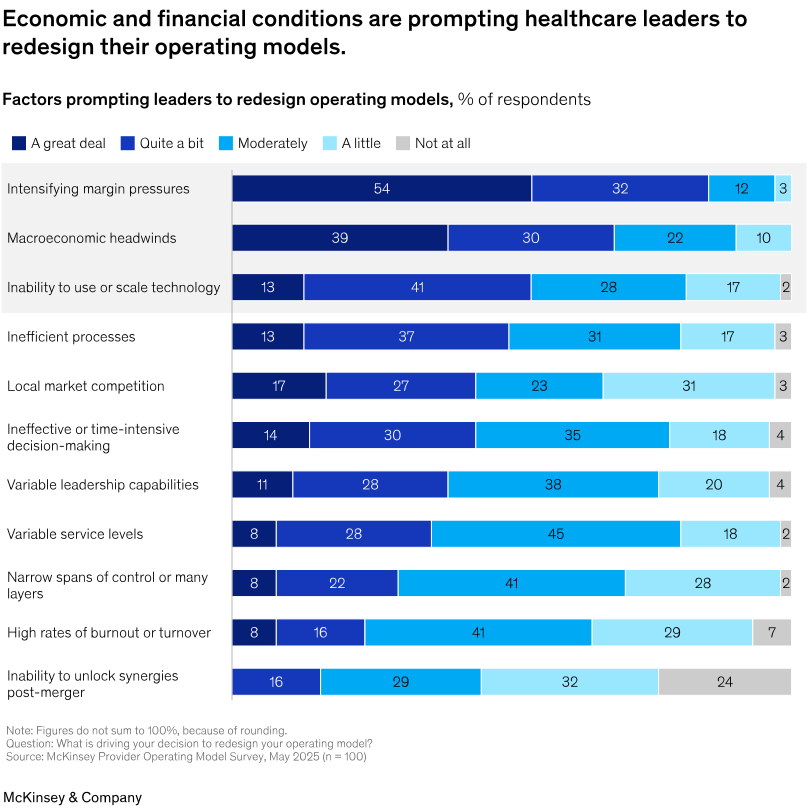
Intensifying margin pressures, macroeconomic headwinds, and an inability to use or scale technology are the top factors prompting survey respondents to redesign their operating models (Exhibit 1).
Successful operating models depend on three critical areas
A health system’s ability to develop a high-performing operating model depends on how it approaches three critical areas:
- How an organization is structured: The design of how work is allocated across business leaders, including the degree of centralization for various functions and the decision to in-source or out-source functions to optimize strategy execution and performance.
- How work gets done: The key processes and decision-making mechanisms that drive efficiency, agility, and outcomes.
- How talent is attracted, developed, and retained: The training, leadership development, culture redesign, and succession planning required to foster a healthy culture.
Together, these elements determine an organization’s ability to adapt to change, deliver on its mission, and achieve sustainable growth.
Optimizing organizational structure
Leaders can better align their organizational structures with their business strategies by standardizing more capabilities at the system level while allowing execution to remain local. For health systems, this balance is especially critical given varying market dynamics, different competitive landscapes, and the autonomy of physician leaders who are closest to care delivery. Across core functions, surveyed leaders set about half or more of their strategies at the system level (Exhibit 2).
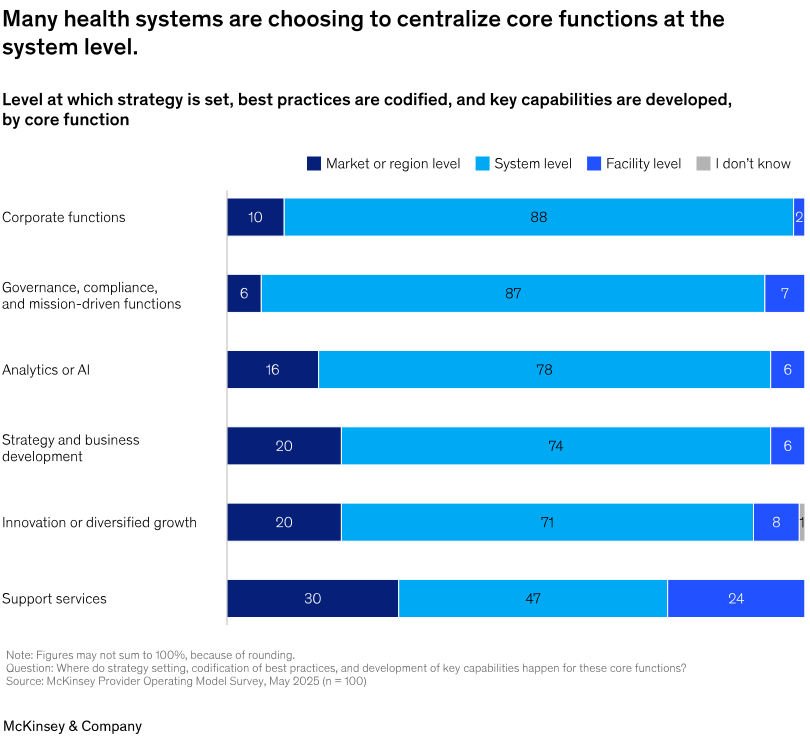
Many systems are considering moving further in this direction—not necessarily through full centralization but through a federated model that centralizes standards, governance, and shared capabilities while preserving local autonomy in execution. This model reflects the reality that care delivery, physician engagement, and market growth strategies often need to be tailored locally, even as systems pursue greater consistency and scale. It can enhance operational efficiency, improve care quality, and help systems achieve competitive advantages (see sidebar “The benefits of federation in the highest-impact areas”).
Based on the survey, leaders expect the share of nonclinical functions owned at the system level to expand by as much as 20 to 30 percent over the next three to five years. This shift requires health systems to think differently about how AI can be used to deliver these services, leveraging scale where it adds value while enabling flexibility at the point of care. For multistate systems, this shift also requires navigating regulatory and policy variation across states, where scope-of-practice laws, Medicaid rules, and labor regulations can meaningfully affect how centralized capabilities are deployed.
For example, one health system established a “center of excellence” for AI and other select service lines to accelerate changes and allow for more direct oversight into strategic priorities. Such centers of excellence can include a lean team composed of a strategic leader, a clinical leader when relevant, an analyst who can support governance and coordination, and a part-time, dedicated finance lead. Another health system is moving toward a more federated shared service model, standardizing tools, data, and performance expectations centrally while enabling markets to retain ownership of day-to-day operations. This approach has allowed the system to capitalize on AI solutions at scale across HR, finance, and other relevant departments while avoiding one-size-fits-all implementation at the facility level.
Reimagining processes and decision-making
Addressing the complexity and inefficiency in decision-making processes is a crucial part of optimizing operating models, yet many health systems struggle to speed up this aspect of the organization because of ingrained decision-making norms. For example, many health systems make decisions based on consensus and unanimity rather than taking a more agile approach in which individuals have clear decision rights over certain areas.
Among survey respondents, 48 percent said decision rights and accountability for strategic decisions in their organizations are “less than somewhat clear”; 52 percent said 11 people or more are involved in making systemwide decisions; and 38 percent said their organizations have established at least nine committees to help make decisions.
Across leading health systems, executives are reimagining decision-making governance to meet today’s pace of change. Slow decision-making is costly, and organizations that address six problem areas can speed up the process (Exhibit 3).
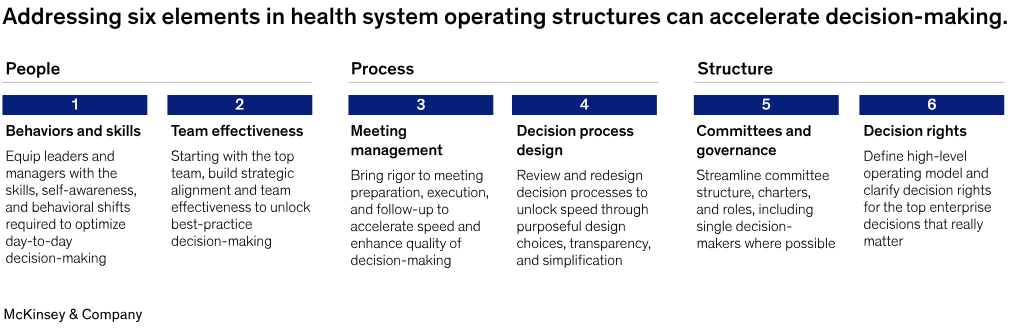
At the heart of this shift is a simple but powerful principle: People make decisions, not committees, and those decisions are made by the individuals closest to the work, rather than the person with the most senior title. Instead of routing all choices to an executive leader or governing body, organizations move faster and more effectively when they clarify decision rights—who decides, who advises, who recommends, and who executes—and encourage an active culture in which people are empowered to act to make the best use of everyone’s time.
In addition, the survey found that executive teams are radically simplifying decision infrastructure. For example, some health systems have reduced the number of their standing committees significantly, shrinking from up to 20 committees to just a few formal groups that are supported by more agile, cross-functional teams.
Last, organizations aren’t just redesigning governance; they’re investing in the capabilities of the people making the decisions. When top leaders are trained to use a common, emotionally neutral language for decision roles (such as decision-maker, recommender, or adviser) and on how to bring forward a data-driven recommendation (via a recommendation memo, for example), they can reduce confusion, misalignment, and rework, while saving time and making better decisions.
Investing in talent attraction, development, and retention
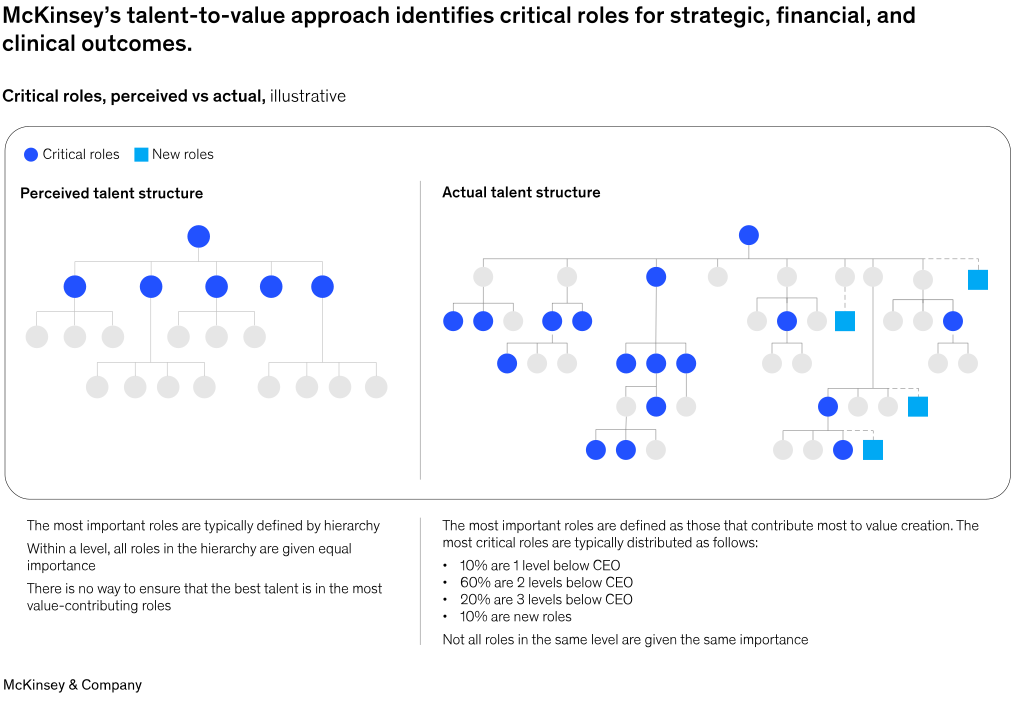
According to the survey, 43 percent of respondents noted that attracting and retaining top talent is their organization’s most difficult challenge. Health systems can address labor shortages by building a robust talent strategy that focuses on attracting top talent, developing existing employees, and creating a culture that supports retention. McKinsey “talent to value” research3 finds that fewer than 10 percent of healthcare CEOs know which 30 to 50 roles drive the most value for their business and whether they have high-performing employees in those roles.
When updating their operating models, health systems should place talent at the center of their efforts, starting with a renewed focus on leadership development and strategic talent deployment. Operating models don’t run themselves—they depend on people with the skills, mindsets, and capacity to execute. Without the right talent in the right roles, even the best-designed model will stall. Talent amplifies the impact of any operating model redesign.
A previous McKinsey Quarterly Winning with Talent Survey shows that companies that reallocate talent in step with a strategic plan are nearly twice as likely to outperform their peers.4 To start, many health systems can invest in enterprise-wide leadership development programs to build a common foundation of skills, behaviors, and mindsets aligned with the organization’s future direction. These programs go beyond traditional training; they are linked to the organization’s strategy, tailored to specific roles, and tied directly to performance and cultural expectations.
In parallel, systems are embracing McKinsey’s talent-to-value approach, which systematically identifies the most critical roles that drive strategic, financial, and clinical outcomes and ensures the most qualified people are placed in those positions (Exhibit 4).
To support these employees, health systems can tailor coaching, succession planning, and clear performance metrics to each role rather than using a standardized leadership development approach. This strategy, in turn, helps create lasting impact for the organization.
Getting started requires an intentional, phased approach
For health systems looking to transform their operating models, taking decisive action early is critical to build momentum and set the foundation for success. A structured, phased approach can help organizations propel meaningful change and achieve their aspirations. Four steps can help health systems create clear, action-oriented plans to begin their operating model transformations and ensure lasting impact.
Clarify specific objectives. Step one for health systems updating their operating models is to get a clear idea of the areas they need to improve or focus on to create more value for both patients and the organization. In this step, health systems can outline strategic objectives and prioritize them to create the most value. These objectives will vary across organizations: The list of objectives for a health system with a primary goal of designing the lowest-cost model possible will look very different from that of a health system with the primary goal of growing into new markets or innovating based on the diversified portfolio.
Create a strategy-backed organizational blueprint. Once objectives are set, leaders can develop a blueprint that clarifies roles and responsibilities across system, market, and facility levels to help achieve the most pertinent goals. Many systems operate with blurred lines across these levels, which can result in duplication of efforts or stalled progress. Clear definitions—such as which level owns growth strategy and which owns care delivery—will help reduce friction and increase accountability.
Shift processes to put the design into practice. With the blueprint in place, the focus will be on putting the design into action. Health systems often create new organizational charts without reshaping the processes and behaviors that make those structures effective. By testing the blueprint design, organizations can get a clearer idea of how the new operating model will work and ensure that the structure and processes in place will enable rather than hinder this work.
This phase may include redesigning the workflows of the frontline, supervisory, and manager-level employees; aligning high-value roles with the right talent; and shifting accountability and decision rights to where they can drive the most value. To reinforce these shifts and demonstrate what a faster system could look like, leaders can streamline two or three cross-functional processes, such as position control or capital approvals, and reduce the number of redundant committees.
Intentionally develop leaders who are aligned with future priorities. As leaders settle into a new operational structure and way of working, health systems can embed leadership development, culture-building, and performance management into their strategies to ensure the new model sticks. Development efforts can include standing up a leadership institute or enterprise development program to build capabilities and foster a shared mindset across all levels. These efforts could also help create talent pipelines that are aligned to future roles and high-impact business areas and reward behaviors that support systemwide goals rather than siloed performances.
The macroeconomic challenges facing health systems can be daunting, but the opportunity to drive meaningful change within organizations is promising. By addressing barriers to progress, adopting a strategic approach, and leveraging a proven framework for operational transformation, health system leaders can improve organizational efficiency, build resilience, and ultimately deliver better patient outcomes.
Click here to download a PDF of this article
Jung Paik is a partner in McKinsey’s Boston office, Michael Elliott is a senior partner in the Cleveland office, and Philippa Duffy is a partner in the Bay Area office.
The authors wish to thank Emma Lucken, Sarah Greenberg, and Shreya Mathai for their contributions to this article.
1. “US not-for-profit acute health care medians,” S&P Global; medians for 2019–23 include about 370 institutions, which together represent 91 percent of S&P Global Ratings’ total US not-for-profit acute health care portfolio.
2. “A new operating model for a new world,” McKinsey Quarterly, June 18, 2025.
3. Mike Barriere, Miriam Owens, and Sarah Pobereskin, “Linking talent to value,” McKinsey Quarterly, April 12, 2018.
4. “Winning with your talent-management strategy,” McKinsey, August 7, 2018.