Financial institutions face pressure to report and manage climate-related risks across their portfolios—including emissions resulting from activities they fund (known as financed emissions). Portfolios with high financed emissions tend to carry greater exposure to transition risks, such as stranded assets, carbon taxes, and regulatory penalties. Leading firms are turning those compliance obligations into an opportunity: They’re using insights about climate-related risks, clients’ financed emissions, and transition strategies to reprice risk, generate new business, and strengthen client relationships.
Mandatory disclosure requirements for net zero and transition plans under the Net-Zero Banking Alliance (NZBA) are no longer in place following a wave of withdrawals from NZBA from multiple banks beginning in late 2024, which led to the alliance’s winding down in October 2025. At the same time, however, regulators—particularly in Europe—have sharpened their focus on the credibility of banks’ transition plans (see sidebar “European Banking Authority raises the bar for transition planning”). The emphasis has shifted from disclosure alone to demonstrating how banks can establish credible pathways to achieve emissions-reduction targets.
The emerging concept is a prudential transition plan that goes beyond mere regulatory compliance. Rather, it’s a framework that connects the strategic, risk, and business processes required to manage the transition to a low-carbon economy. This includes embedding transition considerations into corporate strategy and portfolio planning, risk identification and management, business steering, and client engagement. The plan helps ensure that emissions reduction ambitions are supported by concrete governance, capabilities, and execution levers. The European Banking Authority’s guidelines also introduce the mandate to the European Central Bank (ECB) to assess the credibility of banks’ transition plans, which will be subject to supervisory scrutiny starting in 2026 and 2027.
In this article, we explore how leading firms are building the capabilities and processes necessary to capture opportunities arising from financed emissions. Regulatory and supervisory pressures are forcing financial institutions operating in Europe to adopt this approach, but those in North America and elsewhere may also benefit.
Challenges in managing financed emissions
Several obstacles hamper financial institutions’ ability to track and measure those emissions, as well as the associated financial, regulatory, and reputational risks.
First, the lack of reliable and consistent emissions data, especially for small and midsize companies, complicates the development of emissions baselines for clients. Without accurate baselines, institutions cannot set credible targets for clients’ emissions reductions, accurately estimate the investments needed to achieve those targets, guide prioritization of decarbonization initiatives, or effectively track clients’ decarbonization progress. They also cannot fully assess their own exposure to the risks posed by their clients’ emissions.
Second, many institutions have published net-zero targets but don’t incorporate sustainability considerations into their business decisions. In 2024, a survey of 95 banks conducted by the ECB, covering about 75 percent of euro area loans, found that 90 percent of banks’ targets are not aligned with Paris Agreement goals.1 For example, while some have started to offer financing tailored to specific decarbonization efforts, in most cases that financing isn’t based on data indicating the investments that clients would need to make to reach their desired emissions reductions.
Third, organizational silos limit many firms’ ability to foster collaboration between sustainability leaders and other decision-makers, which is critical to ensuring that sustainability objectives align with institutions’ business strategy. Sustainability-related functions are often disconnected from strategic decision-making, and insights from risk assessments and transition-planning analyses aren’t incorporated into day-to-day lending, capital planning and investment, and risk management.
However, some institutions are finding ways to overcome these challenges and help clients navigate their climate transition journeys while mitigating risks. What differentiates the leading players is not access to emissions data but the ability to translate that data into detailed, economics-backed actions at client and portfolio levels.
How leading institutions support clients’ decarbonization journeys
Growing regulatory focus on the credibility of transition plans is giving rise to new commercial models that integrate insights about “in the money” decarbonization business cases (based on current energy and materials price outlooks) as the foundation for advisory services, financing innovations, and deeper client engagement. The following five approaches illustrate some of the ways leading firms are seizing these opportunities.
Applying industry-level models to fill data gaps
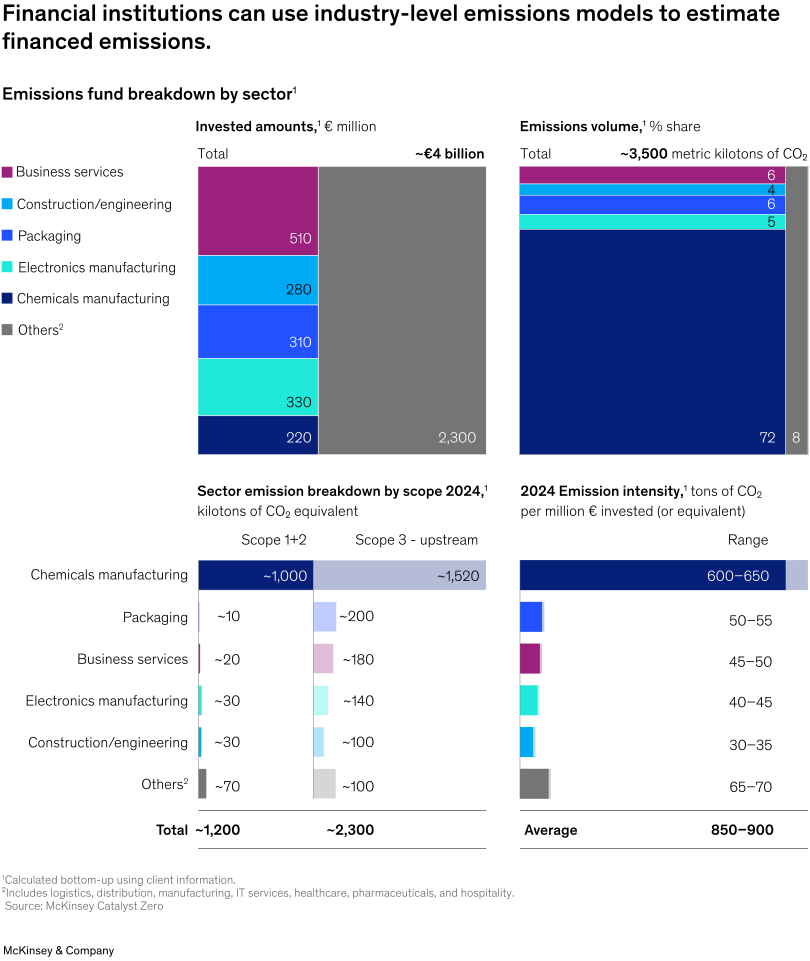
To bridge gaps in client data, some financial institutions leverage industry emissions profiles to estimate their clients’ emissions and compare their decarbonization progress with that of their industry peers (Exhibit 1). This approach, based on detailed subsector- and activity-based data, allows firms to conduct very granular comparisons (see sidebar “Our capabilities: Empowering decarbonization and growth”).
Prioritizing decarbonization options
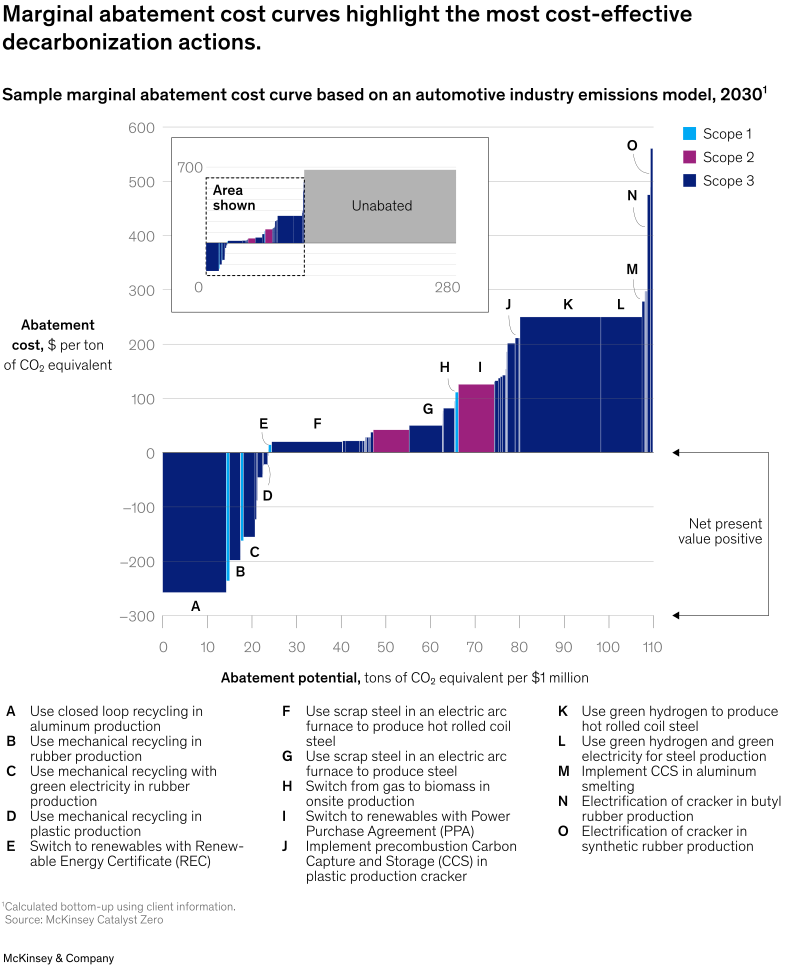
Financial institutions can use industry-level models to build marginal abatement cost curves (MACCs) to identify and recommend the most cost-effective decarbonization actions for clients (Exhibit 2). Institutions can provide these clients with detailed views of baseline emissions and decarbonization opportunities at both the individual-company and corporate-portfolio levels, enabling them to identify and select the most effective actions (as business cases vary across regions based on local economic conditions). For example, one bank used MACCs to identify approximately 35 percent of emissions in a client portfolio that could be reduced through cost-neutral or value-creating actions.
Building transition plans stress-tested across scenarios
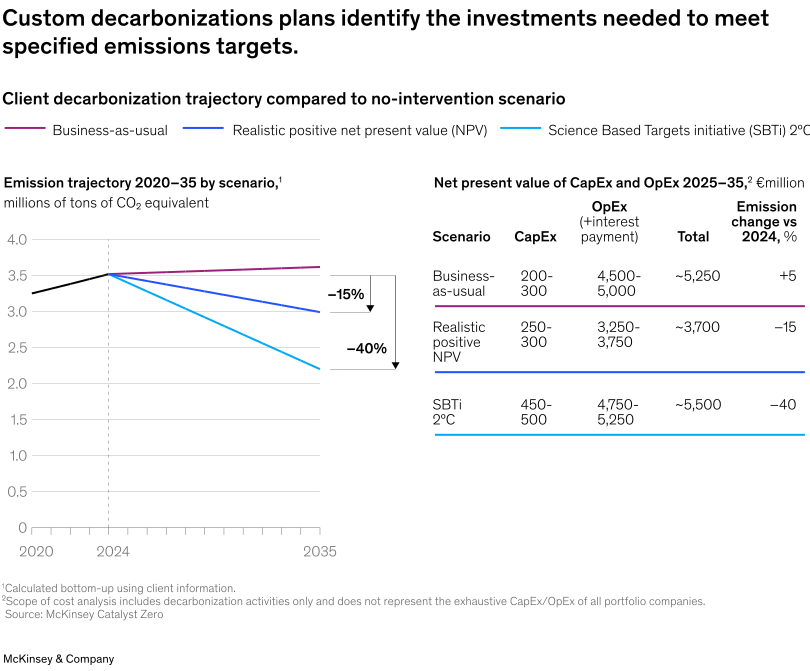
Some firms are developing bespoke ten-year transition plans, with intermediate milestones, for their clients. These plans outline the capital investments clients would need to make to meet their emissions reduction targets and forecast the effects on operating costs. The firms then test the plans against a variety of macroeconomic and climate-related scenarios (such as 1.5°C- and 2°C-aligned pathways2) and model the impact of different energy price projections, new carbon taxes, regulatory shifts, or technological advances. By simulating a range of scenarios, financial institutions can assess the plans’ resilience and adapt them as clients’ assumptions or priorities change. Aside from guiding clients’ decarbonization journeys, such plans provide banks’ relationship managers with a view of the emissions reduction trajectory across their client portfolios (Exhibit 3).
Embedding sustainability considerations into decision-making
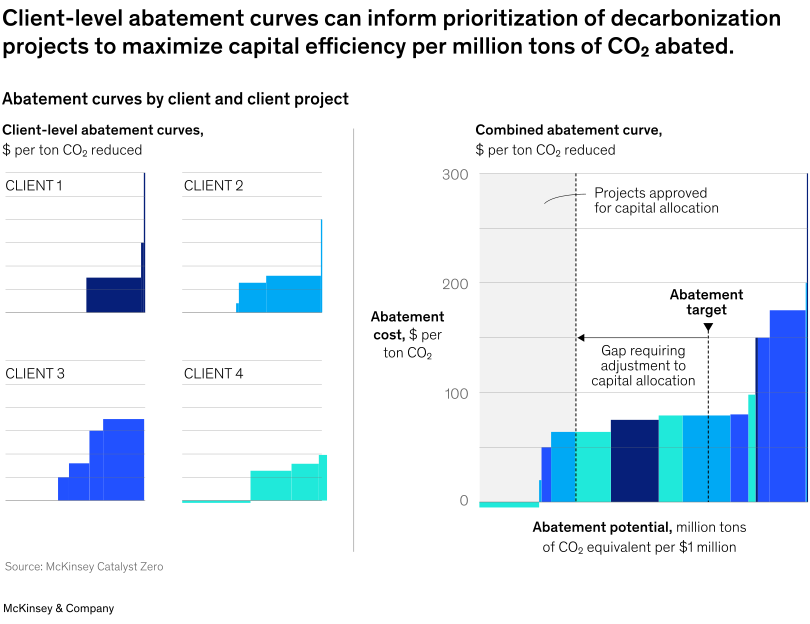
Incorporating sustainability targets into business decisions helps financial institutions align their decarbonization objectives with strategic goals. By integrating emissions reduction targets into the criteria for credit underwriting, capital allocation, and risk management, business leaders can track risk exposure, prioritize mitigation actions for their portfolios and individual clients, and identify the best governance structures to oversee progress. For example, they can aggregate clients’ emissions reduction initiatives and compare them across the portfolio to identify the most cost-effective options and potential economies of scale as part of their capital-planning process (Exhibit 4).
Establishing decarbonization advisory services
Some financial institutions are becoming strategic partners in their clients’ climate transition journeys. Armed with data-backed insights, relationship managers can move beyond transactional interactions to help clients identify the most effective decarbonization opportunities, estimate the required investments and potential returns, and design loans and other financial instruments that align financial incentives with decarbonization outcomes—for instance, by tying a loan’s interest rate to the client’s achievement of emissions reduction milestones.
Transition-planning requirements help position banks as catalysts for innovation, growth, and competitive differentiation. By incorporating sustainability considerations into their strategic objectives, financial institutions will be best placed to support clients’ energy transition needs. What’s more, by understanding each client’s unique challenges and offering tailored solutions, financial institutions can become trusted partners in their customers’ sustainability journeys.
This article was revised on July 13, 2026.