India is on track to become the world’s third-largest economy by the end of this decade, with nominal GDP expected to approach $7.3 trillion by 2030.1 This recent growth has been accompanied by a broader structural transformation that has seen an expansion in formal participation across banking, payments, taxation, and digital services, offering a more connected and accessible economic system supported by India’s digital public infrastructure. These developments provide a foundation for the Indian insurance sector’s next chapter of growth, supported by increasing scale, formalization, and digital infrastructure.
Inflection point for Indian insurance
However, despite access to banking and payments and rapidly expanding participation in formal investment products, insurance adoption has not kept pace with economic growth, creating a widening protection gap relative to global benchmarks. For instance, between fiscal years 2017 and 2025, the number of in-force individual life insurance policies has remained essentially flat, at around 330 million (Exhibit 1).2 Today, India’s insurance industry remains the only major financial-services sector (among banking, asset management, and insurance) that has not fully benefited from the country’s broader financial-inclusion story. This divergence becomes more apparent when viewed through the lens of household savings. Between the prepandemic and postpandemic periods, the proportion of shares and debentures (including mutual funds) in household portfolios rose from 6.6 percent to 7.6 percent, while the share of provident and pension funds grew from 18.9 percent to 20.4 percent3; in contrast, life insurance funds were broadly stable at around 18.0 percent.

Meanwhile, the need for financial protection continues to evolve, potentially contributing to increased demand. Rising healthcare costs, longer life expectancy, increasing household asset ownership, climate-related risks, and growing income volatility are expanding the range of risks faced by Indian households and businesses. As economic participation deepens, so too does the need for mechanisms that improve financial resilience.
Additionally, the regulatory environment continues to evolve, with potential implications for the sector. The pace of market entry has accelerated significantly following recent regulatory reforms. Through its vision of “Insurance for All by 2047,”4 the Insurance Regulatory and Development Authority of India (IRDAI) has introduced measures on improving awareness, accessibility, and affordability. Reforms such as the use-and-file regime, the Expense of Management framework, and the Bima Trinity initiatives (Bima Sugam,5 Bima Vistaar,6 and Bima Vahaks7) address areas around enabling innovation, expanding distribution reach, and lowering the cost of serving customers.
Additionally, the Sabka Bima Sabki Raksha (Amendment of Insurance Laws) Act, 20258 (operational starting February 2026) has raised the foreign direct investment (FDI) ceiling for insurers and intermediaries from 74 percent to 100 percent under the automatic route. On the taxation front, the Goods and Services Tax Council (GST Council) decision (effective September 22, 2025) eliminated the goods and services tax on individual term life and health insurance premiums,9 reducing annual premium outgo by up to 18 percent for retail policyholders and materially improving affordability for first-time buyers. IRDAI’s Insurance Intermediaries (Amendment) Regulations, 2026 propose commission disclosure and policy-tagging norms for large-scale intermediaries and periodic competency training for sales personnel to lift distribution standards as the market scales.10
This year, IRDAI introduced two measures relating to regulatory expectations around transparent customer journeys: first, by increasing supervisory focus on mitigating digital misselling via the Central Consumer Protection Authority (CCPA) Guidelines for Prevention and Regulation of Dark Patterns, and second by linking removal of dark patterns directly to senior-management incentives.11
As of June 2026, IRDAI has established a dedicated AI working group to develop an industry-wide governance approach to address AI adoption, oversight, and risk management across the insurance sector.12
India’s financial and digital rails are increasingly in place, yet, as discussed, insurance adoption has not kept pace. Overall insurance penetration is 3.7 percent of GDP, compared with a global average of 7.3 percent, with the shortfall concentrated primarily in nonlife insurance.13 The next phase of growth will likely depend less on basic access and more on product relevance, distribution alignment, affordability, and trust.
Potential areas for growth vary across different segments of the industry. India’s life and general insurance sectors are expanding along distinct trajectories, shaped by changing product mixes, distribution economics, and competitive intensity. In life insurance, premium growth has outpaced policy volumes, market-linked products are gaining share, and private insurers continue to face pressure on distribution productivity and profitability.14 In general insurance, health, motor, and commercial lines are evolving at different speeds, with stand-alone health insurers emerging as strong performers and the 100 percent FDI regime likely to intensify competition.15 Both sectors may have the opportunity to improve productivity, risk selection, claims outcomes, and customer engagement to translate market growth into profitable and inclusive expansion.
Life insurance
While growth has remained resilient, profitability has become increasingly challenging. The top four private life insurers delivered approximately 12 to 16 percent CAGR in new business premium (NBP) and around 14 to 20 percent embedded value (EV) growth over the course of fiscal years 2022–26.16 At the same time, however, value-of-new-business (VNB) margins declined by three to four percentage points (with the exception of one player). This suggests that, while insurers continue to write more business, the profitability of incremental business has moderated. Zeroing in on sales and distribution, analysis finds that, while NBP grew at some 14 percent CAGR over fiscal years 2022–25, total operating expenses grew by around 20 percent CAGR during the same period.17 Indeed, overall productivity among the top Indian life insurers has essentially remained flat in recent years (Exhibit 2). The life insurance industry in India is focusing on addressing the protection gap while maintaining operational efficiency and sustainable margins. A value chain perspective highlights three key factors to address in order to achieve this balanced growth:
- Sales and distribution operations have been subject to rising cost pressures and stagnant productivity.
- Underwriting and pricing represent a significant bottleneck where manual processes continue to constrain speed and decision quality.
- Despite customer experience improving across the Indian life insurance industry, service friction continues to impact retention and customer value.
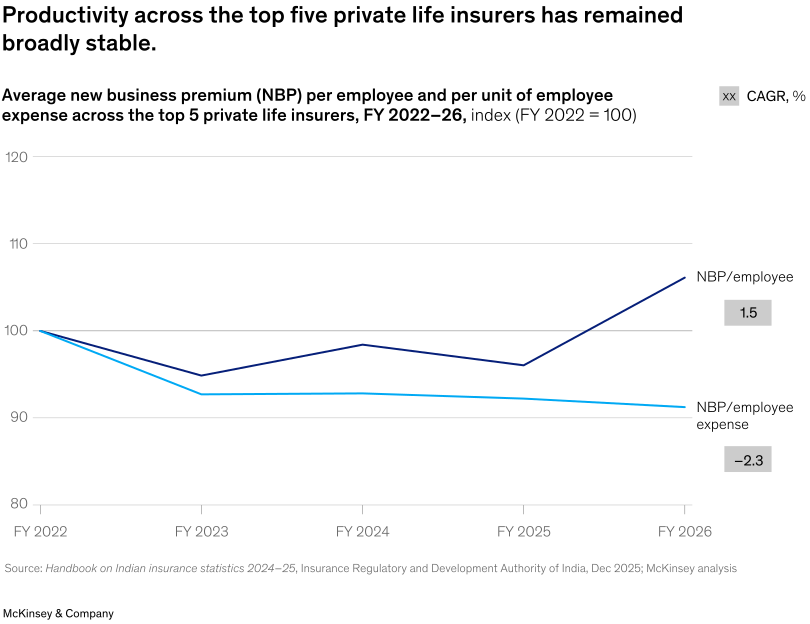
For life insurers, these challenges highlight several areas that may influence profitable growth. First, insurers may consider improving distribution productivity and customer persistency by strengthening advisor activation and effectiveness, equipping frontline managers with better activity intelligence, simplifying advisor and customer journeys, and using proactive servicing and renewal intelligence to deepen customer relationships. Second, they could consider improving product mix, with greater emphasis on protection products, which remain significantly underpenetrated in India. Third, insurers could consider building greater operating leverage by embedding AI and technology across the value chain, including AI-enabled intake, risk assessment, and decision support in underwriting. Together, these levers can improve productivity, persistency, and product economics while creating a more efficient and scalable operating model.
General insurance
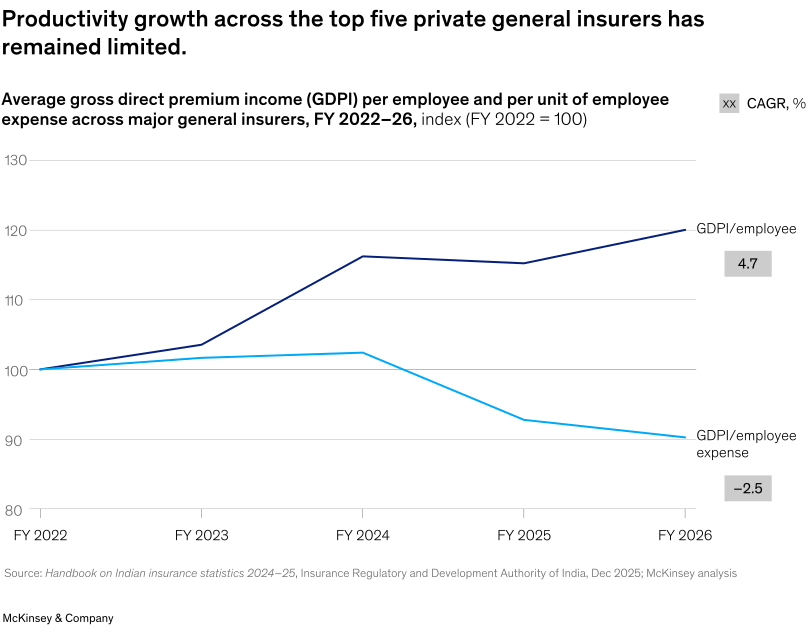
India’s general insurance market has followed a different growth trajectory from life insurance. Over fiscal years 2022–25, gross written premium (GWP) grew at approximately 12 percent CAGR, driven primarily by expansion in policy volumes, which increased at around 14 percent CAGR, while average ticket sizes declined by approximately 2 percent CAGR.18 Meanwhile, productivity within the sector remained muted (Exhibit 3). For example, despite sustained premium growth, frontline productivity continues to be one of the largest structural constraints across the general insurance industry. Productivity across the top five private multiline general insurers has declined by 2.5 percent per annum over financial years 2022–26, measured as premium per unit of employee expense.19 One potential contributor is the shift in business mix away from commercial lines toward more distribution- and servicing-intensive retail segments, particularly health. Notably, however, stand-alone health insurers have shown a different trajectory, with two of the top three players delivering double-digit productivity improvement.20
Thus, the general insurance sector’s challenges are comparable to those in life but are distinctive:
- Frontline productivity remains one of the key structural constraints across the sector.
- Underwriting continues to rely heavily on manual processes and fragmented data.
- Claims management has emerged as an important differentiator of profitability across the general insurance industry.
- Customer expectations are rising, increasingly shaped by digitally mature sectors such as banking, e-commerce, and digital consumer platforms; closing this gap requires more than incremental improvements to customer service.
Addressing these challenges may require a differentiated focus across general insurance lines. In health insurance, insurers can strengthen claims and provider-network economics through intelligent triage; fraud, waste, and abuse detection; network steering; and more granular risk assessment and pricing. In motor insurance, the focus can be on strengthening underwriting and pricing discipline, claims automation, fraud detection, and repair-network optimization. In commercial insurance, where underwriting remains document- and expertise-intensive, AI can help automate submission processing, enable risk assessment and pricing, and improve responsiveness to brokers.
How AI may reshape the way insurers operate
The question now is, how can these challenges be addressed at the speed and scale required to support the next phase of industry growth? Historically, the insurance industry has been hampered by fragmented workflows, manual decision-making, siloed data, and limited operational scalability. However, advances in AI may enable insurers to evolve how they operate. Rather than optimizing individual tasks, AI can enable end-to-end workflow transformation across the insurance value chain, augmenting decision-making, automating routine activities, and orchestrating increasingly complex processes.
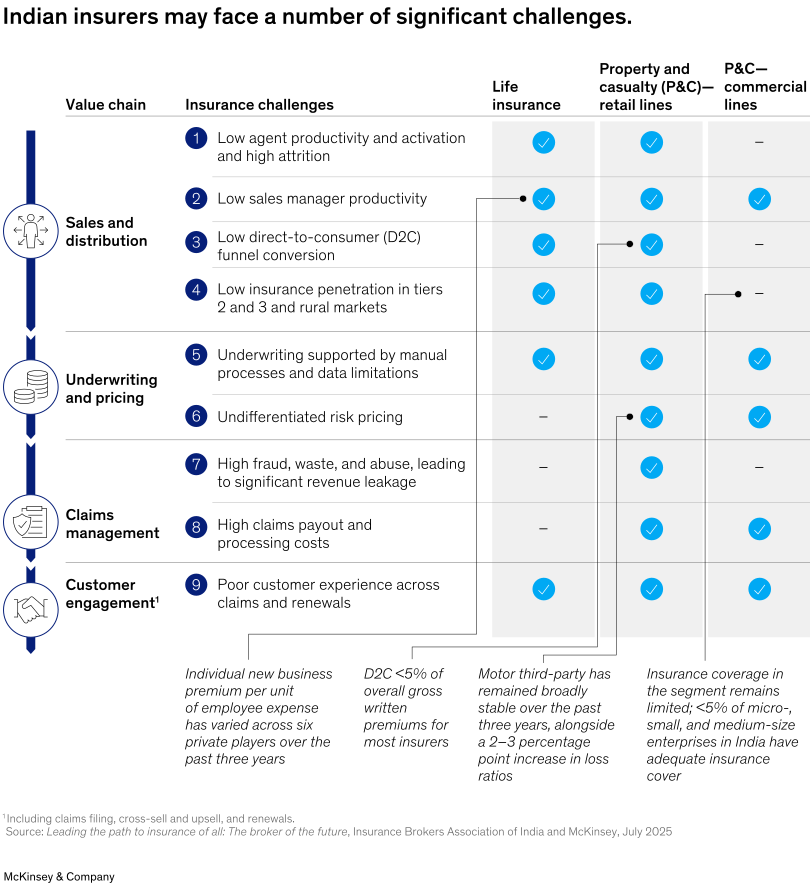
Importantly, the primary constraint on AI value creation today is no longer technology availability; it’s the ability to embed successful use cases into the operating model at scale. The current challenge is about translating isolated successes into enterprise-wide transformation. Achieving this may require organizations to move beyond deploying AI tools and instead redesign operating models, decision-making processes, and business workflows so that AI can be embedded into how the enterprise operates. See Exhibit 4 for the key challenges that have been identified. The greatest value is realized when AI transforms end-to-end workflows rather than individual tasks.
When considering this transformation, insurance leaders may focus on two key questions:
- Which workflows should they seek to prioritize to maximize value creation and impact potential?
- What governance mechanisms and responsible AI considerations need to be in place as adoption scales?
To support the transformation process, McKinsey has identified a set of potential AI-led interventions to consider across sales and distribution, underwriting and pricing, claims management, and customer servicing to help insurers accelerate growth, improve productivity, strengthen risk outcomes, enhance customer experience, and create sustainable competitive advantage (Exhibit 5). These interventions can range from conversational sales enablement and agentic direct-to-consumer journeys to AI-enabled underwriting, intelligent claims triage, fraud detection, network optimization, and personalized servicing. These interventions may provide a practical approach for translating AI capabilities into measurable business outcomes and supporting more productive, responsive, and scalable insurance operations.
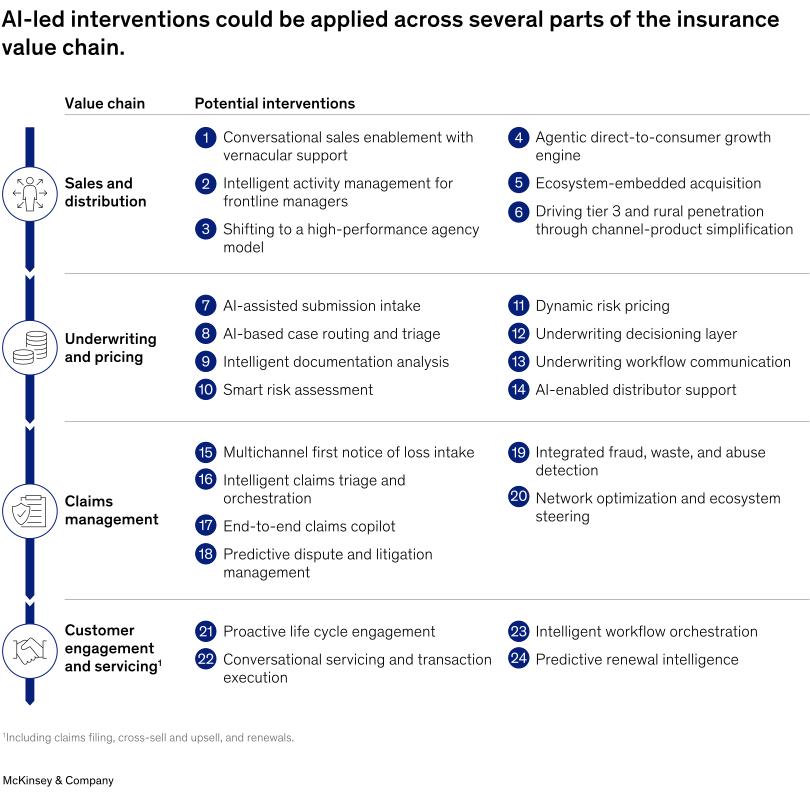
Exhibit 6 sets out the potential business impact AI interventions can have across the value chain for the life and general insurance sectors, together with the likely time it might take to realize these outcomes.
While these interventions may be relevant across the insurance industry, their potential value and sequencing can differ by segment: Distribution productivity, underwriting, and persistency are particularly important for life insurers; underwriting, claims, and network economics for health and retail general lines; and underwriting transformation for commercial lines.

In parallel, insurance leaders could consider how to streamline governance structures to enable faster decision-making and accelerate value delivery as part of a redesigned, agile operating model. High-quality data products, common data definitions, strong governance, and enterprise-wide accessibility can provide a foundation for deploying AI at scale. Moreover, rather than treating data as a functional asset, organizations can consider enterprise-wide platforms that make data easy to consume, share, and reuse across business functions, supporting both analytics and AI adoption. Organizations can also consider change management, stakeholder engagement, governance, risk management, and value tracking to support the translation of AI initiatives into measurable business outcomes. Insurers can consider embedding new ways of working into the organization from the outset, creating buy-in across stakeholders and establishing mechanisms to monitor value realization. The potential impact of transformation can depend on adoption at scale with sustained outcomes supported by investment in both adoption and capability building.
Scaling AI within the organization
The primary consideration for Indian insurers today is no longer about whether AI can create value but how organizations can consistently convert successful pilots into enterprise capabilities that can support business performance at scale. McKinsey’s Rewired 2.0 AI transformation approach has identified six capabilities associated with organizations that have scaled AI: business-led road maps, evolved talent models, redesigned ways of working, flexible technology foundations, enterprise-grade data assets, and disciplined adoption and scaling. While each capability may contribute value individually, developing them together as an integrated transformation agenda may support broader impact.
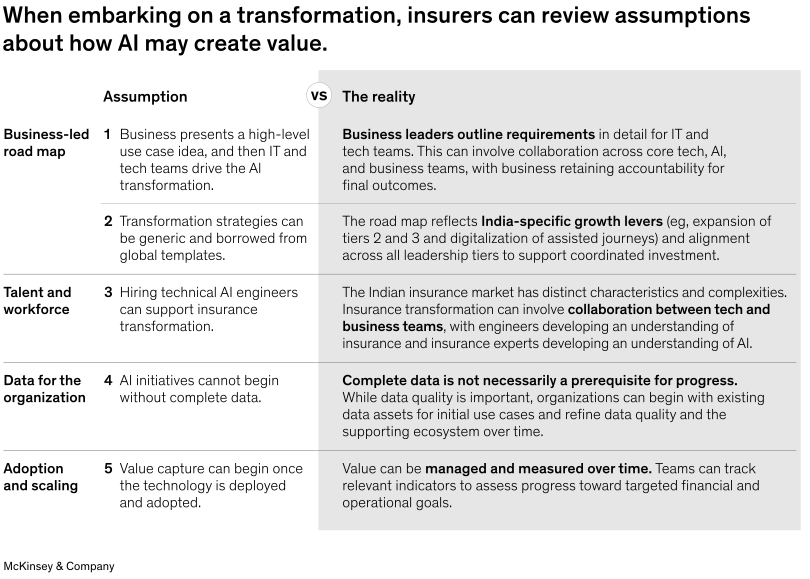
At the same time, organizations can consider reviewing the assumptions around how AI may create value. Organizations that successfully scale AI tend to challenge preconceptions across the following domains: the business road map, talent and the workforce, flexible technology foundations, extent and ownership of data, and adoption and scaling at an early stage in the process (Exhibit 7). Rather than viewing AI as a technology initiative, organizations can treat the process as a business transformation that requires new operating models, disciplined execution, and continuous organizational learning.
Navigating the Indian market context: Five factors for insurers to consider
India’s insurance industry is entering AI transformation from a position unlike that of most global markets. The combination of digital public infrastructure, regulatory reforms, low-cost operating models, diverse distribution channels, and a vibrant technology ecosystem offers a distinct context for execution.
Accordingly, five factors have been identified for Indian insurers to consider as they seek to scale AI beyond pilots and translate technological capability into measurable business value: tapping into digital public infrastructure, implementing workflow transformations over scattered AI use cases, adopting a selective but orchestrated approach to the AI ecosystem, driving business ownership, and making execution speed a source of competitive advantage.
1. The role of India’s public digital infrastructure. The execution priority is not simply to connect to digital rails but to consider how they could support AI-enabled decisioning, orchestration, and customer engagement at scale.
2. Complete workflow transformations over scattered AI use cases. Demonstrating measurable improvements in productivity, loss ratios, expense ratios, or persistency may support the business case and provide the organizational confidence needed to scale subsequent AI investments.
3. A selective, orchestrated approach to India’s AI ecosystem. Rather than making long-term commitments to individual models or platforms, insurers can consider modular architecture that allows models and AI services to evolve as the ecosystem matures.
4. Embed AI within core insurance workflows. Underwriting, claims, distribution, product, and servicing leaders can retain accountability for business outcomes, while technology, data, and risk teams can provide the enabling capabilities.
5. A culture of rapid experimentation. The objective is to rapidly test, evaluate, and continuously refine solutions before committing to enterprise-wide deployment.
Conclusion
For Indian insurers, the race ahead remains long, but endurance alone will not guarantee success. The nature of the competition is changing, from a marathon to a “decathlon” that requires performance across multiple disciplines. The next era will demand coordinated progress across omnichannel service, distribution, underwriting, claims, actuarial science, core technology, and talent, with AI reshaping how these capabilities work together.