



The B2C energy retail sector in key European markets is facing sustained structural pressures: falling standard power and gas volumes from slower-than-expected electricity demand growth, declining gas consumption, and gains in energy efficiency.1 Margins are being further compressed by shifts in customer acquisition channels and intensifying competition from digital attackers.
This trajectory is unlikely to reverse: McKinsey’s latest analysis projects that the B2C energy retail value pool2 across seven markets in Europe and the United States will decline by roughly 1 percent annually between 2025 and 2035 (see sidebar “Our methodology”).
But, while traditional power and gas supply is expected to continue its downward trend, the total value pools for adjacent services and solutions, such as electric vehicle (EV) chargers, distributed solar generation (solar DG), home batteries, heat pumps, and flexibility solutions supporting demand side response (DSR), will grow significantly. However, they likely won’t offset declines in traditional energy retail supply.
To stay ahead of the curve, energy retailers may need a strategic reset. Here we detail ways in which they could optimize their outlook.
Evolving value pools in the B2C energy sector
Our analysis projects that the total B2C energy supply value pool across the seven markets analyzed is expected to decline to €37.5 billion by 2035—a 1 percent annual reduction (Exhibit 1). This outlook, however, differs between power supply, gas supply, energy solutions, and flexibility.
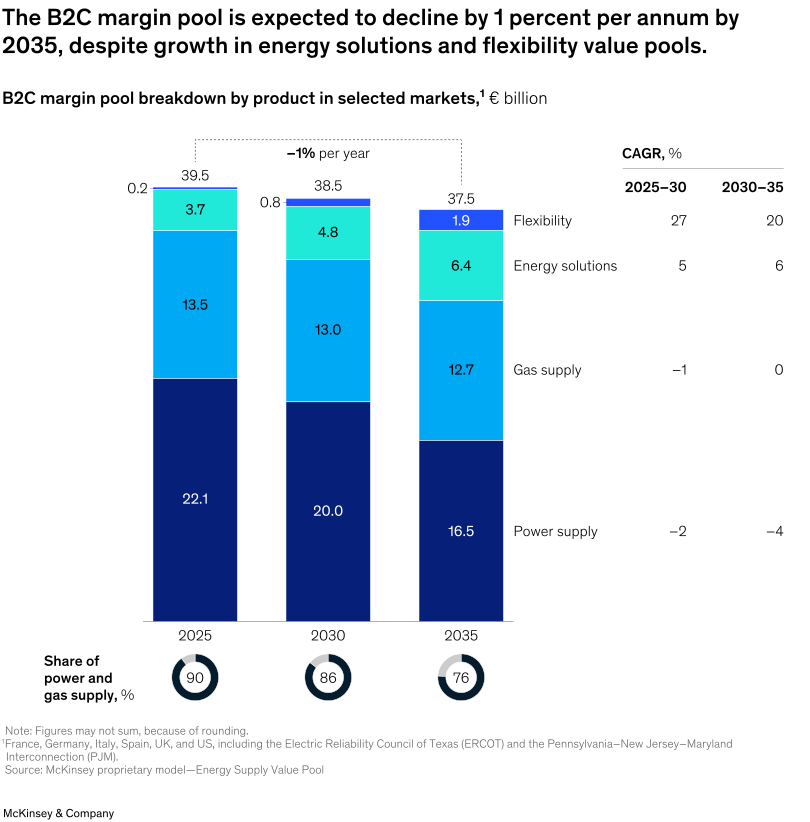
Power supply volumes are projected to grow modestly by approximately 1.8 percent annually, despite improvements in energy efficiency, with electrification driving this demand growth. However, margins are anticipated to decline by approximately 5 percent annually because of the shift to digital channels, the gradual move toward lower-margin tariffs such as time-of-use (ToU), and intensifying competition.3 The power supply value pool is therefore projected to shrink by around 3 percent per year to 2035.
Gas supply volumes are expected to drop gradually as electrification increasingly replaces residential gas demand, with an average annual decline of 0.7 percent to 2035. The overall value pool is projected to shrink by about 1 percent per annum over the same period.
Energy solutions are emerging as the main growth driver, led by heat pump adoption and rising EV charger installations across major European markets. In contrast, the value pools for solar DG and home batteries are declining, reflecting lower capital expenditure, flattening deployment in markets such as Germany and Italy, and the reduction or phase out of subsidies. Overall, the energy solutions value pool is projected to grow by more than 70 percent over the next decade.
Flexibility is emerging as the most robust growth opportunity, predicted to scale rapidly from a relatively small base, growing from €0.2 billion in 2025 to €1.9 billion in 2035 (Exhibit 2). By this time, home batteries could account for around 70 percent of the market, reflecting their importance in grid services, participation in capacity markets, and ability to dispatch electricity independently of customer behavior (see sidebar “Flexibility modeling methodology”). EV flexibility is also accelerating, supported by the rapid uptake of smart home chargers across Europe, including vehicle-to-grid (V2G), while heat pump flexibility remains constrained by comfort requirements, which limit load shifting despite available thermal inertia.
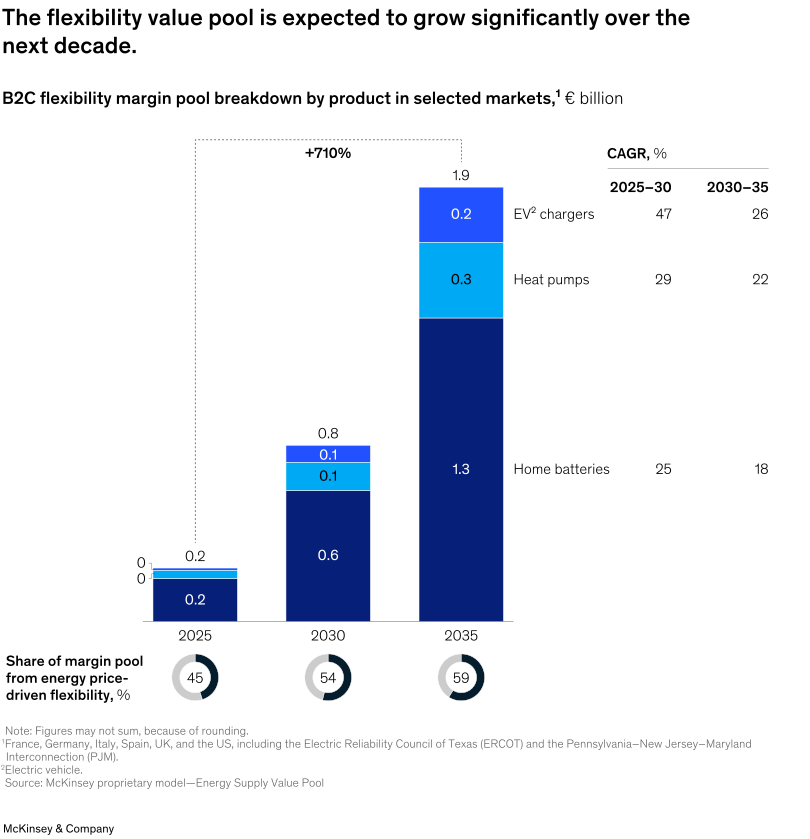
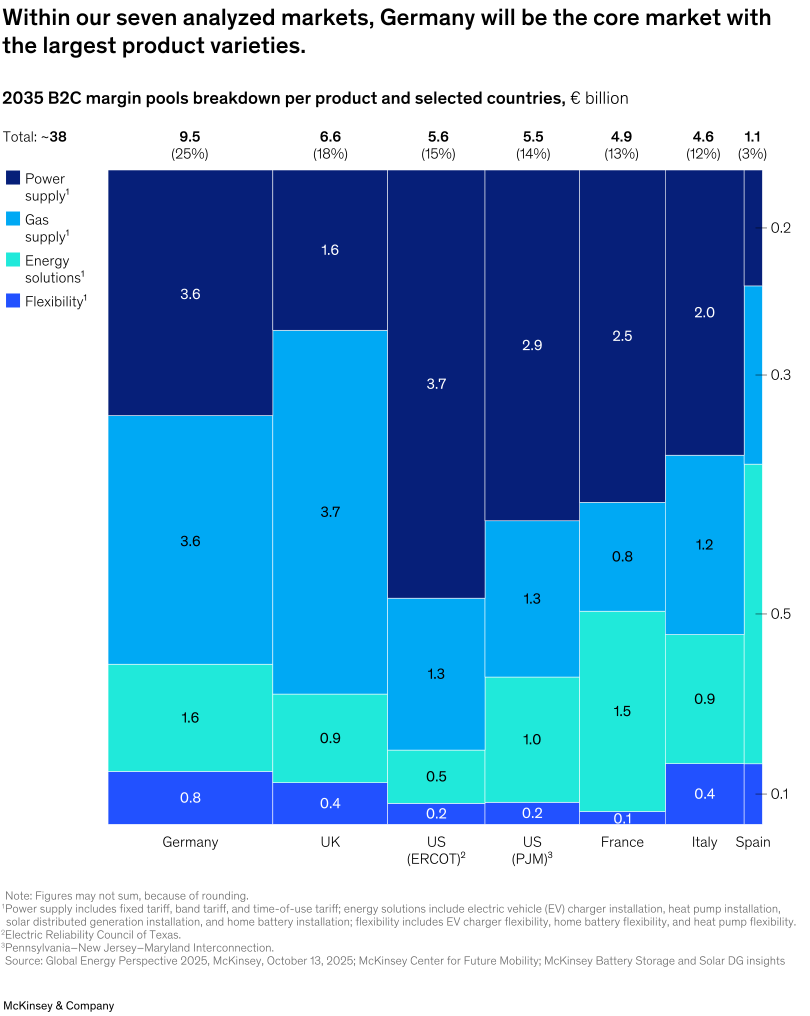
Although energy solutions and flexibility value pools are likely to grow rapidly, we don’t expect them to be able to fill the gap from the decline of power and gas retail supply at this point, given the relatively small base. However, we do predict that the different countries analyzed will see significant variation across product types (Exhibit 3).
Strategic imperatives for B2C energy retailers
Even though we expect an overall decline in the B2C value pool, opportunities remain. A combination of five levers could help B2C energy retailers address their margin challenge.
Drive AI-based operational efficiency and customer satisfaction
AI can deliver significant impact. Since core products are largely undifferentiated, customers can switch providers with ease, and a high share of costs comes from standardized customer interactions.
By assessing more than ten AI use cases across customer service, operations, marketing and sales, corporate functions, and energy management, we estimate that AI could reduce operating costs by 15 to 20 percent.4 In fact, a major UK incumbent retailer cut customer service operations costs by over 50 percent with conversational AI.
Adoption is already underway among leading retailers: Octopus Energy has introduced live assistants to support customer service teams, and ENGIE has implemented AI-driven automated outreach.5
Scale solution-led propositions
Energy retailers are moving beyond single-point tariffs to integrated packages that combine hardware, tariffs, and installation services, addressing customers’ broader needs around electrification, flexibility, and convenience.
Offerings now include EV bundles; home energy ecosystems that integrate solar, battery storage, and heat pumps; and flexibility-as-a-service models that reward customers for shifting demand. E.ON, for example, utilizes the gridX platform for dynamic load management solutions.6 And energy retailers are partnering with equipment manufacturers, such as Ovo’s smart tech bundle featuring tado° thermostats and Iberdrola’s Smart Solar Pack Premium.7
This solution-led evolution builds customer relationships, diversifies revenue streams, and strengthens market positions as households electrify.
Value-driven customer management
Targeting high-value customers can support margin growth. Segmentation enables tailored product portfolios, including flexible offerings for specific segments, while strategic pricing and bundling can be aligned with customer value and behavior. Adopting automated, personalized customer engagement and pricing at scale has been transformative in more mature industries, such as sports retail and hospitality.
Pursue strategic consolidation
Scale is critical to gain new capabilities and resilience in a margin-constrained market. For example, Plenitude, Eni’s retail arm, is set to acquire ACEA Energia by mid-2026, expanding its customer base and reinforcing its competitive position in Italy.8
Those companies that integrate such deals effectively may be best placed to manage costs, diversify, and secure long-term growth.
Boost new capabilities
Building new capabilities enables energy retailers to unlock the four levers described above, including:
- designing and delivering innovative propositions, as well as flexibility solutions
- advanced billing and customer relationship management (CRM) capabilities to support bundled offerings and dynamic tariffs
- data, analytics, and AI to manage prioritized use cases across functions
- partnerships to orchestrate an ecosystem of technology, sales and marketing, and product partners
Retailers could fundamentally transform their operating models to optimize for end-to-end responsibility, continual “test and learn” iteration, and fast decision-making. Some utility companies are already adopting a “universal agent” model, which empowers service agents to quickly solve customer issues.
Growth potential in the B2C margin pool is steadily shifting from traditional power and gas retail supply to energy solutions and flexibility.
That said, the current small scale of these emerging value pools creates a margin value mismatch compared to the declines in the much larger traditional energy retail supply market. Nonetheless, companies can still seize opportunities across all four value pools by adopting a strategic approach to securing new growth.
The authors wish to thank Maxime Audry for his contributions to this blog.
1 Global Energy Perspective 2025, McKinsey, October 13, 2025.
2 Gross margin (in euros) for B2C energy retail products, modeled as described in sidebar, “Our methodology.”
3 The shift to digital channels is particularly evident in countries with higher levels of digital penetration among consumers.
4 Uses McKinsey B2C benchmarking and cost data from small, medium, and large retailers, encompassing incumbents as well as digital attackers.
5 “Octopus Energy briefing to origin investors,” Octopus Energy, July 5, 2024; “Using predictive analytics to promote off-grid solar connectivity,” CIO, October 2025.
6 “Optimizing renewable capacity,” gridX, October 2025.
7 For more information, see ovoenergy.com; “Iberdrola España launches Smart Solar Pack Premium, its new product to get more out of solar self-consumption installations,” Iberdrola España, December 13, 2024.
8 “Acea: BoD approved the binding offer received from Eni Plentitude for the acquisition of the Acea Energia,” Acea, June 24, 2025.