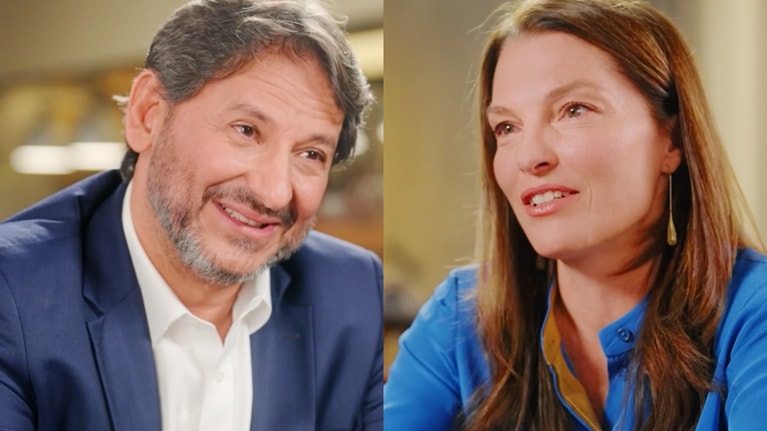
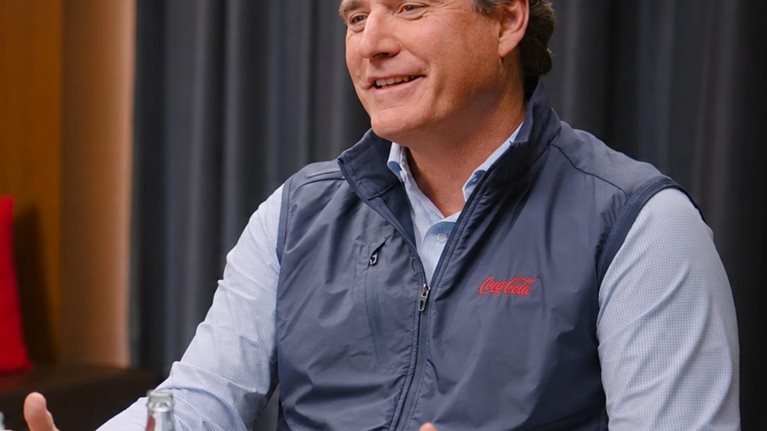
Henrique Braun, CEO of The Coca-Cola Company, has spent three decades seeing the business from different vantage points—across four continents, local markets, and a global system that delivers 2.2 billion servings a day. In this episode of Brilliant Moves: Coffee with CEOs, McKinsey Senior Partner and CEO Excellence coauthor Vik Malhotra sits down with Braun early in his next chapter: leading the company.
In a global business with the scale of Coca-Cola, if we do a little better every day, everywhere, the math works for us.
Their conversation explores a challenge familiar to leaders of enduring institutions: how to build on what has made an organization successful while continuing to innovate. Grounded in three beliefs about Coca-Cola’s strengths, Braun outlines three priorities for moving the company forward: getting even closer to consumers—leveraging insights, innovation, intimacy, and integration—using digital and AI to build on the system’s strengths, and fostering a culture that embraces being constructively discontented.
The following transcript of their conversation has been edited for clarity and length.
Respect the legacy, reimagine the future
Vik Malhotra: One of the defining characteristics of Coca-Cola is your consumer centricity: moving with the tastes, views, and understanding of consumers while remaining very true to who you are. Quintessentially Coca-Cola. How do you balance respecting the legacy of the institution versus innovating and disrupting for the future? It’s a delicate balance as you meet evolving consumer needs.
Henrique Braun: That balance needs to be there. It’s very important to humbly look at what has worked and build that into your plan for the future. But equally important is to be bold in how you connect with the current landscape—with the context, the trends, and new passion points that consumers have today. Going to the FIFA World Cup to watch a match, going to a concert—all of those passion points are important. The passion continues to travel, but how you connect—especially with digitization—is different, and we need to be on top of that agenda.
Vik Malhotra: What are the big topics you’re wrestling with as you think about the company’s next chapter?
Henrique Braun: There are three principles we need to build on as we carry our momentum into this next phase. First, stay even closer to the consumer than ever. Second, bring digital to every intersection we have with consumers, customers, and within the enterprise. And third, nurture a mindset that has served us for a long time. Our former president, Robert Woodruff [1923–55] once said, “The future belongs to the discontented.” It’s a profound message we need to nurture, and I want to carry this into the future.
In a global business with the scale of Coca-Cola, if we do a little better every day, everywhere, the math works for us.
Turning global scale into consumer intimacy
Vik Malhotra: Coca-Cola has over 65,000 employees, and when you include the bottler system, the total is approximately 700,000 people globally. How do you mobilize that many people and that much talent to get close to the consumer? What does that mean in practice?
Henrique Braun: It’s through a shared vision and passion for our brands. There is something unique and magical that permeates everything we do across the portfolio. I’ve had the privilege of working across four continents. You do not need to explain where you work when you say “Coca-Cola.”
I think about our connection with consumers through the four I’s: insights, innovation, intimacy, and integration. We deliver 2.2 billion servings per day in aggregate, globally. If I can turn all these connections into insights, data mine, and then continue to innovate and adapt our brands, we can build intimacy with consumers in the local market. Then the job really becomes integrating all of that.
Vik Malhotra: I love the way the four I’s are linked to each other.
Henrique Braun: Exactly. And we do it through local teams. Coca-Cola is manufactured in Switzerland by Swiss teams, in India by Indians, and in the US by Americans. That local touch is an important element to staying relevant with consumers.
Making digital a superpower
Vik Malhotra: I remember when we spoke a few months ago, you were very clear. This was moments before you became CEO, and you said, “AI is going to be big for Coca-Cola, and it’s going to be a big focus area for me.” If you look at your journey, where do you think Coca-Cola is leading, and where do you think there are further opportunities for you?
Henrique Braun: Digitization is about doing better what we already do best. We can get a greater return on investment from technology, data, and AI by strengthening the capabilities we already do well. When we focused on that under the consumer, customer, and enterprise pillars, we started to see how it could become a superpower.
Today, we serve roughly 33 million customer outlets around the globe, and we are digitizing those relationships as we speak. Take digital ordering. With generative AI, we can be more precise about the next product to offer a customer. Rather than guessing what might be right, with data and AI, we can say, “I think for customer X, this should be the next SKU.”
Vik Malhotra: As CEO, you have a lot of responsibilities. This space is moving so quickly. How do you stay current enough to ask the tough questions of your organization?
Henrique Braun: If you are humble enough to keep that curious mindset and to learn from anybody, then you stay current. That connects to the idea of being constructively discontent. If you are not, you become complacent or obsolete.
Vik Malhotra: Can you explain what you mean by “constructively discontent”? It’s a cultural statement, but how does it practically translate into what people do every day?
Henrique Braun: A fresh example is our FIFA World Cup execution. The World Cup has a deadline, and then it ends. The next day, you need to be ready for the next connection with the consumer. It’s that mindset: While you celebrate something you did very well, you should already be obsessed with what comes next.
While you celebrate something you did very well, you should already be obsessed with what comes next.
Another example: We are the number one customer value generator for top retailers globally. The next question is: What is our out-of-stock rate? It’s never zero. Then we can do a little bit better there, even if it’s a fraction of that number. It’s a mindset of always looking for an opportunity to do better. That’s how the discontent comes to life, but in a constructive way.
Global scale, local judgment
Vik Malhotra: You have worked across four continents and lived in many countries. What have you learned about taking an insight from one market and adapting it somewhere else?
Henrique Braun: A recent example is Sprite + Tea. Influencers started talking about the idea. We launched it in the US and then the China team saw it and said, “Great idea, let’s try this here.” They tested it with consumers, launched it, and it has become a positive example.
Vik Malhotra: Regardless of whether you are building on a success, a failure, or a flat period, you can still do better.
Henrique Braun: You still can do better. But that requires empowerment, accountability, and discipline.
Turning into a force multiplier
Vik Malhotra: Coca-Cola has potentially one of the world’s largest franchise systems. Franchise systems can be fragile, but you’ve made it into a force multiplier. What is the secret sauce?
Henrique Braun: There are three beliefs. First, we are in the best industry. You need leaders at the top of both the company and the bottlers who believe in it, and we have an unprecedented level of alignment.
Second, we believe we have the right brands to win, unrivaled billion-dollar brands. Third, we believe the system itself is an unmatched advantage. The Coca-Cola Company works on the top part of the flywheel, which is brand building and the innovation pipeline, while the bottlers focus on revenue growth management and execution. That positive tension makes both sides better over time.
But the real secret sauce is something I have studied and have a strong conviction about. More than 200 bottlers operate around the world, and the majority are family-rooted businesses. On our side, many executives have dedicated their professional lives to this company.
That passion and desire to continue to grow the business means you go the extra mile. And I really believe that, when you ask about the secret sauce, it’s this.
Where leadership moves the needle
Vik Malhotra: You are CEO now, but you have led major parts of the business within Coca-Cola for years. What is your personal philosophy on leadership? How do you think about talent and your team?
Henrique Braun: That evolves over time. But the higher you are in the organization, the clearer it is to me that the CEO’s number one priority is to pay attention to and care about the people.
There is a tremendous difference when you have leaders aligned and the right people running the work that matters. Matching the right talent to the right priorities creates much greater returns for the organization and its stakeholders. If you make the right choices about people, everything else moves. That is where I spend most of my time.
We try to build a culture that stays humble and curious while giving people permission to try new things, with empowerment and accountability. The goal is for people to make their contribution an inflection point for the organization. I am a big believer that talent and people are what move the needle in this business.
The values of this company are untouchable. We want to refresh the world, and we want to make a difference.
Vik Malhotra: As you look back, what experiences or lessons have guided you through your professional journey?
Henrique Braun: It starts with family. My parents gave us everything we needed to grow, and education was the number one priority. Sports also taught me humility because you do not win all the time. When you lose, you learn from it, and you want to do better next time.
It is about having the right foundation, hunger for more, and ambition to do better. I wanted to go and see the world.
Lightning round
Vik Malhotra: Coca-Cola has appeared in countless movies and moments in pop culture. Do you have a favorite moment?
Henrique Braun: The Devil Wears Prada 2 was a big thing with Diet Coke. If I go back to my roots, do you remember “Mean” Joe Greene? In the commercial, after the game, he would get frustrated, go to the locker room, and a kid would go and hand him a Coca-Cola. In Brazil, they did it with Zico [football star Arthur Antunes Coimbra]. I was a big fan of Flamengo and Zico’s team. And I just wanted to be that kid.
Vik Malhotra: You and I are both big football fans. The FIFA World Cup created a shared passion, but much of the energy is rooted in local clubs. What’s your takeaway as a football fan—are there lessons to be learned in the way soccer is run or has evolved?
Henrique Braun: It connects directly to what I was talking about with intimacy. It starts with your club, your city, and your passion for football. Then, there are rivalries in the cities. When the national team plays, you all become one. The point is the passion, and that passion is the same.
Vik Malhotra: You started at Coca-Cola as an intern. What is your day-one advice?
Henrique Braun: You have no idea what can happen. On day one, be yourself. One of the biggest things about this company is that I never had to pretend to be someone else or hide where I came from or what I believed. It is a place for everybody.
But it is up to you to show how hungry, collaborative, and curious you are. You can go anywhere. I think I am proof of that.
Vik Malhotra: Henrique, thank you. This has been a real privilege and a pleasure. What a fun conversation.
Henrique Braun: Thank you. It is always great to be with you. And we need to watch a soccer match together.
Vik Malhotra: Absolutely.
Consumer Packaged Goods
See more in this series