The global chemical sector is navigating a period of structural change. Three years of reduced demand and intensifying competition have reshaped market dynamics across value chains. While some in the industry expect the era of historical overperformance to return, many players still do not see momentum building for a sectorwide recovery. Signals suggest that the industry may lag behind the broader market for years to come.
This outlook comes even though valuations across the chemical industry have rebounded over the past 12 months—albeit at a pace below the broader market. The 9 percent annualized TSR increase during that period partly corrects earlier overreactions and partly reflects renewed confidence in the sector’s long-term fundamentals. But structural overcapacity in many core chemical supply chains, set against a modest demand outlook, paints a more sobering picture of sustained pressure on margins. To succeed in today’s chemical industry, companies will likely need to combine near-term discipline with long-term reinvention, rethinking cost structures, portfolios, and innovation strategies.
Our analysis draws from our proprietary database tracking nearly 700 chemical companies, reflecting the latest arrivals and departures from the industry. This article explores the state of the chemical industry, the forces underlying today’s trends, and the opportunities that could help players emerge stronger in the next phase of the cycle.
The chemical industry continues to lag behind the broader market
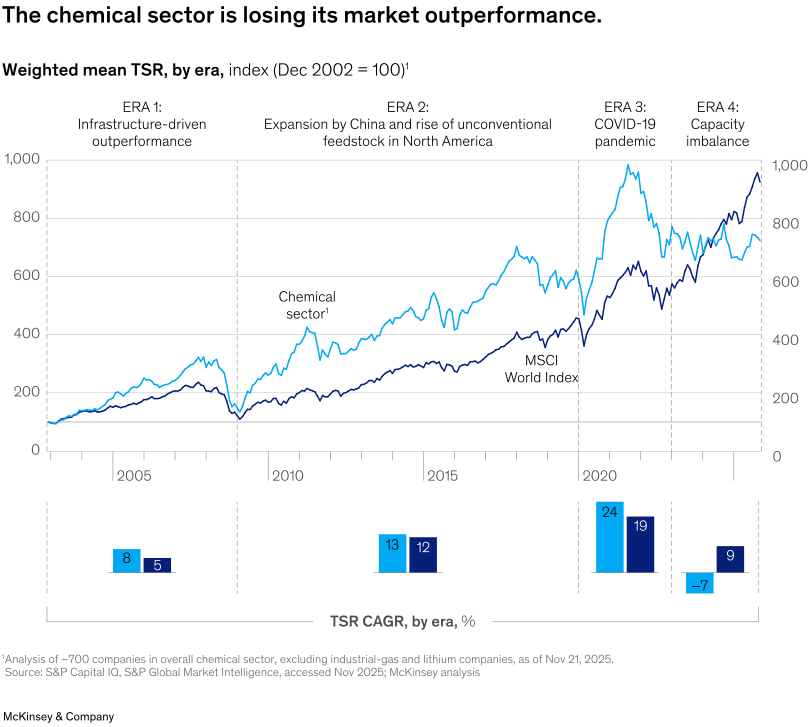
From 2004 to 2023, the chemical sector consistently outperformed the broader global equity markets (as defined by the MSCI World Index), but in the past three years, the sector has effectively undone 20 years of outsized performance (Exhibit 1). One might imagine that the recent downward shift means the chemical industry is simply reverting to the mean, as outliers often do, entering a period of returns closer to the average cost of capital. But there are many potential structural explanations for this trend, including short-term effects such as supply chain disruptions and destocking and longer-term structural dynamics creating a sustained supply–demand imbalance.
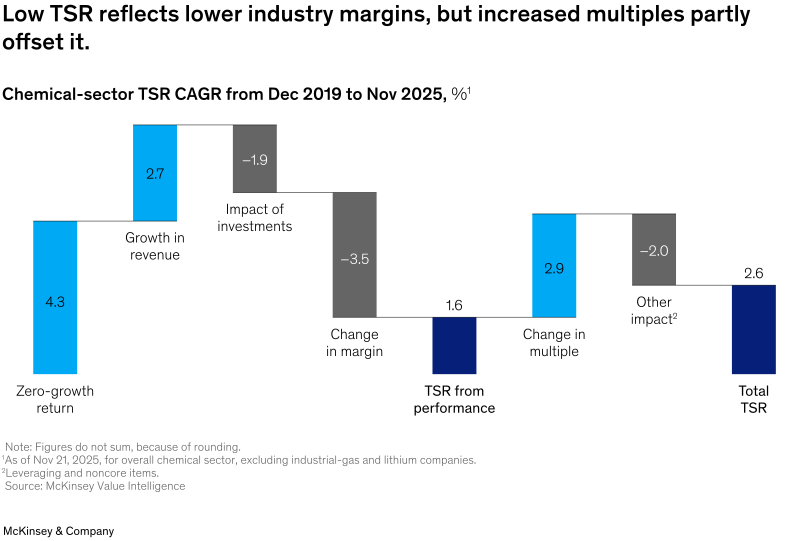
Our TSR analysis points to the factors contributing to recent industry performance: Over the past five years, the chemical industry has grown, but its growth has been more than offset by heavy capital investments and decreasing margins (likely due to overcapacity), resulting in a TSR from performance alone of 1.6 percent per year (Exhibit 2). This low TSR is partially offset by multiple expansion, reflecting the market’s expectation that cyclical industries will recover. Together, these elements result in a total TSR of 2.6 percent per year over the same period.
Yet, as we noted last year, and as current signals increasingly suggest, the path ahead may not follow historical norms.
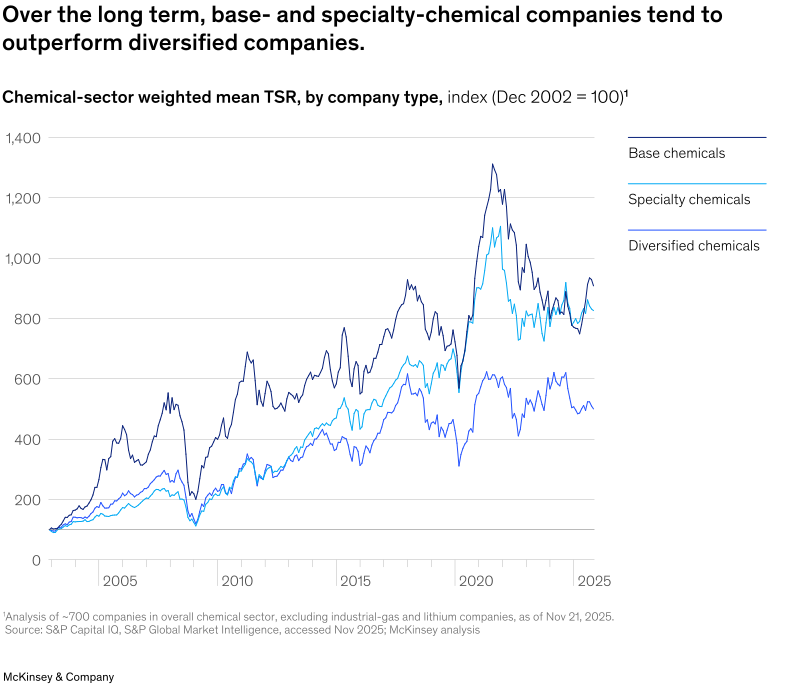
There is a widely held belief in the chemical industry that specialty and base chemicals make money, whereas diversified companies underperform. Exhibit 3 appears to prove this point. Over the long term, there is no statistically significant difference between base and specialty chemicals’ TSR performance (TSR compound annual growth rates of 10.1 percent and 9.7 percent, respectively, since 2003), while diversified companies as a whole perform worse over the same period (7.3 percent).
A closer look, however, shows a more nuanced reality. Base chemicals’ high performance was concentrated in a few distinct periods: 2003–07, 2007–08, 2009–11, 2016–18, and 2020–22. Each of these periods was associated with specific industry and macro events such as Middle Eastern state-owned enterprises outperforming in the early 2000s and the shale gas boom in the United States in the mid-2010s.
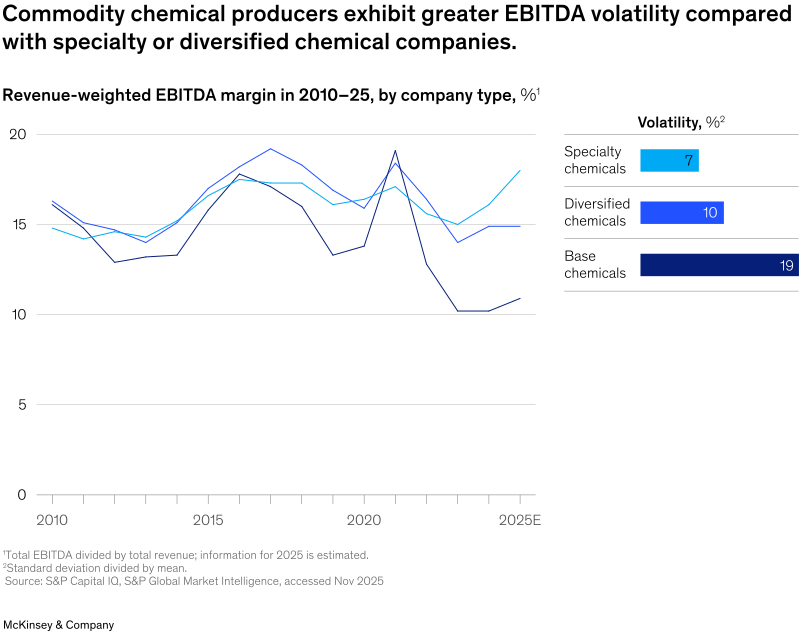
While the shareholder returns of base and specialty chemical companies are close over the long term, the earnings volatility of specialty chemical companies is significantly lower than that of base chemicals (Exhibit 4). Specialties’ TSR typically comes from consistent top-line growth, while base chemicals show more volatile, cyclical earnings profiles because they are more exposed to the fundamental supply–demand dynamics that are typical of commodity industries.
TSR underperformance in diversified companies is not a given, despite the observed trends; some diversified companies can deliver strong TSR with best-in-class performance in both the specialty and commodity parts of their portfolios.
Analysts continue to predict a recovery that hasn’t come
Our observations of the chemical industry suggest structural challenges likely underlie the industry’s underperformance. Demand remains subdued across key value chains. Capacity additions continue to outpace consumption growth in several markets, putting returns at risk. China has accelerated investment in recent years in many chains including polyethylene, polyurethane, polystyrene, and polyols, reshaping global supply–demand balances. Meanwhile, Europe’s chemical producers face a prolonged slowdown driven by energy cost disadvantages and weak industrial output. Many specialty chemicals are showing signs of commoditization as technologies diffuse and differentiation narrows. These shifts are challenging established business models and eroding the premium once associated with innovation-led portfolios.
That said, some indicators point to a light at the end of the tunnel for the industry: Margins are moving toward breakeven in Asia in certain supply chains; rationalizations, through closure or consolidation of uncompetitive assets, are accelerating; and companies are pausing some of the most economically challenging capacity additions. While there has been government action to rationalize older and higher-cost capacity across Asia, these efforts have not yet meaningfully changed major supply–demand balances.
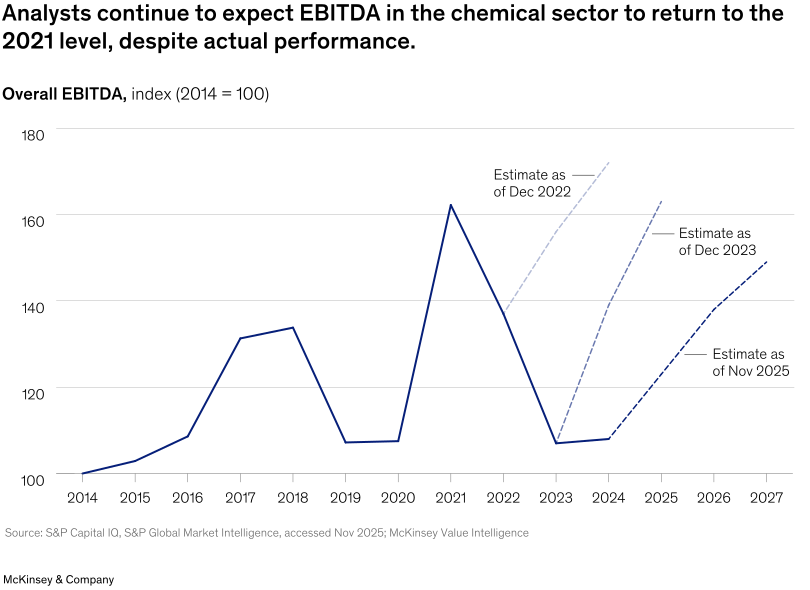
These mixed messages are evident in our finding that, while analysts have expected an earnings rebound over the past several years, actual earnings growth has not met expectations (Exhibit 5). As a result, many investors and market participants are taking a “wait and see” attitude toward the timing of recovery.
How companies can chart a path forward
Today’s environment presents challenging fundamentals alongside high market expectations. Growth and improved profitability are already built into valuations, and the pathway to recovery is unclear. Management teams will likely have to run faster just to maintain their position. Last year, we called for bold action and innovation. Twelve months later, this message is even more pertinent. Companies’ choices today could dictate their positioning for decades. Four strategies could help guide these choices.
Consider a radical rethink on cost
Three years into this changed market environment, many companies have already begun transformation and restructuring efforts to maximize productivity, with varying scope and ambition. A few have achieved breakthroughs in performance, redefining their competitive positions, while others have made more incremental gains.
Companies could benefit from reassessing their full performance potential across their portfolios. This means taking a granular, business-by-business, and site-by-site view to evaluate whether their maximum potential would consistently outperform peers and generate returns above the cost of capital.
Achieving this level of performance in most cases would not be possible without structural cost reduction. In the current environment, implementing a zero-based cost approach—challenging every assumption—is not merely an efficiency exercise; it is a matter of long-term resilience and survival. Moving up a quartile in a given benchmark will not be a high enough goal for many companies. The question going forward will be: What is the cost structure we need to build a foundation for sustained competitiveness?
Apply innovative and active asset and footprint management
Rationalizing capacity remains essential to restoring balance. While capacity adjustments often strengthen the overall industry structure, they rarely translate into immediate value creation for individual companies. The scale of recent capacity additions across major value chains underscores the magnitude of the challenge: Achieving equilibrium would require levels of consolidation and restructuring not seen in decades. For example, our analysis shows that bringing global ethylene markets into balance would require pausing all existing announced capacity additions worldwide and rationalizing 20 million metric tons per annum, which is as much capacity as whole regions produce today.
Against this backdrop, management teams should rigorously assess what level of cost and performance is required for each asset or business line to remain viable. Leading companies are already finding creative ways to unlock value from underperforming operations, often through innovative deal structures or partnerships. In some cases, this involves engaging governments, downstream customers, or ecosystem partners to jointly invest in the sustainable, long-term competitiveness of critical industrial bases.
Looking ahead, companies might need to take a long-term view of how to reallocate talent, resources, and capital toward more profitable segments. Many are learning that delaying difficult portfolio decisions can impose high social, political, and financial costs, particularly when combined with an aging workforce and emerging skill gaps. Building a proactive, forward-looking asset and footprint strategy could be key to positioning for sustainable growth in the next cycle.
Maintain investment in commercial, R&D, and strategic capital with a through-cycle view
A common refrain among chemical industry executives is the pressure to cut discretionary spending when the market enters a downturn. Too often, this translates into pausing capital projects, scaling back development programs, and reducing investments in application development and commercial capabilities—all of which underpin long-term competitiveness. While cyclical discipline is important, the best-performing companies manage costs continuously, not just reactively.
Leading players adopt a through-cycle mindset—maintaining or even accelerating high-impact investments during industry troughs. They continue to fund select R&D initiatives, critical capital projects, and commercial excellence programs, including attracting and retaining top customer-facing talent. By doing so, these companies position themselves to emerge from downturns with stronger capabilities, deeper customer relationships, and a more resilient cost base.
Accelerate the use of digital tools (including AI) to drive productivity
A major source of investment is of course the use of AI. Last year, we outlined how gen AI is driving value across the entire business for leading chemical companies. Today we are seeing AI’s productivity impact growing in all areas of the industry:
- R&D. AI is accelerating everything from molecule discovery to formulation optimization—doubling the rates of these in some cases—and accelerating knowledge extraction from 15 million patents.
- Commercial. Gen AI opens completely new avenues to growth through lead generation and identification of new markets and cross-sell opportunities. In certain applications, use of gen AI can result in a two- to threefold increase in the sales pipeline.
- Cost and operations. AI use cases can reduce costs and increase efficiency by optimizing processes such as predictive maintenance, energy consumption, and supply chain management.
With enormous growth over the past 12 months, leading companies are now using hundreds—or even thousands—of AI agents to automate workflows and apply generative solutions. As an example, a leading chemical player fundamentally revamped its supplier qualification process, including evaluating environmental, social, and governance compliance, financial performance, and market intelligence. For those who have not yet adopted AI tools, catching up will require a rapid and decisive digital transformation; AI-enabled performance is quickly becoming the new baseline.
For companies that are in a strong position, lean forward on mergers and acquisitions
In periods of uncertainty, most companies prioritize internal stability and operational discipline over pursuing acquisitions; the demands of integration and increased leverage often deter deal activity. Furthermore, today’s chemical market has many companies facing lower valuations and limited cash flow. Yet, for chemical companies with the right balance sheets, strategic M&A can serve as a powerful accelerant for transformation—unlocking new capabilities, streamlining portfolios, and accelerating growth even amid challenging market conditions. Four possible M&A strategies stand out in the chemical sector:
- Divest nonstrategic assets to streamline operations and focus on core areas. This is especially attractive where capital markets may be more bullish on valuations than your company’s internal long-term view.
- Use an M&A event as a catalyst for a broader operating model transformation. M&A can be a powerful tool to add new capabilities, fix dated systems and processes, and reset the cost base.
- Create value through cost-driven M&A by building scale for operations or procurement, or by better leveraging the fixed cost base.
- Enter attractive pockets where significant value can be captured and where your company has an advantage.
Despite challenges, M&A can be a powerful value creation tool for strong owners with a clear thesis. Many private equity firms are preparing to sell portfolio companies, and many strategic players may need proceeds from divestments to improve their capital structure, creating opportunities for sizeable risk-adjusted returns.
In a market that will likely remain out of equilibrium for years, leadership teams have a rare chance to reset their organizations for sustained competitiveness. Standing still is not an option. The path forward will require bold choices, innovation, full adoption of digital and AI tools, and a willingness to adapt to a rapidly changing landscape.