With ships transporting more than 80 percent of the world’s traded goods by sea1, a thriving maritime industry is essential to fostering economic growth and shoring up national security. Yet for decades, the United States has grappled with significant shortages in maritime capacity. Shipyards, once the backbone of flourishing communities, now face myriad challenges—from talent gaps to outdated operating models—that threaten their ability to grow and thrive. The United States has gone from building 5.0 percent of the world’s ocean-going commercial ships in the 1970s to building about 0.2 percent today, as measured by gross tonnage. Simultaneously, the commercial shipbuilding industries in other countries, such as China, Japan, and South Korea, have grown significantly. For defense, which accounts for almost all US shipbuilding, the country is significantly behind in producing the volume of ships and submarines that the Department of Defense requires.2 Currently, China makes more than three warships for every one manufactured in the United States.3
Strengthening the nation’s shipbuilding capabilities is vital to meet growing domestic and international demand over the next 30 years, which will increase significantly, even by conservative estimates. But the maritime ecosystem faces critical talent gaps that are likely to intensify and hamper the sector’s growth if left unaddressed. The US government has acknowledged these gaps and committed to strengthening the maritime labor force, partly by re-assessing current nautical education programs and investigating the creation of new maritime academies.4 Such efforts will likely improve the talent pool, but shipyard leaders, maritime industry organizations, and educational institutions must also devise more transformative strategies for building the future maritime workforce. While some recent initiatives have promoted private investment in the production of vessels and might attract workers to shipbuilding, they are not focused on broadly strengthening the talent pipeline.
Based on our analysis, shipbuilding stakeholders must focus on five critical actions as they try to improve the maritime talent pool: strengthening the value proposition for shipbuilding careers, bolstering the talent pipeline from educational institutions to shipyards, encouraging better skill building through educational partnerships, modernizing talent management, and sustaining success by improving ROI for all stakeholders.
The shipyard dilemma
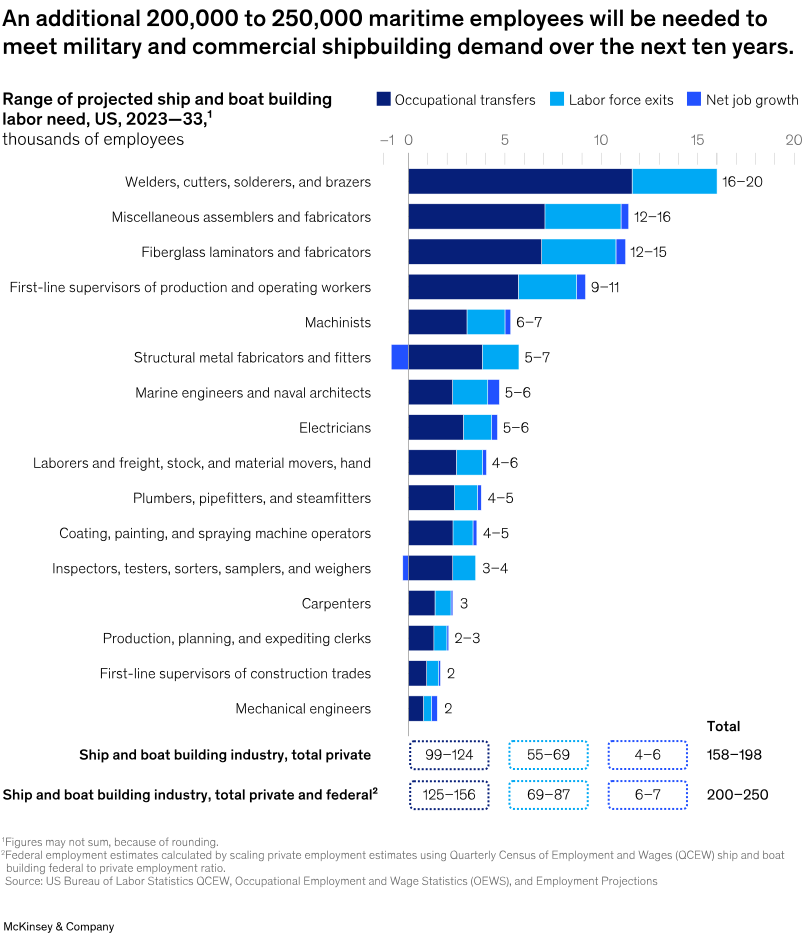
According to the US Department of Labor, the shipbuilding industry may require about 200,000 to 250,000 additional maritime workers in critical occupations, such as welding, soldering, and front-line management, to satisfy demand over the next decade. If demand for ships increases, the labor gap will be even wider (Exhibit 1).
Shipyards often struggle to fill critical roles because of five key workforce trends:
- Competition from other fields. Shipyards increasingly recruit skilled tradespeople, such as electricians, fabricators, and pipefitters, as well as front-line managers and white-collar workers, including engineers. Companies in many adjacent sectors are also trying to recruit such employees and may offer more lucrative compensation, greater flexibility, and desirable benefits. Many recent graduates also gravitate to roles in construction or the energy sector because they perceive shipyard work to be more physically demanding, or because it may offer slower wage growth early in their careers.
- Shortages of skilled workers. For employers across US production hubs, finding enough skilled and semiskilled workers is challenging. Younger employees are particularly challenging to recruit because they are drawn to urban centers5 and are less satisfied with frontline work.6 In addition, the persistent stigma surrounding skilled trades can dissuade workers from choosing vocational careers.7 Clearances and specific qualifications (such as for nuclear shipbuilding) can further limit the talent pool.
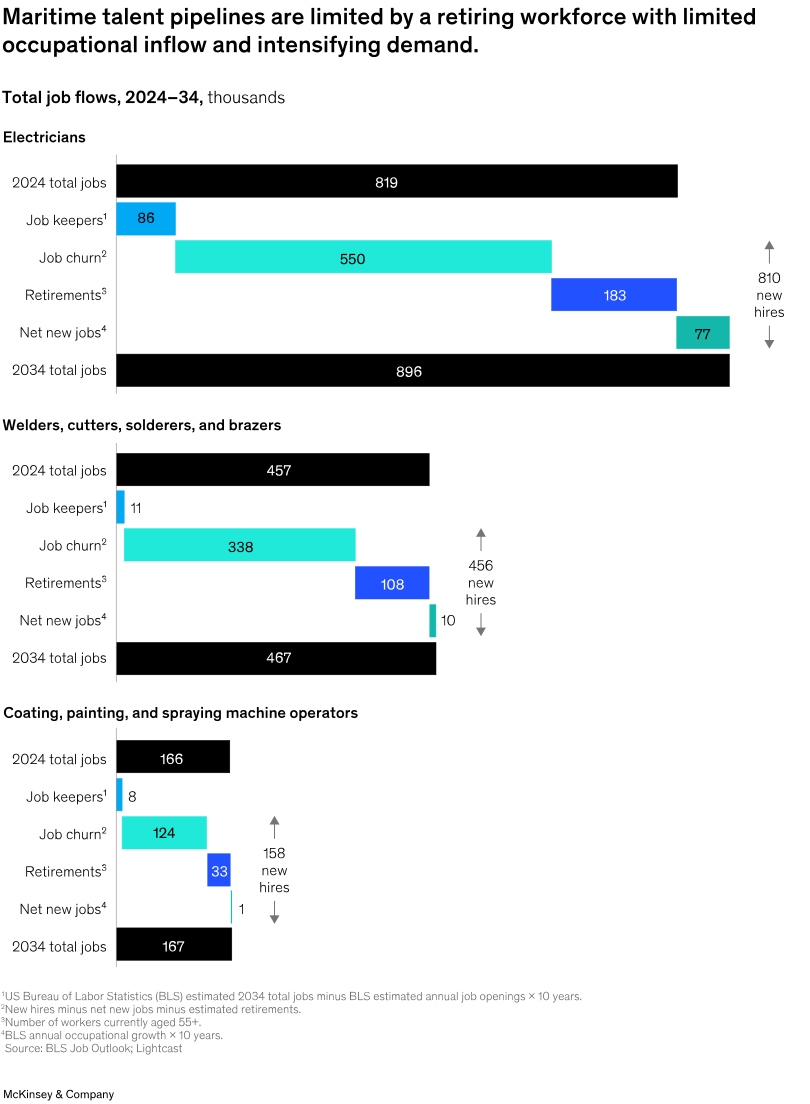
- High rates of churn. Churn rates in the skilled trades are high.8 Within shipbuilding, it is particularly difficult to retain welders, electricians, and those operating coating, painting, and spraying machines. This trend can weaken the talent pool, especially if many employees leave during the first year of employment, because skilled tradespeople require extended training to achieve proficiency. Many shipyards serve as talent accelerators in which entry-level workers gain experience, but they often lose their trained staff to other fields, such as manufacturing and construction.
- An aging workforce. The US maritime industry includes a high share of older workers, with 27 percent aged 55 years or more.9 When skilled, experienced workers retire, few younger workers have the specialized competencies needed to take their place, leaving gaps in institutional knowledge.
- Slow technology adoption. While there are signs of recent improvement, many shipyards still lack the capability and cultural appetite to incorporate and scale the technological solutions that attract tech-savvy younger workers. These include AI analytics tools, which can help leaders quickly interpret shipyard data to improve planning and scheduling, and advanced robotics, which could allow companies to automate repetitive tasks, such as welding and painting. Accelerating technology adoption has the potential to be a win-win by simultaneously improving productivity and bolstering talent attraction.
Exhibit 2 shows the projected impact of job churn and retirements on three critical roles.
Gaps in the maritime education pipeline
Across the United States, maritime organizations and educational institutions have long provided future nautical workers, including the engineers, naval architects, and shipyard managers required to plan, supervise, and perform complex shipbuilding work. Public schools that offer maritime education, and that do not always require military service post-graduation, include the US Merchant Marine Academy (USMMA),10 which is run by the federal government, and six state-run institutions. Several four-year colleges also offer naval architecture and maritime engineering programs, while some two-year schools and private organizations have programs suitable for potential shipyard employees. (See sidebar, “Educating the future maritime workforce.”)
While many training programs and educational institutions have a distinguished history of preparing students for maritime careers, they also face several pressing challenges, including long-term declines in enrollment. At the six state maritime academies, enrollment fell by 30 to 35 percent over the past decade.11 Only about 1,100 students graduated from the USMMA or state-run maritime academies in 2025.12
At its current level, the scale of four-year maritime education is insufficient to provide the talent needed for large projects, such as those for destroyers, carriers, and submarines, which require thousands of new hires each year. If labor demand remains at the same level over the next decade, the seven maritime academies would have to double the number of graduates to satisfy it. A 50 percent rise in demand would necessitate a three-fold increase in graduates, and a doubling of demand would require a four-fold increase.
The talent gap may be even wider for certain roles. For instance, the US Department of Labor estimates that about 600 jobs for naval architects and marine engineers will open annually until 2034.13 Of the approximately 200 people graduating from USMMA per year, however, fewer than half specialize in naval architecture and marine engineering and then enter shipbuilding careers. Other institutions that offer naval architecture and marine engineering programs produce only dozens of graduates annually, rather than hundreds.
Training programs for skilled trades also produce an insufficient number of workers, partly because of high attrition rates. Similarly, two-year community colleges get many applicants but the National Student Clearinghouse Research Center reports that almost half of students drop out within one year.14 Unless these schools can increase retention, they are unlikely to see a large uptick in the number of graduates.
In addition to their insufficient scale, some maritime educational programs are not building the most critical skills. Frontline trade workers often need significant retraining because their courses or programs did not emphasize the actual skills and technology used in shipyards. This may occur because vessels used for training are often older and can only be replaced at great expense. In other cases, training programs are slow to update their curricula to reflect advances in technology. Several shipyards are moving toward digital shipbuilding and pursuing new technologies, such as computer-aided design and computer-aided manufacturing, robotics, and additive manufacturing. Training and apprenticeship programs that include these sophisticated tools better prepare workers for shipyards, especially if they show how these solutions can be applied to traditional shipbuilding methods.
Forging the future of shipbuilding
Acting on the following five key recommendations could help maritime industry leaders expand recruitment, strengthen education and training, and appeal to future generations. Some of these actions fall to educational leaders, while others are primarily the domain of employers, unions, or other industry organizations. Many are designed to create stronger connections between educational institutions and shipyards to ensure that schools and training programs produce graduates with relevant skills.
1. Strengthen the value proposition for shipbuilding careers
Skilled trades are often perceived as tough, physical jobs, but they are increasingly enabling leading-edge technologies, including robotics, automation, and AI.15 All shipbuilding stakeholders—educational institutions, employers, or industry organizations—can highlight the importance of the skilled trades by implementing national recruitment campaigns that show how such professions can lead to modern, technology-focused, well-paid shipbuilding careers. For instance, the Shipbuilders Council of America’s “We Stand Ready” campaign features video footage from US shipyards nationwide, focusing on the dedicated shipyard workers who construct and repair vessels.16
With many maritime employees nearing retirement age, shipyards will also benefit by developing recruitment strategies customized for Gen Z—people aged about 28 or younger. In particular, shipyards should emphasize how they offer challenging, interesting careers with opportunities to build connections and advance. According to a recent McKinsey survey of US adults, 84 percent of Gen Z respondents said they would be more interested in public-sector employment if it provided day-to-day enjoyment in work, and this sentiment likely holds true for private-sector jobs. Other workplace priorities for Gen Z included the ability to develop a network of colleagues and the opportunity to gain specialized knowledge and expertise that can be applied in future roles.
In another recent survey of 1,000 US-based 18-to-20-year-olds, 74 percent believed there was a stigma associated with choosing vocational school over a traditional four-year university.17 In addition, 79 percent of respondents said their parents wanted them to attend college and only 5 percent said the same about vocational school. To counter such negative perceptions, shipyard leaders and industry organizations could emphasize how skilled tradespeople are valued at their organizations during recruitment efforts and advertising campaigns.
One important caveat: Several major US shipyards are located far away from large cities with dense labor pools that tend to attract many job applicants. This could hamper recruitment efforts, especially since companies in other industries may be in more desirable or populated locations. To increase their appeal to applicants, shipyards could provide targeted incentives such as lump-sum payments to reimburse moving costs. A recent survey of 558 decision-makers in more than 20 industries found that most companies are boosting their investments in talent mobility, with 63 percent expecting higher relocation budgets in 2025 and more than half reporting an annual increase in employee relocations.18
2. Bolster the talent pipeline from educational institutions to shipyards
Given the magnitude of the talent gap, novel approaches to finding new labor are necessary. Both shipyards and the federal government could create service and conservation corps programs designed to place college graduates into formal careers. A 2025 Brookings study found that such programs placed many participants in infrastructure roles, including maintenance, construction, and carpentry.19
Maritime educational institutions might help increase the talent pool by incentivizing students to major in certain subjects. Some colleges have found success with such initiatives for other majors. These include the University of Massachusetts Lowell, which provides scholarships to rising juniors who transition from mechanical engineering to industrial engineering.20 Shipyards could also help funnel workers to new roles by being less stringent about credentials as long as they ensure that safety and quality standards are always met. For instance, they could place non-engineering graduates into junior engineering roles and then offer them a defined career path and robust, targeted professional development.
Finally, shipyards and industry organizations should think harder about who they recruit, not just how they recruit, and draw talent from nontraditional sources. To attract more women to male-dominated fields such as plumbing, welding, and carpentry, shipyards could offer special training programs and apprenticeships. Many organizations outside the maritime sector have such programs, such as the free “Women Can Weld” course provided by the Connecticut State Building Trades Training Institute. Shipyards could also develop campaigns targeted at other groups that may represent an untapped source of talent, such as returning veterans, people in manufacturing or other adjacent fields that are reducing staff because of automation, or older adults seeking new careers.
3. Encourage better skill building through educational partnerships
Increasing the number of potential employees is a critical step, but it will not fully resolve the talent gap. Shipbuilders also need workers who have the right skills, and one way to obtain such quality employees involves forming close partnerships with educational institutions or other groups that are willing to offer relevant coursework.
Such arrangements are common in many industries. For instance, a global automaker has formed partnerships with dealerships, community colleges, and vocational schools across the United States to train entry-level workers for automotive careers. The program has produced at least 23,000 certified technicians, with most securing jobs in car dealerships after graduation.21
Although shipyards have been slower to undertake educational partnerships than companies in many sectors, a few have already created strong programs. The Maine Maritime Academy and the Portsmouth Naval Shipyard established an education partnership agreement, which includes paid training, to strengthen the workforce-development pipeline. The Hampton Roads Workforce Council has established an annual awards event that convenes both employers and educators to celebrate innovative advancements in strengthening the maritime talent pipeline.22
Shipyards that want to accelerate the adoption of leading-edge technological solutions might also benefit from partnerships with educational institutions that provide training on digital tools, including those for AI. Beyond helping workers advance, such training could help shipyards increase both automation and productivity.
4. Modernize talent management
Shipyards must revise their recruiting strategies and adopt more modern practices to reach tech-savvy Gen Z members. By leveraging cutting-edge hiring technology and job platforms, they can create a targeted, digital-first strategy to reach young professionals. Shortening recruitment timelines may also help attract younger workers, who often prefer quick decisions during the hiring process.
To reduce new-hire churn, shipyards should offer realistic previews of shipyard roles. Job shadowing initiatives, pre-enrollment site visits, and “Day in the Life of” overviews (including employee video testimonials) can reduce early attrition that might arise from misunderstanding the demanding nature of the work. The National Career Development Association found in 2022 that more than 80 percent of people in job-shadowing programs reported increased confidence about their career decisions.23
Across the entire talent lifecycle, shipyards can use advanced analytics to enhance their efforts, as one leading shipbuilder has done to find new talent pools, streamline candidate attraction and selection, and mitigate attrition risk.24 The analytics revealed which geographies and trade schools historically delivered the most candidates to the shipbuilder, as well as the sources of the best talent (for instance, schools that were likely to provide employees who stayed past the first year and were most productive).
5. Sustain success by improving ROI for all stakeholders
The long-term viability of these recommendations will depend on whether a real ROI is delivered to the employers and students who invest in maritime training and education.
For students, the ROI equation is simple: they weigh tuition, fees, and the opportunity cost of being in school against the benefits of a potential maritime career. This perspective underscores the need for a strong value proposition and career ladders that are clearly worth the investment. Training providers—educational institutions and trade or industry organizations—can enhance the value proposition by forging stronger connections with employers that involve work-based learning opportunities and more direct recruitment pipelines.
Educational institutions and industry organizations that employ innovative cost-reduction strategies can also generate financial benefits for both for themselves and their students, improving ROI. For example, organizations could jointly fund shared maritime training centers, which could lessen their financial burden and potentially allow them to offer free or discounted tuition.
Shared investments in smart technology, such as augmented reality (AR) and virtual reality (VR), also have widespread ROI benefits. In collaboration with federal and state agencies, one major shipyard recently opened a VR welding lab that offers practical, interactive training for crucial skills and introduces emerging technologies.25 In addition to helping students become more desirable employees, the partnership reduced the shipyard’s investment burden.
Finally, some employers also improve ROI for current and potential employees by offering free or low-cost training programs. To maximize their ROI on such initiatives, employers must ensure that many graduates become productive, long-term employees. Shipyards that implement a data-driven benefits approach—for instance, by analyzing employee feedback on training programs and enrollment rates—can better identify and prioritize effective training programs while also boosting retention.
Reversing the decades-long decline in US shipbuilding capacity requires a shared commitment to rebuilding the nation’s maritime talent engine. The five areas of action outlined above offer leaders a practical blueprint for closing today’s talent gap and confronting future growth scenarios with clarity and resolve. Progress will not result from any single organization or initiative; rather, it will emerge from many stakeholders choosing—consistently and intentionally—to invest in people and their productivity. In this way, leaders can define a compelling future for an industry that remains essential to US economic strength and national security.