








New entrants in the US defense sector have captured investor attention—and money.
Even though traditional defense contractors continue to capture most of the US government’s prime obligations (sales to prime contractors), disruptors are achieving significantly higher valuations (exhibit). These companies have shown that they can not only meet customer demand for software-enabled solutions but also generate commercial margins in a contracting environment. Investors are taking notice, putting the weight of the market behind these new entrants.
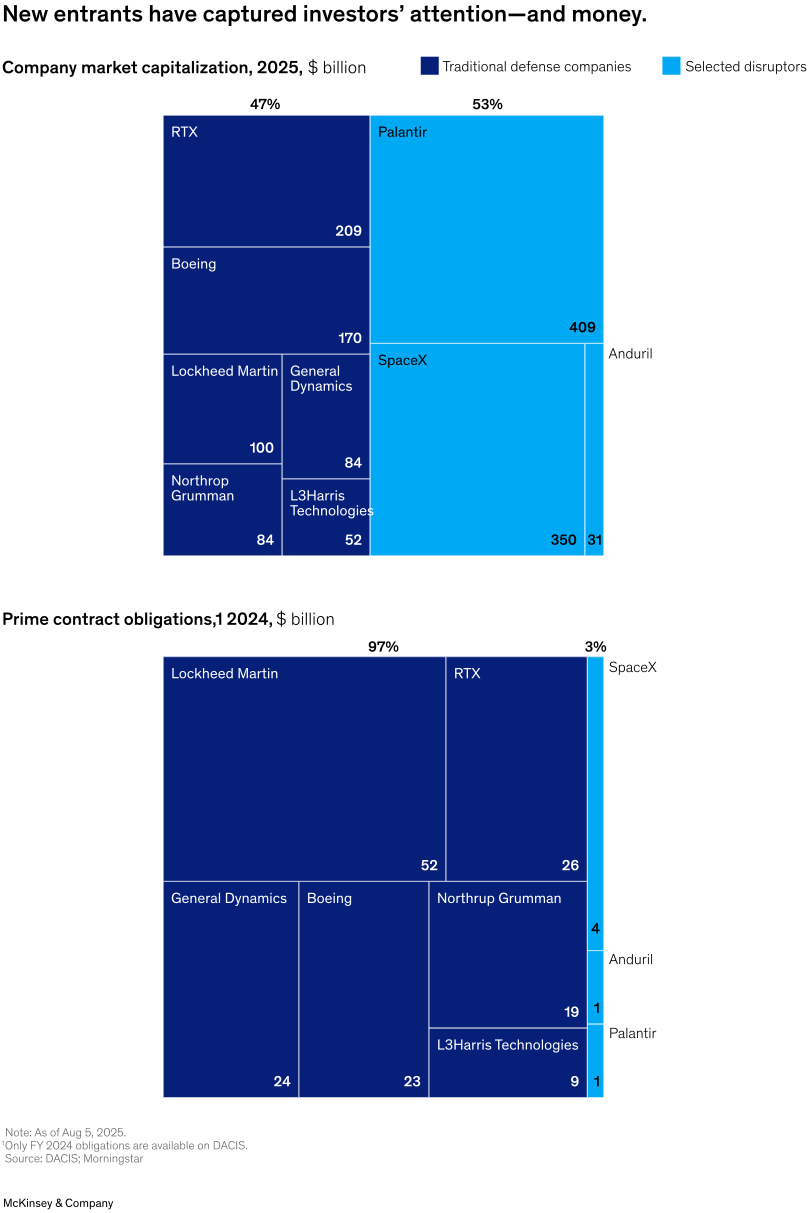
As investors are signaling, the future of the defense industry hinges on adaptability. Defense contractors—both traditional and disruptors—will need to be flexible to address changes in customer buying behavior and the evolving threat environment. Traditional contractors will also need to increase their focus on software capabilities: From 2023 to 2026 alone, the US Department of Defense increased R&D funding for software and digital technology pilot programs by 218 percent.
As DOD policy pushes for new sources of innovation and more “off the shelf” technological solutions, the national security innovation base will keep evolving. In this environment, contractors will need to adapt, or they risk falling further behind.
Kevin Sachs is a senior partner in McKinsey’s Denver office, Ryan Brukardt is a senior partner in the Miami office; Varun Marya is a senior partner in the Bay Area office, where Dale Swartz is a partner, Karl Hujsak is an associate partner, and Katherine Ottenbreit is a consultant; Adam Tappella is an associate partner in the St. Louis office; Christian Rodriguez is an associate partner in the Washington, DC, office; and Jordan Favret is a consultant in the New York office.