Wings of change needed

The regional aviation segment, which handles short-haul flights and uses smaller aircraft, provides 11 percent of total commercial aviation seats. Despite its significance, regional aviation has lagged behind in postpandemic recovery compared with other parts of the industry, say Partner Daniel Riefer and coauthors. Small narrowbody jets have fully recovered, with 19 percent more flights in 2025 than in 2019, but service using smaller regional aircraft and turboprops have had the slowest recovery, possibly due to pilot shortages, aging fleets, and limited manufacturer investment. Despite uneven recovery, emerging technologies, new business models, and evolving network strategies could reinforce the role of regional aviation within the global aviation ecosystem.
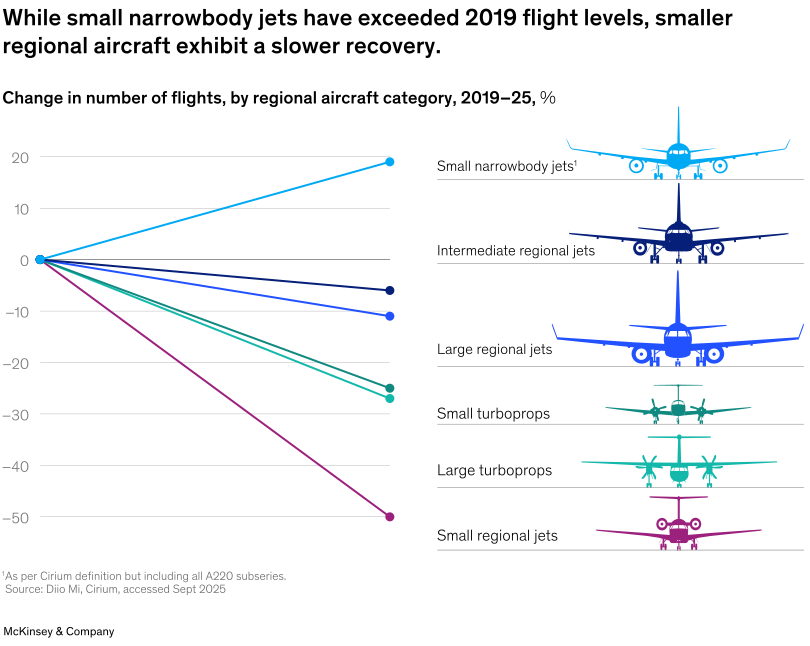
While small narrowbody jets have exceeded 2019 flight levels, smaller regional aircraft exhibit a slower recovery.
Image description: A line graph illustrates the percentage change in the number of flights by regional aircraft category from 2019 to 2025. The chart compares 6 categories: small turboprops, large turboprops, small regional jets, intermediate regional jets, large regional jets, and small narrowbody jets, displaying the percentage change for each. The data shows that small turboprops decreased by 25%, large turboprops by 27%, small regional jets by 50%, intermediate regional jets by 6%, and large regional jets by 11%. In contrast, small narrowbody jets increased by 19%. The chart is labeled with a footnote indicating that the definition of small narrowbody jets follows Cirium’s definition, but includes all A220 subseries. Note: This image description was completed with the assistance of Writer, a gen AI tool. Source: Diio Mi. End of image description.

To read the article, see “Small planes, big changes: The evolving business of regional aviation,” October 16, 2025.