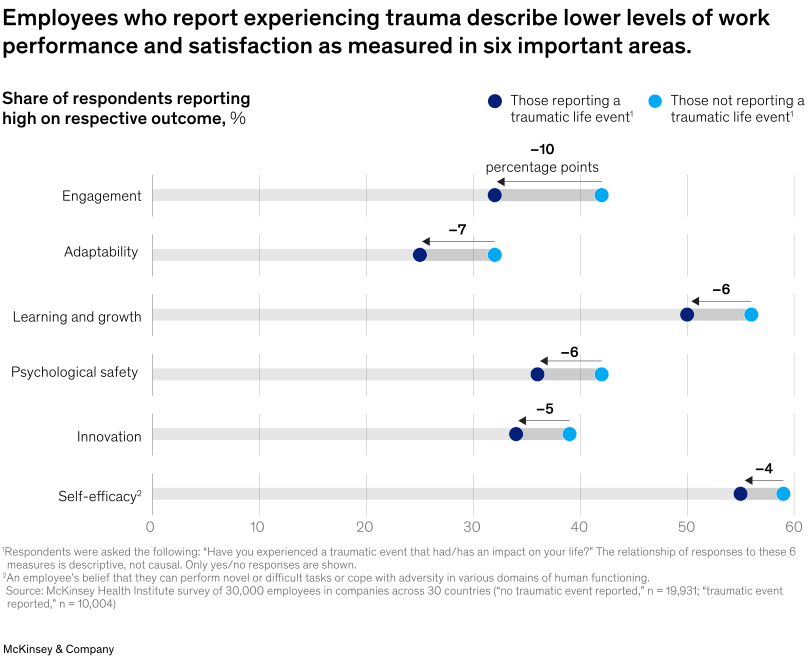
The effects of trauma can extend into the workplace, impacting employee performance and satisfaction. In a McKinsey Health Institute survey of 30,000 workers across 30 countries, 33 percent of respondents report experiencing a traumatic event that has affected their lives. These employees also report lower levels of adaptability, learning, engagement, and other performance outcomes. The difference is most pronounced in engagement, where scores are ten percentage points lower for employees who have experienced trauma than among those who have not, according to McKinsey’s Johanne Lavoie, Ramesh Srinivasan, and coauthors. Leaders who account for these dynamics may be better positioned to help people adapt, maintain performance, and contribute to sustained competitive advantage.
Image description.
Bar chart showing that employees who report experiencing a traumatic life event are less likely to report positive workplace outcomes across six measures. The chart compares respondents who reported a traumatic event with those who did not. Engagement is 32% versus 42% (10-point gap), adaptability is 25% versus 32% (7-point gap), learning and growth is 50% versus 56% (6-point gap), psychological safety is 36% versus 42% (6-point gap), innovation is 34% versus 39% (5-point gap), and self-efficacy is 55% versus 59% (4-point gap). The largest gap appears in engagement. Source: McKinsey Health Institute survey of 30,000 employees across 30 countries. The exhibit supports findings that trauma and sustained strain are associated with lower workplace performance, resilience, and satisfaction outcomes.
McKinsey Health Institute survey of 30,000 employees in companies across 30 countries (“no traumatic event reported,” n = 19,931; “traumatic event reported,” n = 10,004)
This image description was completed with the assistance of Writer, a gen AI tool.
End of image description.