Planned energy generation in the United States reveals a notable shift toward new players and renewable sources. Incumbents—domestic utilities, traditional-generation independent power producers, and private investors—represent about 86 percent of today’s generation. Their portfolios are primarily gas, coal, nuclear, and hydropower, according to partner Andrew Warrell and coauthors. In contrast, planned energy is dominated by industry challengers—and most of what is planned is solar, wind, and energy storage.
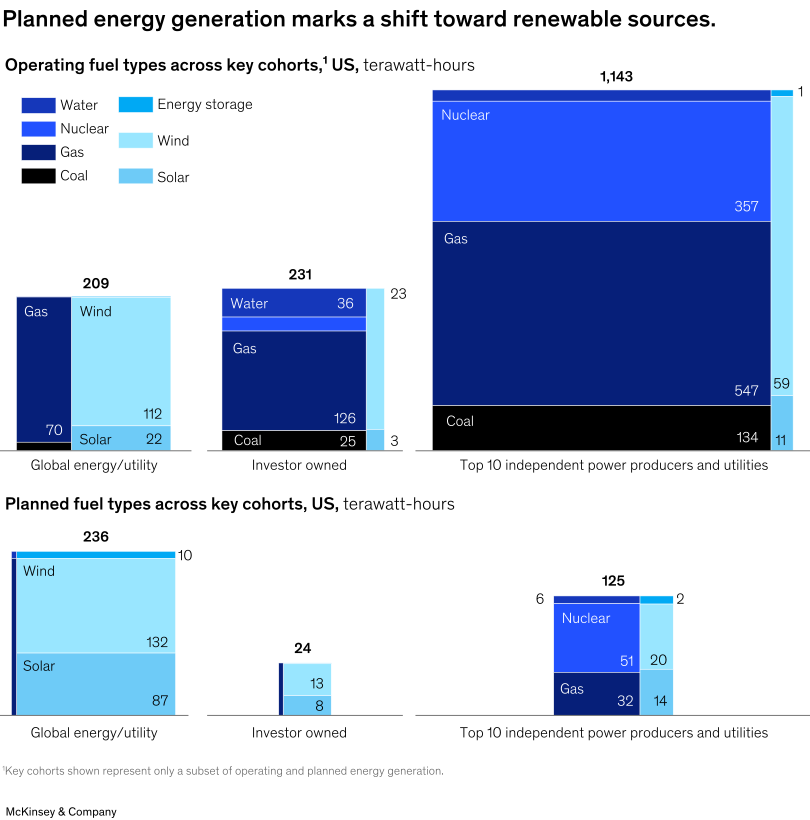
Image description:
Six area tree maps show operating and projected fuel types in the the US measured in terawatt-hours (TWh), broken down by type of owner: global energy/utility, investor owned, and top 10 independent power producers and utilities. Operating fuel types are at 209 TWh for global energy/utility, 231 TWh for investor owned, and 1,143 TWh for the top 10 independents. The projected planned fuel types are at 236 TWh for global energy/utility, 24 TWh for investor owned, and 125 TWh for the top 10 independents. Nearly all of what is planned is solar, wind, and energy storage.
End of image description.
To read the article, see “Managing risk in renewable-energy portfolios: The role of flexible assets,” November 5, 2024.